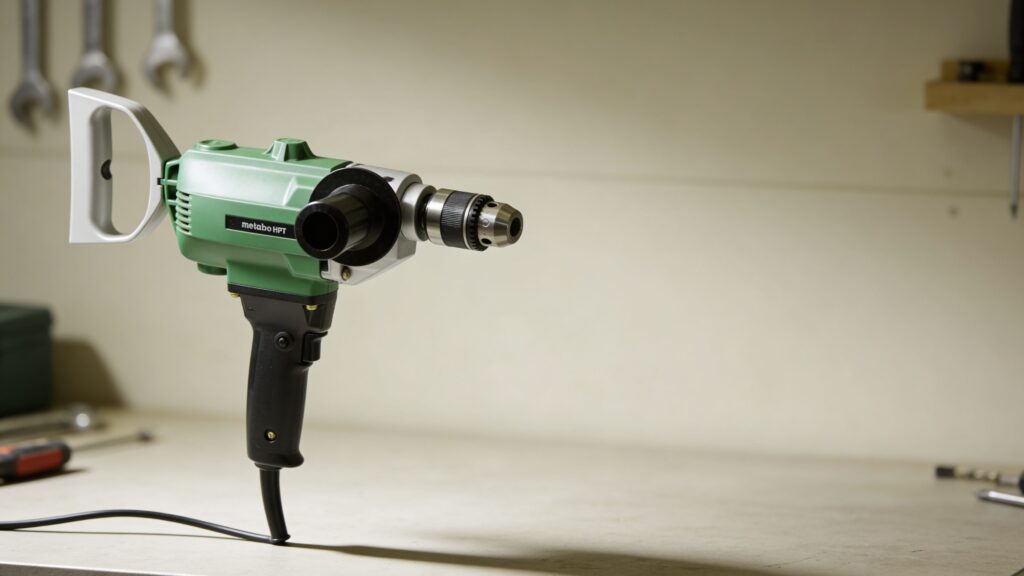
Choosing a corded drill for concrete and masonry requires more than selecting a tool with adequate wattage. These materials vary widely in density, aggregate composition, and structural purpose, placing distinct demands on torque delivery, impact mechanisms, bit compatibility, and thermal management. Applications range from light-duty anchor installation in block walls to repetitive drilling in reinforced concrete, where sustained power and control directly influence efficiency and tool longevity. Matching drill characteristics to material hardness and workload intensity is therefore a technical decision rather than a casual upgrade.
This buying guide clarifies the critical variables that define performance in masonry environments, including motor output, hammer action design, chuck systems, ergonomics, and duty cycle considerations. It outlines the tradeoffs between speed and control, weight and stability, and continuous runtime versus maneuverability. By the end, readers will understand the terminology, functional distinctions, and evaluation criteria necessary to select a corded drill aligned with specific concrete and masonry demands.