
How to Choose Cordless Drills for Furniture Assembly
Furniture assembly places unique demands on a cordless drill, blending light-duty fastening with the need for precision and control. Tasks range from driving small fasteners into engineered wood to aligning hardware in tight spaces, where excessive power or poor balance can cause damage or slow progress. As a result, selecting a drill for this purpose involves more than simply choosing a compact tool, and the wrong characteristics can quickly complicate otherwise straightforward projects.
This buying guide explains how to evaluate cordless drills specifically for furniture assembly by breaking down key factors such as torque control, size, weight, ergonomics, and speed management. It clarifies common terminology, outlines practical tradeoffs, and defines decision criteria that matter most for accuracy and consistency. By the end, readers will understand how to assess drill features in relation to real assembly tasks and make informed, purpose-driven choices.
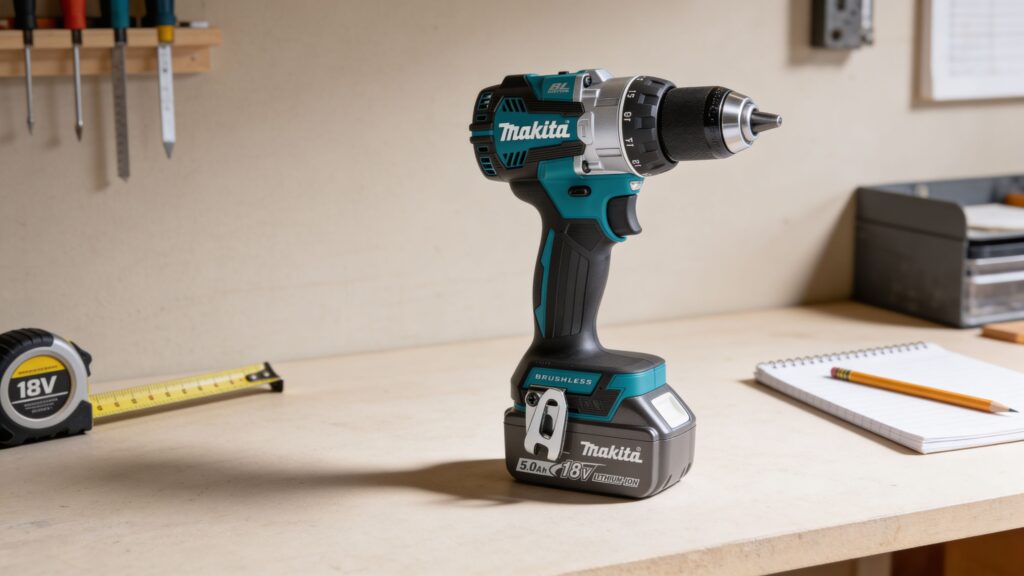
Buying framework
How to think about buying a cordless drill
Furniture assembly puts a premium on precision rather than raw power. While most cordless drills can handle basic fastening, meaningful differences emerge in control, balance, and ergonomics during repetitive, detail-oriented work. Use this framework to identify which characteristics support clean assembly and consistent results before narrowing your options.
Control matters more than strength: Smooth trigger response and a reliable clutch help you seat screws accurately, avoid cam-out, and protect fasteners and materials commonly used in flat-pack furniture.
Weight and balance affect accuracy: Lighter, well-balanced drills reduce wrist strain and make it easier to maintain alignment when working at awkward angles or holding parts in place during assembly.
Size dictates access: Compact drills navigate tight clearances inside cabinets, frames, and panels more easily, while larger bodies can limit visibility and maneuverability in confined spaces.
Battery choice shapes workflow: Smaller batteries often improve balance and handling for assembly tasks, while larger packs add weight that may be unnecessary for light-duty fastening.
Ergonomics influence consistency: Grip comfort, trigger placement, and overall feel determine how steadily you can work across dozens of fasteners, which directly affects assembly quality and efficiency.
Who this is for
Pick the drill that matches how you actually work
Furniture assembly looks simple, but the right drill depends on how often you assemble, where the work happens, and how precise the results need to be. Use these profiles to identify the capability level that fits your real-world assembly tasks.
Apartment dwellers & occasional assembly: prioritize compact size, light weight, and predictable clutch control. For flat-pack furniture and small spaces, ease of handling and precision matter more than extended runtime or high power.
Homeowners assembling multiple rooms: prioritize balance, comfortable ergonomics, and consistent low-speed control. Repeating the same fastening steps across dressers, beds, and cabinets makes fatigue and accuracy the deciding factors.
Tight or enclosed spaces: prioritize short head length, good sightlines, and slim tool profiles. Working inside cabinets, drawers, and frames rewards drills that stay maneuverable without forcing awkward wrist angles.
Frequent assembly or light installation work: prioritize durability, trigger consistency, and batteries that maintain steady output through repetitive tasks. Reliability and control become more important than outright speed over long sessions.
One-drill households: prioritize versatility across light assembly, basic repairs, and occasional drilling. A balanced setup that handles detail work well will see more use than a tool optimized only for heavier jobs.
What to pay attention to
Which cordless drill specs actually matter
Spec sheets often emphasize numbers that look impressive but say little about how a drill behaves during furniture assembly. What matters most is how the tool feels in your hands, how precisely it drives fasteners, and how consistently it performs during repetitive, detail-focused work.
Specs that affect feel
Trigger response, balance, clutch behavior, and ergonomics determine accuracy and comfort during assembly.
Specs that affect capability
Head length, battery options, and sustained behavior shape what tasks are practical in tight or repetitive setups.
Trigger control: Not listed on spec sheets, but essential for furniture assembly. Smooth, predictable trigger response helps you start screws cleanly and seat hardware without damaging materials.
Weight and balance: Advertised weights rarely reflect real use. A drill that feels balanced with a compact battery is easier to control during long assembly sessions and awkward angles.
Clutch consistency: Even clutch engagement prevents over-driving fasteners. Inconsistent clutches increase the risk of stripped screws and misaligned hardware, regardless of torque ratings.
Head length: Shorter head length improves access inside cabinets, drawers, and frames. Compact proportions often matter more than raw capability when space is limited.
Battery capacity (Ah): Higher amp-hour ratings extend runtime but also add weight. For assembly work, lighter batteries usually improve balance and control without sacrificing practicality.
Often overhyped: peak torque numbers, voltage branding, and single-point performance claims that don’t reflect sustained, precision-focused use.
Avoid these traps
Common mistakes people make when buying a cordless drill
Furniture assembly exposes weaknesses that don’t always show up on a spec sheet. Most frustration comes from choosing a drill based on assumptions that don’t match how precision-focused, repetitive assembly work actually feels in practice.
Chasing torque instead of finesse: High torque sounds useful, but aggressive power makes it harder to start screws cleanly and stop at the right depth. Assembly work rewards drills that respond smoothly and predictably at low speeds.
Buying a full-size drill “to be safe”: Larger drills feel reassuring on paper, yet they become awkward inside cabinets, frames, and boxed furniture panels. Extra size often reduces visibility and control where accuracy matters most.
Overlooking balance with real batteries: Many drills feel fine unloaded but change dramatically once a battery is attached. Poor balance increases wrist strain and makes it harder to keep fasteners straight during long assembly sessions.
Assuming more runtime improves assembly: Furniture assembly rarely pushes batteries to their limits. Heavier batteries may last longer, but they often slow you down by reducing comfort and precision over dozens of fasteners.
Confusing voltage labels with real performance: Voltage branding does not describe how controllable or refined a drill feels. Motor tuning, electronics, and clutch behavior shape real-world results far more than label numbers.
Ignoring long-term compatibility: A drill is often the first cordless tool added to a setup. Over time, battery and charger compatibility can matter more than small differences in individual drill behavior.
Decision guidance
Which type of cordless drill is right for you
Furniture assembly rewards control, balance, and access more than raw output. Use this guidance to match drill type to how often you assemble, where the work happens, and how precise the results need to be.
Choose a compact drill if: your work centers on furniture assembly, cabinets, and light home tasks where precision and comfort matter most. Compact drills are easier to control, fit better in tight spaces, and reduce fatigue during repetitive fastening common in flat-pack builds.
Choose a mid-size drill if: you assemble furniture regularly but also handle general repairs, shelving, and occasional drilling in denser materials. This size offers more headroom without sacrificing too much balance, though it can feel bulkier during detail work.
If assembly happens in tight spaces: prioritize shorter head length and lighter overall feel. Drills that maneuver easily inside frames, drawers, and cabinets help maintain alignment and reduce awkward wrist angles over long sessions.
Match the drill to repeated tasks: furniture assembly often involves dozens of identical fasteners. A drill that feels steady, feathers smoothly, and stays comfortable over time will outperform one chosen for occasional heavy-duty needs.
When a drill may not be enough: if you frequently drive long or structural screws, a drill alone can feel slow and tiring. In those cases, pairing a drill for assembly and drilling with a separate driving tool can improve efficiency without increasing bulk during precision work.
Ownership & compatibility
What you’re really buying into long term
Furniture assembly tends to be recurring rather than one-off, which makes long-term usability more important than short-term capability. Battery compatibility, workflow friction, and serviceability shape how satisfying a drill feels months or years after the first project.
Battery options and balance: Smaller batteries often suit assembly work better by improving control and reducing fatigue. Having access to multiple battery sizes lets you optimize handling for quick builds without committing to unnecessary weight.
Charging and workflow friction: Furniture assembly typically involves short bursts of use rather than all-day drilling. Easy charging, quick swaps, and predictable battery indicators reduce interruptions and keep assembly moving smoothly.
Platform longevity and expansion: A drill is often the first cordless tool added to a setup. Battery compatibility across future tools can simplify storage, reduce clutter, and make it easier to expand without managing multiple chargers and packs.
Serviceability and wear items: Chuck performance, switches, and clutches experience the most wear during repetitive assembly tasks. Long-term satisfaction depends on how easy it is to service or replace these components as they age.
Long-term ownership costs: Batteries are consumables with a finite lifespan. Over years of use, replacement batteries and accessories typically account for more ownership cost than small differences in the initial tool purchase.
FAQ
Cordless drill buying guide FAQ
Quick answers to common questions that come up when choosing a cordless drill for furniture assembly, focused on real use and day-to-day experience.
Do I need a 20V drill, or is 12V enough?
What’s the real difference between “18V” and “20V Max”?
How important is torque for a cordless drill?
What battery size (Ah) should I buy?
Should I buy a drill/driver kit or tool-only?
Do I need a hammer drill?
Is an impact driver better than a drill for driving screws?
What features actually matter day to day?
How long should a cordless drill last?
Bottom line
The simplest way to pick the right cordless drill
Furniture assembly rewards control, balance, and comfort far more than raw power. The right drill is the one that feels steady and predictable across dozens of fasteners, not the one built for rare extremes.
If your work is mostly furniture assembly: prioritize a compact, well-balanced drill that’s easy to control in tight spaces and comfortable during repetitive fastening.
If day-to-day feel matters most: focus on smooth trigger response, consistent clutch behavior, and balance with the battery you’ll actually use. These details shape every assembly session.
If you occasionally handle heavier tasks: add capability only when those jobs are frequent enough to justify extra size and weight. Avoid choosing for rare scenarios that complicate everyday use.
If screws are your primary task: remember that drills excel at control and alignment. Complementary tools can handle high-volume driving without turning your assembly tool into a burden.
Final check: picture where most assembly happens—inside cabinets, along frames, or at awkward angles. Choose the drill that feels easiest to manage there, and long-term satisfaction usually follows.
Reading Shortcuts
Jump to the sections that matter most for choosing the right drill.
Decision Reminders
A quick checklist before you commit to a drill + battery platform.
- Prioritize control over power: predictable trigger response and a consistent clutch matter more than high torque for furniture assembly.
- Size affects accuracy: compact drills are easier to align inside frames, cabinets, and tight assembly spaces.
- Balance changes with batteries: the battery you use most often determines comfort and wrist strain over long assembly sessions.
- Think beyond the first tool: battery and charger compatibility shape long-term convenience more than short-term capability.
- Optimize for repeated tasks: drills that feel steady over dozens of fasteners deliver better results than ones built for rare extremes.
- Ignore headline specs: voltage labels and peak numbers don’t reflect how controlled or comfortable a drill feels in real use.
Glossary Snippets
Quick translations for the terms that confuse buyers most.
When to Use a Top 10 Review
Use this format when you want a fast, structured way to narrow the field before deciding.
- You want a quick shortlist: Rankings group drills by use case so you can see which types fit furniture assembly best.
- You’re still defining priorities: A Top 10 helps translate specs into real-world control, size, and comfort differences.
- You want category context: Labeled picks like “Best Overall” or “Best Compact” explain positioning, not final answers.
- You’re comparing ownership paths: Useful for understanding platform breadth and long-term considerations at a glance.
Already down to 2–3 models? A Comparison is usually faster than reading full reviews.
When to Use a Comparison
Best when you already have a shortlist and need clarity on real tradeoffs.
- You’ve narrowed it to 2–3 options: side-by-side views surface differences faster than full guides.
- You care about real-world feel: balance, trigger control, fatigue, and handling become obvious in head-to-heads.
- You want clear tradeoffs: comparisons highlight strengths and compromises across control, capability, and ownership.
- You need to decide efficiently: a Comparison works as the final filter once the shortlist exists.
Still exploring? Start with a Top 10 to identify the right drill type first.