
How to Choose Right-Angle Drills for DIY Home Projects
A right-angle drill is one of those tools that makes sense the moment a regular drill will not fit. DIY projects often put fasteners and holes inside cabinets, between studs, under countertops, near plumbing, behind appliances, or close to corners where a standard drill body is too long to line up cleanly.
This guide helps you decide whether you need a compact right-angle drill, a right-angle attachment, or a stronger model for occasional heavier work. It covers size, torque, chuck type, battery fit, bit choices, control, and the small ownership details that matter when the tool is used for home repairs, furniture projects, built-ins, shelving, and remodeling tasks.
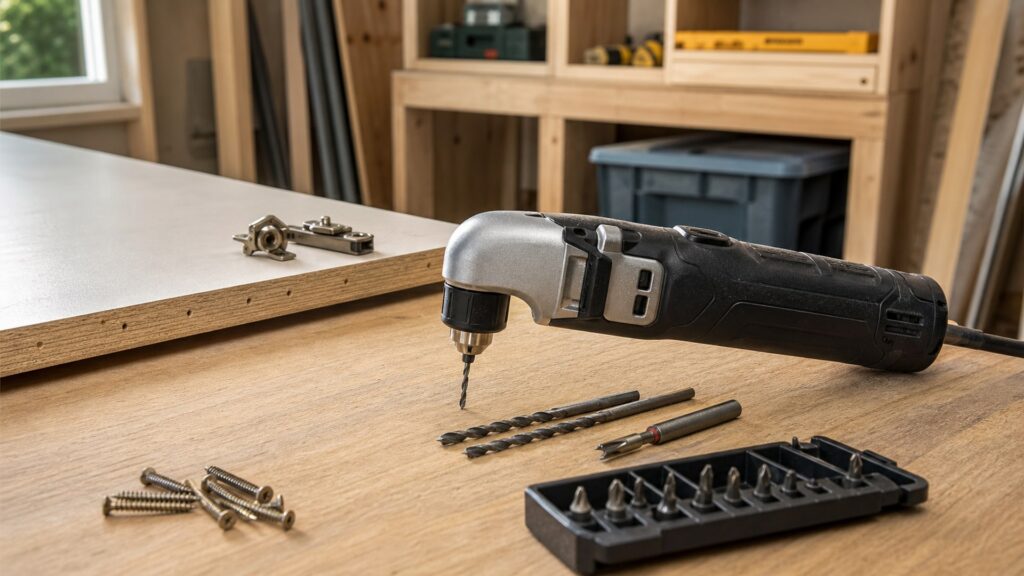
Buying framework
How to think about choosing a right-angle drill for DIY home projects
Start with the spaces you need to reach and the kinds of holes or screws you expect to drive. For most DIY buyers, the best right-angle drill is not the most powerful one; it is the one that fits, controls easily, and works with the batteries and bits you already use.
Identify the tight-space jobs: Think through where the drill will be used: cabinets, shelves, closet systems, furniture repairs, stud bays, plumbing access, appliance spaces, and corner work. A smaller head and shorter body can matter more than raw torque in these areas.
Decide whether this is drilling, driving, or both: Some DIY tasks are mostly screwdriving in awkward spaces, while others involve drilling pilot holes, spade-bit holes, or small hole-saw openings. Match the tool to the hardest common task rather than the rarest possible project.
Consider an attachment first for rare use: If you only need right-angle access once or twice a year, a quality right-angle attachment may be enough. A dedicated tool makes more sense when tight-space work is common or you want better control and comfort.
Prioritize control over size alone: A tiny tool is not helpful if the trigger is jumpy or the grip is awkward. Look for smooth speed control, predictable clutch behavior, and a shape you can hold securely in cramped positions.
Match the purchase to your tool ecosystem: If you already own cordless batteries, staying in the same platform can reduce cost. Just make sure the compatible right-angle drill has enough capability and clearance for your actual projects.
Who this is for
Pick the right-angle drill setup that matches your DIY workload
Different homeowners need different levels of tool. Use these profiles to choose between an attachment, compact cordless model, or stronger right-angle drill without paying for jobsite capacity you may not use.
Occasional home repair: A right-angle attachment or small cordless model can handle light screwdriving, pilot holes, and one-off access problems. Prioritize low cost, easy storage, and compatibility with your current drill or batteries.
Cabinet and furniture projects: Choose a compact right-angle drill with good trigger control, short head length, and comfortable one-hand handling. These projects reward accuracy and gentle control more than maximum torque.
Shelving, closets, and built-ins: Look for a tool that can drill pilot holes and drive screws close to walls, corners, and panels. A clutch, built-in light, and slim grip can make repetitive work cleaner and less frustrating.
Light remodeling: If you are working around studs, subfloors, plumbing, or electrical access, consider more torque and a 3/8-inch or 1/2-inch chuck depending on bit needs. Battery capacity becomes more important as hole count rises.
DIYers already invested in a battery platform: A bare-tool right-angle drill can be a smart add-on if you already own compatible batteries and chargers. Compare the total working setup, not just the bare-tool price.
What to pay attention to
Which right-angle drill specs actually matter for home projects
For DIY use, specs should be read through the lens of access, comfort, and control. A home-project right-angle drill needs enough power for common materials, but it also needs to fit the places that made you want the tool in the first place.
Specs that affect feel
Head length, body size, weight with battery, grip shape, trigger modulation, clutch behavior, LED placement, and balance determine how easily the tool works in cabinets and corners.
Specs that affect capability
Chuck size, speed range, torque, battery voltage, supported bit diameter, and motor type determine whether the tool can handle pilot holes, screws, spade bits, and light remodeling tasks.
Head length: The head length determines how close the chuck can get to a wall, cabinet side, or stud. Compare dimensions with a bit installed when possible, because the working length is what matters.
Chuck size: A 3/8-inch chuck is enough for many light DIY tasks, while a 1/2-inch chuck gives more flexibility for larger bits. Do not pay for a larger chuck unless your projects actually need those bits.
Clutch and speed control: A clutch helps avoid overdriving screws in cabinets, trim, and furniture panels. Smooth variable speed matters when starting pilot holes or driving fasteners near finished surfaces.
Battery size and balance: Large batteries can add runtime, but they may make the tool bulky in the tight spaces where right-angle drills are useful. A compact pack is often easier to handle for short DIY tasks.
Built-in light: A useful LED can make a real difference inside cabinets, closets, and under counters. Placement matters because the chuck and bit can cast shadows in close quarters.
Often overhyped: Peak torque, voltage, and maximum speed are easy to compare but can distract from fit and control. For many homeowners, a smaller tool that fits well is more useful than a stronger one that cannot reach the fastener.
Avoid these traps
Common mistakes people make when buying a right-angle drill for DIY work
Most disappointing purchases come from choosing the wrong tool class for the job. Avoid these traps before buying a dedicated right-angle drill or attachment.
Buying a heavy-duty model for light cabinet work: A large right-angle drill can be powerful but awkward for delicate home projects. If you mostly drive screws inside cabinets or furniture, compact control may be more valuable than torque.
Relying on an attachment for too much work: Attachments are handy for occasional access problems, but they can feel clumsy during repeated drilling or driving. If tight-space work is part of several projects, a dedicated tool may be easier to use.
Ignoring battery fit: A big battery can block access or make the drill feel nose-light or tail-heavy. Check how the tool balances with the battery you plan to use, not only the tool body.
Skipping pilot holes: Right-angle access does not remove the need for clean technique. Pilot holes help prevent splitting, wandering bits, and overdriven screws in cabinets, shelving, and furniture parts.
Choosing by price alone: The cheapest tool may be fine for rare use, but poor trigger control, weak chucks, and awkward grips show up quickly in tight spaces. Value should include how cleanly the tool solves the job.
Forgetting bit length: Shorter tools still need bits, extensions, and driver tips. Make sure the full tool-plus-bit setup fits the space you care about before assuming the drill will solve the access problem.
Decision guidance
Which right-angle drill option is right for your home projects
Choose by how often you need tight-angle access, how large the holes are, and whether you already own a compatible cordless platform. The right answer may be an attachment, compact tool, or stronger model.
Buy a right-angle attachment if: You only occasionally need to drive screws or drill small holes where your regular drill does not fit. It is the lowest-cost path and stores easily, but it is not ideal for frequent work.
Buy a compact cordless right-angle drill if: You work on cabinets, shelving, furniture, closet systems, or small remodels where tight spaces come up often. Prioritize head length, grip comfort, clutch settings, and battery balance.
Buy a stronger right-angle drill if: You expect repeated holes in framing, subfloors, or remodel materials and need more torque than a compact model provides. Make sure the extra size will still fit your work areas.
Stay in your battery platform if: You already own batteries and chargers that fit a good right-angle drill option. This can lower cost, but do not accept poor size or control just to reuse batteries.
Skip the purchase if: You have one isolated task and can borrow, rent, or use an attachment safely. A dedicated right-angle drill is most useful when tight-space work will come up across multiple projects.
Ownership & compatibility
What you are really buying with a DIY right-angle drill
A right-angle drill purchase includes the tool, bits, batteries or attachments, storage, and habits that make tight-space work easier. Thinking about the full setup prevents small frustrations from following you into every project.
Bits and driver tips: Use short driver bits, bit holders, pilot bits, and extensions that fit the space. A good bit setup can matter as much as the drill when working inside cabinets or close to walls.
Battery compatibility: Cordless models are easiest when they share batteries with your other tools. Check whether compact batteries are available, because smaller packs often fit better in tight places.
Attachment compatibility: If choosing an attachment, confirm it fits your existing drill, handles the bit sizes you need, and can be held securely. Attachments work best for light-duty access problems.
Storage: Right-angle drills and small bit sets are easy to misplace if they are not stored together. A small case or drawer setup keeps the tool ready for quick household tasks.
Maintenance: Keep the chuck clean, remove dust from vents, avoid forcing dull bits, and store batteries properly. These simple habits help small tools stay predictable over time.
Total cost: Budget for the tool or attachment, batteries if needed, compact bit holders, pilot bits, driver bits, and storage. The best value is the setup that solves repeated tight-space tasks without unnecessary bulk.
FAQ
Right-angle drill buying guide FAQ
Quick answers to common shopper questions about right-angle drills for cabinets, repairs, remodeling, attachments, bits, and batteries.
Do I need a right-angle drill for home projects?
Is a right-angle attachment good enough?
Should I buy cordless or corded?
What chuck size is best for DIY use?
Can a right-angle drill drive screws?
What matters more, power or size?
Bottom line
The simplest way to choose a right-angle drill for DIY home projects
Choose the smallest tool that can comfortably handle your real projects, then make sure it works with the bits, batteries, and spaces that matter in your home.
For rare tight-space tasks: Start with a right-angle attachment if the work is light and occasional.
For cabinets, shelves, and furniture: Choose a compact cordless right-angle drill with smooth control, a useful clutch, and a short head.
For light remodeling: Consider a stronger model with more torque and bit capacity, but only if it still fits the work areas.
Final check: Before buying, confirm the tool-plus-bit length, chuck size, battery fit, grip comfort, clutch control, and whether the setup solves more than one project.
Reading Shortcuts
Jump to the sections that matter most when choosing a right-angle drill for DIY home projects.
Decision Reminders
A quick checklist before you commit to a DIY right-angle drill.
- Measure the space: Check the tool-plus-bit length against the cabinet, stud bay, or corner.
- Start with the use case: Occasional screws and repeated remodel holes need different tools.
- Mind the battery: A compact battery can make the tool easier to fit and control.
Glossary Snippets
Quick translations for terms that confuse right-angle drill buyers.
When to Use a Top 10 Review
Use this format when you want a faster way to narrow the right-angle drill field.
- You are early in the process: A Top 10 can separate compact cordless drills, attachments, stronger models, and value picks for home use.
- You want a shortlist: Rankings help organize choices by size, battery platform, control, price, and likely DIY workload.
Already down to 2-3 tools? A Comparison is usually faster than reading broad buying advice.
When to Use a Comparison
Ideal once you have a shortlist and need clear tradeoffs for home projects.
- You narrowed it to 2-3 options: Direct comparisons make differences in head size, clutch control, battery fit, chuck size, and value easier to see.
- You are deciding attachment vs drill: A comparison can clarify whether lower cost or better control matters more for your actual projects.
Still exploring? Start with a Top 10 to identify the right right-angle drill category first.