
How to Choose Right-Angle Drills for Electrical Work
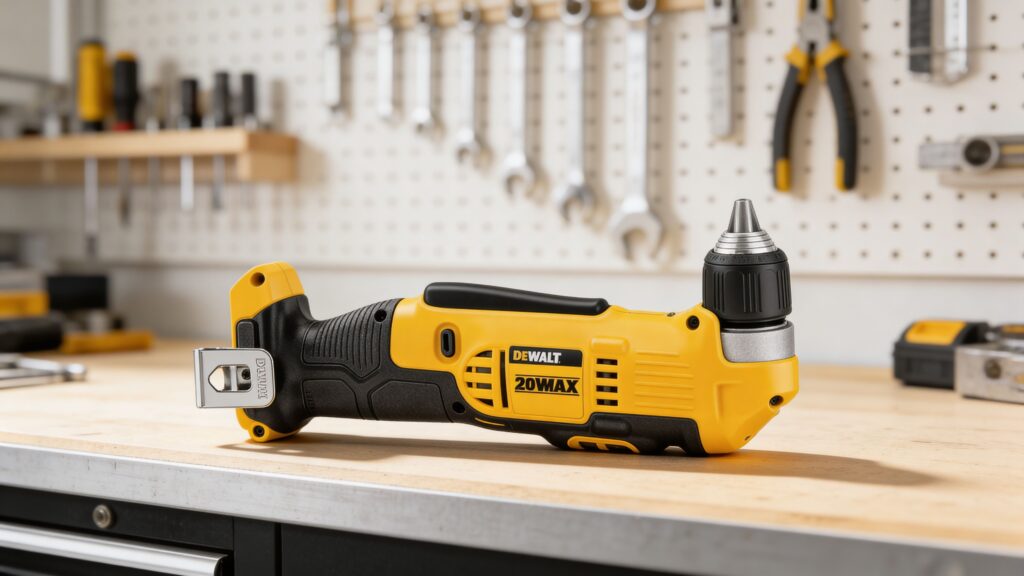
Right-angle drills serve a specialized role on professional job sites, where confined framing bays, joist cavities, and mechanical runs limit the use of standard drill profiles. Their compact head geometry and torque-focused design make them essential for plumbing, electrical, HVAC, and structural applications. Selecting the appropriate configuration involves more than choosing a compact tool; it requires evaluating power delivery, ergonomics, chuck type, and spatial constraints unique to demanding environments.
This buying guide clarifies the technical factors that influence performance, durability, and workflow efficiency. It explains motor types, torque characteristics, head dimensions, gearing considerations, and safety features, along with the tradeoffs between size, control, and output. By the end, readers will understand the terminology and decision criteria necessary to evaluate right-angle drills with confidence in professional settings.
Buying framework
How to think about buying a right-angle drill
Right-angle drills are purpose-built for confined framing bays, joist cavities, and mechanical runs where standard drill profiles do not fit. The differences that affect real ownership show up in torque delivery, head clearance, balance, and durability under sustained load—not just stated power figures. Use this framework to clarify priorities before narrowing your selection.
Fit the head to the space: Head height and length determine whether the tool can operate between studs, inside cabinets, or within tight mechanical assemblies without compromising alignment.
Torque must match the task: Larger hole saws and auger bits demand sustained torque and gearing designed for load, while lighter-duty applications prioritize control and reduced kickback.
Balance affects fatigue: Motor placement and battery size influence handling in overhead or extended drilling sessions, which can impact accuracy and long-term comfort on the job.
Durability supports daily use: Reinforced gear housings, metal chucks, and protective features matter more in repetitive professional environments than occasional residential work.
Platform compatibility shapes workflow: Battery systems, charger options, and shared tool ecosystems influence efficiency across a crew, particularly when multiple tools operate simultaneously.
Who this is for
Pick the drill that matches how you actually work
The right right-angle drill depends on trade focus, frequency of use, and the physical constraints of the jobsite. Use these profiles to align head size, torque output, runtime, and durability with the demands of your work.
Electrical contractors: frequently drill through studs and joists for conduit and cable runs in confined framing bays. Priorities include compact head dimensions, smooth low-speed control, and balanced weight for overhead work; what matters most is reliable performance in tight cavities without sacrificing alignment.
Plumbing & mechanical trades: routinely bore larger-diameter holes for pipe and ductwork, often under sustained load. Priorities include torque consistency, durable gearing, and kickback management; what matters most is controlled power that holds up during repetitive heavy drilling.
Remodeling & finish carpentry crews: move between framing, cabinetry, and retrofit environments where access changes constantly. Priorities include shorter head length, ergonomic grip design, and manageable runtime; what matters most is maneuverability without unnecessary bulk.
Commercial build teams: operate tools daily across large sites where uptime and platform compatibility affect workflow. Priorities include battery interchangeability, reinforced housings, and dependable runtime; what matters most is consistency across long shifts and multiple users.
Specialty installers & service technicians: work in mechanical rooms, crawl spaces, and retrofit conditions where access is highly restricted. Priorities include precise trigger modulation, compact form factor, and durable chuck construction; what matters most is controlled drilling in spaces where repositioning is limited.
What to pay attention to
Which cordless drill specs actually matter
Right-angle drill spec sheets can look technical and impressive, but not every number translates into better jobsite performance. Focus on the specifications that change control, clearance, and sustained drilling behavior — not just peak output figures listed for marketing impact.
Specs that affect feel
Control, head balance, grip design, and trigger modulation determine how stable and manageable the tool feels in confined spaces.
Specs that affect capability
Head height, torque delivery, battery system, and sustained performance under load determine what tasks are realistically practical.
Head height and length: In framing bays and joist cavities, clearance determines usability. Even small differences in head profile can decide whether a hole can be drilled straight or at all.
Torque delivery under load: Published torque numbers matter less than how consistently the drill maintains speed with larger auger bits or hole saws during repeated use.
Weight and balance: Overall weight shifts depending on battery size and motor placement. Poor balance becomes noticeable during overhead drilling or extended sessions in tight quarters.
Trigger modulation: Smooth low-speed response improves alignment and reduces bit walking, particularly when starting holes in dense lumber or structural material.
Battery capacity (Ah): Higher amp-hour ratings extend runtime but add bulk and change handling. The tradeoff between endurance and maneuverability matters more than maximum capacity alone.
Often overhyped: peak torque claims, nominal voltage branding, and isolated performance numbers that do not reflect sustained drilling in real-world conditions.
Avoid these traps
Common mistakes people make when buying a cordless drill
Most dissatisfaction with a right-angle drill comes from mismatching capability to jobsite realities. These are the most common misunderstandings we see—and how to think about them before committing to a tool.
Focusing only on maximum torque: High torque ratings can overshadow how the drill behaves at startup and under sustained load. In tight framing bays, controlled engagement and stability often matter more than peak output.
Overlooking head clearance: Assuming all right-angle drills fit the same spaces can lead to frustration on site. Small differences in head height and length determine whether you can drill straight between studs or must reposition repeatedly.
Choosing oversized batteries by default: Larger battery packs extend runtime but alter balance and increase fatigue. In confined or overhead work, maneuverability can outweigh the benefit of fewer battery changes.
Underestimating sustained use demands: Occasional heavy drilling differs from daily repetitive boring. Tools optimized for intermittent tasks may feel strained during continuous commercial work.
Assuming all gear housings are equally durable: Exterior construction and internal gearing affect how a drill handles repeated torque loads. Durability considerations become more important in professional environments than in light-duty use.
Ignoring workflow compatibility: A right-angle drill rarely operates alone on a jobsite. Battery system alignment and shared charging setups influence efficiency more than small differences in isolated specifications.
Decision guidance
Which type of cordless drill is right for you
The right right-angle drill depends more on your daily workload and jobsite constraints than on peak specifications. Use this to align drill size, torque class, and battery configuration with the work you actually perform most often.
Choose a compact right-angle drill if: most of your work happens inside cabinets, between closely spaced studs, or in service environments with limited clearance. Compact models prioritize maneuverability, lighter weight, and easier overhead control, making them well suited for repetitive drilling in confined areas.
Choose a high-torque right-angle drill if: you regularly bore larger-diameter holes with auger bits or hole saws through dense framing material. These configurations handle sustained load better but are typically heavier and require more space to operate comfortably.
If runtime is your limiting factor: consider battery capacity in relation to task duration and crew workflow. Larger batteries extend drilling sessions but affect balance, while smaller packs keep the tool more agile at the cost of more frequent swaps.
Match the drill to your most frequent task: if 80% of your week involves moderate boring and positioning in tight framing, prioritize control and fit. Step up in torque and size only if heavy boring is a consistent part of your schedule rather than an occasional requirement.
When a right-angle drill isn’t the ideal choice: if your work primarily involves open-space drilling or heavy fastening without clearance restrictions, a standard drill or dedicated impact tool may be more efficient. Right-angle drills are purpose-built for access, not universal replacement.
Ownership & compatibility
What you’re really buying into long term
A right-angle drill is part of a broader cordless system, not a standalone purchase. Long-term ownership depends on battery availability, service support, and how well the tool integrates into daily workflow as job demands evolve.
Battery ecosystem realities: Over time, batteries become the primary wear item and replacement cost driver. Consider the range of available capacities, how easily replacements can be sourced, and whether the platform is likely to remain supported for years.
Charging workflow and jobsite logistics: Runtime is only part of the equation. Access to multiple chargers, charge times, and how batteries rotate across a crew can either streamline work or create daily friction.
Serviceability and parts access: Switches, chucks, and internal components experience wear under sustained load. Platforms with accessible parts and clear service channels reduce downtime compared to tools that require full replacement after minor failures.
Compatibility across the tool lineup: A right-angle drill typically complements other cordless tools used on site. Shared batteries and consistent ergonomics across the system simplify storage, transport, and day-to-day transitions between tasks.
Total ownership horizon: Initial kit choices influence future expansion, battery replacements, and upgrade paths. Thinking beyond the first purchase helps prevent unnecessary duplication and ensures the system scales with your workload.
FAQ
Cordless drill buying guide FAQ
Quick answers to the questions contractors ask most when choosing a right-angle drill—focused on jobsite reality, not spec-sheet hype.
When do I actually need a right-angle drill?
Are compact right-angle drills powerful enough for framing?
How much does head size really matter?
What battery size works best for right-angle drills?
Is kickback a concern with high-torque models?
Do right-angle drills replace standard drills?
How important is sustained performance versus peak specs?
What features improve control in tight spaces?
How long should a professional right-angle drill last?
Bottom line
The simplest way to pick the right cordless drill
The right right-angle drill is the one that fits your daily access constraints and workload—not the one with the biggest published numbers. Prioritize clearance, control, and sustained behavior over rare worst-case scenarios.
If tight spaces define your work: prioritize compact head dimensions, balanced weight, and smooth trigger modulation so the drill stays controllable between studs and overhead.
If large-diameter boring is routine: step up to a higher-torque configuration that maintains speed under load, but accept the added size and weight that come with it.
If you work long shifts: think beyond runtime alone and consider how battery size affects balance, fatigue, and battery rotation across your crew.
If you’re building a system: choose a battery platform that aligns with your other cordless tools to reduce charging friction and simplify long-term ownership.
Final check: match the drill to the work you perform 80% of the time, not the occasional heavy task, and confirm it fits the physical spaces you encounter most often.
Reading Shortcuts
Jump to the sections that matter most for choosing the right right-angle drill.
Decision Reminders
A quick checklist before you commit to a drill + battery platform.
- Prioritize clearance first: head height and length determine whether the drill actually fits between studs and inside framing bays.
- Match torque to your real workload: sustained boring with large bits demands more stability than occasional small-diameter holes.
- Consider balance with your actual battery: larger packs increase runtime but can add fatigue in overhead and confined work.
- Think about daily workflow: shared batteries and chargers reduce friction across a crew more than small spec differences.
- Plan for battery replacement: over time, battery lifecycle and availability often shape long-term ownership more than the drill itself.
- Avoid buying for rare worst-case jobs: choose the configuration that feels right for the work you perform most weeks.
Glossary Snippets
Quick translations for the terms that confuse buyers most.
When to Use a Top 10 Review
If you want the fastest shortlist, this is the format that gets you to a confident pick.
- You’re narrowing the field quickly: A ranked list helps you scan categories and identify which configurations align with your workload.
- You want structured “best for” buckets: Formats like Best Overall or Best for Tight Spaces clarify positioning without reading every full guide.
- You’re comparing capability tiers: A Top 10 shows how compact, high-torque, and specialty models differ at a glance.
- You’re exploring platform direction: Ranked lists make it easier to see ecosystem depth and long-term ownership considerations side by side.
Already down to 2–3 models? A Comparison is usually faster than reading full reviews.
When to Use a Comparison
Best when you’re choosing between specific models and want the clearest tradeoffs.
- You’re down to 2–3 finalists: a side-by-side view highlights differences in size, torque class, and handling without rereading long guides.
- You’re weighing tradeoffs: comparisons make it easier to see how clearance, sustained load behavior, and battery balance stack up.
- You want category callouts: formats often identify a “winner by category” for control, durability, or runtime to clarify positioning.
- You need a fast, defensible choice: once your shortlist is set, a head-to-head layout accelerates the final decision.
Still exploring? Start with a Top 10 to find the right “type” of drill first.