
How to Choose Right-Angle Drills for Framing and Stud Work
Right-angle drills occupy a specialized role in framing and stud work, where confined wall cavities, overhead runs, and dense structural lumber limit the use of standard drill profiles. Applications range from boring large-diameter holes for plumbing and electrical lines to repetitive stud drilling in production framing. Head size, torque delivery, gearing, and ergonomics all influence performance, and selecting the wrong configuration can reduce efficiency or strain the operator in demanding jobsite conditions.
This buying guide clarifies the structural and mechanical factors that define right-angle drill performance in framing environments. It explains power ratings, clutch systems, chuck capacity, head clearance, and balance considerations, along with the tradeoffs between compactness and torque output. By the end, readers will understand how to evaluate specifications and match tool characteristics to the practical demands of stud and wall construction.
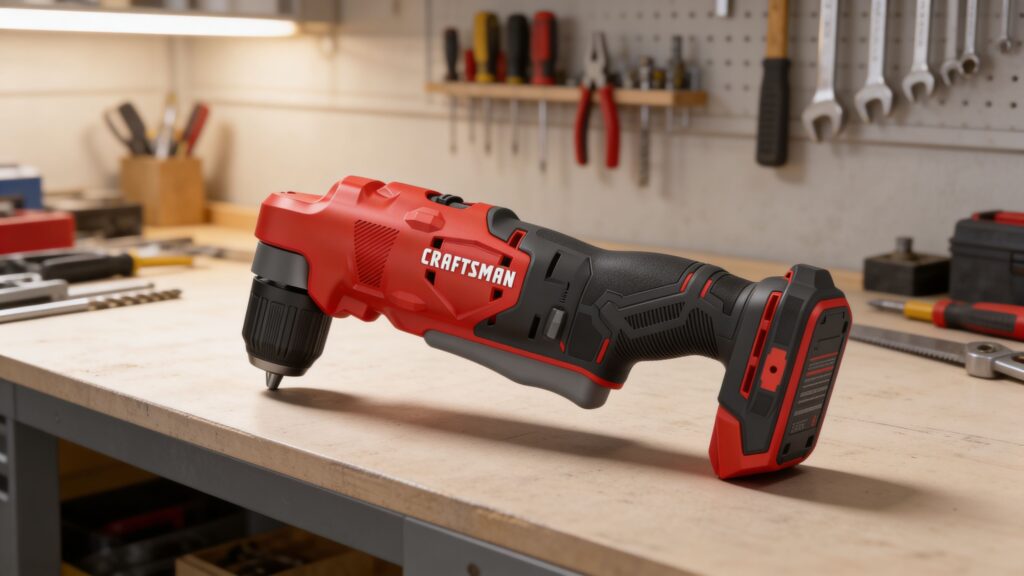
Buying framework
How to think about buying a right-angle drill for framing and stud work
In framing environments, most right-angle drills can bore through standard studs. The meaningful differences emerge in torque delivery, head clearance, durability under load, and how controllably the tool handles large self-feed or auger bits in repetitive construction tasks. Use this framework to define your workload before narrowing your options.
Torque must match bit size: Larger auger and self-feed bits demand sustained torque at low speeds. Evaluate how the drill manages resistance in dense lumber rather than focusing on headline power figures.
Head profile determines access: The overall height and length of the right-angle head dictate whether you can drill between studs, inside corners, or close to subfloors without repositioning the workpiece.
Gear range affects control: A true low-speed setting with predictable throttle response improves hole placement and reduces binding when boring repeated runs through stacked framing members.
Handle orientation shapes fatigue: Inline and side-handle configurations distribute torque reaction differently. Consider how often you will drill overhead or at shoulder height when assessing comfort.
Durability matters in repetitive work: Framing tasks involve sustained load and jobsite impact. Pay attention to gearbox construction, chuck capacity, and overall build design intended for structural drilling.
Who this is for
Pick the drill that matches how you actually work
The right right-angle drill for framing and stud work depends on how often you bore structural members, the size of holes you routinely cut, and the physical constraints of your jobsite. Use these profiles to align torque, head clearance, ergonomics, and runtime with the way you actually build.
Home renovators running occasional rough-in lines: Work is intermittent and often inside finished spaces where access is limited. Priorities include manageable size, predictable low-speed control, and moderate torque for standard auger bits. What matters most is clean, controlled drilling without excessive weight.
Remodelers working in tight framing bays: Tasks involve drilling between closely spaced studs, near subfloors, or overhead. Priorities include compact head height, balanced handling, and steady torque under load. What matters most is access and control in confined cavities.
Production framers boring repeated large holes: Daily work includes stacked studs and larger self-feed bits in structural lumber. Priorities include sustained low-speed torque, durable gearing, and effective side-handle support. What matters most is consistent power delivery without excessive strain.
Electrical and plumbing rough-in crews: Frequent drilling for conduit and pipe runs demands predictable bit speed and reduced binding risk. Priorities include reliable clutch or anti-kickback features, comfortable grip orientation, and sufficient runtime for continuous use. What matters most is safety and control during repetitive boring.
Small crews sharing one primary tool: The drill rotates between users and job types across different sites. Priorities include adaptable gearing, broad bit compatibility, and balanced ergonomics for varied working positions. What matters most is versatility that supports multiple framing tasks without compromise.
What to pay attention to
Which right-angle drill specs actually matter
Spec sheets can make right-angle drills appear dramatically different, but many numbers are presented without context. In framing and stud work, the meaningful differences show up in control under load, physical access between members, and how the drill behaves during repeated large-diameter boring.
Specs that affect feel
Trigger modulation, handle orientation, and overall balance determine how confidently the drill manages torque reaction.
Specs that affect capability
Head clearance, gear range, chuck capacity, and sustained torque output define what size holes you can bore comfortably.
Low-speed control: Framing tasks rely on steady, controlled boring through dense lumber. A predictable trigger and true low gear reduce binding and improve hole placement.
Head height and length: The physical profile of the right-angle head determines whether you can drill between studs or near subfloors without repositioning materials.
Handle configuration: Inline grips and auxiliary side handles distribute torque differently. Proper support matters when larger bits catch and transfer force back to the operator.
Chuck capacity: The maximum bit shank size dictates compatibility with self-feed and large auger bits. Capability is limited not just by torque, but by what the chuck can securely hold.
Battery capacity and runtime: Higher amp-hour ratings extend runtime but increase weight. In repetitive framing work, balance and fatigue can matter as much as total run time.
Often overemphasized: peak torque figures and headline voltage numbers rarely reflect sustained drilling through structural lumber, where gearing, control, and ergonomics matter more.
Avoid these traps
Common mistakes people make when buying a right-angle drill
Most dissatisfaction with a right-angle drill in framing and stud work comes from mismatching tool capability with the actual demands of structural boring. These are the most common mistakes we see—and how to avoid them before committing to a configuration.
Focusing only on headline torque numbers: Peak torque figures do not reflect how the drill behaves under sustained load in dense lumber. Without smooth low-speed control and proper gearing, high numbers can translate into binding and difficult handling.
Overlooking physical head clearance: A drill may appear capable on paper yet struggle to fit between studs or near subfloors. In framing environments, access often determines productivity more than raw power.
Underestimating torque reaction: Large auger and self-feed bits can transfer significant force back to the operator. Ignoring handle configuration and support features can lead to fatigue and reduced control during repetitive drilling.
Assuming larger batteries solve every problem: Higher-capacity packs extend runtime but add weight and shift balance. In overhead or shoulder-height work, that added mass can reduce comfort more than it improves productivity.
Choosing for rare extreme tasks: Buying around occasional oversized holes can compromise everyday maneuverability. It is more effective to align the drill’s gearing and size with the majority of framing tasks performed.
Confusing voltage labels with real performance: Voltage branding alone does not determine sustained drilling capability. Gear design, motor efficiency, and ergonomics influence real-world results more than a single printed number.
Decision guidance
Which type of right-angle drill is right for you
The right configuration depends more on your framing workload and working environment than on headline specifications. Use this guidance to match size, gearing, and torque delivery to the tasks you perform most often.
Choose a compact right-angle drill if: your work involves occasional stud boring, remodel framing, or drilling in tight wall cavities where clearance is limited. Compact profiles are easier to maneuver between studs and overhead, and they reduce fatigue during shorter sessions.
Choose a high-torque, larger-frame right-angle drill if: you routinely bore large-diameter holes through stacked studs or dense structural lumber. Sustained low-speed torque and reinforced gearing matter more here than minimal size, though added weight is part of the tradeoff.
If access is your main constraint: prioritize head height, length, and overall balance over peak output figures. A drill that fits cleanly in framing bays will often be more productive than one with higher stated torque that cannot position easily.
If repetitive production work is your norm: look for gearing that supports controlled low-speed drilling and handle configurations that manage torque reaction comfortably. Long sessions magnify small ergonomic differences, so sustained control outweighs occasional maximum output.
When this isn’t the right tool: if most of your work involves open-area drilling with large bits and ample clearance, a traditional drill or drill with a different form factor may provide better leverage and visibility. Right-angle drills are optimized for confined framing spaces, not unrestricted layouts.
Ownership & compatibility
What you’re really buying into long term
A right-angle drill for framing is part of a broader cordless system and daily jobsite routine. Long-term ownership depends on battery availability, service support, parts access, and how smoothly the tool integrates into repetitive rough-in and structural drilling work.
Battery options and lifecycle: Framing work can drain batteries quickly, especially when boring large holes. Consider the range of battery sizes available, expected cycle life, and how replacement costs factor into multi-year use.
Platform compatibility: A right-angle drill typically shares batteries and chargers with other cordless tools. Staying within a consistent ecosystem simplifies charging logistics and reduces duplication as your tool collection expands.
Serviceability and wear components: Heavy structural drilling stresses chucks, gearboxes, and switches over time. Access to replacement parts and straightforward servicing can extend usable life well beyond the initial purchase period.
Workflow fit on the jobsite: Charging speed, spare battery rotation, and storage solutions affect daily productivity. Tools that integrate smoothly into your staging and transport setup create less friction over months of continuous use.
Total ownership considerations: Over several years, battery replacements and consumables often represent the largest recurring expense. Thinking beyond the drill itself and accounting for long-term system costs leads to more sustainable decisions.
FAQ
Right-angle drill buying guide FAQ
Quick answers to the questions people ask most when choosing a right-angle drill for framing and stud work—focused on real use, not spec-sheet claims.
Do I really need a right-angle drill for framing?
How much torque do I need for stud and framing work?
Are compact right-angle drills strong enough for framing?
What head size should I look for?
Does battery size affect performance?
Is a clutch important on a right-angle drill?
Can I use a standard drill with a right-angle attachment instead?
What features matter most day to day?
How long should a right-angle drill last in framing work?
Bottom line
The simplest way to pick the right right-angle drill
Most right-angle drills can bore through standard studs. The right choice depends on how often you drill large holes, how tight your framing bays are, and how the tool feels during repetitive work.
If access is your biggest constraint: prioritize compact head dimensions and balanced handling. A drill that fits cleanly between studs will improve daily efficiency more than higher peak torque.
If you bore large holes regularly: choose a configuration built for sustained low-speed torque and controlled gearing. Comfort under load matters more than occasional maximum output.
If most jobs are moderate framing tasks: avoid buying around rare extreme scenarios. Select a drill that feels steady and manageable for your typical hole sizes and session lengths.
If workflow consistency matters: stay within a battery platform that simplifies charging, spares, and long-term ownership. Reduced friction on the jobsite often outweighs small specification differences.
Final check: picture your most common drilling situation—tight bay, overhead run, or repeated stud boring—and choose the drill that will feel controlled and balanced in that exact setting.
Reading Shortcuts
Jump to the sections that matter most for choosing a right-angle drill for framing.
Decision Reminders
A quick checklist before you commit to a right-angle drill and battery platform.
- Prioritize head clearance: if it doesn’t fit cleanly between studs or near subfloors, power won’t matter.
- Match torque to your real bit sizes: sustained low-speed control matters more than a high peak number.
- Consider torque reaction: handle support and balance determine how manageable the drill feels when a large bit binds.
- Think about session length: heavier batteries extend runtime but can increase fatigue during overhead or repetitive work.
- Buy for your 80% tasks: choose the configuration that feels right for routine stud boring, not rare oversized holes.
- Plan around the battery ecosystem: charging logistics, spare packs, and long-term replacement costs shape ownership more than small spec differences.
Glossary Snippets
Quick translations for the terms that confuse buyers most.
When to Use a Top 10 Review
If you want the fastest shortlist, this is the format that gets you to a confident pick.
- You’re narrowing the field quickly: A ranked format highlights strong fits for framing and stud work without reading every full guide.
- You want structured categories: Labels like Best Overall or Best for Tight Spaces help clarify intended use cases at a glance.
- You need a workload-based shortlist: Top 10 lists group drills by capacity, size, and typical jobsite demands.
- You’re comparing ownership tradeoffs: It’s an efficient way to see how battery ecosystems and long-term considerations differ across options.
Already comparing a few finalists? A head-to-head comparison is usually faster than scanning a full list.
When to Use a Comparison
Best when you’re choosing between specific models and want the clearest tradeoffs.
- You’re down to 2–3 right-angle drills: side-by-side differences in size, torque behavior, and handling are easier to process than separate reviews.
- You’re weighing feel vs capability: comparisons highlight balance, head clearance, sustained output, and fatigue in one view.
- You want a category winner format: see which model leads in control, ergonomics, runtime, or ownership considerations.
- You need a clear final call: once your shortlist fits your framing workload, a Comparison helps resolve the last tradeoffs quickly.
Still identifying the right type? Start with a Top 10 to build your shortlist first.