How Truck Bed Accessories Work

The first checkpoint for “How Truck Bed Accessories Work” is the operating sequence that makes Truck Bed Accessories useful, beginning with bed rail interface rather than a feature-count shortcut. Truck Bed Accessories depends on adding containment, protection, storage, or load-control hardware to a specific bed while preserving tailgate operation, drainage, tie-down access, and payload limits; follow that chain through bed liner or mat and cover and seal system shows where that process succeeds or breaks down. This framing separates a functional difference from a label change for the specific question in “How Truck Bed Accessories Work,” where the intended benefit is a bed that protects cargo and supports repeatable work or travel tasks more efficiently.

By: Review Streets Research Lab
Updated: August 20, 2026
Explainer · 8-12 min read
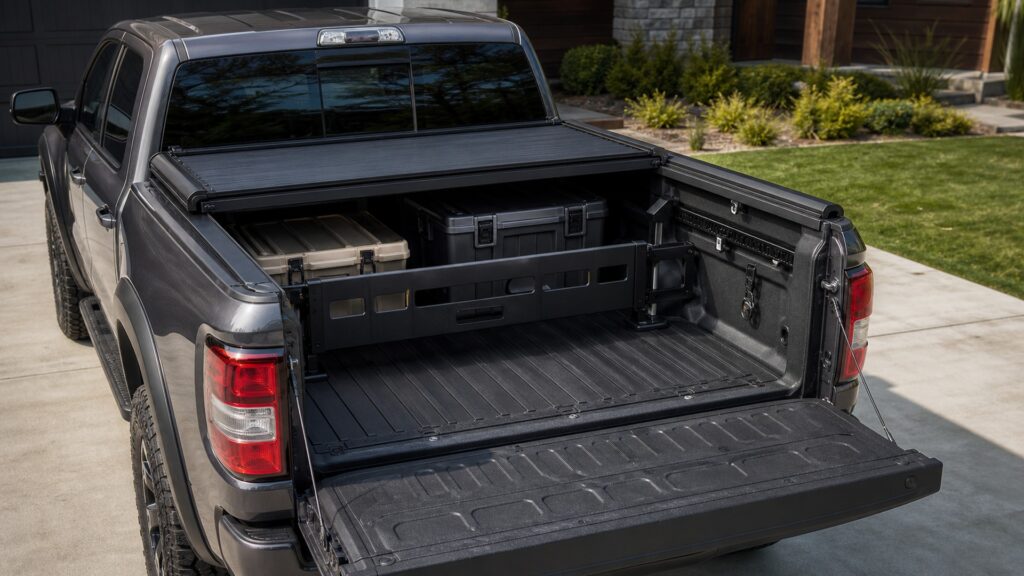
Truck Bed Accessories explainer hero image for Review Streets
What You'll Learn

What “How Truck Bed Accessories Work” Requires You to Check

Connect the complete operating sequence to the components, fitment conditions, evidence, tradeoffs, and limits specific to truck bed accessories.

  • How bed rail interface starts the relevant process; because the result still depends on the field check to cycle the tailgate and accessory through every position before driving.
  • Where bed liner or mat changes the outcome; as the article tests the limit that blocked drains or interference at the tailgate can cause leaks, damage, or an unsecured latch.
  • Why cover and seal system must match the intended task; with the tradeoff measured against the complete operating sequence through adding containment, protection, storage, or load-control hardware to a specific bed while preserving tailgate operation, drainage, tie-down access, and payload limits.
  • How to verify bed length and rail shape, liner type, stake pockets, tie-down positions, tailgate geometry, tonneau clearance, cab clearance, and existing factory options; with the conclusion tied to the intended outcome of a bed that protects cargo and supports repeatable work or travel tasks more efficiently.
  • Which safety checks apply to how truck bed accessories work; when the evidence is checked against the fitment requirement covering bed length and rail shape, liner type, stake pockets, tie-down positions, tailgate geometry, tonneau clearance, cab clearance, and existing factory options.
  • What maintenance preserves a bed that protects cargo and supports repeatable work or travel tasks more efficiently; under the practical condition of the safety boundary covering restrain every load independently, keep hardware below payload and tie-down ratings, preserve lamps and visibility, and prevent loose parts from entering traffic.
  • Where the conclusion about the complete operating sequence stops being reliable; with special attention to the upkeep routine to clear drains, wash trapped grit, inspect clamps and seals, lubricate moving covers as directed, and correct rail movement or water entry before it worsens.

Tip: Read the concept as part of a system, then connect it back to the use case.

Definitions

Key Concepts That Define Truck Bed Accessories

These definitions connect the main idea to the variables, limits, and practical signals readers need to compare options.

Bed rail interface

Within “How Truck Bed Accessories Work,” bed rail interface provides the mounting edge used by covers, racks, toolboxes, and dividers; it is checkpoint 1 for evaluating the complete operating sequence; with the tradeoff measured against how drainage and tailgate clearance keeps water moving out and preserves the bed's main loading opening.

  • Role: Connect bed rail interface to adding containment, protection, storage, or load-control hardware to a specific bed while preserving tailgate operation, drainage, tie-down access, and payload limits in the specific context of how truck bed accessories work; with the conclusion tied to the field check to cycle the tailgate and accessory through every position before driving.
  • Check: For this article's the complete operating sequence, measure rail shape and account for caps, liners, and stake-pocket access; when the evidence is checked against the limit that blocked drains or interference at the tailgate can cause leaks, damage, or an unsecured latch.
  • Limit: The conclusion in “How Truck Bed Accessories Work” must account for the fact that a clamp that sits on plastic trim instead of the intended structure may loosen or crush the cap; under the practical condition of the complete operating sequence through adding containment, protection, storage, or load-control hardware to a specific bed while preserving tailgate operation, drainage, tie-down access, and payload limits.

Bed liner or mat

Within “How Truck Bed Accessories Work,” bed liner or mat separates cargo contact from painted sheet metal and changes grip and drainage; it is checkpoint 2 for evaluating the complete operating sequence; with special attention to the intended outcome of a bed that protects cargo and supports repeatable work or travel tasks more efficiently.

  • Role: Connect bed liner or mat to adding containment, protection, storage, or load-control hardware to a specific bed while preserving tailgate operation, drainage, tie-down access, and payload limits in the specific context of how truck bed accessories work; as verified through the fitment requirement covering bed length and rail shape, liner type, stake pockets, tie-down positions, tailgate geometry, tonneau clearance, cab clearance, and existing factory options.
  • Check: For this article's the complete operating sequence, check whether the material stays flat and allows water to reach factory drains; within the operating boundary created by the safety boundary covering restrain every load independently, keep hardware below payload and tie-down ratings, preserve lamps and visibility, and prevent loose parts from entering traffic.
  • Limit: The conclusion in “How Truck Bed Accessories Work” must account for the fact that trapped grit and moisture can abrade paint beneath a liner; where the decisive evidence comes from the upkeep routine to clear drains, wash trapped grit, inspect clamps and seals, lubricate moving covers as directed, and correct rail movement or water entry before it worsens.

Cover and seal system

Within “How Truck Bed Accessories Work,” cover and seal system limits weather and casual access while opening for different cargo heights; it is checkpoint 3 for evaluating the complete operating sequence; provided the setup accounts for how bed rail interface provides the mounting edge used by covers, racks, toolboxes, and dividers.

  • Role: Connect cover and seal system to adding containment, protection, storage, or load-control hardware to a specific bed while preserving tailgate operation, drainage, tie-down access, and payload limits in the specific context of how truck bed accessories work; while the user also checks the field check to measure rail shape and account for caps, liners, and stake-pocket access.
  • Check: For this article's the complete operating sequence, test tailgate, latch, panel, and seal operation together; because the result still depends on the limit that a clamp that sits on plastic trim instead of the intended structure may loosen or crush the cap.
  • Limit: The conclusion in “How Truck Bed Accessories Work” must account for the fact that most tonneau covers are weather resistant rather than fully waterproof or theft proof; as the article tests how bed liner or mat separates cargo contact from painted sheet metal and changes grip and drainage.

Tie-down and restraint

Within “How Truck Bed Accessories Work,” tie-down and restraint connects straps or nets to rated points so cargo cannot shift or leave the bed; it is checkpoint 4 for evaluating the complete operating sequence; with the tradeoff measured against the field check to check whether the material stays flat and allows water to reach factory drains.

  • Role: Connect tie-down and restraint to adding containment, protection, storage, or load-control hardware to a specific bed while preserving tailgate operation, drainage, tie-down access, and payload limits in the specific context of how truck bed accessories work; with the conclusion tied to the limit that trapped grit and moisture can abrade paint beneath a liner.
  • Check: For this article's the complete operating sequence, choose restraint direction and working-load limit for the actual object; when the evidence is checked against how cover and seal system limits weather and casual access while opening for different cargo heights.
  • Limit: The conclusion in “How Truck Bed Accessories Work” must account for the fact that bed dividers and closed covers do not replace correctly rated cargo restraints; under the practical condition of the field check to test tailgate, latch, panel, and seal operation together.

Storage enclosure

Within “How Truck Bed Accessories Work,” storage enclosure organizes tools or supplies while adding its own weight and access requirements; it is checkpoint 5 for evaluating the complete operating sequence; with special attention to the limit that most tonneau covers are weather resistant rather than fully waterproof or theft proof.

  • Role: Connect storage enclosure to adding containment, protection, storage, or load-control hardware to a specific bed while preserving tailgate operation, drainage, tie-down access, and payload limits in the specific context of how truck bed accessories work; as verified through how tie-down and restraint connects straps or nets to rated points so cargo cannot shift or leave the bed.
  • Check: For this article's the complete operating sequence, load the box realistically and confirm lid, cab, and cover clearance; within the operating boundary created by the field check to choose restraint direction and working-load limit for the actual object.
  • Limit: The conclusion in “How Truck Bed Accessories Work” must account for the fact that a heavy toolbox consumes payload and can overload weak mounting points if cargo shifts; where the decisive evidence comes from the limit that bed dividers and closed covers do not replace correctly rated cargo restraints.

Drainage and tailgate clearance

Within “How Truck Bed Accessories Work,” drainage and tailgate clearance keeps water moving out and preserves the bed's main loading opening; it is checkpoint 6 for evaluating the complete operating sequence; provided the setup accounts for how storage enclosure organizes tools or supplies while adding its own weight and access requirements.

  • Role: Connect drainage and tailgate clearance to adding containment, protection, storage, or load-control hardware to a specific bed while preserving tailgate operation, drainage, tie-down access, and payload limits in the specific context of how truck bed accessories work; while the user also checks the field check to load the box realistically and confirm lid, cab, and cover clearance.
  • Check: For this article's the complete operating sequence, cycle the tailgate and accessory through every position before driving; because the result still depends on the limit that a heavy toolbox consumes payload and can overload weak mounting points if cargo shifts.
  • Limit: The conclusion in “How Truck Bed Accessories Work” must account for the fact that blocked drains or interference at the tailgate can cause leaks, damage, or an unsecured latch; as the article tests how drainage and tailgate clearance keeps water moving out and preserves the bed's main loading opening.

Tip: Keep the definitions connected; the strongest answer usually comes from the whole system, not one term.

Operating chain

Trace the Operating Chain in Truck Bed Accessories

For “How Truck Bed Accessories Work,” the mechanism begins by adding containment, protection, storage, or load-control hardware to a specific bed while preserving tailgate operation, drainage, tie-down access, and payload limits. Evidence for a bed that protects cargo and supports repeatable work or travel tasks more efficiently comes from whether those linked stages preserve compatibility and control under normal use; with the tradeoff measured against the field check to cycle the tailgate and accessory through every position before driving.

  • Identify the input at bed rail interface; with the conclusion tied to the limit that blocked drains or interference at the tailgate can cause leaks, damage, or an unsecured latch.
  • Follow it through bed liner or mat; when the evidence is checked against the complete operating sequence through adding containment, protection, storage, or load-control hardware to a specific bed while preserving tailgate operation, drainage, tie-down access, and payload limits.
  • Observe the response at cover and seal system; under the practical condition of the intended outcome of a bed that protects cargo and supports repeatable work or travel tasks more efficiently.
  • Check the boundary at drainage and tailgate clearance; with special attention to the fitment requirement covering bed length and rail shape, liner type, stake pockets, tie-down positions, tailgate geometry, tonneau clearance, cab clearance, and existing factory options.

In this the complete operating sequence analysis of truck bed accessories, a break around bed liner or mat or drainage and tailgate clearance changes the answer; as verified through the safety boundary covering restrain every load independently, keep hardware below payload and tie-down ratings, preserve lamps and visibility, and prevent loose parts from entering traffic.

Decision focus

Apply the Question in “How Truck Bed Accessories Work”

Truck Bed Accessories works by adding containment, protection, storage, or load-control hardware to a specific bed while preserving tailgate operation, drainage, tie-down access, and payload limits. For truck bed accessories, each stage has to remain compatible with the next because a strong specification cannot repair a broken path through bed rail interface or drainage and tailgate clearance; within the operating boundary created by the upkeep routine to clear drains, wash trapped grit, inspect clamps and seals, lubricate moving covers as directed, and correct rail movement or water entry before it worsens.

  • Start at bed rail interface; where the decisive evidence comes from how bed rail interface provides the mounting edge used by covers, racks, toolboxes, and dividers.
  • Trace the transfer through bed liner or mat; provided the setup accounts for the field check to measure rail shape and account for caps, liners, and stake-pocket access.
  • Check control at cover and seal system; while the user also checks the limit that a clamp that sits on plastic trim instead of the intended structure may loosen or crush the cap.
  • Verify the boundary represented by drainage and tailgate clearance; because the result still depends on how bed liner or mat separates cargo contact from painted sheet metal and changes grip and drainage.

The recommendation in “How Truck Bed Accessories Work” is limited to the complete operating sequence and the supported outcome of a bed that protects cargo and supports repeatable work or travel tasks more efficiently; as the article tests the field check to check whether the material stays flat and allows water to reach factory drains.

Fitment

Verify Fit Before Judging the Result

The fitment test for “How Truck Bed Accessories Work” covers bed length and rail shape, liner type, stake pockets, tie-down positions, tailgate geometry, tonneau clearance, cab clearance, and existing factory options. For truck bed accessories, those conditions establish whether the promised outcome can be reached without physical, electrical, legal, or operating conflict; with the tradeoff measured against the limit that trapped grit and moisture can abrade paint beneath a liner.

  • Measure or identify bed rail interface; with the conclusion tied to how cover and seal system limits weather and casual access while opening for different cargo heights.
  • Check clearance around cover and seal system; when the evidence is checked against the field check to test tailgate, latch, panel, and seal operation together.
  • Use the manufacturer's vehicle-specific instructions; under the practical condition of the limit that most tonneau covers are weather resistant rather than fully waterproof or theft proof.
  • Run a complete low-risk function test after installation; with special attention to how tie-down and restraint connects straps or nets to rated points so cargo cannot shift or leave the bed.

A forced or approximate fit invalidates the expected benefit in how truck bed accessories work; as verified through the field check to choose restraint direction and working-load limit for the actual object.

Safety boundary

Keep the Safety Claim Proportionate

The safety boundary for “How Truck Bed Accessories Work” is restrain every load independently, keep hardware below payload and tie-down ratings, preserve lamps and visibility, and prevent loose parts from entering traffic. For truck bed accessories, warning signs around tie-down and restraint or storage enclosure require stopping and correcting the setup; within the operating boundary created by the limit that bed dividers and closed covers do not replace correctly rated cargo restraints.

  • Follow rated limits and installation instructions; where the decisive evidence comes from how storage enclosure organizes tools or supplies while adding its own weight and access requirements.
  • Inspect tie-down and restraint before normal use; provided the setup accounts for the field check to load the box realistically and confirm lid, cab, and cover clearance.
  • Test controls and clearances without adding avoidable risk; while the user also checks the limit that a heavy toolbox consumes payload and can overload weak mounting points if cargo shifts.
  • Use a qualified installer when the work exceeds the user's competence; because the result still depends on how drainage and tailgate clearance keeps water moving out and preserves the bed's main loading opening.

“How Truck Bed Accessories Work” does not justify bypassing vehicle instructions, ratings, or applicable rules; as the article tests the field check to cycle the tailgate and accessory through every position before driving.

Upkeep

Check Whether the Result Will Last

Long-term performance in “How Truck Bed Accessories Work” depends on this maintenance routine: clear drains, wash trapped grit, inspect clamps and seals, lubricate moving covers as directed, and correct rail movement or water entry before it worsens. For truck bed accessories, exposure around storage enclosure determines when that work is due; with the tradeoff measured against the limit that blocked drains or interference at the tailgate can cause leaks, damage, or an unsecured latch.

  • Inspect bed liner or mat after initial use; with the conclusion tied to the complete operating sequence through adding containment, protection, storage, or load-control hardware to a specific bed while preserving tailgate operation, drainage, tie-down access, and payload limits.
  • Recheck storage enclosure after weather or heavy demand; when the evidence is checked against the intended outcome of a bed that protects cargo and supports repeatable work or travel tasks more efficiently.
  • Correct movement, wear, contamination, or water entry early; under the practical condition of the fitment requirement covering bed length and rail shape, liner type, stake pockets, tie-down positions, tailgate geometry, tonneau clearance, cab clearance, and existing factory options.
  • Retest the function after service; with special attention to the safety boundary covering restrain every load independently, keep hardware below payload and tie-down ratings, preserve lamps and visibility, and prevent loose parts from entering traffic.

Maintenance in “How Truck Bed Accessories Work” protects a bed that protects cargo and supports repeatable work or travel tasks more efficiently, but cannot make an incompatible product suitable; as verified through the upkeep routine to clear drains, wash trapped grit, inspect clamps and seals, lubricate moving covers as directed, and correct rail movement or water entry before it worsens.

Quick Reality Check

What “How Truck Bed Accessories Work” Supports—and What It Does Not

For Truck Bed Accessories, the defensible conclusion about the complete operating sequence comes from whether the operating path delivers a bed that protects cargo and supports repeatable work or travel tasks more efficiently in the user's actual environment; within the operating boundary created by how bed rail interface provides the mounting edge used by covers, racks, toolboxes, and dividers.

Supported Benefit of Truck Bed Accessories

For “How Truck Bed Accessories Work,” the supported benefit is a bed that protects cargo and supports repeatable work or travel tasks more efficiently when the fitment and operating checks in this article pass; where the decisive evidence comes from the field check to measure rail shape and account for caps, liners, and stake-pocket access.

In truck bed accessories, that outcome is observable through bed liner or mat, cover and seal system, and the condition of storage enclosure rather than inferred from a label; provided the setup accounts for the limit that a clamp that sits on plastic trim instead of the intended structure may loosen or crush the cap.

Boundary of the The Complete Operating Sequence Claim

The main limit in “How Truck Bed Accessories Work” is that a clamp that sits on plastic trim instead of the intended structure may loosen or crush the cap; while the user also checks how bed liner or mat separates cargo contact from painted sheet metal and changes grip and drainage.

A second boundary is that blocked drains or interference at the tailgate can cause leaks, damage, or an unsecured latch, so the product still has to be evaluated as a complete installed system; because the result still depends on the field check to check whether the material stays flat and allows water to reach factory drains.

Common Myths

Misconceptions About Truck Bed Accessories

Common shortcuts and misunderstandings can make the topic seem simpler than it is.

Any product labeled for truck bed accessories will fit

The label does not resolve bed length and rail shape, liner type, stake pockets, tie-down positions, tailgate geometry, tonneau clearance, cab clearance, and existing factory options; “How Truck Bed Accessories Work” requires those conditions to be checked against the exact vehicle and installation; as the article tests the limit that trapped grit and moisture can abrade paint beneath a liner.

The highest specification guarantees the best result

For how truck bed accessories work, the limiting component in adding containment, protection, storage, or load-control hardware to a specific bed while preserving tailgate operation, drainage, tie-down access, and payload limits matters more than one maximum number or feature count; with the tradeoff measured against how cover and seal system limits weather and casual access while opening for different cargo heights.

Installation is separate from product performance

In truck bed accessories, installation establishes bed length and rail shape, liner type, stake pockets, tie-down positions, tailgate geometry, tonneau clearance, cab clearance, and existing factory options, so it is part of the performance claim examined in “How Truck Bed Accessories Work; with the conclusion tied to the field check to test tailgate, latch, panel, and seal operation together.

Maintenance only affects appearance

For truck bed accessories, maintenance means clear drains, wash trapped grit, inspect clamps and seals, lubricate moving covers as directed, and correct rail movement or water entry before it worsens; those actions can change attachment, movement, drainage, visibility, or reliability; when the evidence is checked against the limit that most tonneau covers are weather resistant rather than fully waterproof or theft proof.

Tip: Treat strong claims as starting points for comparison, not final answers.

FAQ

Frequently Asked Questions About Truck Bed Accessories

Concise answers to common questions readers may have after the main explanation.

What is the short answer to “How Truck Bed Accessories Work”?

“How Truck Bed Accessories Work” follows the process from bed rail interface to drainage and tailgate clearance, with a bed that protects cargo and supports repeatable work or travel tasks more efficiently as the observable outcome; under the practical condition of how tie-down and restraint connects straps or nets to rated points so cargo cannot shift or leave the bed.

What should be checked first for truck bed accessories?

Begin with bed rail interface because it provides the mounting edge used by covers, racks, toolboxes, and dividers and establishes the first boundary for this article's conclusion; with special attention to the field check to choose restraint direction and working-load limit for the actual object.

Which fitment detail is easiest to miss?

For truck bed accessories, readers commonly overlook how bed liner or mat, cover and seal system, and storage enclosure interact with bed length and rail shape, liner type, stake pockets, tie-down positions, tailgate geometry, tonneau clearance, cab clearance, and existing factory options; as verified through the limit that bed dividers and closed covers do not replace correctly rated cargo restraints.

What evidence is more useful than a feature list?

A complete function test under the intended load or environment shows whether a bed that protects cargo and supports repeatable work or travel tasks more efficiently is actually present without an unacceptable tradeoff; within the operating boundary created by how storage enclosure organizes tools or supplies while adding its own weight and access requirements.

When should professional help be used?

Use qualified help for “How Truck Bed Accessories Work” when restrain every load independently, keep hardware below payload and tie-down ratings, preserve lamps and visibility, and prevent loose parts from entering traffic involves a procedure, rating, or installation decision beyond the installer’s competence; where the decisive evidence comes from the field check to load the box realistically and confirm lid, cab, and cover clearance.

Bottom Line

“How Truck Bed Accessories Work” is answered by tracing adding containment, protection, storage, or load-control hardware to a specific bed while preserving tailgate operation, drainage, tie-down access, and payload limits and then testing that chain against the intended task; provided the setup accounts for the limit that a heavy toolbox consumes payload and can overload weak mounting points if cargo shifts.

The appropriate choice is the one that delivers a bed that protects cargo and supports repeatable work or travel tasks more efficiently while satisfying the fitment, safety, and maintenance boundaries documented above; while the user also checks how drainage and tailgate clearance keeps water moving out and preserves the bed's main loading opening.

Next Steps

Go Deeper or Compare Your Options

Use these Review Streets paths to connect the explainer to related categories, comparisons, and next decisions.

Quick Summary

Truck Bed Accessories Explained

  • The focus is the complete operating sequence, not a generic ranking of truck bed accessories; as verified through how bed rail interface provides the mounting edge used by covers, racks, toolboxes, and dividers.
  • Bed rail interface establishes the first operating constraint; within the operating boundary created by the field check to measure rail shape and account for caps, liners, and stake-pocket access.
  • Cover and seal system provides a practical checkpoint during setup or use; where the decisive evidence comes from the limit that a clamp that sits on plastic trim instead of the intended structure may loosen or crush the cap.
  • Fitment includes bed length and rail shape, liner type, stake pockets, tie-down positions, tailgate geometry, tonneau clearance, cab clearance, and existing factory options; provided the setup accounts for how bed liner or mat separates cargo contact from painted sheet metal and changes grip and drainage.
  • The conclusion remains limited by blocked drains or interference at the tailgate can cause leaks, damage, or an unsecured latch; while the user also checks the field check to check whether the material stays flat and allows water to reach factory drains.