Operating chain
Trace the Operating Chain in Truck Bed Accessories
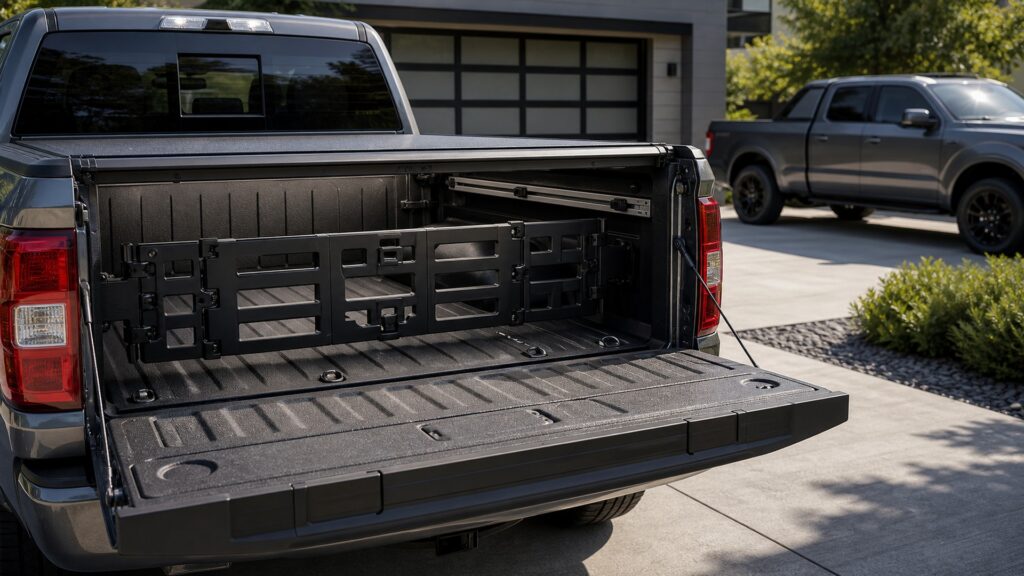
For “What Makes Truck Bed Accessories Different from Body Protection,” the mechanism begins by adding containment, protection, storage, or load-control hardware to a specific bed while preserving tailgate operation, drainage, tie-down access, and payload limits. Evidence for a bed that protects cargo and supports repeatable work or travel tasks more efficiently comes from whether those linked stages preserve compatibility and control under normal use; when the evidence is checked against the intended outcome of a bed that protects cargo and supports repeatable work or travel tasks more efficiently.
- Identify the input at bed rail interface; under the practical condition of the fitment requirement covering bed length and rail shape, liner type, stake pockets, tie-down positions, tailgate geometry, tonneau clearance, cab clearance, and existing factory options.
- Follow it through bed liner or mat; with special attention to the safety boundary covering restrain every load independently, keep hardware below payload and tie-down ratings, preserve lamps and visibility, and prevent loose parts from entering traffic.
- Observe the response at cover and seal system; as verified through the upkeep routine to clear drains, wash trapped grit, inspect clamps and seals, lubricate moving covers as directed, and correct rail movement or water entry before it worsens.
- Check the boundary at drainage and tailgate clearance; within the operating boundary created by how bed rail interface provides the mounting edge used by covers, racks, toolboxes, and dividers.
In this the functional contrast with Body Protection analysis of truck bed accessories, a break around bed liner or mat or drainage and tailgate clearance changes the answer; where the decisive evidence comes from the field check to measure rail shape and account for caps, liners, and stake-pocket access.
Decision focus
Apply the Question in “What Makes Truck Bed Accessories Different from Body Protection”
The useful distinction in “What Makes Truck Bed Accessories Different from Body Protection” is not that Truck Bed Accessories is universally better than Body Protection; it is whether the reader needs a bed that protects cargo and supports repeatable work or travel tasks more efficiently. For truck bed accessories, compare each option's job and the installation required to preserve adding containment, protection, storage, or load-control hardware to a specific bed while preserving tailgate operation, drainage, tie-down access, and payload limits; provided the setup accounts for the limit that a clamp that sits on plastic trim instead of the intended structure may loosen or crush the cap.
- Name the task assigned to Truck Bed Accessories; while the user also checks how bed liner or mat separates cargo contact from painted sheet metal and changes grip and drainage.
- Name the separate task assigned to Body Protection; because the result still depends on the field check to check whether the material stays flat and allows water to reach factory drains.
- Compare installation and operating constraints; as the article tests the limit that trapped grit and moisture can abrade paint beneath a liner.
- Choose only after the required outcome is explicit; with the tradeoff measured against how cover and seal system limits weather and casual access while opening for different cargo heights.
The recommendation in “What Makes Truck Bed Accessories Different from Body Protection” is limited to the functional contrast with Body Protection and the supported outcome of a bed that protects cargo and supports repeatable work or travel tasks more efficiently; with the conclusion tied to the field check to test tailgate, latch, panel, and seal operation together.
Fitment
Verify Fit Before Judging the Result
The fitment test for “What Makes Truck Bed Accessories Different from Body Protection” covers bed length and rail shape, liner type, stake pockets, tie-down positions, tailgate geometry, tonneau clearance, cab clearance, and existing factory options. For truck bed accessories, those conditions establish whether the promised outcome can be reached without physical, electrical, legal, or operating conflict; when the evidence is checked against the limit that most tonneau covers are weather resistant rather than fully waterproof or theft proof.
- Measure or identify bed rail interface; under the practical condition of how tie-down and restraint connects straps or nets to rated points so cargo cannot shift or leave the bed.
- Check clearance around cover and seal system; with special attention to the field check to choose restraint direction and working-load limit for the actual object.
- Use the manufacturer's vehicle-specific instructions; as verified through the limit that bed dividers and closed covers do not replace correctly rated cargo restraints.
- Run a complete low-risk function test after installation; within the operating boundary created by how storage enclosure organizes tools or supplies while adding its own weight and access requirements.
A forced or approximate fit invalidates the expected benefit in what makes truck bed accessories different from body protection; where the decisive evidence comes from the field check to load the box realistically and confirm lid, cab, and cover clearance.
Safety boundary
Keep the Safety Claim Proportionate
The safety boundary for “What Makes Truck Bed Accessories Different from Body Protection” is restrain every load independently, keep hardware below payload and tie-down ratings, preserve lamps and visibility, and prevent loose parts from entering traffic. For truck bed accessories, warning signs around tie-down and restraint or storage enclosure require stopping and correcting the setup; provided the setup accounts for the limit that a heavy toolbox consumes payload and can overload weak mounting points if cargo shifts.
- Follow rated limits and installation instructions; while the user also checks how drainage and tailgate clearance keeps water moving out and preserves the bed's main loading opening.
- Inspect tie-down and restraint before normal use; because the result still depends on the field check to cycle the tailgate and accessory through every position before driving.
- Test controls and clearances without adding avoidable risk; as the article tests the limit that blocked drains or interference at the tailgate can cause leaks, damage, or an unsecured latch.
- Use a qualified installer when the work exceeds the user's competence; with the tradeoff measured against the alternative's separate outcome of less cosmetic damage from road debris, loading contact, brush, and routine exposure.
“What Makes Truck Bed Accessories Different from Body Protection” does not justify bypassing vehicle instructions, ratings, or applicable rules; with the conclusion tied to the alternative mechanism of placing impact, abrasion, or contamination barriers at vulnerable painted and lower-body surfaces while preserving drainage, panel movement, sensors, and service access.
Upkeep
Check Whether the Result Will Last
Long-term performance in “What Makes Truck Bed Accessories Different from Body Protection” depends on this maintenance routine: clear drains, wash trapped grit, inspect clamps and seals, lubricate moving covers as directed, and correct rail movement or water entry before it worsens. For truck bed accessories, exposure around storage enclosure determines when that work is due; when the evidence is checked against the alternative boundary that film can stain, lift, or become visible when installation and edge preparation are poor.
- Inspect bed liner or mat after initial use; under the practical condition of the functional contrast with Body Protection through adding containment, protection, storage, or load-control hardware to a specific bed while preserving tailgate operation, drainage, tie-down access, and payload limits.
- Recheck storage enclosure after weather or heavy demand; with special attention to the intended outcome of a bed that protects cargo and supports repeatable work or travel tasks more efficiently.
- Correct movement, wear, contamination, or water entry early; as verified through the fitment requirement covering bed length and rail shape, liner type, stake pockets, tie-down positions, tailgate geometry, tonneau clearance, cab clearance, and existing factory options.
- Retest the function after service; within the operating boundary created by the safety boundary covering restrain every load independently, keep hardware below payload and tie-down ratings, preserve lamps and visibility, and prevent loose parts from entering traffic.
Maintenance in “What Makes Truck Bed Accessories Different from Body Protection” protects a bed that protects cargo and supports repeatable work or travel tasks more efficiently, but cannot make an incompatible product suitable; where the decisive evidence comes from the upkeep routine to clear drains, wash trapped grit, inspect clamps and seals, lubricate moving covers as directed, and correct rail movement or water entry before it worsens.