How Work Trucks Work

A work truck combines a road vehicle with the equipment needed to carry out a job. The chassis moves and supports the load; the body organizes tools or materials; and, on some trucks, a separate power system runs a crane, dump hoist, compressor, or liftgate. A pickup carrying hand tools and a chassis cab fitted with a service body can both be work trucks, even though their equipment differs.

The important distinction is between carrying equipment and operating it. A truck may have enough capacity to transport a crane but still need a particular setup before the crane can lift. Understanding those two states explains why weight ratings, controls, support, and stowage all matter.

By: Review Streets Research Lab
Updated: October 6, 2026
Explainer · 8-12 min read
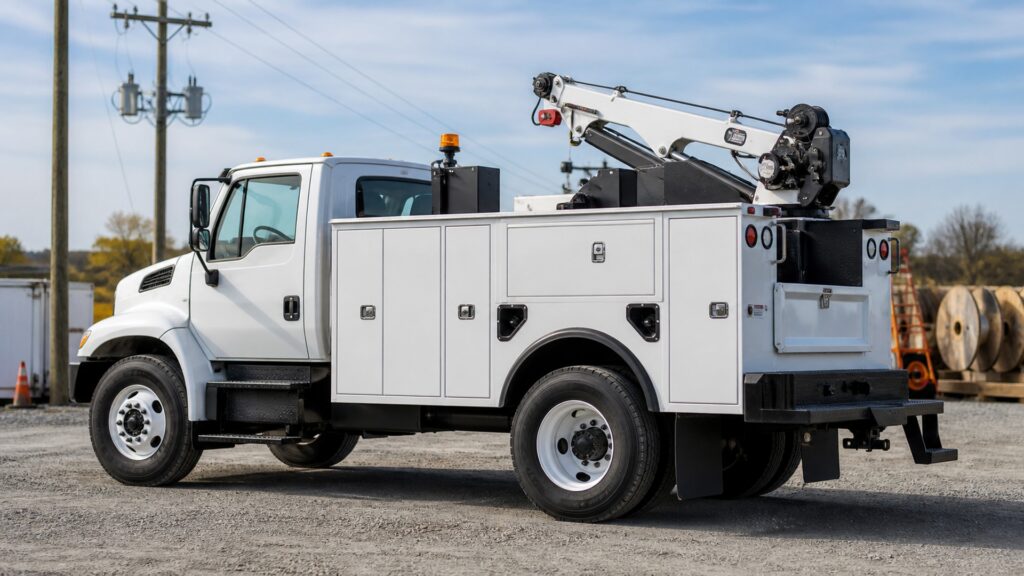
work trucks explainer hero image for Review Streets
What You'll Learn

From Road Vehicle to Working Equipment

Follow the load and the power through a truck built for field work.

  • What the chassis contributes to carrying and controlling a load
  • How service bodies, flatbeds, and dump bodies serve different jobs
  • How hydraulic and electrical equipment receives power
  • Why lifting capacity and road payload are separate limits
  • What changes between arrival, working, and departure

Tip: Describe the heaviest typical job and the equipment it needs before comparing truck configurations.

Definitions

Six Parts of a Working Truck

These terms separate the road vehicle from the equipment it carries and powers.

Chassis

The chassis is the structural and running foundation supporting the cab, body, and load.

  • Example: a cab-and-chassis vehicle fitted with a utility body
  • Check: the exact configuration and its ratings
  • Limit: a similar cab does not mean identical capacity

Vocational body

A vocational body is the load-carrying or storage structure selected for a particular trade.

  • Example: side compartments for a field-service technician
  • Check: tool access, usable dimensions, and installed weight
  • Limit: more storage can encourage carrying more weight

Working load

The working load is what the truck actually carries for its assignment, including people, tools, and materials.

  • Example: crew members, replacement parts, and a portable welder
  • Check: the completed truck at representative operating weight
  • Limit: available space is not a weight rating

Power takeoff

A power takeoff, or PTO, transfers mechanical power from a compatible vehicle drivetrain to auxiliary equipment.

  • Example: a transmission-driven hydraulic pump on a suitably equipped truck
  • Check: the specified engagement conditions and equipment compatibility
  • Limit: many work trucks have no PTO

Hydraulic circuit

A hydraulic circuit uses pressurized fluid to transmit power to an actuator or motor.

  • Example: a pump supplying a cylinder that raises a dump body
  • Check: the equipment instructions and condition of hoses and connections
  • Limit: pressure and lifting capability are equipment-specific

Operating envelope

The operating envelope is the permitted range of load, position, and conditions for a piece of equipment.

  • Example: a crane load chart relating allowed load to reach
  • Check: the chart and setup requirements for that exact installation
  • Limit: a maximum headline lift rating does not apply at every reach

Tip: Keep vehicle weight ratings and equipment operating limits in separate parts of the truck record.

Road vehicle

The Chassis Carries the Finished Truck

Bodywork, permanent equipment, fuel, crew, and cargo all travel on the same chassis. The engine or traction motor supplies motion, while the driveline delivers torque to the wheels. Suspension supports the load and allows wheel movement; brakes dissipate energy when the truck slows. Adding a body changes the mass these systems must handle, even before the first tool goes into a compartment.

  • Account for permanent equipment before calculating room for cargo.
  • Check the completed vehicle and individual axle loads.
  • Include trailer tongue or pin load when it applies.

Ford's chassis-cab towing guidance specifically accounts for body weight and added passengers and cargo. Use the ratings for the actual completed truck, not a maximum advertised for a different configuration.

Reference: Ford chassis-cab weight and towing guidance.

Body choice

The Body Determines How the Crew Reaches the Load

A service body puts small tools and parts in compartments that can be reached from the side. A flatbed provides an open deck for bulky material but needs suitable restraint and weather planning. A dump body adds a tipping mechanism for unloading loose material. These choices reorganize the work itself: a technician may benefit more from accessible parts than from an empty deck with greater volume.

  • List the items retrieved repeatedly during a job.
  • Check access with the truck parked in a realistic space.
  • Allow for securing equipment during travel.

For example, a plumbing service truck needs organized fittings and tools; a landscaping truck carrying loose mulch may need a different unloading method.

Equipment power

Auxiliary Power Does a Different Job from Propulsion

Some equipment takes power through a PTO and pump; other equipment uses an electric motor, batteries, or an independent engine. In a hydraulic hoist, a pump moves fluid and a valve directs it to a cylinder that turns fluid power into movement. The vehicle engine running does not by itself mean every attachment is ready to operate: engagement, control, and interlock conditions depend on the installation.

  • Identify each attachment's power source.
  • Use its specified controls and operating states.
  • Keep installation and service information with the truck.

Body-builder documentation supplies integration information such as electrical schematics and frame dimensions. It complements the operating instructions supplied with the installed equipment.

Reference: GM body-builder manuals.

At the jobsite

Transport Capacity Is Different from Working Capacity

Road ratings describe how the loaded vehicle may travel. Equipment limits govern what it can do once positioned. A crane's permissible load can change with reach; a liftgate has its own load and placement limits. Ground conditions, support arrangements, overhead space, and people nearby also affect the setup. An attachment that was secured for travel must be put into its permitted working state before use.

  • Read the equipment-specific instructions and load chart.
  • Evaluate the site before deploying an attachment.
  • Keep people clear of the equipment's movement area.

Being below the truck's gross weight rating does not establish that a particular lift or dump operation is acceptable.

Daily sequence

A Service Call Ends Only When the Truck Is Ready to Travel

Consider a mobile repair truck arriving with tools, parts, and a small crane. The driver first positions it for the job; the operator then follows the crane's setup and lifting instructions. After the repair, the crew accounts for tools and replacement parts, secures the load, and returns attachments to their required travel positions. Driving away with equipment deployed is a different failure from carrying too much weight, so both need attention.

  • Check the intended load before departure.
  • Use the prescribed setup at the work location.
  • Inspect stowage, doors, restraints, and the area around the truck before leaving.

The truck delivers useful work when transport, equipment operation, and the return to travel are all accounted for.

Quick Reality Check

Carrying Tools or Operating a Mobile Machine

Both uses belong in the work-truck category, but they require different equipment.

A transport-focused truck

A tradesperson may need secure storage, convenient access, and capacity for parts.

A powered attachment adds little value if the crew never needs its function.

An equipment-focused truck

A hoist, crane, or compressor can let the crew perform work without separate machinery.

That capability brings installation requirements, operating limits, and another maintenance schedule.

Common Myths

Misconceptions About Work-Truck Capability

Separate the capacity to travel from the capacity to perform a job.

Every work truck uses hydraulics

Many simply carry people, tools, and materials. Hydraulic equipment is fitted only where the task calls for it.

A larger engine increases every weight rating

Power, braking, frame, axle, tire, and completed-vehicle limits are different constraints. Engine output alone does not change them.

The largest crane rating applies to every lift

The applicable load depends on the equipment chart and operating configuration, including reach.

Installed equipment leaves cargo capacity unchanged

Permanent equipment contributes to the truck's weight and changes what remains available for the job.

Tip: Treat the truck and each powered attachment as related systems with their own instructions.

FAQ

Questions About How Work Trucks Operate

Answers about bodies, power, and everyday use.

Is a pickup a work truck?

Yes. A pickup used to carry out a trade or service can be a work truck without a specialized body.

Does every truck need a PTO?

No. A PTO is one way to power auxiliary equipment. Some attachments use electrical or independent power, and many trucks carry no powered attachments.

Why weigh the completed truck?

A chassis specification cannot show the weight of every installed body, tool, or supply. Weighing a representative loaded configuration helps check actual total and axle loads.

Can one body serve several trades?

Sometimes. Compare the items carried, access needs, restraints, and equipment requirements rather than assuming that a shared body style means an identical job.

What should an operator receive at handover?

The completed configuration details and relevant vehicle, body, and equipment instructions, including operating limits and service requirements.

Bottom Line

A work truck carries a job to the site and may also supply the power and equipment to complete it.

Understand the chassis, body, load, and attachment controls together, while keeping road ratings separate from equipment operating limits.

Next Steps

Go Deeper or Compare Your Options

Use these Review Streets paths to compare related categories and practical next decisions.