Why Work Trucks Fitment Matters

Work-truck fitment is the compatibility of the chassis, vocational body, installed equipment, and the systems connecting them. A body may sit within the available length yet interfere with tanks, overload an axle, obstruct service access, or require electrical connections the chosen chassis does not provide. Correct fitment therefore goes beyond whether the mounting holes can be made to line up.

Treat the finished truck as one engineered configuration. Confirm the exact chassis and body dimensions, weight distribution, mounting requirements, moving clearances, and equipment interfaces before installation. A qualified upfitter uses the relevant manufacturer information to resolve conflicts rather than treating a similar-looking truck as proof of compatibility.

By: Review Streets Research Lab
Updated: October 6, 2026
Explainer · 8-12 min read
work trucks explainer hero image for Review Streets
What You'll Learn

Match the Chassis, Body, and Equipment Together

Understand the checks that turn a collection of parts into a compatible working truck.

  • Identify the exact chassis and intended body.
  • Use the correct dimensional references.
  • Assess the weight and position of installed equipment.
  • Preserve clearances and service access.
  • Verify power, controls, and completed-vehicle documentation.

Tip: Obtain compatibility confirmation for the completed specification before ordering the body and chassis separately.

Definitions

The Interfaces That Determine Work-Truck Fitment

Each interface needs its own application-specific check.

Cab-to-axle dimension

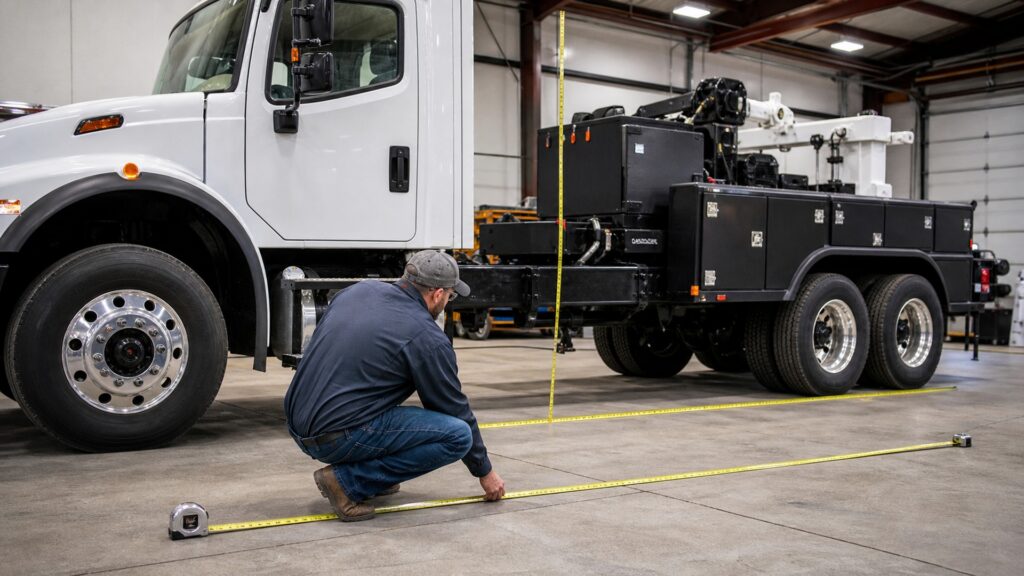
Cab-to-axle dimension is the distance from the rear of the cab to the rear axle centerline used in body selection.

  • Example: matching a service body to a specified chassis layout
  • Check: the body maker's dimensional requirements
  • Limit: nominal body length alone is not enough

Mounting arrangement

The mounting arrangement transfers forces between the body or equipment and the chassis.

  • Example: the specified body mounts and supporting structure
  • Check: approved hardware, locations, and procedures
  • Limit: a convenient frame hole is not necessarily an approved attachment

Weight distribution

Weight distribution is how the completed truck's weight is shared across its supporting axles.

  • Example: a heavy rear attachment changing the rear axle load
  • Check: the finished configuration with representative cargo
  • Limit: unused total capacity does not guarantee axle capacity

Clearance envelope

A clearance envelope is the space needed around a component for movement, heat, or operation.

  • Example: space around suspension travel or an exhaust component
  • Check: all required operating conditions
  • Limit: a stationary gap does not prove working clearance

Power interface

A power interface connects the vehicle or another source to task equipment.

  • Example: a specified electrical or hydraulic connection
  • Check: required output, protection, and duty
  • Limit: matching connectors do not prove system compatibility

Service access

Service access is the space and route needed to inspect, maintain, or remove components.

  • Example: reaching a service point after the body is installed
  • Check: the access needed for routine and major work
  • Limit: a tight installation can be functional yet difficult to maintain

Tip: Keep dimensions, load, mounting, movement, and system connections separate until each is verified.

Identification

Start with the Exact Chassis and Body Application

Record the model year, cab, wheelbase, axle configuration, powertrain, and relevant equipment. Then match the body maker's application requirements, including cab-to-axle dimensions. Fuel or other tanks and chassis components can occupy space the body needs. A used body transferred to a newer chassis needs a fresh compatibility assessment even if the external proportions appear similar.

  • Identify the complete chassis specification.
  • Use actual dimensional drawings and body data.
  • Check exclusions and component locations.

Knapheide's body-selection guidance identifies cab-to-axle measurement alongside ratings, wheelbase, and tank locations as compatibility considerations. Knapheide body and chassis fit guidance.

Weight

Place the Equipment Before Judging Remaining Capacity

The location of a crane, liftgate, compressor, or loaded compartment matters as well as its weight. An upfitter should evaluate the proposed body and equipment with the intended crew and cargo, including axle distribution. Do not assume that a lighter body automatically makes every arrangement acceptable. A different equipment position may create a different loading result on the same chassis.

  • Include the body and all permanent equipment.
  • Model the representative working load.
  • Verify total and individual axle limits.

Assess the finished truck against its applicable ratings; a headline payload number cannot validate a particular equipment layout. Ford weight-rating guidance.

Illustrative load check: a completed truck rated at 14,000 pounds weighs 11,600 pounds with its body, installed equipment, fuel, and crew aboard. That leaves 2,400 pounds before reaching the gross vehicle weight rating. Loading 1,800 pounds of parts brings the total to 13,400 pounds, leaving 600 pounds against that rating. The layout still needs a separate axle-load check: the rear axle can reach its limit before the whole truck reaches 14,000 pounds. These invented figures explain the calculation; they are not ratings for a particular model.

Structure

Mounting Must Follow the Relevant Engineering Instructions

Body mounts and equipment supports carry forces during travel and work. Their locations, fasteners, and any required supporting structure belong to a defined installation design. Frame drilling, welding, or alterations should follow the applicable manufacturer requirements and qualified engineering where needed. The fact that a modification is physically possible does not establish that it is acceptable.

  • Use the correct model-year body-builder information.
  • Confirm the specified mounting hardware and method.
  • Resolve structural alterations before installation.

GM body-builder resources include body and frame dimensions and other integration information; use the equivalent documents for the actual chassis. GM body-builder manuals.

Space

Check Movement, Heat, and Future Service

Inspect clearances around wheels, suspension, driveline components, exhaust, tanks, and the body. Include moving attachments, doors, and the space needed to reach service points. A hose or cable routed neatly while stationary may be exposed to heat, abrasion, or movement in use. These checks require the relevant installation criteria rather than an invented universal gap.

  • Check the required range of component movement.
  • Protect specified heat and routing clearances.
  • Keep inspection and maintenance access available.

Fitment should allow the truck to operate and be maintained without removing unrelated equipment for an ordinary service task.

Integration

Power and Controls Need a Documented Handover

Confirm equipment demand, connection provisions, circuit protection, control behavior, and any required interlocks with the responsible suppliers. Vehicle electronics and vocational equipment must function together in the permitted operating states. At handover, obtain the final equipment list, instructions, required labels or certification documents, and the prescribed commissioning results. Keep these with the truck so later service does not depend on guesswork.

  • Document the final installed configuration.
  • Demonstrate permitted operating states and stowage.
  • Retain service and installation information.

A completed installation is more than a mounted body: it includes a verified working system and enough documentation to support its continued use.

Quick Reality Check

Bolting On a Body Versus Completing a Compatible Truck

Physical attachment is only one part of fitment.

Unresolved Fitment Looks Like

The body length seems right, but axle loading, tanks, mounting instructions, or clearances are unconfirmed.

Equipment runs, but connection details, interlocks, or service access are undocumented.

Confirmed Fitment Includes

A body and equipment application matched to the exact chassis and assessed working load.

Specified mounts, clearances, interfaces, and a documented commissioning and handover process.

Common Myths

Misconceptions About Work-Truck Fitment

Similar dimensions do not make two builds interchangeable.

Matching body length proves compatibility

Cab-to-axle dimensions, chassis details, equipment, and ratings still need checking.

Unused total weight capacity makes any equipment position acceptable

Axle distribution and other installation requirements remain limiting factors.

A body can always move to a newer truck unchanged

A transfer requires assessment of the new chassis and the body's condition and application.

Tip: Request a documented answer for the actual configuration rather than relying on a past installation that looked similar.

FAQ

Questions About Work-Truck Fitment

Practical answers before a body or equipment installation.

Who should confirm compatibility?

A qualified upfitter working with the chassis, body, and equipment manufacturers' application information.

Is cab-to-axle the same as wheelbase?

No. Wheelbase is the distance between the front and rear axle centerlines. Cab-to-axle measures from the back of the cab to the rear axle centerline. A body supplier uses the latter dimension to relate its body layout to the cab and rear axle; wheelbase alone does not establish that fit.

Can an electrical connector prove equipment compatibility?

No. Output, protection, control requirements, and the intended operating duty also need confirmation.

What documents should remain with the truck?

The final equipment specification, relevant operating and service instructions, commissioning information, and required completed-vehicle documentation.

Bottom Line

Work-truck fitment succeeds when the chassis, body, load distribution, moving clearances, and equipment interfaces are compatible as a complete system.

Confirm the exact application before installation and retain the documentation needed to operate and maintain the finished truck.

Next Steps

Go Deeper or Compare Your Options

Use these Review Streets paths to compare related categories and practical next decisions.