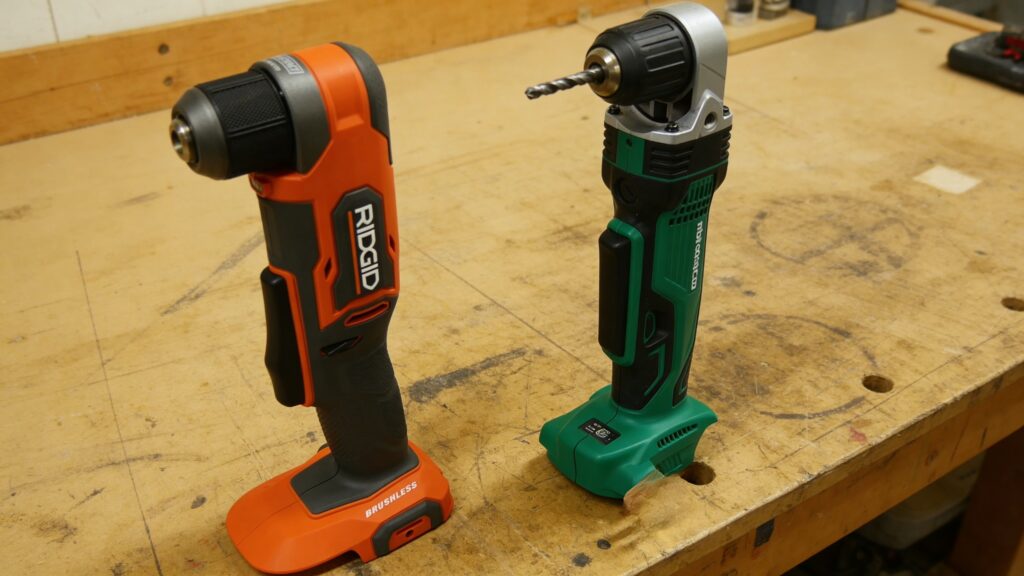
This head-to-head comparison examines keyed and keyless chuck right-angle drills, highlighting functional differences, performance tradeoffs, and real-world usability factors to inform practical tool selection decisions.

Head-to-head
A clean A/B view of what matters when drilling in tight cavities: chuck security vs speed of bit changes, control while starting holes off-angle, ergonomics in confined spaces, and the practical tradeoffs of buying into an 18V platform for right-angle work.
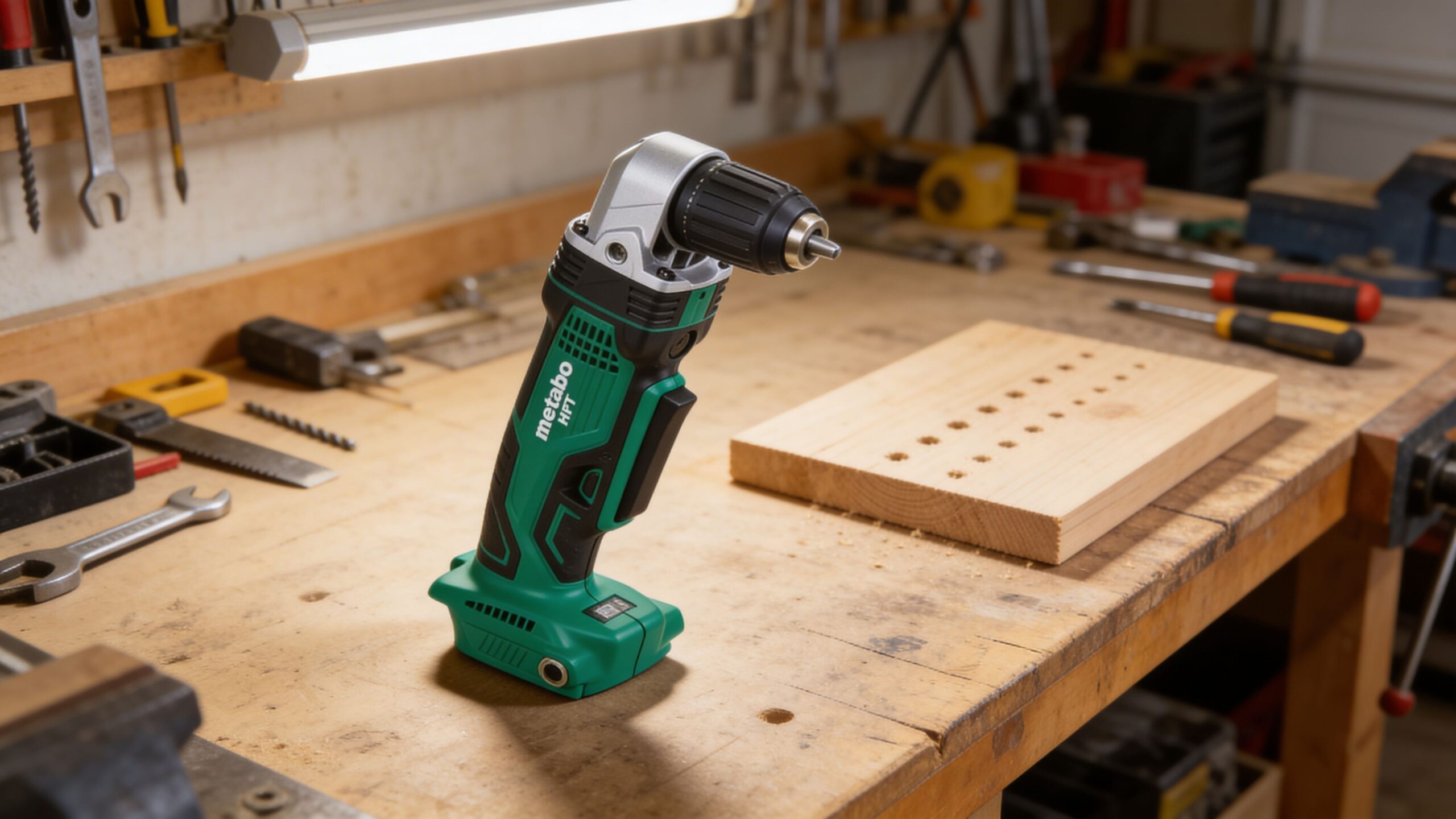
A work-ready right-angle drill that prioritizes steady boring and reliable bit holding when you’re leaning into studs, joists, and cabinet cavities where resets are slow and space is tight.
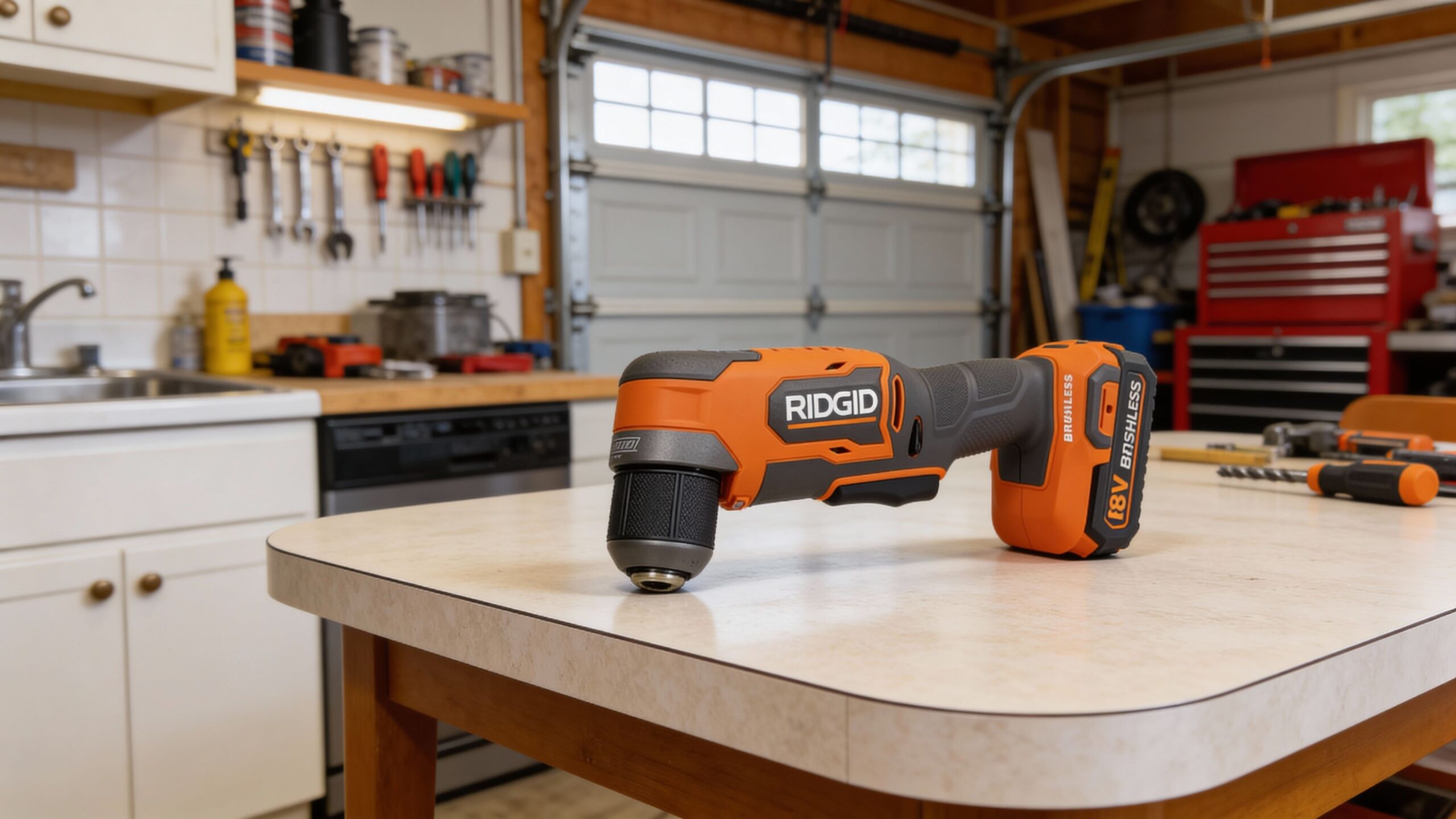
A practical right-angle option that emphasizes quick, tool-free changes and day-to-day usability—well suited to punch lists, installs, and stop-and-go drilling where time lost to a chuck key adds up.
Deep dive
In a right-angle drill, the deciding differences rarely show up in the marketing bullets. What changes outcomes is how stable the tool feels when the bit first bites, how confidently it keeps turning when resistance spikes inside a stud bay, and how much the chuck design supports (or slows) the way you actually work. This deep dive focuses on the practical tradeoffs between secure bit holding and faster bit changes, plus the everyday ownership considerations that matter once this tool becomes part of a kit.
Starting control in awkward angles: Right-angle drilling often begins off-axis—one hand guiding, the other trying to keep the head from walking. The Metabo HPT tends to suit situations where the priority is a more planted start and fewer interruptions mid-hole, while the RIDGID fits workflows where quick adjustments and frequent stop-and-go work are common. In practical terms, the better choice is the one that helps you start cleaner holes in tight bays without fighting the tool’s balance.
Chuck confidence vs workflow speed: Keyed vs keyless is less about “better” and more about what costs you time. When you’re boring larger holes, working in dense stock, or using accessories that are more likely to slip, a keyed-style approach rewards people who want maximum clamp confidence and fewer re-tightening moments. A keyless-style approach rewards people who change bits constantly—pilot, drive, step bit, hole saw arbor—where tool-free swaps prevent small delays from stacking up across a day.
Fatigue in tight spaces: In confined work, the tool that feels easiest isn’t always the lightest—it’s the one that lets you hold a stable line without over-gripping. If a drill’s balance encourages wrist strain or forces a cramped hand position, the cost shows up in slower, less precise starts and more “reset” moments. The RIDGID leans into convenience for short bursts and frequent repositioning, while the Metabo HPT leans into steadiness for longer boring sequences where you want fewer surprises.
Reliability signals and confidence over time: With right-angle drills, small issues become big issues because the work is already inconvenient—tight access, awkward leverage, and higher chance of bind-ups. The most important reliability signal is whether the drill inspires confidence to keep pushing without babying the trigger or constantly checking the chuck. If your work regularly includes resistance spikes (older framing, knots, or awkward hole paths), the tool that stays composed reduces rework and frustration even without chasing specs.
Ownership realities: Most people don’t buy a right-angle drill as a “one-and-done” tool. Batteries, chargers, and next-tool compatibility shape the real cost. Metabo HPT’s MultiVolt 18V approach can be appealing if you want flexibility as your kit grows, while RIDGID’s 18V lineup tends to make sense when you want practical coverage for common jobs without overcomplicating the ecosystem. The best value is the platform that fits what you’ll actually add next—not just the drill in isolation.
Where each one fits best: Choose Metabo HPT when your work emphasizes secure bit holding, steadier starts, and fewer mid-task interruptions in tight framing bays. Choose RIDGID when your day is defined by frequent bit changes, quick adjustments, and install-style tasks where tool-free convenience keeps the workflow moving. Both can handle real projects—the difference is whether your time is lost to chuck management or to resets when resistance shows up.
Methodology
Our evaluation focused on real-world drilling scenarios that highlight the practical differences between keyed and keyless chuck right-angle drills. Rather than relying on spec-sheet claims, each model was assessed in confined-space tasks that reflect how these tools are actually used inside framing, cabinetry, and mechanical bays.
Tasks: boring medium and larger-diameter holes in dimensional lumber, starting holes at awkward angles, repeated bit changes between pilot and driver work, and sustained drilling inside tight stud cavities to evaluate stability, chuck behavior, and fatigue over time.
What we scored: consistency under load, start-up control in confined spaces, chuck reliability during resistance spikes, ergonomics during stop-and-go use, and ownership factors such as battery platform flexibility and long-term kit expansion.
How results are interpreted: findings are assessed through a context-aware lens. The importance of secure bit retention versus quick bit changes, for example, shifts depending on whether the tool is used for sustained boring in dense material or frequent accessory swaps during install work.
What we ignored: isolated torque claims, marketing terminology, and features that do not consistently improve real-world control, workflow efficiency, or reliability inside tight working conditions.
FAQ
Verdict
In this matchup, the decision comes down to how you work in tight spaces: sustained boring with maximum bit security, or faster accessory changes that keep install tasks moving. Both drills are capable, but they prioritize different parts of the workflow.
Recommended for secure, sustained drilling
Metabo HPT 18V Right-Angle DrillA better fit when stability, confident bit retention, and composed performance under resistance matter most in framing bays and dense material.
Tip: If you already own batteries in one 18V ecosystem, staying within that platform can outweigh smaller differences in chuck style or workflow preference.
Navigate directly to the sections that clarify the real differences between these two 18V right-angle drills—workflow trade-offs, practical performance, and final buying guidance.
We prioritize reputable sellers, easy returns, and reliable availability.
Tip: If you’re already on one 18V platform, matching batteries and chargers typically matters more than small tool differences—especially for a specialty drill used in tight-space jobs.
Choose a retailer
Prices checked regularly. We may earn a commission at no cost to you.