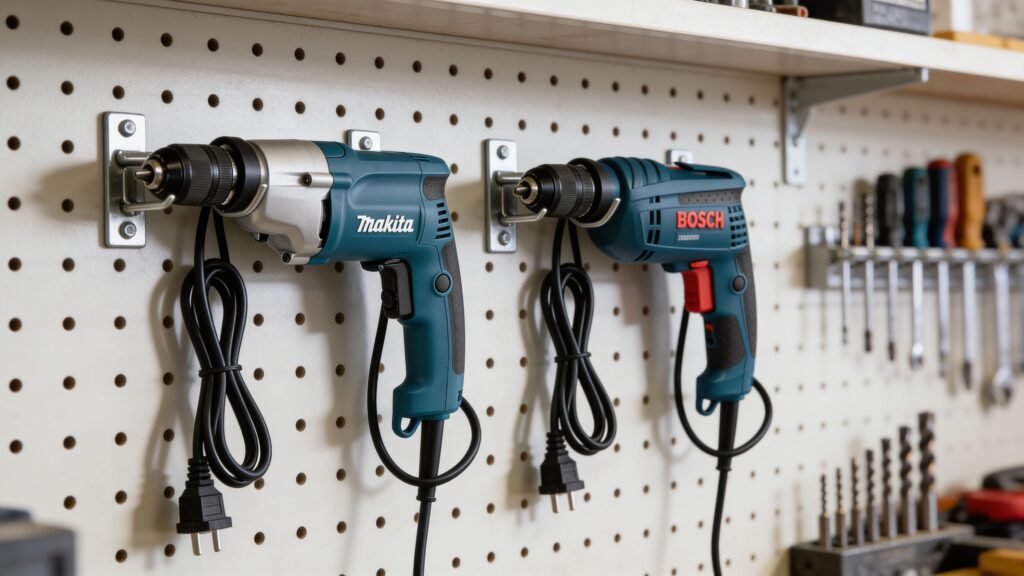
This head-to-head comparison examines the Makita DP4011 and Bosch 1005VSR corded drills, focusing on real-world performance, build quality, and practical tradeoffs to help you choose the right tool.

Reviews You Can Trust
Head-to-head
Makita DP4011 vs Bosch 1005VSR: Which Corded Drills Is Better?
A clean A/B view of what matters for corded drilling: steady power delivery, speed range for clean holes, feel and control on the trigger, durability for repeated use, and practical value for the work you actually do.
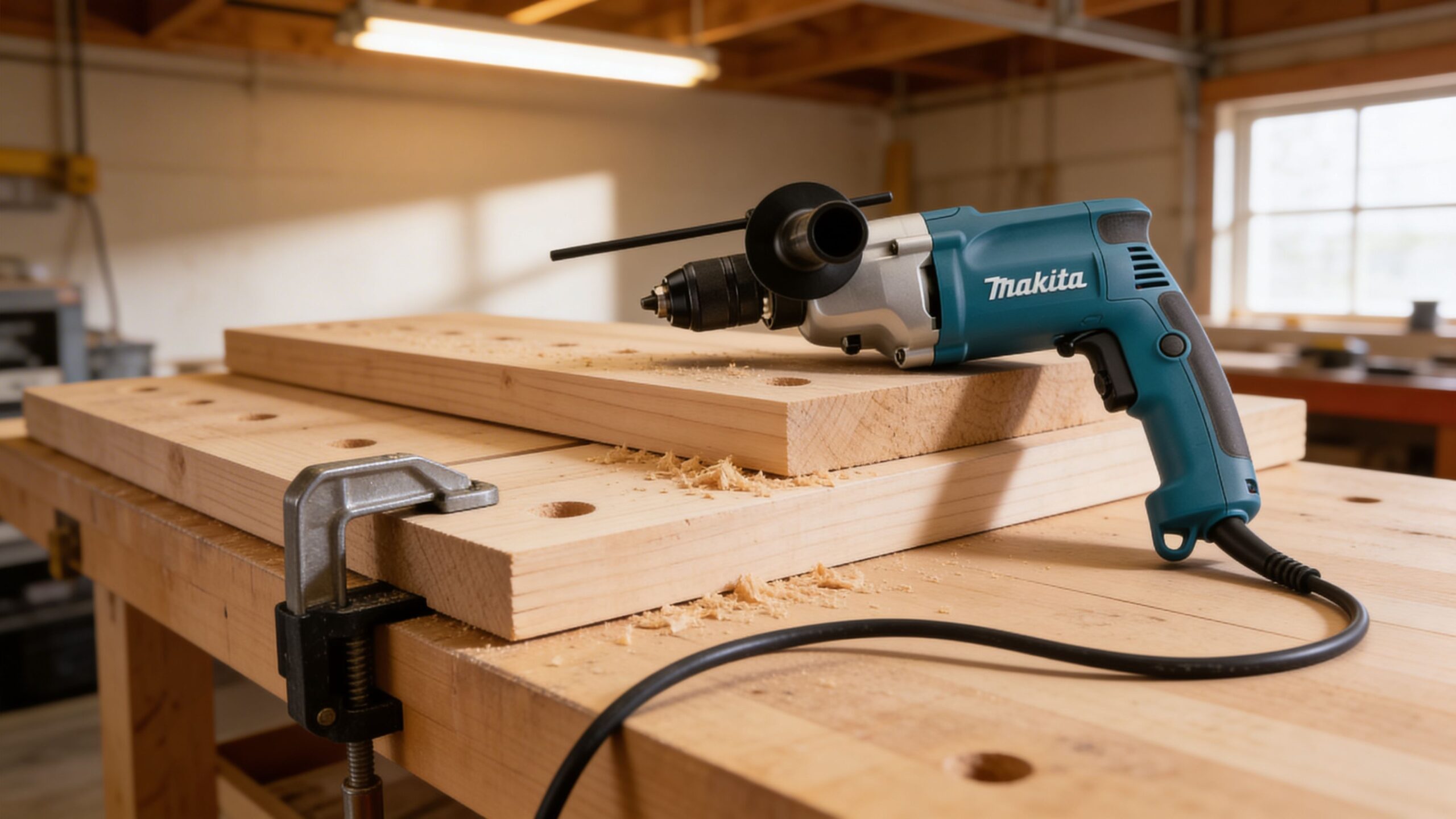
Makita DP4011 corded 1/2" drill
A smooth, higher-speed corded drill that feels purpose-built for clean holes in wood and light-to-moderate metal—ideal when you want consistent performance without managing batteries.
- Strong trigger control for accurate starts and tidy, centered holes
- Higher top speed helps when you’re drilling smaller bits in wood or metal
- Good pick for frequent bench work where consistency matters more than portability
VS
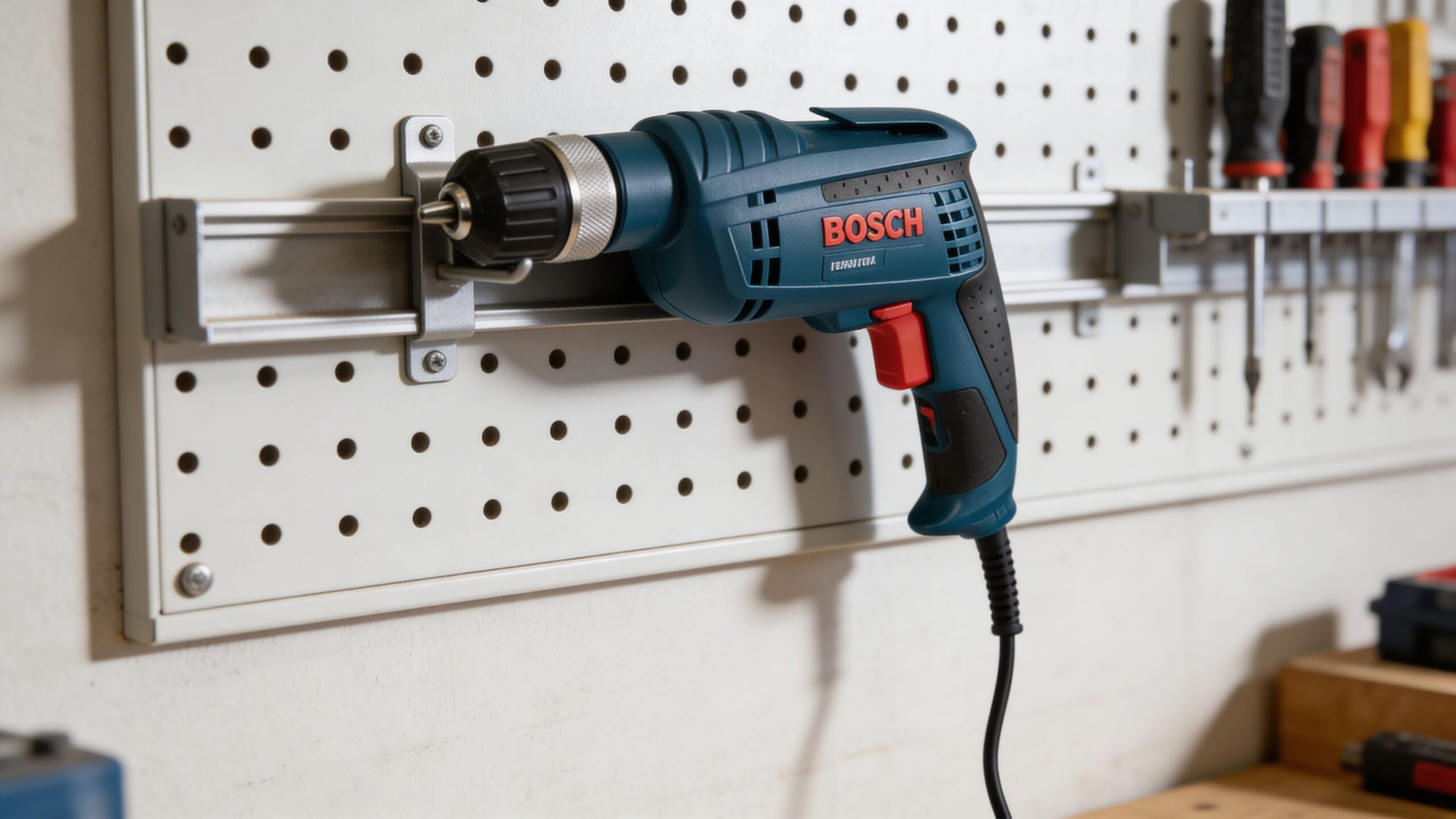
Bosch 1005VSR corded 1/2" drill
A straightforward, compact corded drill that covers everyday drilling and pilot holes well—especially appealing when you want a solid, no-fuss tool at a more budget-friendly price.
- Easy-to-live-with size for quick tasks, pilots, and routine holes
- Good everyday trigger control without overcomplicating the design
- Strong choice when you want corded reliability with a lower buy-in cost
Power under load
Steady, composed feel
Capable for routine work
Makita
Control & clutch consistency
Very good trigger finesse
Good, predictable control
Makita
Ergonomics (feel + fatigue)
Stable, slightly larger
Compact, easy handling
Bosch
Value (typical kit pricing)
Priced for refinement
Often the better deal
Bosch
Battery ecosystem depth
N/A (corded)
N/A (corded)
Tie
Real-world context
This comparison reflects a synthesis of professional reviews, manufacturer data, long-term user feedback, and use-case patterns to highlight how each drill typically performs in everyday projects.
Makita — Why people choose it
- Smoother, more “finished” feel for controlled drilling and cleaner results
- Higher-speed capability that suits frequent shop holes and smaller-bit work
- A strong fit when you want corded consistency and don’t need battery portability
Bosch — Why people choose it
- Practical everyday performance that handles common drilling tasks well
- Compact handling that stays comfortable for quick projects and light-duty repetition
- Often a smart buy when price matters and you still want a reputable, dependable tool
Verdict: Choose Makita DP4011 if your priority is a smoother, more controlled drilling experience with a speed range that supports clean shop work in wood and light metal. Choose Bosch 1005VSR if you want a straightforward, compact corded drill for general tasks and pilots, with stronger typical value for occasional-to-regular use.