
The Makita SP6000J1 track saw is designed for controlled, precise cutting, but its real value shows in how it performs across different materials and workflows. This review examines its plunge action, tracking stability, and consistency under load, highlighting where it excels and where tradeoffs may influence your decision.
Makita SP6000J1 Track Saw Review: Performance, Pros, and Cons
By: Review Streets Research Lab
Updated: April 2, 2026
Approx. 8–10 min read
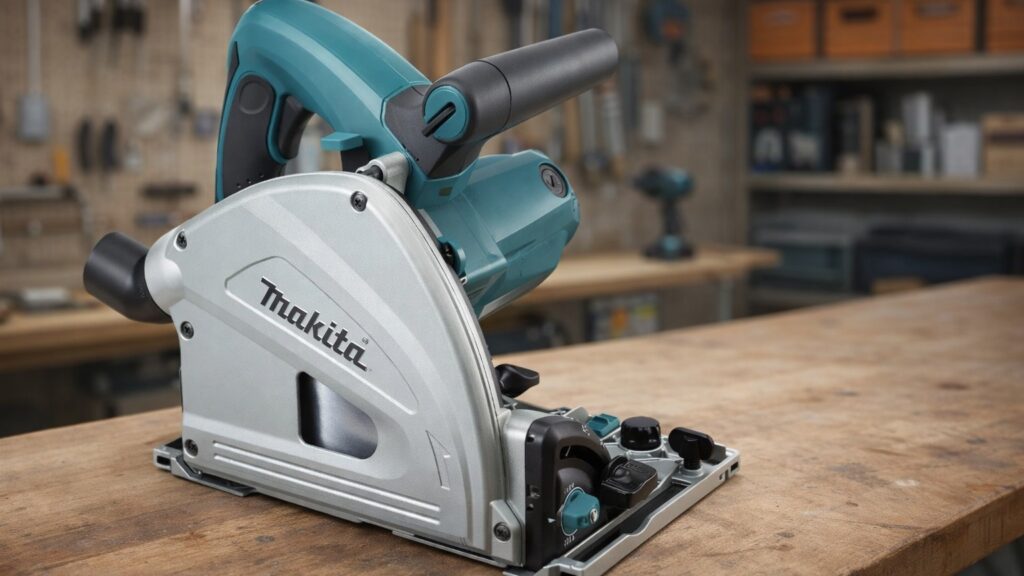
Quick Summary
The Makita SP6000J1 track saw delivers smooth, controlled cutting with a refined plunge feel and strong workflow confidence on sheet goods and precision trim work. It suits users who prioritize clean tracking, predictable handling, and repeatable results, though its overall value depends heavily on whether its rail-based system and project focus match how it will actually be used.
8.9
Score
Best for: Precision woodworking
Pros & Cons
Makita SP6000J1: what we liked (and what we didn’t)
A quick look at the biggest strengths and tradeoffs based on performance, handling, and everyday usability.
Pros
- Smooth Plunge: The saw enters cuts in a controlled, predictable way that supports cleaner starts and better confidence on finish work.
- Stable Tracking: It rides the rail with a planted feel that helps maintain straight, repeatable cuts across sheet goods and longer passes.
- Clean Results: Cut quality is consistently tidy when paired with the right setup, making it well suited to visible edges and precision work.
- Refined Handling: The overall feel is composed and easy to manage, which helps reduce correction during careful layout-driven cuts.
- Workflow Confidence: Once dialed in, the system feels dependable for repeat cuts and controlled material breakdown in shop-based tasks.
Cons
- System Commitment: Much of its appeal depends on working within a rail-based setup, which adds ownership complexity beyond the saw itself.
- Less Flexible: It is not the most convenient choice for quick rough cuts or tasks where setup speed matters more than precision.
- Learning Curve: Getting the most from it takes some familiarity with rail alignment, plunge technique, and repeatable setup habits.
- Space Demands: The saw and rail system are easier to appreciate in open work areas than in cramped spaces with limited support surfaces.
Specs
Makita SP6000J1 key specifications
These are the core specs and practical details most buyers compare across track saws for precision sheet goods and finish work.
| Spec | Makita SP6000J1 |
|---|---|
| Type | Corded plunge track saw |
| Platform | Makita guide rail system |
| Voltage | 120V corded |
| Speed | Variable speed: approx. 2,000–5,200 RPM |
| Chuck | Not applicable; blade arbor track saw design |
| Torque | Not typically published for this category |
| Length | Approx. 13.8" |
| Weight | Approx. 9.7 lbs; consistent since it is corded |
| Clutch settings | Not applicable; plunge, depth, and bevel adjustments instead |
| LED light | No integrated work light |
| Included | Saw, guide rail, blade, and case (kit configuration) |
| Best use | Precision sheet breakdown, cabinet panels, trim panels, and clean plunge cuts |
| Warranty | Makita limited warranty (varies by region/product) |
Performance
How the Makita SP6000J1 performs
We evaluated cut quality, plunge control, rail tracking, and overall day-to-day usability across common sheet goods, panel trimming, and precision woodworking tasks to understand how this track saw performs in real-world use.
Cut Quality
Produces clean, controlled cuts that feel well suited to visible edges and finish-oriented work.
Power Under Load
Stays composed through sheet goods and longer passes, with a steady feel that supports consistent feed control.
Control & Handling
Smooth plunge action and predictable rail movement make it easier to start accurately and stay on line.
Setup & Repeatability
Once dialed in, it supports repeat cuts with good confidence, though the rail-based workflow rewards careful setup.
Noise & Refinement
Operation feels reasonably controlled for the category, though it still carries the usual noise and workshop presence of a corded saw.
Overall Performance
A confident, precision-focused performer that stands out more for control and repeatability than raw aggressiveness.
Testing note: Performance observations are based on real-world cutting, plunge, and handling scenarios using common panel materials and repeat-use workflow impressions.
Build Quality
Build quality & durability
The Makita SP6000J1 feels thoughtfully built for precision-focused work. The housing feels rigid, the grip surfaces support secure handling, and the overall construction gives a stable, confidence-inspiring impression rather than an overly stripped-down or delicate feel.
Key contact points—plunge controls, bevel adjustments, and rail engagement surfaces—feel solid and deliberate in use. The interfaces give a reassuring sense of fit and finish, with the kind of controlled movement that supports repeatable alignment and reduces second-guessing during careful cuts.
In everyday handling, it presents as a tool meant to be moved, set down, and used regularly without feeling fussy. Heat, dust, and repeated setup work seem well within its comfort zone, and the overall build inspires reasonable long-term confidence when used in normal shop or jobsite conditions.
Compared with lighter or more stripped-back saws, the SP6000J1 favors a more planted and substantial feel. That makes it less about outright portability and more about giving the user a steadier, more durable sense of control over time.
Setup & Maintenance
Setup, daily use, and upkeep
The Makita SP6000J1 rewards careful setup—align the rail accurately, set depth just past the material, and match speed to the cut. Most of the setup comes down to stability and control so the saw tracks cleanly, starts smoothly, and delivers consistent results across repeated cuts.
Best setup for common tasks
- Sheet Breakdown: Use a stable support surface with the rail fully supported. Set depth slightly beyond the material to avoid dragging or incomplete cuts.
- Finish Cuts: Moderate speed with steady feed pressure. Let the blade do the work to maintain clean edges and reduce tear-out.
- Plunge Cuts: Align carefully and start with a controlled plunge. Keep firm downward pressure so the saw stays planted on the rail.
- Bevel Cuts: Double-check angle settings and rail alignment. Move slowly to maintain consistent contact and avoid drift along the edge.
What to do for smoother starts
- Secure The Rail: Make sure the rail is stable and not shifting before starting the cut to prevent wandering at entry.
- Ease Into Plunge: Lower the blade smoothly rather than forcing it down to keep the cut line clean and controlled.
- Start At Speed: Let the blade reach full speed before engaging the material to reduce chatter and improve edge quality.
Maintenance (simple but important)
- Keep Rail Clean: Wipe dust and debris from the rail surface so the saw glides smoothly without resistance.
- Check Splinter Guard: Replace or trim when worn to maintain clean cut edges and accurate alignment reference.
- Clear Dust Ports: Keep the dust port and internal paths clear to maintain airflow and reduce buildup.
- Use Sharp Blades: Replace dull blades to avoid burn marks, rough cuts, and extra strain during longer passes.
Tip: Keep both hands steady on the saw and maintain consistent forward pressure along the rail. Smooth, controlled movement improves cut accuracy and reduces the chance of binding or uneven edges.
Real-World Use
Where the Makita SP6000J1 fits best
On paper, the Makita SP6000J1 is a precision-focused track saw. In real projects, it fits best where clean edges, controlled plunges, and repeatable rail-guided cuts matter more than quick grab-and-go versatility.
Sheet goods and panel breakdown
It works especially well when breaking down plywood, MDF, and larger panels with a cleaner, more controlled feel than freehand cutting. The rail-guided workflow helps reduce correction and builds confidence on longer straight cuts.
Cabinet and furniture work
For projects where visible edges and repeatable sizing matter, the SP6000J1 feels well matched to careful layout-driven work. Its controlled plunge action and stable tracking support cleaner results across parts that need to fit consistently.
Trim panels and finish-focused cuts
It is a strong fit for work that benefits from tidy edges and predictable handling rather than raw cutting speed. That makes it easier to use when material finish quality is part of the final result, not just the rough cut stage.
Where it’s less ideal
If the job calls for fast rough cuts, irregular shapes, or frequent repositioning in cramped spaces, a track saw setup can feel slower and more specialized. The SP6000J1 favors precision and process over maximum flexibility.
Value
Is the Makita SP6000J1 worth it?
The Makita SP6000J1 makes the most sense when precision cutting is a regular part of the workflow—sheet goods, cabinet parts, trim panels, and repeated rail-guided cuts where control and consistency matter. If cutting needs are occasional, rougher, or less accuracy-dependent, a simpler saw setup may cover the job for less overall investment.
Price-to-performance takeaway
You are paying for refined plunge control, stable rail-guided accuracy, and a more confidence-inspiring cutting experience over time. The value shows up most clearly when the saw is used often enough to justify the system around it, especially when rail compatibility, accessories, and long-term workflow matter as much as the saw itself.
Tip: Before buying, think beyond the saw and account for the full rail-based setup you will actually use. A track saw often makes more sense when the complete system fits your projects, not just the tool on its own.
FAQ
Makita SP6000J1 FAQ
Quick answers to the most common questions about the Makita SP6000J1—compatibility, use cases, and what to expect in real-world cutting.
Is the Makita SP6000J1 a corded or cordless track saw?
It is a corded track saw. That means weight stays more consistent during use, and there is no battery runtime to manage, but it also requires working around a power cord.
Does the SP6000J1 work with guide rails?
Yes. It is designed to be used with a guide rail system for straight, repeatable cuts. Much of its real value comes from how well it integrates into that rail-based workflow.
Is this saw good for sheet goods and plywood?
Yes. It is especially well suited to breaking down plywood, MDF, and similar panel materials with more control and cleaner edges than a typical freehand saw setup.
Who is this track saw best for?
It fits users who care about precision, repeatability, and controlled plunge cutting more than quick rough-cut convenience. It makes the most sense when sheet goods, cabinet parts, or finish-sensitive cuts are a regular part of the work.
Is it overkill for occasional DIY work?
It can be, especially if cutting needs are infrequent or mostly rough utility work. The saw makes more sense when accuracy and cleaner results are important often enough to justify the rail-based setup.
What should I consider before buying the full setup?
Think beyond the saw itself and consider the complete system, including rails, blade upkeep, dust collection, and work support. A track saw is usually most satisfying when the whole workflow fits the kinds of projects being done.
What are the most common downsides?
The main tradeoffs are setup time, reduced flexibility for quick rough cuts, and the extra space a rail system requires. It is a more specialized approach than a standard circular saw, even though it offers better control for precision work.
Alternatives
Best alternatives to the Makita XPS01Z
If the Makita XPS01Z fits your needs but you want a different balance—corded consistency, higher-end refinement, or a different cordless platform—these alternatives represent distinct tradeoff directions worth considering.
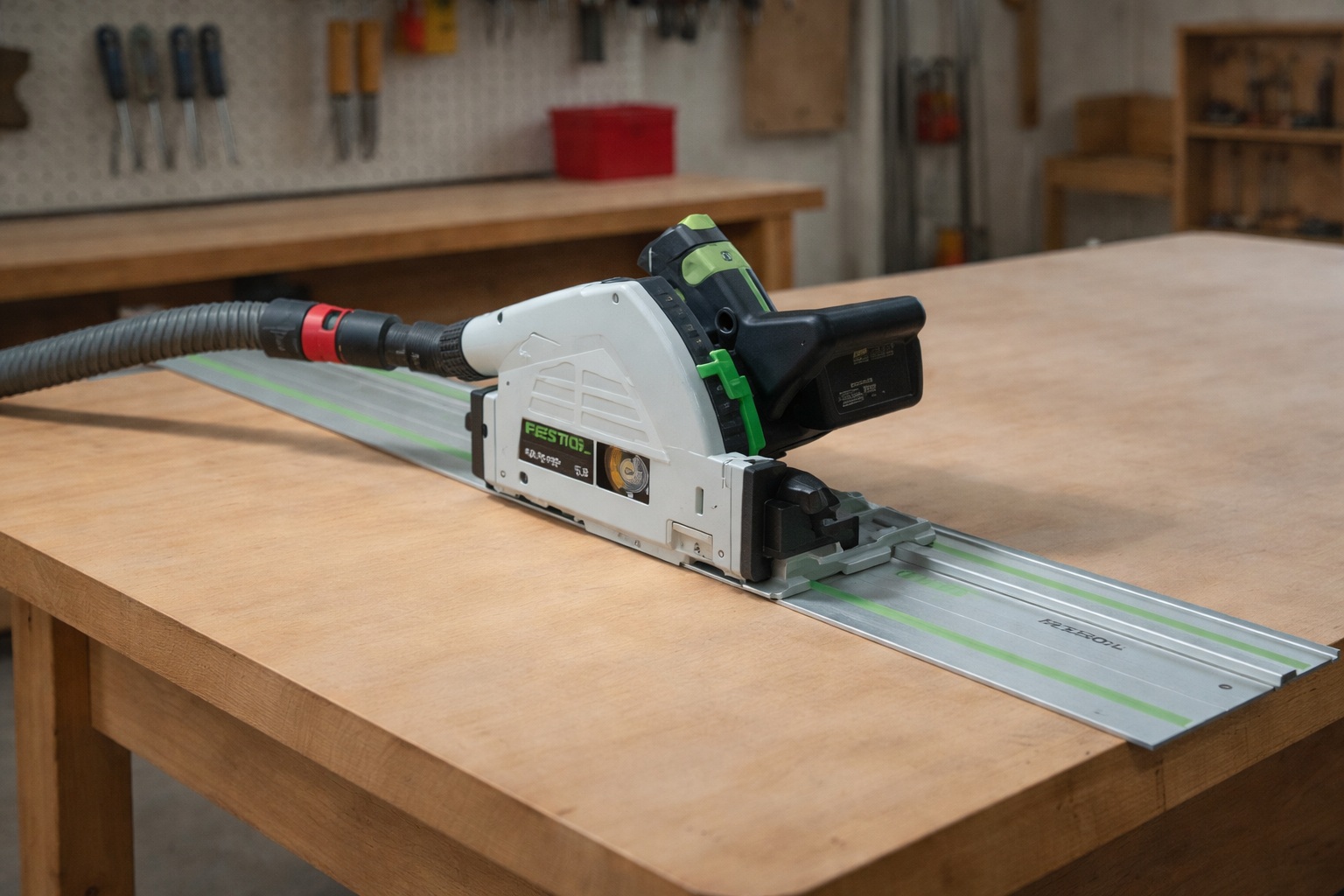
Festool TSC 55 KEB-F-Basic
Premium control
A more refined cordless track saw with a focus on ultra-smooth operation and finish-level precision. It appeals to users who prioritize the highest level of control and system integration over cost.
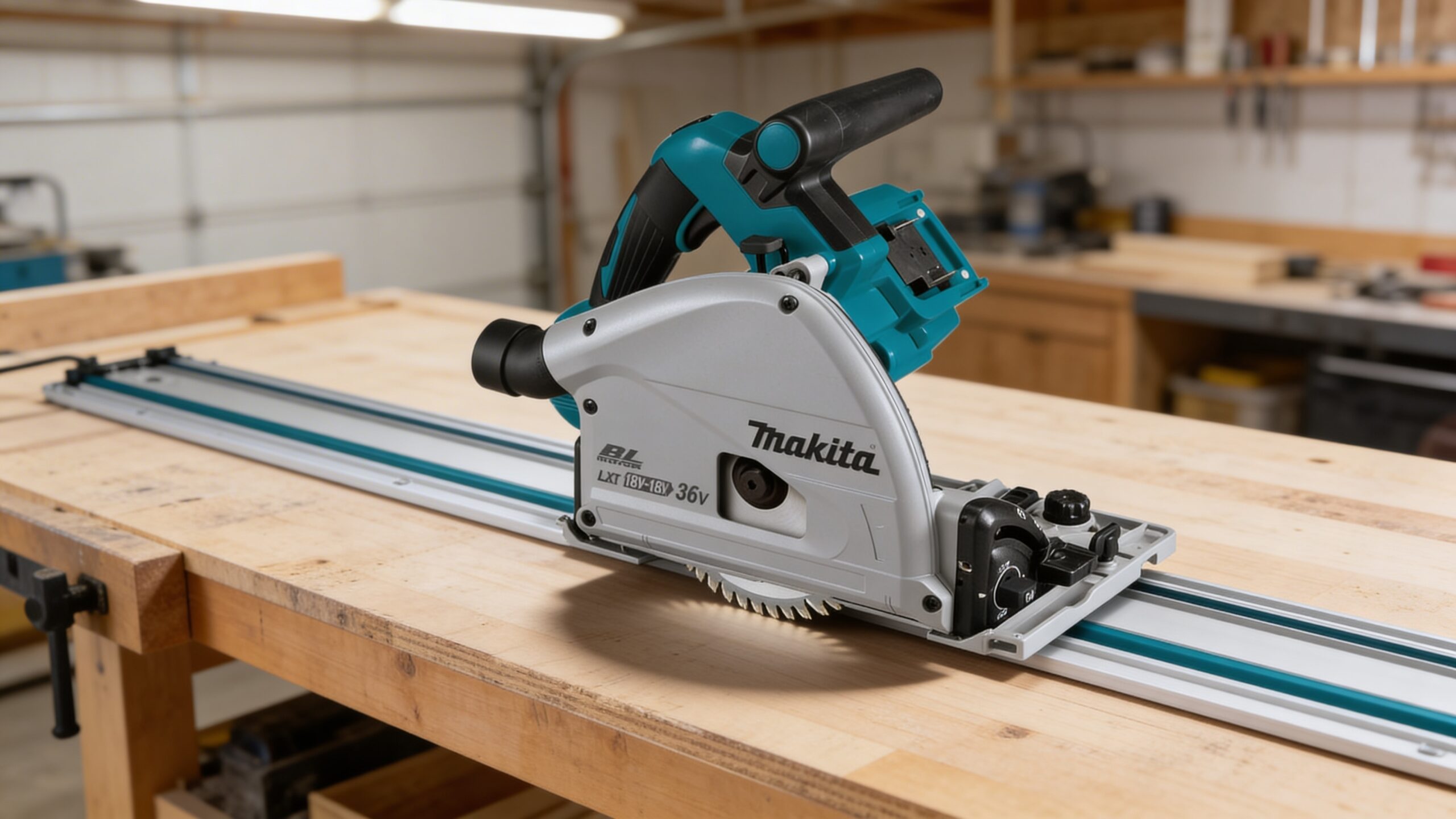
Makita XPS01Z
Platform value
A sensible choice if battery continuity and overall system cost matter more than chasing the newest feel. It is especially appealing for buyers already invested in Makita’s cordless platform.
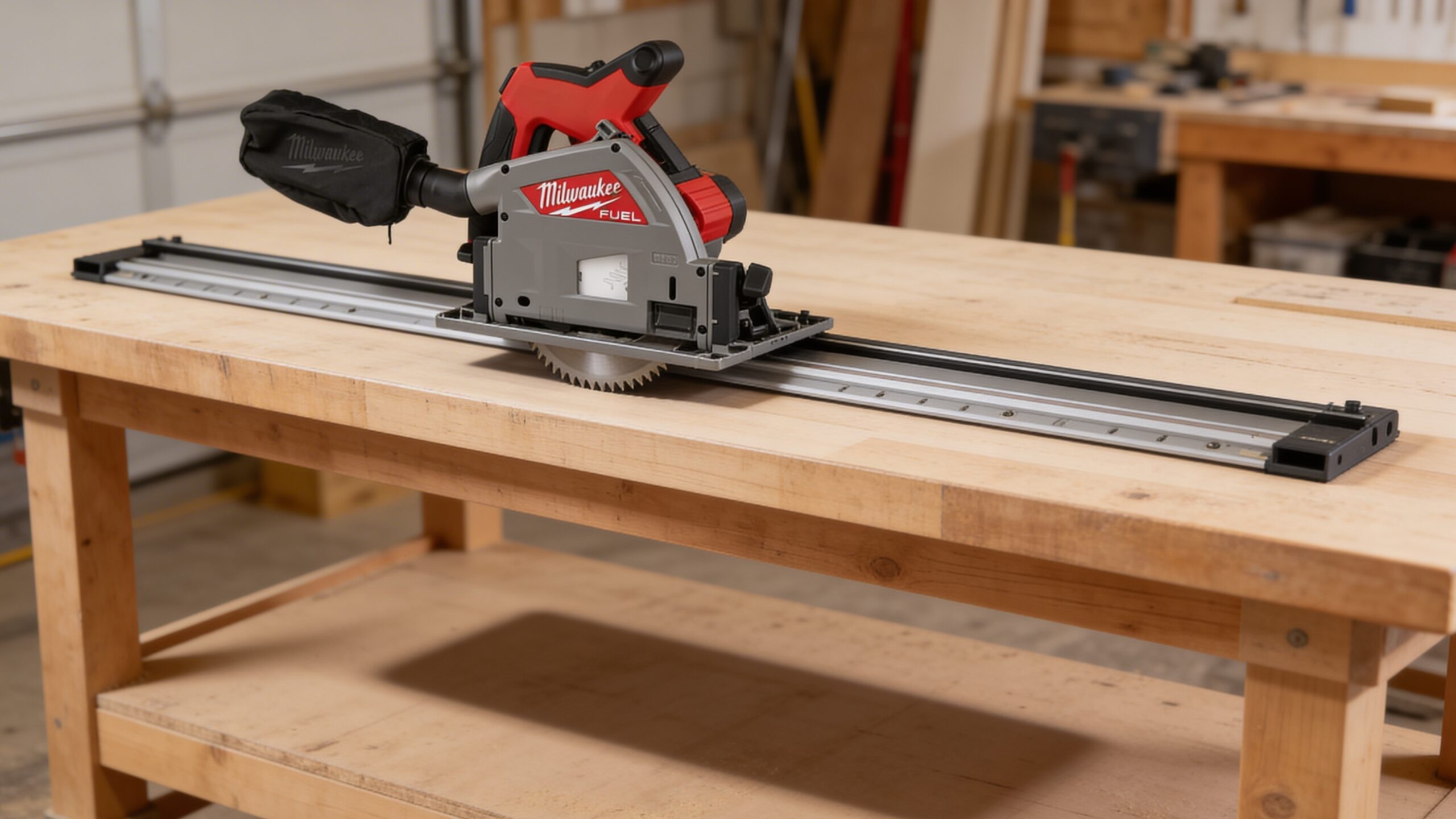
Milwaukee 2831-20
Platform swap
A cordless alternative built around the M18 system, offering similar mobility with a different ecosystem. It makes sense if you’re already committed to Milwaukee batteries and want to keep your setup consistent across tools.
Sources
Sources & reference notes
Specifications and product details referenced in this review were verified using publicly available manufacturer information and current product listings. Where kit contents or included accessories vary, those differences should be confirmed against the specific configuration being considered.
- Makita product documentation and published specifications for the Makita SP6000J1 track saw.
- Guide rail system and accessory compatibility information relevant to track-saw setup and ownership.
- Retail product listings used to confirm current naming, SKU variations, and bundled accessories.
Where to Buy
Makita SP6000J1
Track Saw Kit
Typical price range: $400–$600
Pricing varies by retailer and included rail or kit configuration.
Check Current PriceReview Snapshot
Makita SP6000J1
8.9
Refined control + precision
Best for sheet goods and finish-focused cuts where tracking confidence matters more than quick rough-cut flexibility.
- Performance: Clean, repeatable cuts with a steady feel under normal cutting load
- Handling: Smooth on the rail, but the full system takes more setup space and time
- Value: Makes more sense when precision cutting is frequent enough to justify the rail-based setup
Top 10 List
See the best track saws right now
Want the broader picture? Our Top 10 breaks down the leading track saws by performance, value, and real-world use.
View the Top 10Compare Models
Compare this track saw head-to-head
See how the Makita SP6000J1 stacks up against other track saws across cut quality, control, and overall workflow fit.
View ComparisonsAccessories You’ll Want
- Guide rail clamps (helps keep the rail locked in place when material surfaces are slick or support is limited)
- Fine-finish blade (improves edge quality on plywood, veneered panels, and other visible-cut materials)
- Dust extractor or vacuum hose setup (improves cut-line visibility and reduces cleanup during repeated cuts)
- Rail connector set (useful when longer, straighter cuts require joining rails with better alignment confidence)
- Replacement splinter guard strips (helps maintain clean edges and an accurate cut reference as the original wears)
Tip: Rail compatibility, blade selection, and dust collection shape the day-to-day experience as much as the saw itself—build around the workflow you will actually use most often.