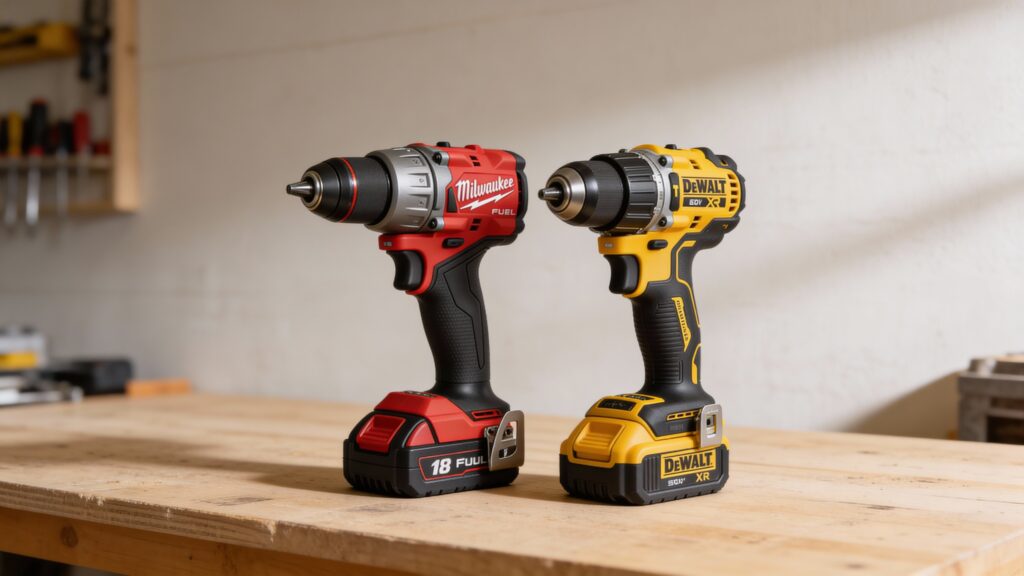
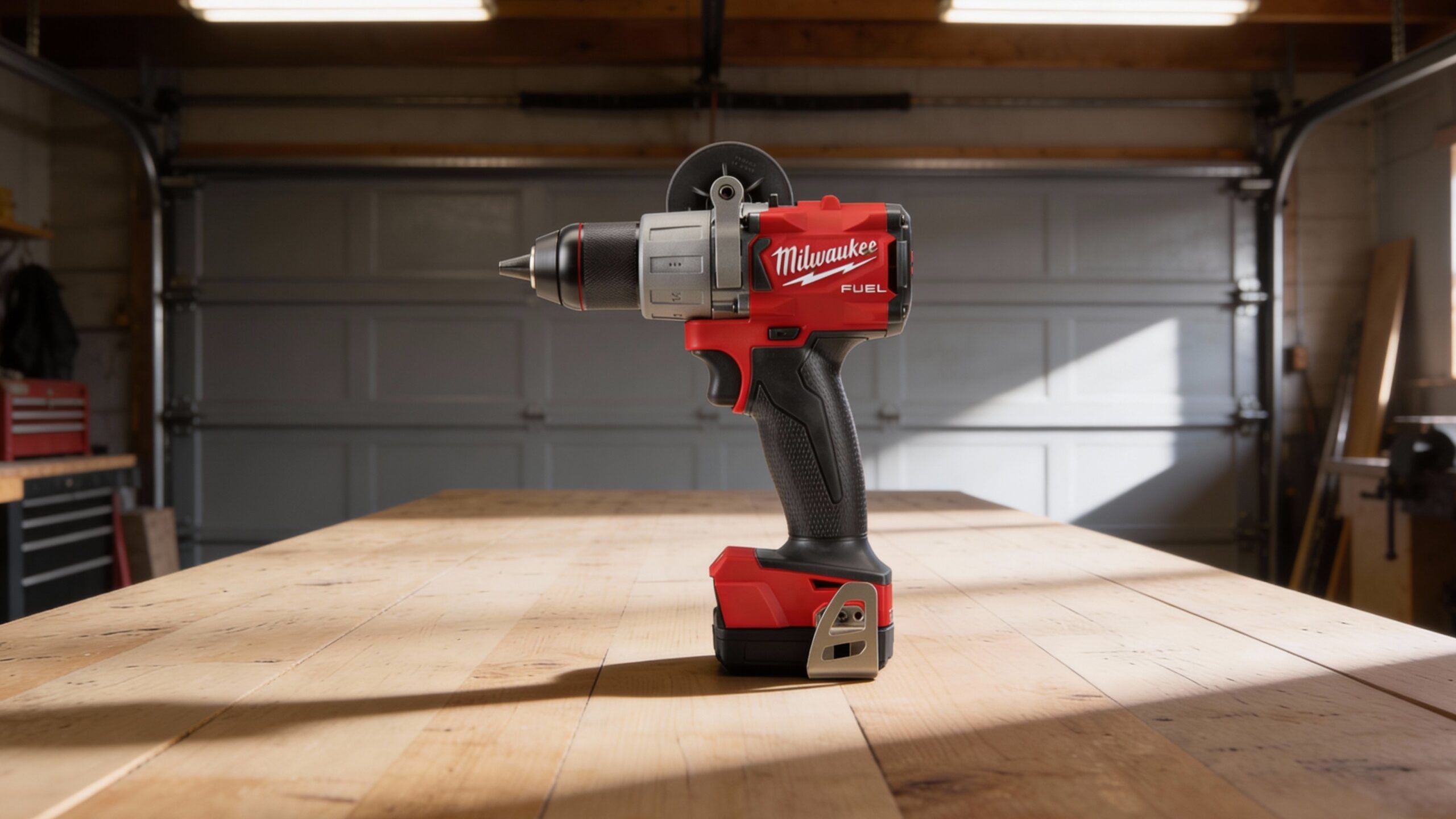
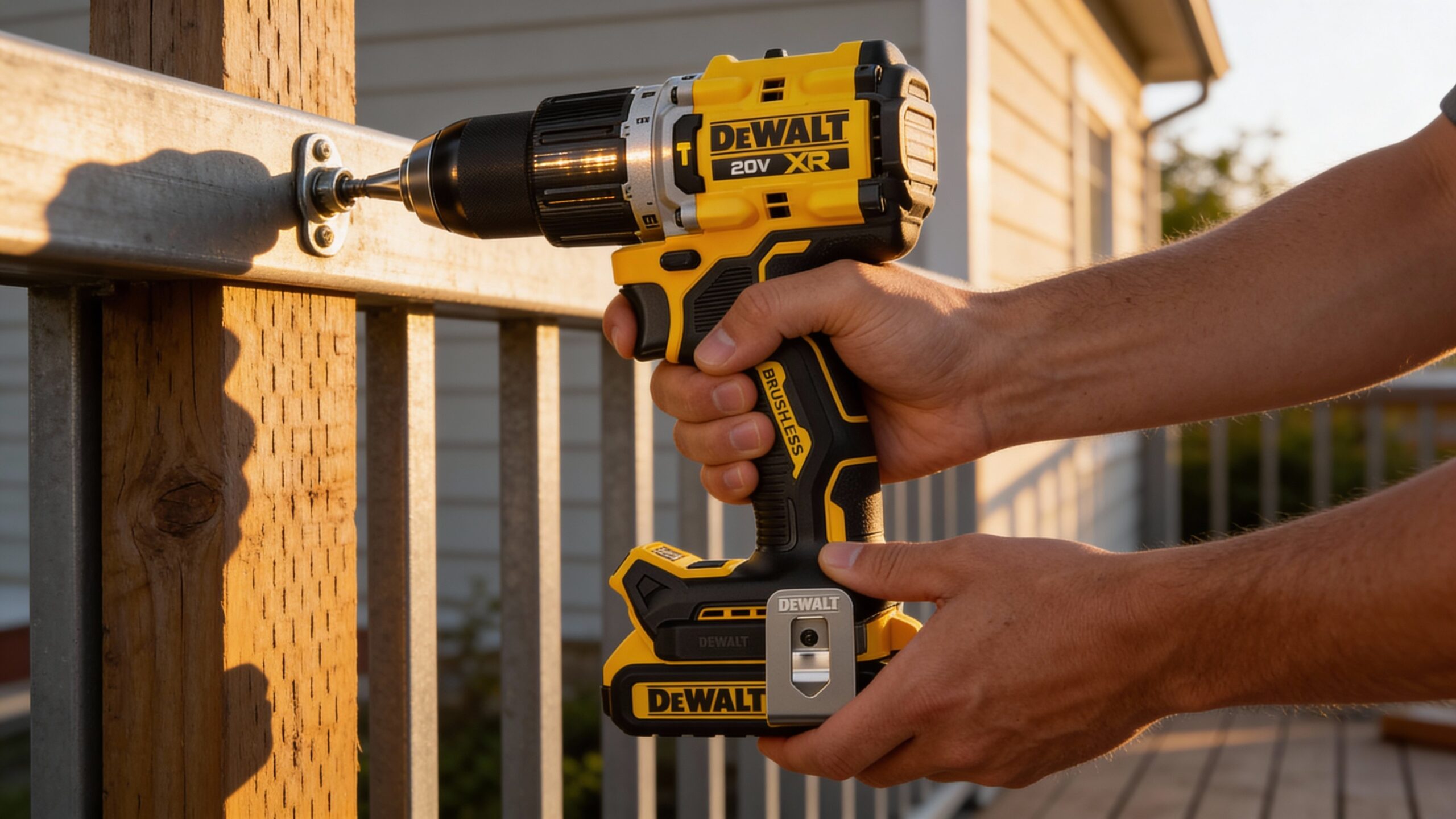
On the surface, both drills cover the basics for framing work, but meaningful differences emerge once they’re used
for sustained drilling, repetitive fastening, and long days on site. This section focuses on how each tool feels
and responds in real framing scenarios—where consistency, control, and fatigue management matter as much as raw output.
Power delivery in framing tasks:
In real-world use, the distinction isn’t peak strength but how smoothly power is delivered when the bit loads up.
One drill tends to hold its pace more confidently when boring larger holes or driving long fasteners, while the other
prioritizes a more forgiving response that feels easier to manage across varied tasks.
Control, balance, and fatigue:
Trigger response, clutch behavior, and balance with common battery sizes shape how tiring a drill feels over time.
A slightly heavier, more planted feel can inspire confidence under load, while a lighter, better-balanced setup
can reduce wrist and forearm strain during repetitive or overhead work.
Ownership and long-term fit:
Beyond daily performance, the surrounding battery ecosystem, availability of kits, and ease of expanding into
other tools influence the overall experience. One platform leans toward maximum flexibility for growing a larger
tool lineup, while the other often feels more accessible and cost-efficient to build out steadily.
How to think about the choice:
This matchup comes down to priorities rather than capability. Users who regularly push their drill at the edge
of its comfort zone may value composure and consistency, while those balancing framing with a wide mix of tasks
may appreciate comfort, availability, and overall ease of ownership.