
Mixing Drills Buying Guide for Professional Contractors
Mixing drills occupy a specialized place in the tool ecosystem, designed to handle dense materials such as mortar, thinset, grout, concrete, epoxy, and paint with controlled torque and sustained power. For professional contractors, the demands vary widely by trade, material viscosity, batch size, and jobsite conditions. Selecting the appropriate mixing drill involves more than choosing a powerful motor; it requires careful consideration of speed management, torque delivery, ergonomics, and duty cycle to ensure consistent performance under load.
This buying guide clarifies the key technical factors that influence performance, including motor type, gearbox configuration, variable-speed control, paddle compatibility, and handling characteristics. It outlines the tradeoffs between power and precision, weight and stability, and versatility and specialization. By the end, readers will understand the terminology, performance metrics, and decision criteria necessary to evaluate mixing drills with confidence and align tool capabilities with professional workflow demands.
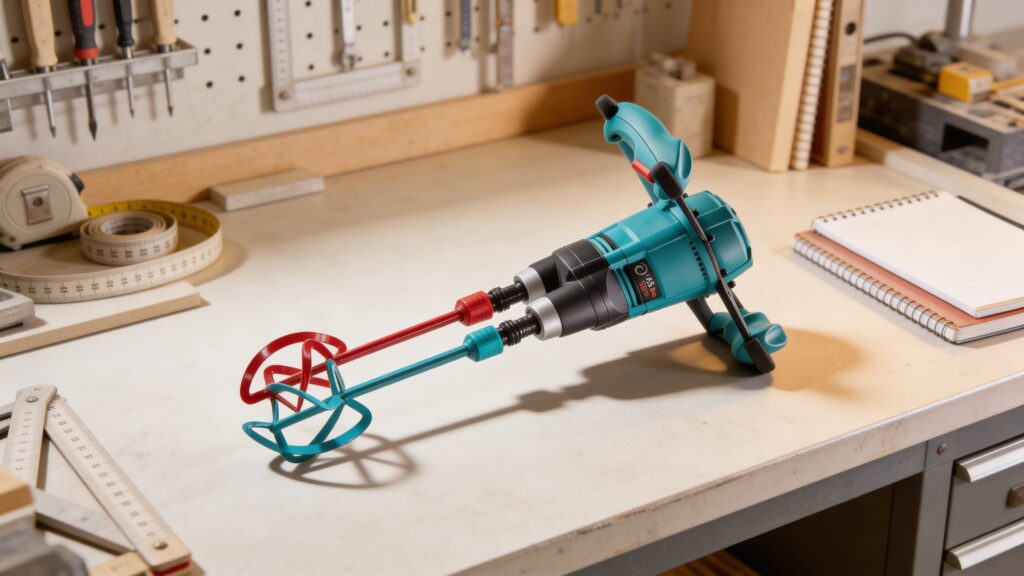
Buying framework
How to think about buying a mixing drill
Mixing drills can look interchangeable until you put them under sustained load. The differences that affect day-to-day work show up in low-speed control, torque delivery, handle stability, and heat management—not the first few seconds of a light mix. Use this framework to define your requirements before weighing specifications.
Control beats raw power: Predictable low-RPM response helps you wet out dry material, avoid splatter, and keep the paddle tracking smoothly as viscosity changes during the mix.
Stability is a jobsite safety factor: Dual-handle layouts, start behavior, and anti-twist control determine whether the drill stays planted when the batch thickens or the paddle catches.
Match torque to batch size: Small buckets favor lighter tools and finer control, while larger batches demand higher sustained torque and gearing that can hold speed without bogging down.
Plan around power and downtime: Continuous mixing favors dependable runtime and heat resistance. Consider how your power source, cord management, and recharge logistics fit your daily workflow.
Paddle and chuck choices matter: The connection standard, chuck security, and paddle style affect mixing efficiency and cleanup. A solid interface reduces wobble, loosening, and tool strain over long sessions.
Who this is for
Pick the drill that matches how you actually work
The right mixing drill depends on the materials you handle, how often you mix, and whether the work happens in a controlled shop or on an active jobsite. Use these profiles to align torque, ergonomics, and runtime with real workload demands.
Tile setters & flooring installers: mix thinset, grout, and self-leveling compounds regularly, often in medium batches on finished job sites. Low-speed control, smooth start-up, manageable weight, and minimal splatter matter most for clean, consistent results in tight interiors.
Concrete & masonry crews: handle dense mortar, resurfacing mixes, and larger batch volumes under sustained load. High torque, durable gearing, heat management, and stable dual-handle control matter most when materials thicken and resistance increases.
Remodelers & general contractors: mix a range of materials intermittently across varied environments, from interior renovations to exterior patchwork. Versatility, balanced ergonomics, adaptable paddle compatibility, and reliable runtime matter most for shifting task demands.
Paint & coatings professionals: blend primers, epoxy coatings, and specialty finishes where consistency and surface quality are critical. Variable speed precision, smooth acceleration, and reduced vibration matter most to avoid introducing air or texture defects.
High-volume commercial crews: operate daily with continuous mixing cycles on large projects where downtime disrupts workflow. Sustained torque, robust construction, serviceability, and power management matter most for predictable performance over long shifts.
What to pay attention to
Which mixing drill specs actually matter
Spec sheets can make mixing drills look dramatically different, but many numbers lack context. The specifications that matter most are the ones that influence control, stability, and sustained behavior under load — not isolated peak figures.
Specs that affect feel
Low-speed response, handle layout, vibration, and overall balance determine how controlled the drill feels during thick mixes.
Specs that affect capability
Torque delivery, gearing, chuck interface, and sustained runtime determine how the tool performs as material resistance increases.
Low-speed control: Smooth, predictable RPM at the bottom of the range reduces splatter and helps you gradually incorporate dry material without sudden torque spikes.
Handle configuration: Dual-handle positioning and grip spacing influence stability when the paddle catches. Good ergonomics reduce wrist strain during extended mixing cycles.
Gearbox design: Lower gearing supports sustained torque at controlled speeds. A drill that holds RPM under load feels steady, while one that bogs or surges interrupts consistency.
Chuck and paddle interface: Thread type and clamping security affect wobble and long-term durability. A secure connection reduces vibration and prevents loosening during dense mixes.
Runtime and heat management: Continuous mixing generates heat. Power source, motor cooling, and duty cycle tolerance determine whether performance stays consistent over repeated batches.
Often overhyped: single peak torque numbers, maximum RPM claims, and headline wattage figures that don’t reflect sustained mixing performance.
Avoid these traps
Common mistakes people make when buying a mixing drill
Most dissatisfaction with a mixing drill comes from mismatching the tool to the material and workload. These are the most common assumptions that lead to frustration—and how to rethink them before choosing.
Chasing peak torque numbers: High torque ratings can look decisive, but they do not guarantee smooth low-speed control. In mixing applications, predictable startup and steady RPM under load matter more than a single headline figure.
Assuming any heavy-duty drill can mix: Standard drills may spin a paddle, but they are not designed for sustained resistance. Mixing requires gearing, handle stability, and cooling capacity built for continuous load.
Overlooking ergonomics and handle layout: Dense materials can cause sudden torque reaction. Without stable dual-handle support and balanced weight, fatigue and loss of control become more likely over longer sessions.
Ignoring batch size and material viscosity: A drill that feels adequate for small grout batches may struggle with thicker mortar or larger volumes. Matching tool capacity to real mixing conditions prevents bogging and overheating.
Focusing only on maximum RPM: Higher speed does not improve most mixing tasks and can increase splatter or introduce air. Controlled low-speed performance is usually more relevant than top-end rotation.
Neglecting the paddle connection standard: Not all chucks and thread types are equally secure for heavy mixing. A stable interface reduces wobble and strain, which directly affects durability and mixing consistency.
Decision guidance
Which type of mixing drill is right for you
The right mixing drill depends more on material type and batch size than on headline specifications. Use this to match torque delivery, size, and power configuration to your typical workload—not the occasional heavy mix.
Choose a lighter-duty mixing drill if: you primarily mix grout, thinset, or coatings in small to medium batches and work in finished interiors. Prioritize smooth low-speed control, manageable weight, and stable handling over maximum output.
Choose a heavy-duty mixing drill if: you regularly handle dense mortar, resurfacing compounds, or large bucket volumes where sustained torque matters. Higher gearing strength and durable construction support repeated mixing cycles but typically add weight.
Consider corded vs cordless based on workflow: if you mix continuously in one location, consistent corded power can reduce downtime. If mobility, exterior work, or unfinished sites are common, cordless flexibility may outweigh runtime constraints.
Match size to environment: in tight interiors or elevated work areas, lighter tools reduce fatigue and improve control. On open job sites with large batches, additional mass can help stabilize the drill under load.
When a mixing drill isn’t the right tool: for occasional light stirring of paint or small compound batches, a standard drill with an appropriate paddle may suffice. Reserve dedicated mixing drills for frequent, dense, or high-volume material handling.
Ownership & compatibility
What you’re really buying into long term
A mixing drill is rarely a one-project tool. Long-term value comes from how it integrates into your power setup, how easily wear parts are replaced, and how reliably it handles repeated heavy mixing over time.
Power source strategy: If you choose cordless, consider battery sizes that support sustained mixing without frequent swaps. For corded tools, think about extension management and access to stable power on varied job sites.
Platform commitment: Cordless mixing drills tie you into a battery ecosystem that may power other tools. Long-term convenience often depends on charger availability, battery lifecycle expectations, and future tool expansion.
Paddles and connection standards: Thread type and chuck design determine which paddles you can use. Over time, easy access to compatible mixing paddles and replacement hardware reduces downtime and workflow friction.
Serviceability and wear parts: Brushes, switches, cords, and gear components experience stress during heavy mixing. Clear parts availability and accessible service support matter more over years than initial specifications.
Total cost of ownership: Battery replacements, spare paddles, and maintenance items typically drive long-term costs. Planning for these ongoing expenses helps prevent surprises after the initial purchase.
FAQ
Mixing drill buying guide FAQ
Quick answers to the questions contractors ask most when choosing a mixing drill—focused on real workload demands, not headline specs.
Can I use a standard drill instead of a dedicated mixing drill?
How much torque do I really need?
Is higher RPM better for mixing?
Corded or cordless for professional use?
What paddle connection should I look for?
Do handle design and layout really matter?
How important is weight?
What features matter most day to day?
How long should a mixing drill last?
Bottom line
The simplest way to pick the right mixing drill
Most professional mixing drills can turn a paddle. The right one is the drill that stays controlled, stable, and consistent for the materials and batch sizes you handle most often.
If you mix lighter materials in moderate batches: prioritize smooth low-speed control, manageable weight, and comfortable handle layout. Day-to-day control will matter more than maximum output.
If you routinely mix dense or large-volume materials: step up to a configuration designed for sustained torque and durability. Extra capacity helps under continuous load—but avoid oversizing if those jobs are occasional.
If mobility defines your workflow: consider how power source, runtime, and charging logistics fit your job sites. Consistent access to power often shapes satisfaction more than small spec differences.
If long-term ownership matters: think about paddle compatibility, serviceability, and the broader battery ecosystem you may be committing to. Replacement parts and workflow friction affect daily operations over time.
Final check: match the drill to your 80% tasks—material thickness, batch size, and session length. Choose the tool that feels stable and predictable in that scenario, and you’ll avoid overbuying for rare extremes.
Reading Shortcuts
Jump to the sections that matter most for choosing the right mixing drill.
Decision Reminders
A quick checklist before you commit to a mixing drill configuration.
- Prioritize low-speed control: smooth startup and steady RPM reduce splatter and improve consistency in thick mixes.
- Match torque to batch size: choose capacity based on the materials and volumes you handle most weeks, not rare heavy jobs.
- Consider handle stability: dual-handle balance and grip spacing directly affect control when the paddle catches under load.
- Think through power logistics: corded reliability or cordless mobility should reflect how and where you actually mix.
- Plan for wear items: paddle compatibility and replacement parts availability shape long-term workflow and downtime.
- Ignore headline RPM and torque claims: sustained behavior under load matters more than peak numbers on a spec sheet.
Glossary Snippets
Quick translations for the terms that confuse buyers most.
When to Use a Top 10 Review
If you need a fast, well-structured shortlist, this format helps narrow the field before you compare finalists.
- You’re still defining your criteria: A ranked list helps surface which features and tradeoffs matter most for your work.
- You want a smart starting shortlist: This format organizes strong candidates into a manageable set before deeper evaluation.
- You want category-style guidance: Labels like Best Overall or Best Value clarify how different picks serve different priorities.
- You need to scan the field quickly: It is useful when you want broad market context before committing to a head-to-head decision.
Already down to 2–3 models? A Comparison is usually faster when you need a direct head-to-head read.
When to Use a Comparison
Best when you’re choosing between specific models and want the clearest tradeoffs.
- You’re down to a tight shortlist: direct, side-by-side differences clarify which model fits your workflow.
- You’re weighing real-world handling: balance, control, fatigue, and usability are easier to judge head-to-head.
- You want a category-by-category breakdown: comparisons frame outcomes across power, ergonomics, runtime, and ownership factors.
- You need a clear final call: this format speeds up decisions once the options are already narrowed.
Still exploring? Start with a Top 10 to build your shortlist before comparing.