
Mixing Drills Buying Guide for Remodeling Projects

Mixing drills used in remodeling projects span a wide range of tasks, from blending lightweight compounds to handling dense materials such as mortar and concrete. The demands vary by batch size, material consistency, and jobsite conditions, making performance requirements less uniform than they first appear. Factors such as torque delivery, speed control, ergonomics, and mixing consistency all influence outcomes, and selecting the wrong type can lead to inefficiency, premature wear, or inconsistent results.

This buying guide clarifies the key considerations behind choosing a mixing drill for remodeling work, including power characteristics, handle configurations, paddle compatibility, and duty cycles. It explains common terminology, outlines practical tradeoffs between control and output, and highlights how different project types shape tool requirements. By the end, readers will understand how to evaluate specifications in context and make informed, task-aligned decisions.
By: Review Streets Research Lab
Updated: March 18, 2026
Approx. 6–8 min read
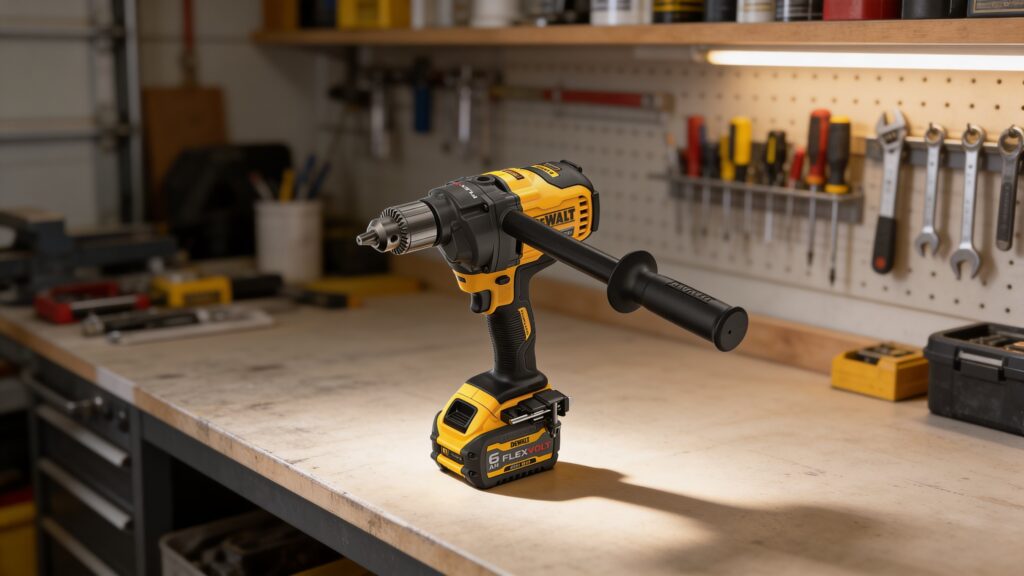
High-torque mixing drill blending mortar in a bucket at a remodeling job site with construction materials in the background

Buying framework

How to think about buying a mixing drill

Mixing drills for remodeling projects often look similar on paper, but the practical differences emerge in torque delivery, speed control, handling, and how well the tool matches the material being mixed. Use this framework to identify the factors that shape real jobsite performance before narrowing the field any further.

Material type sets the baseline: Lightweight compounds, thinset, mortar, and concrete mixes place very different demands on a drill. The thicker and heavier the material, the more important sustained torque and controlled low-speed output become.

Control matters as much as power: Smooth startup and predictable speed adjustment help reduce splatter, improve mix consistency, and make it easier to work through dense material without losing stability.

Handle design affects working comfort: A layout that feels secure under load can reduce fatigue and improve control during longer batches. This becomes more noticeable when mixing repeatedly or working with heavier materials that resist the paddle.

Choose by batch size and frequency: Smaller, occasional jobs may not demand the same duty cycle as full-room remodels or repeated daily mixing. Matching the tool to expected volume helps avoid underpowered or unnecessarily oversized setups.

Compatibility shapes real-world use: Chuck type, paddle fit, cord management, and workspace constraints all influence how practical a mixing drill feels on an active remodel. The right choice is the one that aligns tool capability with the way the work actually gets done.

Who this is for

Pick the drill that matches how you actually work

The right cordless drill depends on what you build, how often you use it, and where the work happens. Use these profiles to choose the right size, battery setup, and capability—without paying for power you won’t use.

Occasional DIY remodelers: mix small batches of compound, grout, or patch material in garages or spare rooms a few times per project. Prioritize manageable weight, simple speed control, and easy handling. What matters most is predictable control for short, low-frequency tasks.

Weekend remodel projects: handle repeated mixing for tile, flooring, or wall work across longer sessions. Prioritize consistent low-speed torque, comfortable grip, and reduced fatigue during continuous use. What matters most is maintaining control and consistency over time.

Confined or finished spaces: mix materials in bathrooms, kitchens, or occupied areas where space is limited and cleanup matters. Prioritize compact form, balance, and precise speed control to minimize splatter. What matters most is maneuverability and clean, controlled operation.

Heavy-duty material mixing: work with dense mortar, concrete, or large batches during structural or surface prep phases. Prioritize sustained torque, stable handling, and durability under load. What matters most is maintaining performance through demanding mixes without strain.

Frequent remodel workflows: mix multiple batches daily across different materials and jobsite conditions. Prioritize ergonomic support, reliability, and compatibility with various paddles and setups. What matters most is dependable operation that fits into a continuous workflow.

What to pay attention to

Which mixing drill specs actually matter

Spec sheets can make mixing drills look similar, but real differences show up in how the tool handles load, maintains speed, and feels during extended mixing. These are the specifications that influence control and consistency — and the ones that rarely reflect how the tool behaves on an active remodel.

Specs that affect feel

Handle layout, balance, and speed control determine how stable and manageable the drill feels under load.

Specs that affect capability

Torque delivery, motor behavior, and paddle compatibility determine how effectively materials can be mixed.

Speed control: Smooth low-speed operation helps prevent splatter and improves mixing consistency. Abrupt or uneven response makes it harder to control thicker materials.

Balance and handling: Weight distribution and handle positioning affect stability during mixing. A well-balanced tool reduces fatigue and makes it easier to keep the paddle steady in dense mixtures.

Torque delivery: Sustained torque matters more than short bursts of power. Consistent output allows the drill to move through heavier mixes without stalling or surging.

Handle configuration: Dual-handle designs provide better control for larger batches, while simpler layouts may feel more manageable for lighter work. The right setup depends on how much resistance the material creates.

Paddle compatibility: Chuck or mount type determines which mixing paddles can be used. Matching the paddle size and style to the material directly affects mixing efficiency and control.

Often overhyped: peak power ratings and maximum speed figures that do not reflect how the drill performs during slow, controlled mixing under sustained load.

Avoid these traps

Common mistakes people make when buying a cordless drill

Most dissatisfaction with a cordless drill comes from choosing the wrong type for how it’s actually used. These are the most common mistakes we see—and how to avoid them before you buy.

Focusing on maximum speed instead of control: High RPM figures can seem useful, but mixing materials requires steady, low-speed control to avoid splatter and uneven consistency. Smooth, predictable speed adjustment matters more than how fast the tool can spin.

Assuming any drill can handle heavy mixes: Standard drills may work for light compounds, but dense materials create resistance that exposes limits quickly. Matching the tool’s capability to material thickness leads to more consistent results and less strain.

Overlooking handle design and stability: A drill that feels manageable at rest can become difficult to control once the paddle meets resistance. Handle layout and grip stability play a central role in maintaining control during longer mixes.

Ignoring batch size and workload: It’s common to think in terms of occasional use, but repeated mixing during a remodel changes the demands significantly. Considering frequency and volume helps avoid tools that feel underpowered or tiring in practice.

Choosing mismatched paddles and attachments: Not all mixing paddles behave the same, and compatibility affects both efficiency and control. Thinking about how the paddle interacts with the material leads to more predictable mixing performance.

Relying on headline specs as indicators of performance: Published power or speed figures often reflect ideal conditions rather than sustained use. Real-world performance is shaped more by how the drill maintains output under load than by isolated numbers.

Decision guidance

Which type of cordless drill is right for you

The right drill depends more on what you do most often than on brand badges or peak numbers. Use this to pick the drill type that fits your real workload—not the rare “worst-case” job.

Choose a light-duty setup if: your projects involve small batches of compound, grout, or patch material and you mix occasionally in controlled spaces. Prioritize manageable weight, smooth startup, and easy handling over raw output. This type of setup works best when control and cleanup matter more than sustained mixing power.

Choose a mid-range mixing drill if: you regularly handle tile work, flooring prep, or moderate batch sizes across longer sessions. Look for consistent low-speed torque, stable handling, and reduced fatigue during repeated use. This balance supports steady mixing without becoming cumbersome in typical remodel environments.

If you’re working with dense materials: such as mortar or concrete, or mixing large batches, lean toward tools designed for sustained torque and two-handed control. These setups handle resistance more predictably but tend to be heavier and less maneuverable. The tradeoff favors stability and output over comfort in lighter tasks.

Match the tool to your most frequent workload: if most of your mixing is moderate and repetitive, prioritize control and ergonomics over maximum capacity. If heavy mixes are common, accept the added weight for more consistent performance. Choosing based on typical use leads to better day-to-day results.

When a mixing drill isn’t the right fit: for very small batches, occasional mixing, or light materials, a standard drill with an appropriate paddle can be sufficient. A dedicated mixing drill becomes more relevant as batch size, material density, and frequency increase. Matching the tool to actual demand avoids unnecessary bulk.

Ownership & compatibility

What you’re really buying into long term

A cordless drill isn’t just a one-time purchase. Long-term value comes from the battery system, parts availability, service support, and how easily the tool fits into your workflow as your needs grow.

Power source and runtime: Corded mixing drills remove battery constraints and are common for sustained mixing, while cordless setups depend on battery capacity and charging cycles. Consider how often you mix and whether uninterrupted runtime or mobility matters more in your workflow.

Platform commitment (for cordless use): If you already use a battery system, staying within it simplifies charging and tool rotation. If starting fresh, think about long-term battery availability, charger compatibility, and how the system supports other tools you may add later.

Paddle fit and attachment standards: Mixing drills rely on compatible paddles, which are wear items over time. Choosing a common attachment style makes it easier to replace or swap paddles as materials and project needs change.

Durability and serviceability: Mixing places sustained load on motors, gears, and switches, so long-term reliability matters. Access to replacement parts, service options, and basic maintenance support affects how the tool holds up over repeated projects.

Workflow fit and long-term upkeep: Charging routines, cord management, storage, and cleanup all shape daily use. Over time, replacement batteries, worn paddles, and maintenance needs tend to drive ownership costs more than the initial purchase.

FAQ

Cordless drill buying guide FAQ

Quick answers to the questions people ask most when choosing a cordless drill—focused on real use, not spec-sheet hype.

Do I need a dedicated mixing drill, or will a standard drill work?
A standard drill can handle small batches of light materials, especially for occasional use. Once you move into thicker mixes or repeated batches, control and strain become more noticeable. Dedicated mixing drills are designed to handle resistance more consistently over time.
What’s the difference between corded and cordless mixing drills?
Corded models offer uninterrupted runtime and are common for sustained mixing tasks. Cordless options provide mobility and convenience but depend on battery capacity and charging cycles. The choice usually comes down to whether flexibility or continuous operation matters more in your workspace.
How much power do I actually need for mixing?
Power needs are driven more by material thickness than by general use. Light compounds require less effort, while mortar and concrete demand steady torque at low speeds. In practice, consistent performance under load matters more than peak power figures.
Does paddle size or type make a difference?
Yes, the paddle directly affects how materials move and combine. Larger or differently shaped paddles can improve mixing efficiency but also increase resistance. Matching the paddle to the material helps maintain control and achieve a more uniform mix.
Is speed range more important than maximum speed?
For mixing, low-speed control is far more noticeable than high-speed capability. A drill that can maintain steady, slow rotation reduces splatter and improves consistency. Maximum speed is rarely used in real mixing scenarios.
Do I need a dual-handle mixing drill?
Dual-handle designs provide more stability when working with dense materials or larger batches. For lighter tasks, a simpler layout can feel easier to manage and store. The decision depends on how much resistance you expect during typical mixing.
How important is ergonomics for mixing drills?
Ergonomics become more noticeable as mixing time increases. Grip comfort, balance, and handle positioning all affect fatigue and control. Over longer sessions, these factors often matter more than headline performance specs.
What features actually matter day to day?
Smooth speed control, stable handling, and consistent torque under load shape everyday use. A tool that feels predictable and easy to manage tends to deliver better results. These qualities are more noticeable than isolated spec numbers.
How long should a mixing drill last?
With occasional use, a mixing drill can last through many projects. Heavier workloads place more strain on internal components, especially when mixing dense materials. Over time, wear tends to show in switches, gears, and accessories rather than the tool body itself.

Bottom line

The simplest way to pick the right cordless drill

Mixing drills vary more in how they handle real work than how they look on paper. The right choice is the one that stays controlled, consistent, and comfortable across the materials and batch sizes you actually work with.

If your work is light and occasional: focus on manageable weight and smooth speed control, since small batches benefit more from precision than raw output.

If consistency and control matter most: prioritize steady low-speed behavior, balanced handling, and a layout that feels stable under resistance during longer mixes.

If you regularly mix dense or heavy materials: step up to a setup that delivers sustained torque and two-handed control, accepting the tradeoff of added size and weight.

If workflow and ownership matter: consider how the tool fits your setup, including power source, attachment compatibility, and how easily it integrates into repeated use.

Final check: think about your most common mixing task—material type, batch size, and frequency—and choose the setup that feels easiest to control in that exact scenario.

Decision Reminders

A quick checklist before you commit to a drill + battery platform.

  • Prioritize control over speed: steady low-speed mixing prevents splatter and improves consistency in real use.
  • Match capability to material: light compounds and dense mortar place very different demands on the tool.
  • Handle design affects stability: a secure, balanced grip makes it easier to manage resistance during longer mixes.
  • Think in batch size, not specs: larger volumes and repeated mixing sessions require more sustained performance.
  • Plan for paddle compatibility: attachment type and size influence how effectively materials are mixed.
  • Don’t rely on headline numbers: peak power and speed figures rarely reflect controlled mixing under load.

Glossary Snippets

Quick translations for the terms that confuse buyers most.

Low-speed control
The ability to keep rotation steady at slow speeds. This directly affects how cleanly materials mix and how well you avoid splatter or uneven blending.
Torque (sustained)
The drill’s ability to keep turning under resistance, not just at startup. In practice, this determines whether it can handle thicker mixes without stalling or surging.
Paddle type
The shape and size of the mixing attachment. Different paddle designs move material differently, affecting how quickly and evenly mixtures come together.
Dual-handle design
A two-handed grip layout for added stability. This becomes more noticeable when mixing heavier materials that push back against the tool.
Max RPM
The highest rotation speed the drill can reach. For mixing, lower controlled speeds matter more, since high RPM is rarely used in real workflows.

When to Use a Top 10 Review

If you want the fastest shortlist, this is the format that gets you to a confident pick.

  • You’re still narrowing your options: See how different mixing drill types fit common remodeling tasks.
  • You want a structured overview: Understand how categories like “Best Overall” or “Best for Heavy Mixes” are defined.
  • You need a quick shortlist: Identify a few strong candidates before digging into deeper evaluation.
  • You’re comparing use cases: See how different setups align with batch size, material type, and workload.

Already down to 2–3 models? A Comparison is usually faster than reading full reviews.

When to Use a Comparison

Best when you’re choosing between specific models and want the clearest tradeoffs.

  • You’ve narrowed your shortlist: compare how each option handles real mixing tasks side by side.
  • You want to understand tradeoffs: see differences in control, stability, and sustained performance under load.
  • You’re focused on real use: evaluate how each setup feels during longer sessions and heavier mixes.
  • You need a clear decision path: a comparison highlights category strengths without requiring full deep dives.

Still exploring? Start with a Top 10 to find the right “type” of drill first.