
Right-Angle Drills Buying Guide for Heavy-Duty Jobsite Use
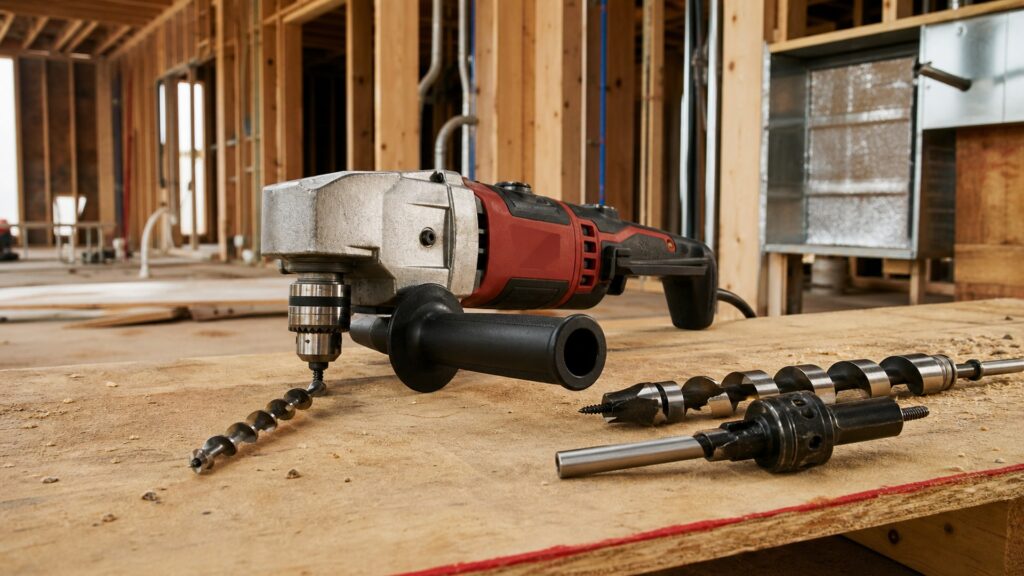
A right-angle drill is usually bought for the places where a standard drill gives up: between studs, under joists, inside cabinets, around ductwork, behind plumbing, and anywhere a straight drill body cannot line up with the hole. On heavy-duty jobsites, that tight access often comes with large bits, tough lumber, awkward body position, and repeated holes that can punish an underbuilt tool.
This guide helps you choose the right-angle drill setup for rough-in work, remodeling, mechanical runs, cabinetry, framing, and other demanding jobsite tasks. It explains the practical differences between compact angle drills, heavy-duty right-angle drills, hole-hawg style tools, cordless and corded options, chuck types, torque control, bit compatibility, and the ownership details that affect safety and productivity after the first day.
Buying framework
How to think about buying a right-angle drill for heavy-duty jobsite use
Start with the holes you need to make, the space around those holes, and how often the tool will be used. A right-angle drill is not just a compact drill with a bent head; for heavy-duty work, it needs enough torque, control, durability, and bit support to work safely in cramped positions.
Define the access problem: Measure the spaces where the tool must work: stud bays, joist cavities, cabinet interiors, crawlspaces, and mechanical chases. Head length, handle shape, battery position, and chuck clearance matter as much as power when the tool has to fit squarely into the work.
Match torque to bit size: Small twist bits and spade bits do not ask the same thing of a drill as self-feed bits, hole saws, augers, or large rough-in holes. Heavy-duty jobs need low-speed strength and predictable reaction control, not just fast no-load speed.
Separate occasional tight-space drilling from rough-in production: A compact right-angle attachment or light-duty angle drill can solve rare access problems. Repeated plumbing, electrical, HVAC, or framing holes call for a dedicated tool built to handle heat, torque, and long sessions.
Think about body position and safety: Right-angle drills can twist hard if a bit binds. Side handles, electronic clutch systems, two-hand grip positions, and smooth trigger control can reduce surprises when drilling in awkward spaces.
Plan the full boring system: The drill is only one part of the setup. Bits, extensions, hole saw arbors, batteries, chargers, cords, dust and chip management, and storage all affect whether the tool is productive on a real jobsite.
Who this is for
Pick the right-angle drill that matches how you actually work
The right choice depends on trade, hole size, work pace, and whether tight access is an everyday problem or an occasional obstacle. Use these profiles to avoid overbuying or choosing a tool that cannot handle the work.
Electricians and low-voltage installers: Prioritize a tool that fits cleanly between studs and joists, handles auger or self-feed bits, and offers strong low-speed control. Cordless convenience can be valuable when moving through framed spaces, but battery capacity and torque management matter.
Plumbers and mechanical rough-in crews: Look for torque, durable gearing, large-bit confidence, and a grip layout that stays controlled when drilling through framing for pipe or mechanical runs. A heavier-duty tool may be worth it if large holes are routine.
Remodelers and cabinet installers: Compact size, clean control, and the ability to work in finished or semi-finished spaces may matter more than maximum torque. A smaller cordless right-angle drill can be easier to place behind cabinets, under counters, and near trim.
Framing and jobsite carpentry: For repeated rough holes, choose a stronger right-angle drill or hole-hawg style tool that can run larger bits without feeling overloaded. Durability, side-handle options, and reaction control become more important as bit diameter rises.
Occasional jobsite users: If tight-angle drilling is rare, consider whether an attachment or compact model is enough. Spend the budget where it changes the work: correct bits, stable grip, battery compatibility, and a tool class that matches the largest realistic hole.
What to pay attention to
Which right-angle drill specs actually matter on a jobsite
Spec sheets can make these tools look simple to compare, but heavy-duty right-angle drilling is shaped by fit, torque delivery, bit compatibility, heat management, and control when a bit starts to bind.
Specs that affect feel
Head length, handle angle, trigger reach, grip texture, battery balance, side-handle placement, and speed control determine how accurately and safely the tool works in tight spaces.
Specs that affect capability
Chuck size, low-speed torque, gear durability, supported bit types, clutch or bind-up protection, battery platform, corded amperage, and thermal behavior determine whether the drill can handle repeated heavy holes.
Head size and clearance: A compact head can be the difference between drilling squarely and fighting the tool at an angle. Compare the full working length with a bit installed, not just the bare tool dimensions.
Chuck size and bit compatibility: A 1/2-inch chuck is common for heavier work and supports many larger bits and arbors. Some heavy-duty systems are optimized for specific boring bits, so confirm the tool matches the bits your work requires.
Low-speed torque: Large holes need controlled strength more than high top speed. Look for a tool that can turn self-feed bits, augers, or hole saws without constant stalling or abrupt kickback.
Reaction control: Mechanical clutches, electronic bind-up protection, side handles, and predictable triggers help when a bit catches. These features are especially valuable when the tool is braced against framing or held overhead.
Corded vs cordless power: Cordless models reduce cord hassles and move easily around a site, but heavy drilling can drain packs quickly. Corded tools can be strong values for production boring when power access and cord routing are manageable.
Often overhyped: Peak RPM, voltage branding, and bare-tool weight can mislead buyers. In real use, the right bit, torque control, tool fit, battery capacity, and operator position usually matter more.
Avoid these traps
Common mistakes people make when buying a right-angle drill
Bad right-angle drill purchases usually come from treating every tight-space drilling job the same. These mistakes can slow the work, damage bits, or make the tool harder to control than expected.
Buying only for compact size: The smallest tool is not always the best tool. If the work involves large holes or repeated rough-in drilling, a tiny right-angle drill may fit the space but lack the torque and durability needed for the job.
Ignoring bit diameter: A drill that feels strong with small bits can struggle badly with self-feed bits, hole saws, or thick framing. Choose the drill around the largest holes you realistically need to make.
Underestimating kickback: Right-angle drills can rotate aggressively when a bit binds. Skipping side handles, clutch features, or stable two-hand positioning can make heavy boring harder and less safe.
Assuming cordless is always better: Cordless is convenient, but repeated heavy holes may require larger batteries, multiple packs, or slower pacing. A corded model can still make sense when production drilling happens near reliable power.
Forgetting jobsite durability: Heavy-duty use means dust, drops, tight framing, transport, and heat. Look beyond a clean showroom feel and consider gear housing, chuck quality, service support, and how the tool stores with bits and batteries.
Skipping the accessory budget: Cheap or worn bits can make a capable drill feel weak. Budget for the right augers, self-feed bits, hole saws, extensions, arbors, spare batteries, and storage so the drill can do the work you bought it for.
Decision guidance
Which type of right-angle drill is right for heavy-duty work
Choose by workload first, then by access, power source, and platform fit. The best right-angle drill is the one that can make your hardest common hole while still fitting the spaces where you actually work.
Buy a compact cordless right-angle drill if: You mostly need access for smaller holes, cabinet work, light remodeling, fixture installation, or occasional jobsite tasks. Prioritize short head length, balance, and trigger control.
Buy a heavy-duty cordless right-angle drill if: You need real boring power without dragging cords through framing. Look for strong low-speed torque, a 1/2-inch chuck, large-battery support, and reaction-control features.
Buy a hole-hawg style tool if: Large rough-in holes are part of your regular work. These tools are usually less delicate than compact models but can be much better for repeated auger, self-feed, and hole-saw drilling.
Buy a corded right-angle drill if: You want sustained power for production drilling and can manage cords safely. Corded tools can be cost-effective for crews that drill many holes in predictable locations.
Use an attachment instead if: You only need right-angle access once in a while and the holes are small. Attachments are not substitutes for heavy-duty boring, but they can solve occasional tight-clearance tasks without buying another full tool.
Ownership & compatibility
What you are really buying with a jobsite right-angle drill
A right-angle drill purchase includes the tool, power source, bits, service path, and safety habits that follow it onto every job. Long-term satisfaction depends on whether the whole setup fits your work, not just the drill body.
Battery platform: If you choose cordless, confirm battery capacity, charger speed, and pack availability. Heavy boring can benefit from larger packs, but bigger batteries also change balance and clearance.
Bit system: Match the drill to the bits you actually use: augers, self-feed bits, spade bits, hole saws, extensions, and arbors. Bit quality and sharpness have a huge effect on speed, heat, and control.
Chuck and gearing wear: Heavy right-angle drilling stresses the chuck, gears, and head assembly. Keep the chuck clean, avoid forcing dull bits, and choose a tool with service support if it will be used professionally.
Storage and transport: Large right-angle drills and long bits can be awkward to store. A case, bag, or dedicated bit organizer helps protect the chuck, keep accessories together, and reduce jobsite downtime.
Safety setup: Use eye protection, hearing protection when appropriate, stable footing, and two-hand control for larger holes. Plan where the tool will move if the bit binds before pulling the trigger.
Total cost: Budget for the drill, batteries or cords, bits, extensions, replacement arbors, storage, and possible backup packs. The cheapest bare tool may not be the cheapest working setup.
FAQ
Right-angle drill buying guide FAQ
Quick answers to common shopper questions about right-angle drills, hole-hawg style tools, bits, batteries, and jobsite use.
What is a right-angle drill used for?
Is a right-angle drill the same as a hole hawg?
Do I need corded or cordless for heavy-duty jobsite use?
What chuck size should I look for?
Can a right-angle attachment replace a dedicated drill?
What features matter most for safety?
Bottom line
The simplest way to choose a right-angle drill for heavy-duty jobsite use
Buy for the largest realistic hole, the tightest realistic space, and the amount of drilling you expect to do. Then make sure the full setup is controllable, serviceable, and compatible with your bits and power source.
For light tight-space work: Choose a compact cordless right-angle drill or attachment that fits well, controls easily, and handles the small bits you use most.
For repeated rough-in holes: Choose a heavy-duty cordless or corded right-angle drill with low-speed torque, a strong chuck, and reaction-control features.
For large production boring: Consider a hole-hawg style tool that is built around bigger bits, repeated holes, and jobsite durability rather than occasional access.
Final check: Before buying, confirm head clearance, bit diameter, chuck type, battery or cord plan, side-handle setup, storage, and whether the tool is comfortable enough to control in the awkward spaces where it will be used.
Reading Shortcuts
Jump to the sections that matter most when choosing a right-angle drill for heavy-duty jobsite use.
Decision Reminders
A quick checklist before you commit to a jobsite right-angle drill.
- Check the clearance: Compare head length with the bit installed, not just the bare tool.
- Size the bit first: Large augers and self-feed bits need more drill than small pilot holes.
- Plan for bind-up: Side handles, clutch systems, and two-hand control matter when bits catch.
Glossary Snippets
Quick translations for terms that confuse right-angle drill buyers.
When to Use a Top 10 Review
Use this format when you want a faster way to narrow the right-angle drill field.
- You are early in the process: A Top 10 can separate compact angle drills, heavy-duty cordless models, corded values, and hole-hawg style options.
- You want a shortlist: Rankings help organize choices by access, torque, battery platform, bit capacity, and jobsite workload.
Already down to 2-3 tools? A Comparison is usually faster than reading broad buying advice.
When to Use a Comparison
Ideal once you have a shortlist and need clear tradeoffs for jobsite drilling.
- You narrowed it to 2-3 options: Direct comparisons make differences in head size, torque, battery cost, chuck quality, and reaction control easier to see.
- You are deciding compact vs heavy-duty: A comparison can clarify whether access, power, runtime, or rough-in speed should drive the final choice.
Still exploring? Start with a Top 10 to identify the right right-angle drill category first.