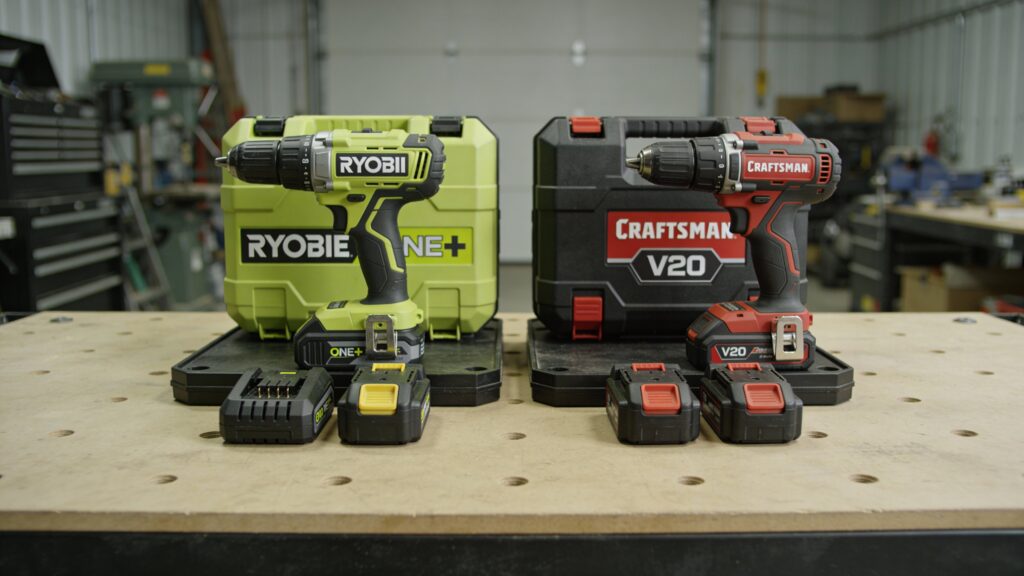
This comparison examines Ryobi ONE+ and Craftsman V20 as starter platforms, focusing on real-world performance, ecosystem depth, pricing, and long-term tradeoffs to support informed, practical buying decisions.

Head-to-head
A clean A/B view of what matters for first-time platform buyers: everyday drilling and fastening performance, ergonomics, kit value, battery compatibility, and the long-term tradeoffs of committing to an ecosystem.
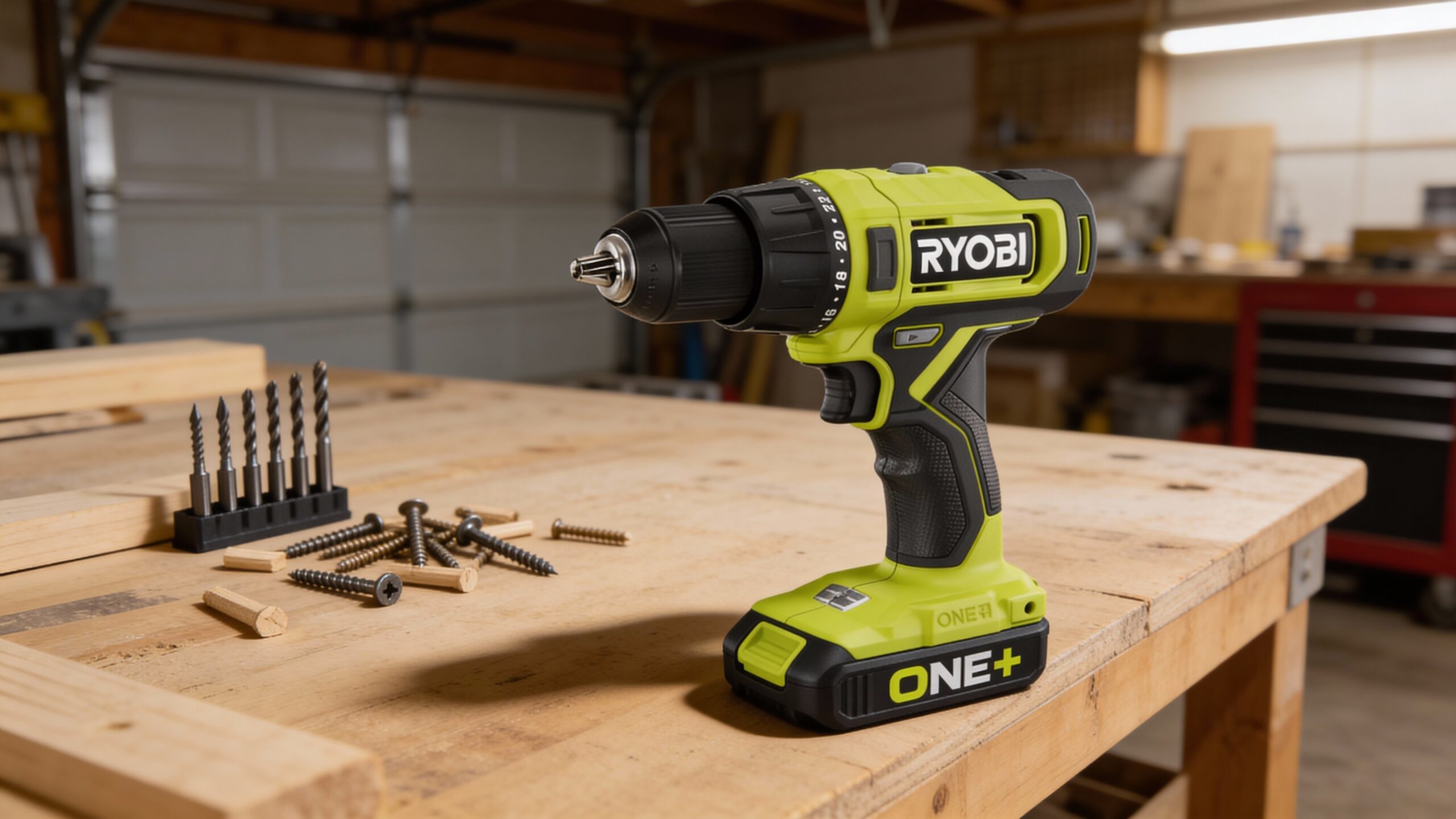
A budget-smart ecosystem built around broad tool variety and easy, incremental expansion—well-suited for homeowners and DIYers who want one battery family to cover lots of occasional-to-regular tasks.
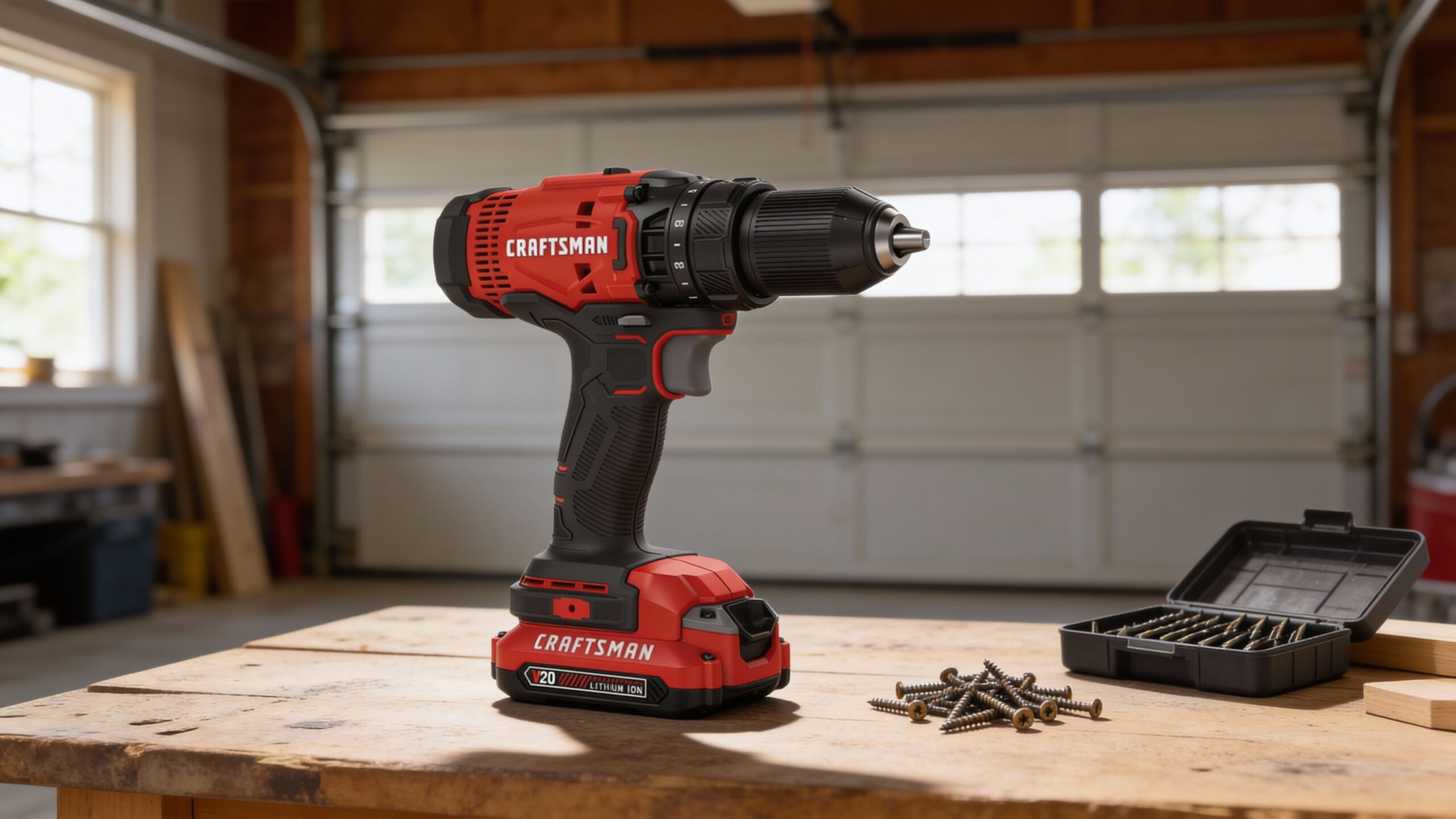
A straightforward, job-ready lineup with strong everyday capability and easy-to-shop kits—often a solid choice when you want familiar ergonomics, local availability, and practical performance for home projects.
Deep dive
Ryobi ONE+ and Craftsman V20 can both cover routine drilling and fastening, but the “right” starter platform usually comes down to how they feel in everyday use and how ownership plays out over years. The meaningful differences show up in how steady each drill stays when the bit starts to bite, how predictable the trigger and clutch feel when you’re trying to avoid stripping fasteners, and how balanced the tool is with the battery size you’ll actually run most of the time. Just as important: the ecosystem you’ll build into—what tools you can add next, how easy replacements are to find, and whether the platform grows with your projects or caps out early.
Power delivery in real materials: The difference isn’t top-end output—it’s how confidently the drill keeps moving when you hit knotty lumber, thicker stock, or larger bits. If your work is mostly pilots, hardware installs, and light-to-moderate holes, either platform can feel “strong enough.” When you’re routinely asking more of a drill, the more composed option is the one that feels less prone to bogging and less fussy about technique.
Control and repeatability: Most owners spend more time driving screws than drilling big holes. In that reality, smooth trigger starts, a clutch that behaves consistently, and stable speed control matter more than headline numbers. Look for the drill that lets you start cleanly on cabinet hardware, hinge screws, or self-tapping fasteners without sudden jumps that lead to cam-outs and rework.
Fatigue and balance over a full project: Weight on a spec sheet rarely tells the story. What matters is how the tool carries with the battery you’ll use most: does it feel front-heavy, does it want to tip when you set it down, and does the grip stay comfortable during repetitive driving? If you do overhead tasks or long runs of fasteners, a well-balanced drill can feel “lighter” even when it isn’t.
Reliability signals you notice day-to-day: Confidence comes from small things—chuck grip that doesn’t slip, fewer stalls when the work gets dense, and controls that stay predictable as the battery drains. Neither platform is defined by a single feature; it’s the steady, problem-free workflow that separates a tool you tolerate from one you keep reaching for.
Ownership and ecosystem: This is where the platforms diverge most. Ryobi ONE+ tends to reward buyers who expect to expand into a broad set of home and shop tools over time. Craftsman V20 tends to fit buyers who want a straightforward lineup with familiar kits and easy local availability. If you’ll add only a few tools, simplicity can be an advantage; if you’ll build a wider kit, ecosystem breadth becomes the long-term value driver.
Where each platform fits best: Ryobi ONE+ generally favors buyers building a larger DIY ecosystem—more tool choices and an easy path to add capability as projects evolve. Craftsman V20 generally favors buyers who want a clean, practical starter setup with dependable everyday performance and simple shopping for common replacements. The smarter choice is the one that matches the kind of work you do repeatedly and the size of the tool family you expect to own.
Methodology
Ryobi ONE+ and Craftsman V20 were evaluated through practical, real-world tasks designed to surface differences that actually matter in everyday use. Rather than relying on spec-sheet claims, the focus is on how each drill performs, feels, and holds up across common drilling and fastening work typical of home improvement and light-to-moderate project use.
Tasks: drilling pilot and clearance holes in typical construction lumber, driving wood screws and hardware fasteners, repeated start–stop cycles, and overhead or awkward-angle work to evaluate balance, control, and user fatigue.
What we scored: how confidently each drill delivers power under real load, consistency of trigger response and clutch behavior, comfort and balance with common battery sizes, perceived build quality, and the practical value of the surrounding battery ecosystem.
How results are interpreted: outcomes are assessed using a context-aware approach, recognizing that the importance of power, control, comfort, and ecosystem depth shifts depending on project type, frequency of use, and long-term ownership expectations.
What we ignored: advertised torque figures, isolated lab-style claims, and features that do not consistently translate into predictable, repeatable performance during real-world drilling and fastening tasks.
FAQ
Verdict
In this matchup, the better choice comes down to how you plan to use the drill over time. Both platforms handle everyday drilling and fastening well, but they diverge in long-term flexibility, simplicity, and how ownership feels as projects add up.
Recommended for most buyers
Ryobi ONE+ Cordless DrillThe more adaptable choice if you expect your tool collection to grow across home, garage, and DIY projects.
Tip: If you already own batteries in either system, staying within that platform often matters more than small performance differences.
Jump to the sections that clarify the real differences between Ryobi ONE+ and Craftsman V20—how they compare in use, how they’re evaluated, and which questions matter most before choosing a starter platform.
We prioritize reputable sellers, easy returns, and reliable availability.
Choose a retailer
Prices checked regularly. We may earn a commission at no cost to you.