
Foot Garment
Apparel designed for the foot, ankle, and shoe interior.
- It includes toe, heel, arch, cushion, and cuff features.
- It has a narrow body scope.
- It is not a shirt or tight.
Athletic socks differ from training clothing because socks are built for the foot inside a shoe, while training clothing covers the torso, hips, legs, arms, or whole-body movement.
Toe seams, heel pockets, arch bands, cushion zones, and sock cuffs solve different problems than training shirts, gym shorts, tights, waistbands, sleeve cuts, and larger fabric panels.
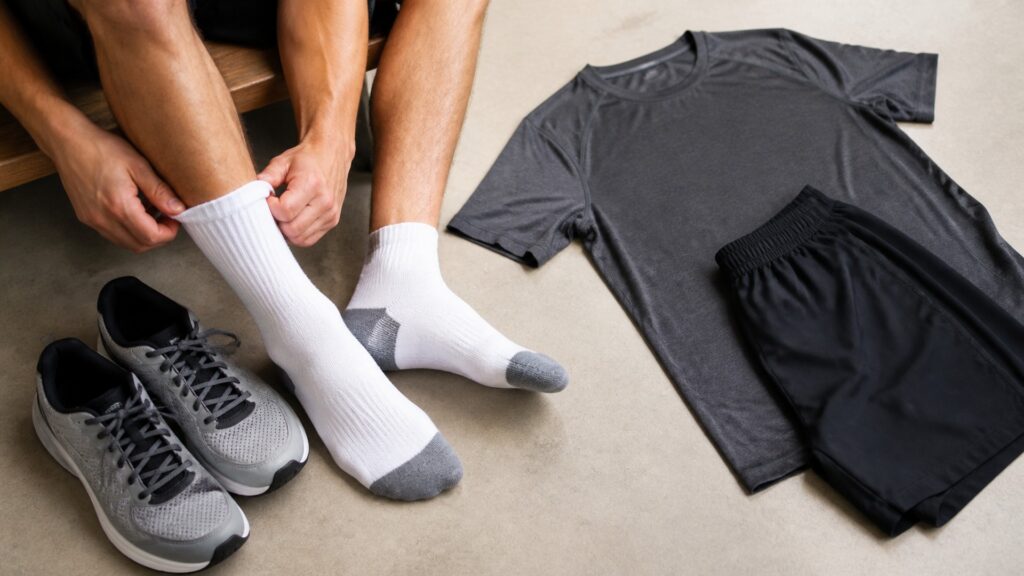
This comparison keeps sock construction separate from broader workout clothing.
Tip: Ask whether the garment's main job happens inside the shoe or across the body.
These definitions connect the main idea to the variables, limits, and practical signals readers need to compare options.
Apparel designed for the foot, ankle, and shoe interior.
General workout apparel such as tops, shorts, tights, and layers.
How the sock works within the shoe's available space.
A fabric section used on tops, shorts, tights, or layers.
The hold mechanism in shorts or tights.
A targeted area such as arch band, heel pocket, toe seam, or cushion zone.
Tip: Use these terms to separate foot-specific knit features from body-apparel construction.
Socks focus on the foot, ankle, shoe interior, toe area, heel hold, arch wrap, and cushion placement.
The sock category is narrow by design.
Training shirts, shorts, tights, and layers solve torso, hip, thigh, arm, coverage, and pocket problems.
Training clothing owns broad body coverage.
Sock hold is built around the foot and shoe, while training-clothing hold is built around waist, shoulders, hems, or cuffs.
The hold mechanism reveals the category.
Both socks and training clothing can use moisture yarns, mesh, stretch, or synthetic blends, but construction and placement change the job.
Material words need product context.
Choose socks for shoe contact, toe seams, heel slip, and cushion; choose training clothing for coverage, waistband, torso, leg, pocket, or layer issues.
Problem location decides the category.
This comparison explains how athletic socks differ from broader training clothing.
It separates shoe-interface construction from body coverage.
It handles shared material language without category drift.
It does not guarantee comfort or performance.
It does not prescribe one garment for every workout.
Common shortcuts and misunderstandings can make the topic seem simpler than it is.
Their shoe-interface job makes them a distinct category.
Fabric function depends on garment placement and construction.
Waistbands belong to shorts or tights.
Small features like seams, heel pockets, and cushion can be highly specific.
Tip: Treat strong claims as starting points for comparison, not final answers.
Concise answers to common questions readers may have after the main explanation.
Athletic socks work inside shoes; training clothing covers larger body areas.
Yes, but the same material can serve different garment jobs.
When the problem is shoe fit, toe seam, heel hold, arch tension, or cushion.
When the problem is torso, leg, waistband, pocket, or layer coverage.
They can support fit and contact conditions, but performance claims need evidence.
Athletic socks differ from training clothing because socks are foot-and-shoe interface garments.
Training clothing solves broader coverage, waistband, pocket, and layer problems across the body.
Use these Review Streets paths to connect the explainer to related categories, comparisons, and next decisions.
Use this for sock-specific construction details.
Read this for torso, leg, waistband, and layer apparel logic.
Browse socks after confirming the issue is shoe-interface fit.
Choose a retailer
Prices checked regularly. We may earn a commission at no cost to you.