
Toe Seam
The stitched or linked area across the toe end of a sock.
- It can change how the sock sits inside a shoe.
- Flat and bulky seams feel different.
- It does not guarantee blister prevention.
Athletic socks work as a small but busy interface between the foot and the shoe.
Toe seams, heel pockets, arch bands, cushion zones, mesh panels, ribbed cuffs, moisture yarns, sock height, shoe volume, and wash wear all shape how the sock behaves during activity.
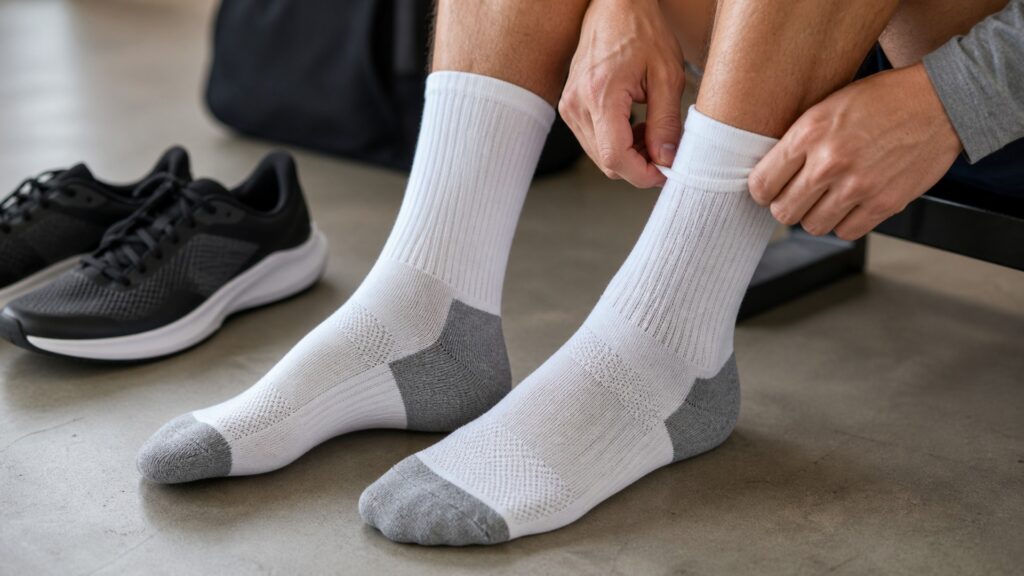
A foot-and-shoe-specific explanation of athletic sock design, limits, and use context.
Tip: Put the sock inside the actual shoe; that is where most of its function becomes visible.
These definitions connect the main idea to the variables, limits, and practical signals readers need to compare options.
The stitched or linked area across the toe end of a sock.
The shaped rear portion that cups the heel.
A tighter knit zone around the midfoot.
Extra yarn thickness placed under or around parts of the foot.
Fiber chosen for how it handles sweat and drying.
How far the sock rises above the shoe.
Tip: Use this vocabulary to keep the explanation anchored to the row's exact product role.
An athletic sock does most of its work by changing the layer between skin, shoe lining, footbed, heel collar, and toe box.
The mechanism starts inside the shoe.
The sock has to stay aligned while the foot moves inside the shoe, so shaped heels, midfoot tension, and cuff structure matter.
Placement is its own job.
Cushion zones can soften contact or fill space, but added thickness can also crowd a shoe or change toe room.
Cushion should be judged with shoe volume.
Fiber blend, knit density, mesh panels, and drying time shape moisture feel, while washing and wear can change stretch and thickness.
Material behavior has practical limits.
Socks can alter contact, fit, and moisture handling, but they cannot guarantee blister prevention, injury prevention, comfort, or performance.
The explanation stays with product behavior.
Sock mechanics explain placement, cushion, moisture behavior, shoe volume, and wear.
They separate sock construction from shoe design.
They help readers check fit inside the actual shoe.
They do not guarantee comfort, blister prevention, injury prevention, or performance.
They do not replace medical or fitting advice.
Common shortcuts and misunderstandings can make the topic seem simpler than it is.
Heel shape, cushion, yarn, seams, and shoe volume can all change use.
Extra thickness can crowd a shoe.
Sweat, heat, shoe ventilation, and duration still matter.
Toe construction can help, but shoe fit and foot shape still matter.
Tip: Treat strong claims as starting points for comparison, not final answers.
Concise answers to common questions readers may have after the main explanation.
They work as a shaped fabric layer between the foot and shoe.
Sock thickness takes up space inside the shoe.
It adds midfoot tension to help the sock stay placed.
That should not be promised; fit, moisture, shoes, skin, and duration all matter.
Elastic, cushion, and fabric feel can change after repeated use.
Athletic socks work by managing the foot-to-shoe layer: placement, cushion, moisture behavior, seams, cuff height, and wear.
The best check is the actual sock in the actual shoe during the activity.
Use these Review Streets paths to connect the explainer to related categories, comparisons, and next decisions.
Use this to connect sock construction with repeated training sessions.
Read this for how socks move during foot strike, push-off, and shoe contact.
Browse socks after understanding fit, cushion, and material behavior.
Choose a retailer
Prices checked regularly. We may earn a commission at no cost to you.