
Fixed Path
A fixed path means both hands move the same bar through one shared line.
- Example: pressing a barbell from the chest
- Check: make sure the path fits the lift
- Limit: the shared bar can expose mobility limits
Barbells and dumbbells both load strength exercises, but they change the lift in different ways. A barbell connects both hands to one shared implement, while dumbbells let each side move and stabilize more independently.
The difference matters because the tool changes load potential, setup, balance, range of motion, storage, and exercise choice. A barbell is not just a longer dumbbell, and dumbbells are not simply smaller barbells.
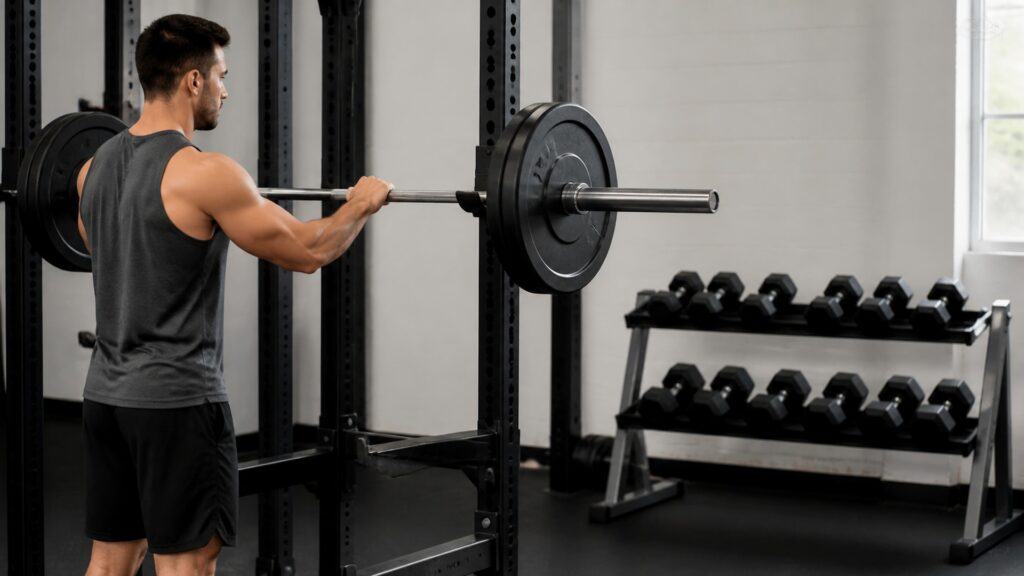
A practical comparison of shared-bar loading and independent-hand loading.
Tip: Compare how the weight moves, not just how heavy it can be.
These concepts explain why the two tools are not direct copies.
A fixed path means both hands move the same bar through one shared line.
Load progression is the ability to add weight in controlled steps over time.
Rack setup is how the bar starts, returns, and stays supported between attempts.
Grip and centering keep the bar balanced before and during the lift.
Brace and control keep the body stable while the bar moves.
Spotter or safeties provide a backup when a lift may fail.
Tip: The shared bar changes loading, stability, and setup.
Because both hands share one bar, many lifters can use heavier total loads on barbell squats, presses, pulls, and deadlifts than on dumbbell versions.
The barbell's load capacity is one of its main differences.
Dumbbells require each arm or side to stabilize its own weight. That can reveal side-to-side differences and allow more natural paths for some lifters.
Dumbbells trade total load for independent movement.
A barbell often needs plates, collars, rack height, safety arms, a bench, or platform space. Dumbbells may be simpler to start and stop.
Setup can decide which tool fits the session.
A bar can limit how the hands travel, while dumbbells can move around the torso or shoulders more freely. That can affect comfort and exercise selection.
The path is part of the difference.
A missed barbell lift may need safeties or a spotter. Dumbbells may be easier to drop or set aside, but they can still create shoulder, wrist, or floor hazards.
Different tools need different backups.
Both build strength, but they organize load differently.
The goal is higher total load or clear plate-based progression.
The exercise fits a shared bar path.
The goal is independent-side control, freer range, or quick setup.
The lifter needs a more adjustable hand path.
The comparison is not only about which is heavier.
They often allow more load, but dumbbells can be better for independent control.
Dumbbells can be primary tools for many strength plans.
The path, grip, balance, and exit can change a lot.
A lighter dumbbell can still be risky if setup or control is poor.
Tip: Choose by movement, control, load goal, and setup.
Short answers for choosing between shared and independent loads.
A barbell connects both hands to one shared load, while dumbbells move independently.
Barbells usually allow higher total load for many compound lifts.
Dumbbells are often simpler for quick sessions, while barbells need more station setup.
Yes. Many strength plans use barbells for main lifts and dumbbells for assistance or range.
Use barbells for shared-load progression and dumbbells for independent control and flexible paths.
Barbells differ from dumbbells because they connect both hands to one shared load.
Dumbbells offer more independent movement, while barbells often offer clearer heavy progression.
Use these Review Streets paths to compare related categories and practical next decisions.
Review the core bar, sleeve, grip, and loading basics.
Compare shared-bar lifting with independent-hand loading.
Explore the barbell category.
Choose a retailer
Prices checked regularly. We may earn a commission at no cost to you.