
Fixed Path
A fixed path means both hands move the same bar through one shared line.
- Example: pressing a barbell from the chest
- Check: make sure the path fits the lift
- Limit: the shared bar can expose mobility limits
Barbells and resistance bands both add resistance to strength training, but they create that resistance in very different ways. A barbell uses fixed external weight, while a band changes tension as it stretches.
The difference matters because the tools change progression, control, setup, joint feel, and exercise choice. Barbells usually suit measurable loaded lifts, while bands suit variable tension, warmups, assistance, travel, and compact training.
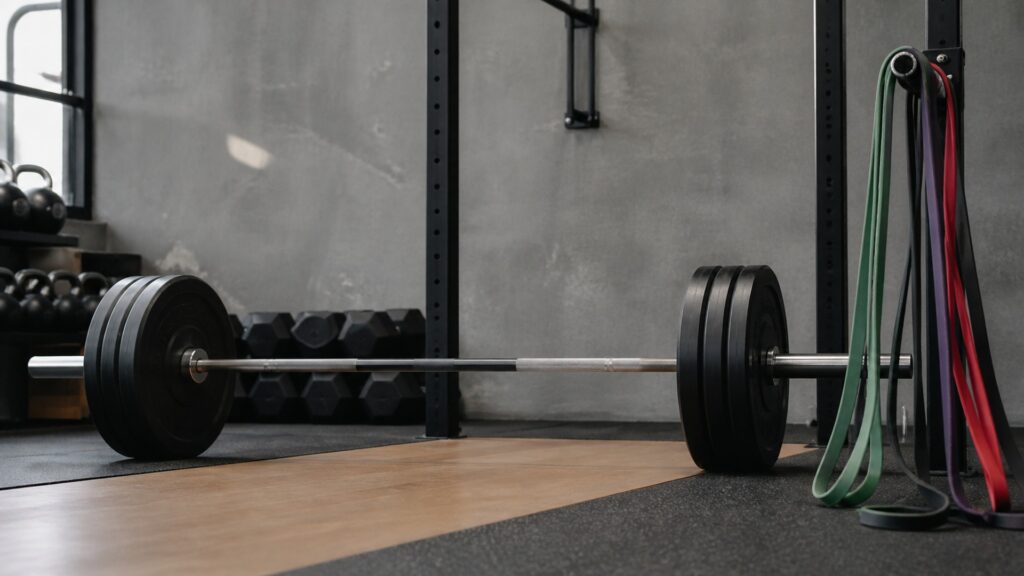
A practical comparison of fixed weight and stretch-based tension.
Tip: Compare the resistance curve before comparing the category name.
These concepts explain why fixed load and elastic tension train differently.
A fixed path means both hands move the same bar through one shared line.
Load progression is the ability to add weight in controlled steps over time.
Rack setup is how the bar starts, returns, and stays supported between attempts.
Grip and centering keep the bar balanced before and during the lift.
Brace and control keep the body stable while the bar moves.
Spotter or safeties provide a backup when a lift may fail.
Tip: A barbell and a band can both challenge strength, but the resistance does not behave the same way.
A loaded bar weighs the same at the bottom, middle, and top of the rep. The lifter still feels different difficulty by position, but the external load does not stretch or shrink.
Fixed weight makes barbell progression clear.
A resistance band usually gets harder as it lengthens. That can support assistance, activation, speed work, or top-range challenge.
Band tension changes during the rep.
Barbells need plates, collars, racks, benches, or platforms. Bands need secure anchors, safe stretch distance, and awareness of where the band will travel.
Different resistance styles create different setup risks.
Barbell load can be tracked in clear plate changes. Band resistance depends on band type, stretch length, angle, and anchor position.
The barbell is usually easier to quantify.
Bands are useful for warmups, rehab-style drills, travel workouts, assistance, and adding tension to certain movements. They can train strength, but not in the same way as a loaded bar.
The best tool depends on the job.
Both add resistance, but the resistance curve changes the session.
The goal is measurable fixed-load progression.
The lift benefits from a shared bar and stable plates.
The goal is variable tension, assistance, warmups, or travel.
The exercise benefits from a light, portable setup.
The comparison is not just heavy versus light.
Bands can be useful for serious training, but their tension behaves differently.
Barbells are strong for measurable load, but bands can support specific roles.
Band resistance changes with stretch and setup.
Barbell progression is usually plate-based, while band progression depends on setup and tension.
Tip: Choose the tool by resistance behavior and session goal.
Short answers for comparing fixed load and elastic tension.
A barbell uses fixed external weight, while a band creates stretch-based tension.
Barbells are usually easier to track because plates provide known load changes.
Yes. Bands can assist, add tension, or support warmups around barbell work.
Bands are usually more portable and easier to store.
Use barbells for fixed-load strength and bands for variable tension or compact support.
Barbells differ from resistance bands because they use fixed external weight instead of stretch-based tension.
That difference changes progression, setup, control, and the kinds of exercises each tool supports best.
Use these Review Streets paths to compare related categories and practical next decisions.
Review the core bar, sleeve, grip, and loading basics.
Compare shared-bar lifting with independent-hand loading.
Explore the barbell category.
Choose a retailer
Prices checked regularly. We may earn a commission at no cost to you.