What Makes Bodyweight Training Equipment Different from Functional Training Equipment

Bodyweight training equipment and functional training equipment overlap, but they are not the same category. Bodyweight tools use the user's own body as the main resistance. Functional training equipment is broader and can include weights, cables, bands, sleds, medicine balls, suspension systems, and other tools for practical movement patterns.

The difference matters because a pull-up bar, parallettes, push-up handle, ab wheel, or dip station solves a different problem than a full functional training setup. Bodyweight equipment is best when the goal is scalable body-resistance work. Functional training equipment is better when the routine needs more load types, movement variety, and conditioning options.

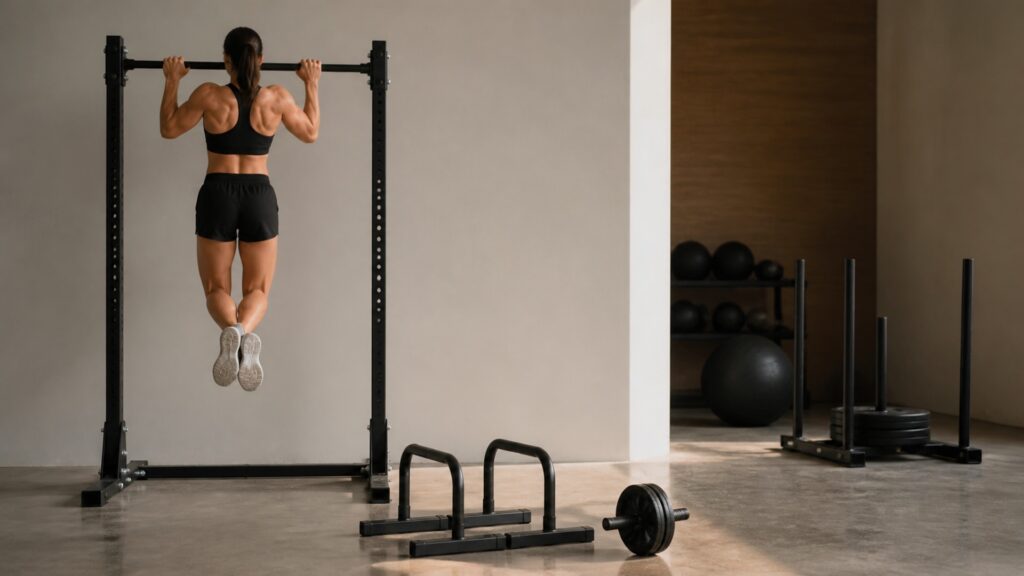
By: Review Streets Research Lab
Updated: October 2, 2026
Explainer · 8-12 min read
bodyweight training equipment explainer hero image for Review Streets
What You'll Learn

How Bodyweight Gear Differs From Functional Training Gear

A practical comparison of body-resistance tools and broader functional training equipment.

  • What bodyweight training equipment is designed to do
  • How functional training equipment covers a wider range of movements
  • Why bodyweight tools depend on leverage, support, and control
  • Where functional gear adds load, power, and conditioning options
  • When the categories can work together
  • How to choose based on the missing training job

Tip: Start with the resistance source. Bodyweight gear uses the body as the load; functional gear can use many load and movement formats.

Definitions

Key Concepts Behind The Difference

These concepts separate body-resistance tools from broader functional training equipment.

Bodyweight Training Equipment

Bodyweight training equipment supports exercises where the user's body provides the main resistance.

  • Example: pull-up bars, parallettes, dip stations, push-up handles, sliders, or ab wheels
  • Check: see how the tool changes support, leverage, or range
  • Limit: it may not offer precise external loading

Functional Training Equipment

Functional training equipment supports practical movement patterns with bodyweight, free load, cables, bands, or other resistance types.

  • Example: kettlebells, medicine balls, suspension straps, bands, sleds, or cable stations
  • Check: review the movement patterns and load options
  • Limit: the category can be broad and less specific

Resistance Source

Resistance source is where the exercise load comes from.

  • Example: body mass during a pull-up or a kettlebell during a loaded carry
  • Check: identify what creates the challenge
  • Limit: some goals need more than one resistance source

Leverage Scaling

Leverage scaling changes difficulty by adjusting body angle, support height, or limb position.

  • Example: making rows harder by lowering the body angle
  • Check: look for small progression steps
  • Limit: leverage can be less precise than adding weight

Movement Variety

Movement variety is the range of pushes, pulls, hinges, squats, carries, rotations, and conditioning formats a setup can support.

  • Example: a functional setup combining bands, balls, and bodyweight work
  • Check: compare the setup with the user's full routine
  • Limit: more variety can add complexity

Training Fit

Training fit is how well the equipment solves the workout problem at hand.

  • Example: using parallettes for pressing control instead of buying a full functional kit
  • Check: match the tool to repeated exercises
  • Limit: one tool rarely covers every need

Tip: Bodyweight equipment is narrower and more body-resistance focused. Functional training equipment is broader and more load-flexible.

Core Difference

Bodyweight Gear Uses The Body As The Main Load

Bodyweight equipment changes how the user supports or moves their own body. The tool may change grip, range, angle, or stability, but the body remains the main resistance.

  • Pull-up bars support hanging and pulling.
  • Parallettes and handles shape pressing positions.
  • Sliders and ab wheels challenge body control.

The category is strongest when body-resistance progression is the goal.

Broader Category

Functional Gear Adds More Resistance Options

Functional training equipment can include bodyweight tools, but it also includes external load and conditioning tools. That makes it a wider category for full-body movement training.

  • Kettlebells and medicine balls add load and power.
  • Bands and cables add directional resistance.
  • Sleds, straps, and stations expand conditioning choices.

Functional equipment is usually chosen for versatility across movement patterns.

Progression

The Progression Paths Are Different

Bodyweight progression often changes leverage, range, tempo, assistance, or stability. Functional training progression can also change external load, implement type, speed, distance, or resistance direction.

  • Bodyweight tools need clear regression and progression steps.
  • Functional tools often scale through weight or resistance.
  • Both require control before intensity.

The best category depends on how the user needs to progress.

Setup

Bodyweight Gear Can Be Simpler But More Specific

Many bodyweight tools are compact and affordable, but they can be narrow. A pull-up bar helps pulling work but does not cover loaded carries or rotational power by itself.

  • Check which movement patterns the tool supports.
  • Avoid buying duplicate pressing or core tools.
  • Add functional gear only when it fills a real gap.

Simple equipment is useful when its job is clear.

Decision

Choose The Category That Solves The Missing Job

Choose bodyweight equipment when the routine needs support, leverage, and body-resistance control. Choose functional training equipment when the routine needs broader loading, conditioning, or movement variety.

  • Buy for repeated use, not category labels.
  • Match tools to push, pull, brace, hinge, squat, and carry needs.
  • Combine categories when each has a separate role.

The right choice follows the training job.

Quick Reality Check

Where Each Category Makes More Sense

The decision depends on whether the workout needs body-resistance control or broader load variety.

Bodyweight Equipment Fits When

The workout centers on pull-ups, dips, push-ups, bracing, support holds, or leverage-based progressions.

The user wants compact tools for body-resistance training.

Functional Equipment Fits When

The routine needs external load, carries, throws, bands, cables, sled work, or mixed conditioning.

The user wants a wider toolkit for multiple movement patterns.

Common Myths

Misconceptions About Bodyweight And Functional Equipment

The categories overlap, but they should not be treated as identical.

Bodyweight equipment is always simpler

The setup can be simple, but advanced bodyweight progressions can be technically demanding.

Functional training equipment excludes bodyweight tools

Bodyweight tools can be part of functional training, but they are not the entire category.

External load is always better

External load helps some goals, while bodyweight leverage and control fit others better.

One category should replace the other

Many routines use bodyweight tools for control and functional tools for loading variety.

Tip: Use bodyweight gear for body-resistance control and functional gear for broader movement loading.

FAQ

Frequently Asked Questions About Bodyweight And Functional Training Equipment

Short answers for separating the two categories.

Is bodyweight equipment functional training equipment?

It can be part of functional training, but bodyweight equipment is a narrower category focused on body-resistance work.

Which should beginners choose first?

Beginners often benefit from simple bodyweight tools first when they need control. Functional tools make sense when load variety is the missing piece.

Can I combine both?

Yes. Many routines use bodyweight tools for support work and functional equipment for loaded movement or conditioning.

What is the biggest difference?

The biggest difference is resistance source and scope: bodyweight tools use the body as load, while functional equipment can use many tools and load types.

What is the practical takeaway?

Choose bodyweight equipment for leverage and support. Choose functional training equipment for broader loading and movement variety.

Bottom Line

Bodyweight training equipment is more specific than functional training equipment.

Use bodyweight tools for body-resistance control and functional tools when the workout needs broader load types, power, carries, conditioning, or movement variety.

Next Steps

Go Deeper or Compare Your Options

Use these Review Streets paths to compare related categories and practical next decisions.