What Makes Compact Pickup Trucks Different from Electric Pickup Trucks

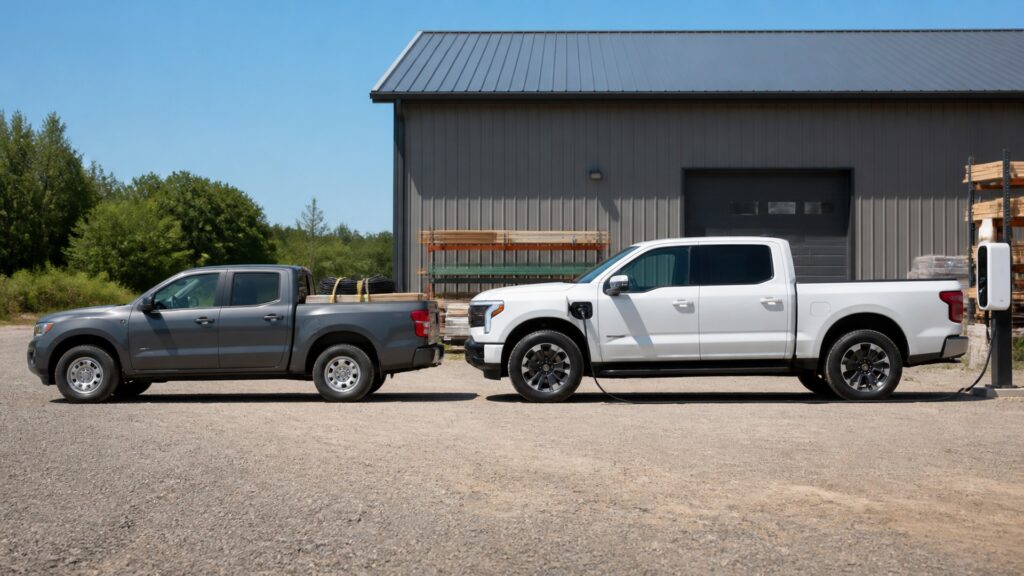
A compact pickup describes a smaller pickup package; an electric pickup describes a powertrain. They are not mutually exclusive categories. The meaningful differences appear when a particular compact gasoline or hybrid truck is compared with a particular battery-electric truck: size and loading access may differ, while energy storage, charging, and propulsion operate differently.

Start with what the compact package is intended to do for the owner: carry the required people and cargo while fitting daily surroundings. Then ask how each candidate's power source supports that role. This keeps a small-body advantage separate from a fuel-access advantage, and avoids assuming that every electric pickup must be large or that every compact must use gasoline.

By: Review Streets Research Lab
Updated: October 5, 2026
Explainer · 8-12 min read
compact pickup trucks explainer hero image for Review Streets
What You'll Learn

Separate Compact Packaging From Electric Operation

Understand what each attribute changes before deciding which differences matter.

  • Measure the actual passenger and cargo package
  • Identify the powertrain instead of inferring it from size
  • Compare how energy is replenished between trips
  • Check operating feel and service requirements by model
  • Use actual ratings and routes to establish suitability

Tip: A candidate can satisfy both descriptions. If it does, judge its dimensions and electric operating routine directly rather than forcing it into one category.

Definitions

Six Attributes to Compare Independently

Each asks a specific question about the truck.

Compact Proportions

A vehicle's smaller overall pickup dimensions and space allocation.

  • Example: A compact configuration fits a constrained parking entrance.
  • Check: Measure the actual exterior and needed access.
  • Limit: A size description does not establish propulsion type.

Passenger-and-Cargo Package

The arrangement of seating, protected storage, and open-bed space.

  • Example: A cab and bed combination accommodates the normal people and tools.
  • Check: Try the actual occupants and load dimensions.
  • Limit: Smaller or larger overall size alone cannot prove a useful fit.

Energy Source

The stored energy and powertrain used to move the vehicle.

  • Example: A gasoline compact burns fuel while a battery-electric candidate draws from its traction battery.
  • Check: Distinguish gasoline, non-plug-in hybrid, plug-in, and battery-electric designs.
  • Limit: A hybrid's electric components do not necessarily mean external charging.

Replenishment Pattern

Where and when driving energy is restored.

  • Example: One truck refuels on the route while another charges during overnight parking.
  • Check: Check actual access, time, and equipment needs.
  • Limit: Convenience depends on the owner and location.

Operating Character

The vehicle's response and controls during ordinary driving.

  • Example: A fitted electric-deceleration setting changes how releasing the accelerator feels.
  • Check: Learn the actual system and operating restrictions.
  • Limit: Category names do not describe every control or driving behavior.

Task Capability

The ability to perform the required load and trip within approved limits.

  • Example: The occupied, equipped truck can support a specified trailer and route.
  • Check: Check configuration-specific ratings and practical energy access.
  • Limit: Fast acceleration does not establish payload or towing suitability.

Tip: Put dimensions, powertrain, load capability, and energy access in separate columns when comparing the actual candidates.

Packaging First

The Compact Advantage Is a Vehicle-Space Question

The compact proposition is useful pickup space in a vehicle that can fit the owner's daily surroundings. Bed height, reach, passenger access, and turning room deserve direct inspection. An electric candidate may be larger, similarly sized, or configured differently; that is a fact about the model, not a necessary effect of electric propulsion. Compare the part of the vehicle that the task actually uses.

  • Measure parking and cargo dimensions separately.
  • Try loading and seating rather than judging photographs.
  • Check the room needed after the truck is parked.

A smaller exterior can be a meaningful benefit even when the owner does not need less cargo weight capacity.

Propulsion

A Small Body Can Contain Different Energy Systems

A gasoline pickup uses a combustion engine, a hybrid combines combustion and electric components, and a battery-electric truck uses externally replenished battery energy for propulsion. Those arrangements influence service and replenishment needs. They do not by themselves decide the truck's bed dimensions or usable seating. Identify the fitted system before assuming an operating requirement.

  • Check the exact powertrain designation.
  • Distinguish non-plug-in hybrids from plug-in designs.
  • Keep propulsion claims separate from cargo specifications.

A non-plug-in hybrid compact can use electric assistance without requiring the charging routine of a battery-electric pickup.

Time Between Trips

Charging and Fueling Create Different Routines

An electric candidate can replenish energy while it is already parked if suitable charging is available. A fuel-powered compact uses an appropriate refueling network instead. Compare the locations and time the owner actually has, including rentals, shared parking, or changing work destinations. Neither a convenient home-charging example nor a quick fuel stop describes every owner's situation.

  • Check the normal parking and energy locations.
  • Include permissions and setup requirements where relevant.
  • Test longer or loaded travel separately from commuting.

Two owners considering the same trucks can reach different conclusions because their parking and travel routines differ.

Driving and Care

Compare Fitted Behavior Rather Than Stereotypes

Battery-electric response can differ from a combustion vehicle's, and some hybrids share electric-deceleration features. Braking controls and limitations should be learned from the actual manual. Service also follows the powertrain: an engine has requirements absent from a battery-electric vehicle, while tires, friction brakes, chassis, and other systems still need attention in either case.

  • Learn pedal response and deceleration settings.
  • Keep brake-pedal readiness and assistance limits in mind.
  • Compare the complete maintenance schedules.

A quiet drive or fewer engine-service tasks should not be confused with an absence of operating limits or maintenance.

Working Ability

The Actual Configuration Must Pass the Load and Route Checks

A useful comparison applies the same passengers, accessories, cargo, and trailer to both candidates. Read the real vehicle ratings and confirm approved equipment. Then assess whether the loaded route is practical with fuel or charging access. An electric truck may offer useful features or capacity; a compact may already provide everything needed in a convenient package. Verify each advantage rather than assigning it by label.

  • Use the occupied, equipped vehicle in the load calculation.
  • Confirm hitch and trailer-brake requirements if towing.
  • Compare real ownership costs and energy use.

A truck serves the job when its space, ratings, and energy routine all support the task, regardless of which category first attracted attention.

Quick Reality Check

What Each Description Does and Does Not Explain

Use the categories to ask better questions about the vehicle.

Compact Describes a Packaging Aim

A smaller pickup footprint and a particular balance of passenger and cargo space.

Actual dimensions, access, and capability still need model-specific verification.

Electric Describes Propulsion

For a battery-electric model, externally charged energy supplies the driving motors.

Physical size, payload, storage features, and total ownership costs are separate vehicle attributes.

Common Myths

Misconceptions About Compact and Electric Pickups

Avoid turning independent characteristics into opposing camps.

A pickup must be either compact or electric.

It can be both; size and propulsion are independent descriptions.

All compact hybrids plug in.

Non-plug-in hybrids do not require external charging; identify the actual design.

Electric propulsion guarantees a larger cargo area.

Cargo space depends on how the particular vehicle is packaged.

The powertrain alone decides the better work truck.

Space, configuration, load limits, route practicality, and cost also matter.

Tip: A fair comparison explains the actual tradeoffs without treating an attribute as an all-purpose advantage.

FAQ

Questions About Compact Versus Electric Attributes

Answers for interpreting two different kinds of vehicle description.

What makes compact different from electric?

Compact describes size and packaging, while electric describes propulsion. Actual vehicles are needed for a direct comparison.

Can a compact have useful towing capability?

An appropriately configured model can tow within its specific ratings and equipment requirements.

Does an electric candidate always need home charging?

It needs a dependable suitable charging arrangement, which may be at home, work, or practical public locations.

Are maintenance needs determined by size?

No. Use the actual powertrain, equipment, model-year schedule, and conditions of use.

How do I make the final comparison?

Check required space and load capability, then compare driving behavior, replenishment, service, and complete ownership costs.

Bottom Line

Compact and electric describe separate aspects of a pickup, so their useful differences come from the actual vehicles being compared.

Start with the space and work the truck must serve, then assess how its particular powertrain and energy routine support those needs.

Next Steps

Go Deeper or Compare Your Options

Use these Review Streets paths to compare related categories and practical next decisions.

Technical references: Ford Maverick configuration information; DOE electric-vehicle consumer information; DOE electric-vehicle maintenance guidance; Chevrolet Silverado EV owner resources. Use the manual and ratings for your own model year and configuration.