
Pressure Profile
How a compression garment distributes firm contact across an area.
- It is central to compression apparel.
- Profiles vary widely.
- It does not prove a health result.
Compression apparel differs from training clothing because pressure profile is the main design trait, not simply stretch, athletic branding, or close fit.
Training clothing usually begins with workout coverage, breathability, range of motion, pockets, and general fabric feel; compression apparel begins with firm contact over a chosen body area.
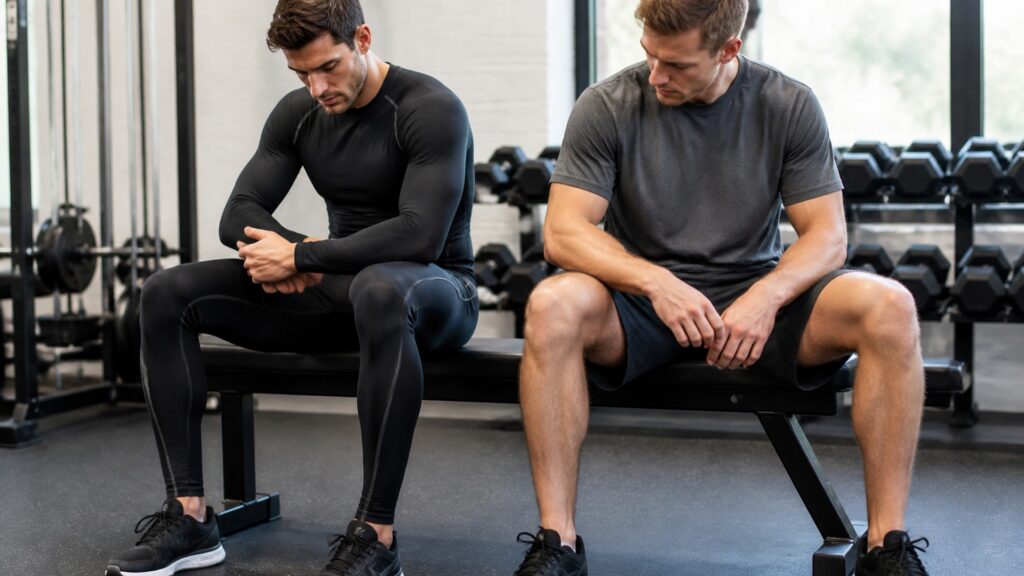
This comparison explains the category difference without ranking one apparel type as universally better.
Tip: Look for pressure design first; if the garment is mainly about coverage and motion, it belongs closer to training clothing.
These definitions connect the main idea to the variables, limits, and practical signals readers need to compare options.
How a compression garment distributes firm contact across an area.
A general workout shirt selected for coverage, fabric feel, and movement.
Workout shorts designed for movement, coverage, pockets, or breathability.
A close garment designed around pressure-focused upper-leg or hip coverage.
How well fabric returns after stretching.
The way a waistband resists rolling or sliding.
Tip: These comparison terms keep close fit from being mistaken for compression.
Compression sleeves, tights, shorts, and tops are distinguished by controlled firm contact over a specific body area.
Pressure is the category marker.
Training tees, gym shorts, tanks, joggers, and loose layers are usually selected for coverage, airflow, range of motion, pockets, or fabric feel.
General workout utility defines the sibling category.
A snug shirt or tight short may sit close without being engineered around pressure zones, high stretch recovery, or compression-specific sizing.
Close fit alone is not enough.
Loose training clothing may still function when slightly oversized, but compression apparel can lose its main purpose or become too restrictive when sizing is off.
Sizing stakes differ.
If the reader wants ventilation, pockets, relaxed movement, casual gym coverage, or easy layering, ordinary training clothing may answer the need more directly.
The comparison does not crown a winner.
This article clarifies what separates compression apparel from general training clothing.
It focuses on pressure profile, fabric recovery, sizing stakes, and ordinary workout utility.
It explains overlap without collapsing the categories.
It does not claim compression is better for every workout.
It does not prove recovery, safety, or performance benefits.
Common shortcuts and misunderstandings can make the topic seem simpler than it is.
Close fit can exist without a pressure-focused design.
General training clothing may be the correct category for many workouts.
Compression shorts use different fit intent and fabric behavior.
Pressure explains category function, not guaranteed outcomes.
Tip: Treat strong claims as starting points for comparison, not final answers.
Concise answers to common questions readers may have after the main explanation.
Compression apparel is designed around firm pressure over a body area.
Yes, but fitted clothing is not automatically compression apparel.
When coverage, pockets, ventilation, or relaxed movement matter more than pressure.
The garment's main function depends on controlled fit.
That cannot be assumed; the categories solve different apparel problems.
Compression apparel is different from training clothing because pressure profile and firm body-area fit are central to its design.
Training clothing remains the better category when the need is general workout coverage, airflow, pockets, or freer movement.
Use these Review Streets paths to connect the explainer to related categories, comparisons, and next decisions.
Use this for the garment mechanics behind pressure profile and fabric recovery.
Compare the general workout clothing side of the category boundary.
Browse compression pieces after learning what makes the category distinct.
Choose a retailer
Prices checked regularly. We may earn a commission at no cost to you.