
Compression Knit
A stretchy fabric structure intended to sit firmly around a body area.
- It supplies garment tension.
- Fiber and knit density vary.
- It is not a medical device by default.
Compression apparel works by turning stretch fabric into controlled garment tension around a specific body area.
The useful mechanics are found in the knit, pressure zones, panel shape, cuff edges, seam placement, stretch recovery, and size chart rather than in broad promises about recovery or better workouts.
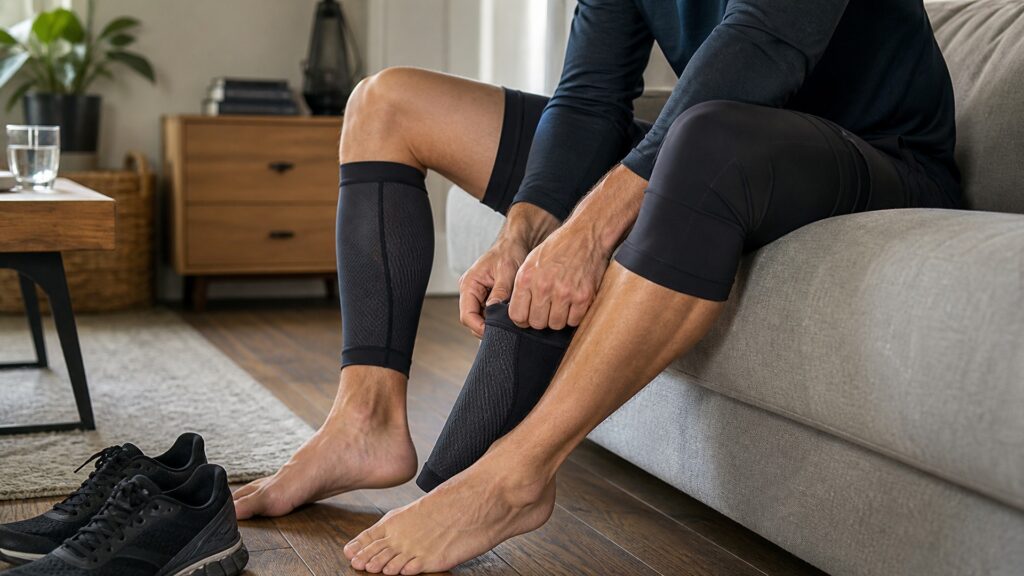
This explanation follows how compression apparel creates a firm fit without turning that fit into unsupported health claims.
Tip: Judge compression apparel by the covered area, pressure feel, and fit stability before judging any claim printed on the label.
These definitions connect the main idea to the variables, limits, and practical signals readers need to compare options.
A stretchy fabric structure intended to sit firmly around a body area.
The fabric's ability to return after being pulled.
An area where the garment is designed to feel tighter or more controlled.
A shaped fabric piece used to form the sleeve, tight, short, or top.
The opening at an ankle, wrist, thigh, waist, or hem.
A seam style often used to reduce bulky overlap.
Tip: These terms keep the explanation focused on garment mechanics rather than training outcomes.
Compression apparel starts with fabric that resists expansion and presses back when wrapped around an arm, leg, torso, or calf.
The mechanism begins with textile tension.
A sleeve, tight, short, or top cannot apply the same feel everywhere unless the cut, seams, and panels support that shape.
Construction directs the pressure.
Cuff edges, hems, grippers, and waistbands mark the borders of the garment and help keep those borders from drifting during use.
Placement is controlled at the openings.
Compression apparel usually needs closer sizing than ordinary training clothing because a small fit mismatch can change firmness, rolling, or garment travel.
Sizing translates design into use.
Compression construction can be explained without claiming faster recovery, improved circulation, injury prevention, or better performance for an individual.
The article stops at garment function.
Compression apparel can be understood as a fit and textile system.
It explains why the garment feels different from ordinary training clothes.
It keeps construction, covered area, and sizing visible.
It does not prove a medical, recovery, circulation, calorie, or injury-prevention result.
It does not tell a reader what pressure level is personally appropriate.
Common shortcuts and misunderstandings can make the topic seem simpler than it is.
A garment can be too tight for its intended use and still be poorly matched.
It is designed around stretch recovery, panels, pressure zones, and anchor edges.
Athletic compression garments and medical-grade products are different categories.
Fabric, cut, and measurement methods vary enough to make brand charts important.
Tip: Treat strong claims as starting points for comparison, not final answers.
Concise answers to common questions readers may have after the main explanation.
It uses stretch fabric and garment shape to create firm contact around a covered area.
They define where the garment begins and ends and can change rolling or edge pressure.
Not by default; medical compression has separate standards and should not be assumed from athletic apparel.
Small sizing differences can change the pressure feel, placement, and usefulness of the garment.
No. Recovery and health outcomes require evidence that a product label alone does not provide.
Compression apparel works through controlled stretch, body-area coverage, panel shape, seam placement, edge hold, and sizing.
Those mechanics can explain fit behavior without promising recovery, circulation, or training results.
Use these Review Streets paths to connect the explainer to related categories, comparisons, and next decisions.
Use this next when the question shifts from mechanics to training-session role.
Compare compression construction with ordinary workout apparel fit.
Browse the category after learning the construction vocabulary.
Choose a retailer
Prices checked regularly. We may earn a commission at no cost to you.