
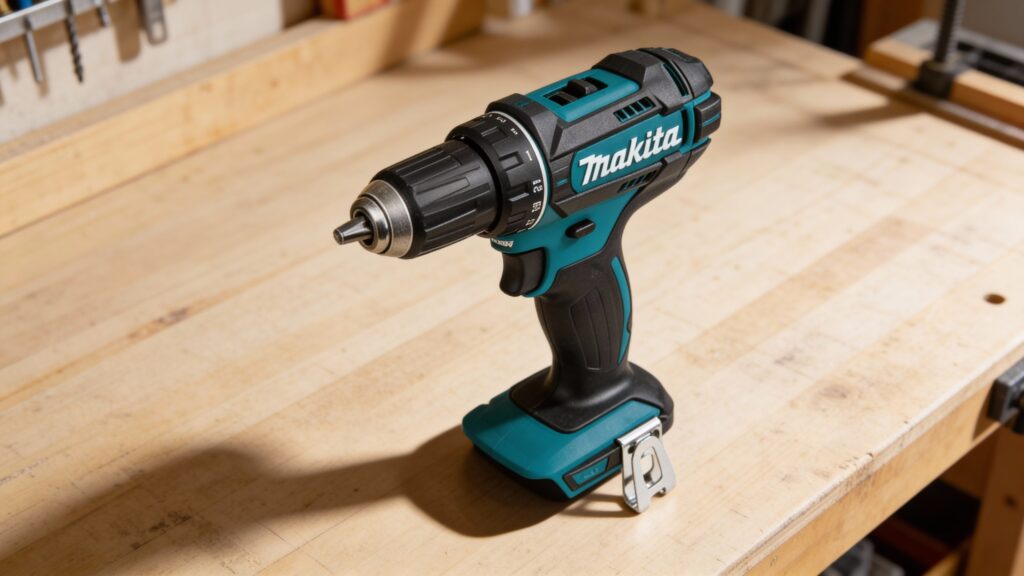
What Makes Cordless Drills Different from Corded Drills

Cordless and corded drills are often grouped together because they perform the same basic function, yet they operate on fundamentally different systems. The distinction is not defined by appearance or intended task, but by how power is generated, delivered, and managed within the tool. These internal differences shape behavior, limitations, and design choices in ways that are frequently overlooked.

This explainer breaks down the core mechanical and electrical principles that separate cordless drills from corded drills. It walks through power delivery, energy storage, runtime behavior, and structural design considerations. By the end, readers will understand how each system functions at a foundational level and why those differences exist from an engineering and usage perspective.

By: Review Streets Research Lab
Updated: April 20, 2026
Explainer · 8–12 min read
Cordless drill and corded drill side by side highlighting power source, portability, and design differences
What You’ll Learn

How Drill Power Systems Differ

A focused breakdown of how power is delivered through each drill system, clarifying where the key mechanical and electrical differences originate.

  • How wall power becomes motor torque through the tool’s internal path
  • How batteries store energy and controllers regulate electrical current flow
  • Why corded power is continuous while batteries depend on discharge limits
  • How motors, gearboxes, and clutches shape torque delivery and control
  • What heat buildup signals in electrical load, friction, and airflow design
  • How cord strain relief, wiring, and switches manage safety and durability
  • How chuck design and bit retention depend on alignment and clamping force

Tip: Follow the power path from source to chuck to understand where limits arise.

Definitions

Key Parts That Shape Corded and Cordless Drill Behavior

To understand why these drills behave differently, it helps to define the components that set power limits, control response, and transmit rotation to the bit.

Battery Pack

A compact energy store built from multiple cells that must deliver high current on demand. Its internal resistance and protection circuits set practical output limits.

  • Cells: Individual units whose chemistry and layout determine current delivery
  • Voltage: The electrical potential available across the motor and controller
  • Thermal limits: Heat buildup reduces allowable output to protect components

Electronic Controller

The control stage that meters power from the source to the motor based on trigger input. It shapes start-up behavior, protects circuits, and stabilizes speed under load.

  • Power metering: Regulates current flow to match demand and limits
  • Protection logic: Prevents damaging overload, overheating, and voltage collapse
  • Speed control: Modulates output to maintain predictable rotation behavior

Motor

The machine that converts electrical energy into rotation through electromagnetic force. Its design determines efficiency, heat generation, and how torque develops across speeds.

  • Magnetic design: Sets how efficiently electrical input becomes mechanical rotation
  • Commutation: Switches magnetic fields to keep the rotor turning smoothly
  • Heat load: Rising temperature increases losses and changes sustained output

Gearbox + Clutch

A reduction train that trades motor speed for usable torque at the chuck, paired with a clutch that disengages at a set threshold. Together, they shape control and repeatability.

  • Reduction ratio: Converts fast motor rotation into slower, higher torque output
  • Load path: Transfers force through gears, bearings, and housings under stress
  • Clutch action: Limits transmitted torque by slipping at a defined setting

Chuck

The clamping interface that centers and holds the bit while transmitting torque. Its alignment and jaw geometry determine grip stability, runout, and vibration behavior.

  • Jaw geometry: Creates clamping force and influences bit centering accuracy
  • Runout: Off-axis rotation that affects hole quality and perceived smoothness
  • Friction surfaces: Wear and debris change how reliably the bit stays seated

Torque Output

The twisting force delivered at the chuck after electrical control and gear reduction. It depends on current availability, motor characteristics, gearing, and the tool’s thermal state.

  • Instantaneous torque: Short-duration output shaped by current and inertia limits
  • Sustained torque: Continuous output constrained by heat, losses, and protections
  • Torque curve: How force changes with speed as load and control interact

Tip: Treat drilling as a chain of constraints from power source through control and gearing to the chuck.

Power Path

How Power Moves Through Corded and Cordless Drill Systems

Drills deliver rotation through a chain of electrical and mechanical stages that constrain what reaches the chuck. The key difference is whether the source is continuous or stored.

  • Wall power supplies steady current through wiring and a switch network
  • Batteries supply current through cells, protection circuits, and connectors
  • Electronic control shapes current delivery into motor-ready electrical input
  • Motor rotation passes through gear reduction before reaching the chuck
  • Each junction adds resistance, heat, and potential voltage drop under load

Real-world behavior reflects the weakest stage in the path from source to bit.

Motors

How Motor Architecture Shapes Electrical Demand and Heat

The motor converts electrical input into rotation, and its design determines how efficiently current becomes torque. This efficiency sets how quickly heat accumulates and how stable output remains.

  • Brushed motors use a mechanical commutator that adds friction and electrical loss
  • Brushless motors rely on electronic commutation that can reduce waste and sparking
  • Torque production depends on magnetic field strength and available current flow
  • Heat rises from resistive losses in windings and friction in moving parts

As losses increase, the same electrical input produces less usable rotation.

Gearing

How Gear Reduction Translates Motor Speed Into Usable Torque

Motors operate most naturally at high speeds, while drilling requires controlled torque at the bit. The gearbox exists to reshape speed and force into a practical output range.

  • Reduction gears slow rotation while multiplying torque at the chuck
  • Two-speed gear trains shift the torque-speed balance for different load ranges
  • Gear tooth geometry and lubrication affect friction losses and temperature rise
  • Bearing support and housing stiffness influence alignment and vibration under load

When the gearbox is stressed, losses increase and output becomes less consistent.

Heat Management

Why Heat Changes Output in Stored-Energy and Line-Powered Tools

Heat builds wherever electrical resistance and mechanical friction convert energy into temperature. As temperatures rise, materials and electronics shift behavior to protect components from damage.

  • Batteries heat internally as high current encounters cell resistance during discharge
  • Controllers limit current when sensors detect unsafe electrical or thermal conditions
  • Motors lose efficiency as winding resistance increases with temperature
  • Gearboxes generate heat through friction, especially under high torque demand

Thermal limits act like a governor that reduces available energy conversion over time.

User Control

How Controls and Balance Translate System Behavior Into Precision

Control feel is the interface between the power system and the work, shaped by electronics, mechanics, and physical layout. Small design choices affect how predictably rotation starts, changes, and settles.

  • Trigger mechanisms map finger movement into electrical control and speed modulation
  • Weight distribution changes leverage at the wrist and affects steadiness at startup
  • Handle geometry influences how torque reaction is absorbed through the hand
  • Vibration and runout alter perceived smoothness and the ability to track a line

These factors shape how reliably the tool’s power chain can be translated into controlled motion.

Quick Reality Check

Where Cordless and Corded Systems Differ

A quick reality check on how the power source shapes drill behavior, especially under sustained load, heat buildup, and changing resistance.

What Stored Power Enables

Cordless systems separate the tool from the outlet, using stored electrical energy to deliver controlled current to the motor through onboard electronics.

This architecture supports clean movement between spaces because the power path is contained within the tool, limited mainly by cell temperature and voltage drop.

What Continuous Power Changes

Corded systems draw power continuously from the grid, which reduces dependence on stored energy limits and keeps voltage more stable during long, resistive work.

In sustained drilling, heat still accumulates in the motor and gears, but output is less constrained by battery discharge and protective current limiting.

Common Myths

Misunderstandings About Corded and Cordless Drill Behavior

Many assumptions come from reading single specs in isolation rather than following the full power path from source to chuck.

Cordless drills cannot handle serious loads

Cordless output is shaped by current delivery, internal resistance, and heat limits, not by the absence of a cord. Limits tend to appear when sustained current demand raises temperatures and protective controls reduce allowable output.

Voltage alone defines how strong a drill feels

Voltage is only one part of the electrical system and does not describe how much current can be delivered at the motor under load. Cell resistance, controller limits, wiring losses, and motor efficiency determine how much torque reaches the chuck.

Amp-hours directly increase drilling power

Amp-hours describe stored energy capacity, which primarily affects how long a given load can be supported. Peak output depends more on allowable current, thermal headroom, and voltage stability as the pack discharges.

Brushless design automatically guarantees higher performance

Brushless motors can reduce commutation losses and allow tighter electronic control, but output still depends on the overall system. Gearing, cooling, current limits, and mechanical alignment determine how efficiently rotation is delivered under real resistance.

Stalling proves the drill lacks torque

Stalling often reflects a torque-speed mismatch created by gearing, rising friction, or current limiting rather than an absolute shortage of motor capability. When demand spikes, voltage sag and protective thresholds can cap torque before the motor reaches its theoretical limit.

Tip: Think in terms of constraints: every stage from power source to gearing sets a limit that shapes what the bit can sustain.

FAQ

Frequently Asked Questions About Corded and Cordless Drill Systems

These answers clarify how power source, control electronics, motors, and gearing interact to shape drill behavior under real resistance.

What actually determines how “powerful” a drill feels?

Perceived power comes from the full chain: how much current the source can supply, how the controller meters it, how efficiently the motor converts it, and how gearing delivers torque at the chuck. Heat and voltage drop under load can reduce available torque even when headline specs look similar.

Does a higher voltage drill always drill faster?

Voltage supports potential motor speed, but bit speed is set by the motor’s operating point and the gearbox ratio. Under load, available current and voltage stability matter as much as nominal voltage, because both affect how the motor maintains rotation when resistance increases.

What does amp-hour (Ah) mean—and does it make the drill stronger?

Amp-hours describe stored energy capacity, which primarily influences how long a given load can be sustained before the pack reaches its cutoff. Strength at the bit depends on allowable current, internal resistance, and thermal headroom, which can vary across packs even at the same Ah rating.

Why does my drill slow down or shut off during tough drilling?

Slowdown is often the motor moving into a less efficient, higher-current region as resistance rises, increasing heat and voltage drop. Shutoff typically comes from protection thresholds in the controller or power source responding to overcurrent, overheating, or undervoltage to prevent component damage.

When should I use low gear vs high gear?

Low gear increases torque at the chuck by reducing speed through a higher reduction ratio, which helps maintain rotation in higher resistance. High gear produces higher bit speed with lower torque multiplication, which is better suited to lower-resistance drilling where maintaining speed matters more.

What’s the practical advantage of a brushless drill?

Brushless motors eliminate the mechanical commutator, shifting commutation to the controller and reducing friction and sparking losses. This can lower waste heat and allow more precise current control, which helps the system hold a steadier operating point as load and battery voltage change.

Why do some chucks slip or wobble?

Slipping occurs when jaw clamping force and friction are insufficient for the applied torque, often influenced by wear, contamination, or jaw geometry. Wobble, or runout, is usually an alignment issue within the chuck mechanism, the spindle interface, or the way the bit seats against the jaws.

What matters more for performance: the drill or the battery?

Performance is limited by whichever element reaches its constraint first, whether that is source current, controller limits, motor heat, or gearbox losses. In cordless systems, the battery and its protective circuitry often set the maximum current and voltage stability the rest of the tool can draw under load.

Tip: Diagnose behavior by tracing the constraint—source current, voltage drop, heat buildup, gearing, or chuck grip—along the power path to the bit.

Bottom Line

Drill behavior is defined by the power path from source to chuck. Corded input stays continuous, while cordless output is shaped by cell limits, controller control, and rising heat under sustained electrical and mechanical load.

With this system view, specs become easier to interpret because they map to constraints like current delivery, voltage stability, gearing losses, and thermal protection.

Next Steps

Go Deeper or Compare Your Options

These pages extend the explainer into practical formats, from curated overviews to structured comparisons and spec interpretation for everyday use.

Cordless Drill Lists

A curated set of lists organized by task profiles, highlighting how design choices influence control, heat behavior, and torque delivery.

Cordless vs Corded Drill Comparison

A structured comparison focused on power-path differences, clarifying where continuous input and stored energy create different constraints in use.

Cordless Drill Spec Guide

A reference guide to interpreting voltage, amp-hours, motor types, and gearing as interacting systems rather than isolated numbers.

Quick Summary

Cordless vs Corded Systems

  • Power delivery follows a chain from source through control, motor, gearing
  • Stored batteries introduce current limits and voltage sag under sustained load
  • Continuous line power avoids discharge limits but still accumulates motor heat
  • Torque at the bit depends on gearing ratios and thermal constraints
  • Perceived strength reflects system balance rather than any single specification