What Makes Cordless Drills Different from Impact Drivers

Cordless drills and impact drivers are frequently grouped together because they share similar forms and overlapping tasks, yet they operate on fundamentally different mechanical principles. Their internal drive systems, methods of force delivery, and interaction with fasteners vary in ways that are not immediately visible. This surface similarity often obscures the distinct roles each tool is designed to perform.

This explainer outlines how rotational motion, impact mechanisms, torque application, and control differ between the two tool types. It clarifies how these systems influence behavior during drilling and driving operations. By the end, readers will have a clear structural understanding of why these tools function differently despite outward similarities.

By: Review Streets Research Lab
Updated: April 20, 2026
Explainer · 8–12 min read
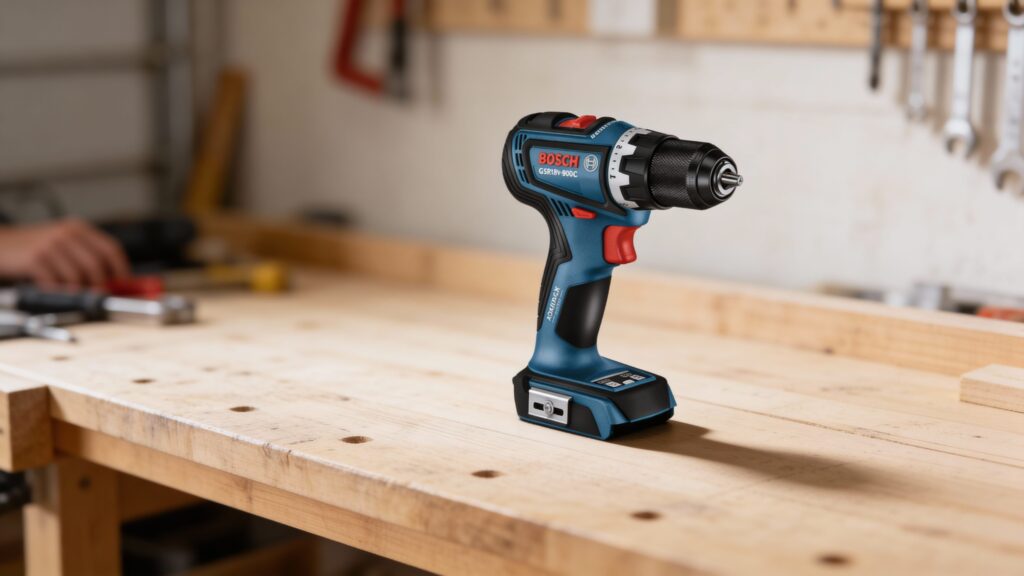
Cordless drill and impact driver shown side by side highlighting differences in size, chuck design, and torque application
What You’ll Learn

Core Mechanical Differences Explained

This section explains the internal systems that differentiate rotary drilling from impact-driven fastening through controlled, mechanical cause-and-effect relationships in modern cordless tools.

  • How continuous rotation differs from hammering impulses in delivering torque to fasteners
  • How impact mechanisms store and release energy independently of motor speed
  • Why drills rely on clutches while impact drivers bypass torque limiting systems
  • How load resistance changes current draw and behavior across different drive systems
  • Why vibration, noise, and control feel different despite similar external tool shapes
  • How bit interface design affects slippage, alignment, and energy transfer efficiency
  • What mechanical tradeoffs influence precision, feedback, and user-applied force paths

Tip: Viewing each tool as a distinct energy delivery system clarifies why they behave differently under resistance.

Definitions

Key Systems Behind Rotary and Impact Driving

Clear definitions of the core parts and mechanisms that shape how these tools deliver rotation and torque, and why they behave differently under resistance.

Battery Pack

The energy reservoir that supplies current to the drive system. Its cell layout and internal resistance set limits on power delivery during demanding moments.

  • Voltage: Sets the operating range for motor speed and control headroom
  • Current: Determines how much force can be sustained under load
  • Cells: Individual units that govern heat, sag, and stability

Electronic Controller

The power-management stage that converts trigger input into controlled motor drive. It meters current, shapes acceleration, and enforces protective limits as load changes.

  • Modulation: Adjusts power delivery to regulate speed under resistance
  • Limits: Constrains current and temperature to protect the system
  • Response: Influences how quickly the tool reacts to changing load

Motor

The electromechanical converter that turns electrical energy into rotation. Its torque curve and thermal behavior shape how the tool maintains motion as resistance rises.

  • Torque curve: Describes available twisting force across different speeds
  • Efficiency: Determines how much input becomes rotation rather than heat
  • Heat: Builds as current increases, changing behavior over time

Gear Train

The reduction system that trades motor speed for torque at the output. Gear geometry, ratios, and lubrication determine how smoothly load is carried through the drivetrain.

  • Reduction: Lowers speed to multiply torque at the output
  • Ratios: Shift how the motor operates across speed ranges
  • Losses: Friction and wear convert some energy into heat

Bit Interface

The coupling that transfers rotation or impacts into the bit. Interface geometry governs alignment, retention, and how efficiently energy reaches the fastener or material.

  • Retention: Holds the bit against pull-out and vibration forces
  • Alignment: Controls runout that affects drilling path and contact stability
  • Transfer: Determines how much energy is lost as slip or flex

Impact Mechanism

A spring-and-hammer style system that stores rotational energy, then releases it as short impulses. It decouples continuous motor rotation from momentary peak torque at the bit.

  • Energy storage: Builds momentum before releasing it into the output
  • Impulses: Deliver torque in bursts when resistance crosses a threshold
  • Load behavior: Changes sound, vibration, and control as impacts begin

Tip: Think in stages—energy supply, control, conversion, transmission, and coupling—to understand why continuous rotation and impact pulses feel fundamentally different.

Power Path

How Energy Becomes Rotation and Torque at the Bit

Cordless drilling and driving depend on a staged energy transfer from cells to the rotating interface. Following this path clarifies where limits appear when resistance rises.

  • The battery supplies current that rises sharply as load increases
  • The controller meters current and shapes acceleration from trigger input
  • The motor converts electrical power into rotational motion with a defined torque curve
  • The transmission conditions that rotation into usable torque at the output
  • The bit interface transfers motion into the fastener or material contact zone

Tool behavior under load reflects the weakest stage in this chain, not a single headline specification.

Motors

How Motor Architecture Shapes Load Response

The motor is the conversion engine that sets how smoothly torque builds, how speed changes under resistance, and how much energy becomes heat inside the housing.

  • Commutation determines how magnetic fields are switched to sustain rotation
  • Control timing influences torque ripple, startup behavior, and low-speed stability
  • Efficiency sets how much input power becomes rotation rather than thermal loss
  • Thermal limits reduce allowable current as internal temperature climbs

When resistance increases, the motor’s torque curve and thermal behavior largely determine how rotation is maintained.

Gearing

How Transmission Design Converts Speed Into Usable Torque

Gearing and drive mechanisms determine how motor rotation is conditioned before it reaches the bit. This stage explains why similar motors can feel different as load ramps up.

  • Reduction gearing lowers speed to increase torque delivered at the output
  • Multi-speed ranges shift the motor’s operating point across different loads
  • Impact mechanisms store rotational energy and release it as short torque impulses
  • Friction and tolerances affect smoothness and energy loss through the drivetrain

Transmission choices shape whether torque arrives as steady rotation or as intermittent pulses under resistance.

Heat Management

Why Output Changes as Temperature Rises

Heat accumulates whenever current climbs and mechanical losses increase. As temperatures rise, protective limits in the battery and electronics reshape available power.

  • Cell temperature increases internal resistance, reducing voltage under load
  • Controllers enforce current and thermal limits to protect electronic components
  • Motors lose efficiency as copper windings and magnets warm
  • Gear and impact losses add heat through friction and repeated impulse events

As the system warms, the power path is progressively constrained, changing how torque is delivered at the bit.

User Control

How Control Inputs Interact With the Drive System

Control feel is the interface between the user and the electronics that shape motor behavior. It influences how precisely torque is applied, especially at low speed and during engagement.

  • Trigger modulation maps finger travel to controller output and motor current
  • Inertia and balance affect how smoothly the bit tracks during engagement
  • Vibration and impulse events alter feedback and perceived stability during driving
  • Bit retention and alignment influence how consistently energy reaches the contact point

These factors determine how motion and torque are managed at the moment the bit meets resistance.

Quick Reality Check

How Drills and Impacts Behave Under Load

A quick reality check on how continuous rotation and impact impulses respond to resistance, heat, and control in everyday fastening and drilling.

Continuous rotation system

A drill delivers steady torque through gears, which supports controlled cutting and smooth engagement when resistance changes gradually through the material.

During a bore or countersink, the controller increases current as load rises, and the clutch can limit output to keep rotation predictable.

Impulse torque system

An impact driver stores rotational energy and releases it in short bursts, which changes how torque arrives when a fastener resists turning.

When the mechanism begins striking, sound and vibration increase as repeated impulses transfer energy, while battery and electronics still limit current as heat builds.

Common Myths

Misconceptions About Drills and Impact Drivers

These tools can look interchangeable, but their internal drive systems and load response differ in ways that specs alone often obscure.

They deliver torque in the same way

A drill applies torque as continuous rotation through its gears, while an impact driver releases torque as short impulses after energy is stored in the mechanism. That difference changes sound, vibration, and how each reacts when resistance suddenly increases.

Impact action is just higher speed

Impact action is a mechanical striking cycle that begins when resistance crosses a threshold, not simply faster rotation. The motor can keep spinning while the hammer-and-anvil system intermittently transfers energy into the output.

More voltage guarantees stronger driving

Voltage sets an operating range, but usable torque depends on current delivery, controller limits, motor efficiency, and drivetrain losses. Under load, voltage sag and thermal protection can constrain output regardless of the nominal rating.

Amp-hours increase torque output

Amp-hours describe stored energy capacity, not the immediate torque delivered at the bit. Higher capacity packs can sometimes hold voltage steadier under load due to cell configuration, but torque is still governed by current, control, and drivetrain behavior.

Stalling means the tool lacks power

A stall is often the result of protective current limits, rising temperature, or gearing that places the motor outside its efficient range. With impact systems, the same resistance may shift behavior into impulse mode rather than stopping rotation entirely.

Tip: Think of drills as steady-rotation systems and impacts as energy-storage pulse systems, then interpret behavior through load, heat, and control limits.

FAQ

Frequently Asked Questions About Drills and Impact Drivers

Clear explanations addressing common points of confusion about how continuous rotation and impact-driven systems behave under load.

What makes drills and impact drivers feel so different?

The difference comes from how torque is delivered. Drills apply torque as steady rotation through gears, while impact drivers store energy and release it in short impulses once resistance crosses a threshold.

Why are impact drivers louder during heavy driving?

The sound comes from the hammer-and-anvil mechanism striking repeatedly. Each impact releases stored rotational energy, producing sharp noise and vibration that increase as resistance remains high.

Why do drills sometimes stall while impacts keep turning?

A drill relies on continuous torque from the motor and gears, so rising resistance can exceed available current or thermal limits. An impact driver shifts into impulse mode, allowing rotation to continue through repeated torque bursts.

Does voltage matter differently for drills and impacts?

Voltage sets the operating range for both tools, but behavior under load depends on current delivery and control. Impact mechanisms can mask voltage sag by releasing stored energy, while drills reflect voltage and current limits more directly.

Why do impact drivers feel easier on wrists?

The impulse mechanism reduces continuous reaction torque transmitted back through the handle. Instead of one sustained twisting force, the load is broken into short events, changing how force is felt by the user.

Can heat affect drills and impacts differently?

Yes. Drills often show reduced speed as heat limits current to the motor, while impact drivers may continue impacting even as electronics restrict average power. In both cases, heat protection reshapes output over time.

Why does control feel different at low speeds?

Drills maintain direct control through continuous motor rotation, making low-speed modulation smoother. Impact drivers rely on reaching a resistance threshold before impacting, which can make low-speed engagement feel less linear.

What ultimately limits torque in either tool?

Torque is limited by the entire system: battery current capability, electronic control limits, motor efficiency, thermal conditions, and drivetrain design. No single specification determines output in isolation.

Tip: When behavior changes, trace it through load, heat, and control limits to understand whether rotation or impact delivery is shaping what you feel.

Bottom Line

Drills deliver steady rotation; impact drivers deliver torque through stored energy pulses. That difference arises from how motors, control electronics, and drive mechanisms handle resistance, heat buildup, and current limits as load increases.

Understanding this system reframes expectations, clarifies behavior under load, and explains noise, vibration, and slowdown without relying on surface-level specifications.

Next Steps

Related Guides for Applying the Concepts

These pages extend the framework by organizing options, clarifying tradeoffs, and translating system behavior into practical selection criteria.

Cordless Drill Lists

Curated lists that group cordless drills by intended workload, control feel, and sustained load behavior for clearer context.

Drill Type Comparisons

Structured comparisons that explain how power delivery, runtime constraints, and thermal limits differ across drill categories.

Cordless Drill Buying Guide

A step-by-step framework for interpreting specs, connecting them to drivetrain behavior, and avoiding common misunderstandings about performance signals.

Quick Summary

Drills vs Impact Drivers

  • Drills deliver continuous rotation through gears, producing steady torque under load
  • Impact drivers store rotational energy, releasing torque as repeating impulse strikes
  • Controller limits and heat protection shape output more than nominal voltage
  • Bit interface geometry affects retention, alignment, and energy transfer efficiency
  • Load thresholds determine when impacts begin, changing sound, vibration, and control