
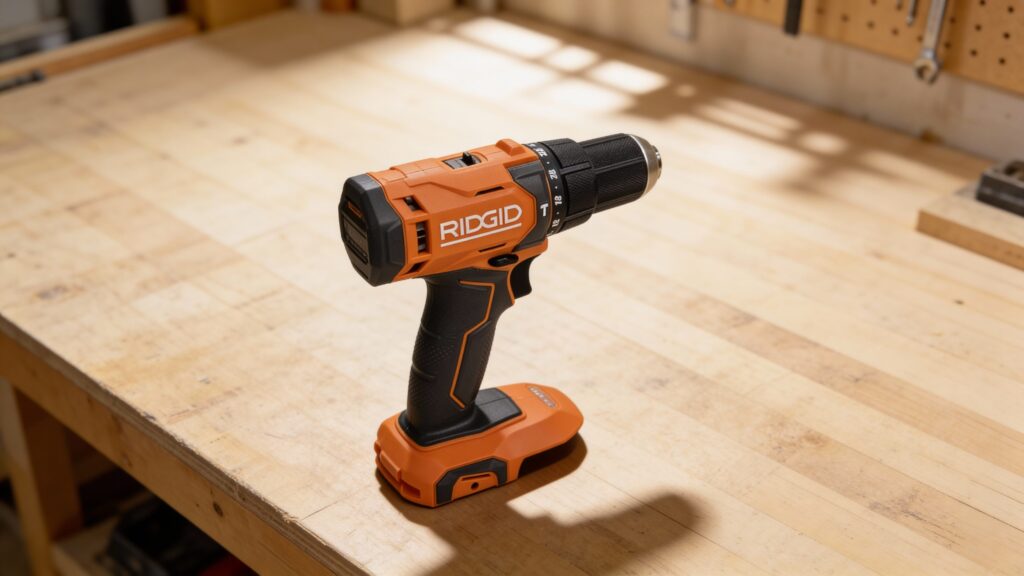
What Makes Cordless Drills Different from Rotary Drills

Cordless drills and rotary drills are frequently grouped together because both rely on rotational motion, yet their internal systems are designed around different mechanical priorities. Differences in power source, control electronics, gearing, and load management shape how each tool generates and sustains rotation. Treating them as interchangeable overlooks how these systems respond differently to resistance, heat, and continuous demand.

This explainer breaks down the structural and functional distinctions that separate cordless drills from rotary drills at a system level. It walks through how power is supplied, how motion is regulated, and how torque is managed as load changes. By the end, readers will understand why these tools behave differently under identical drilling conditions.

By: Review Streets Research Lab
Updated: April 20, 2026
Explainer · 8–12 min read
Cordless drill and rotary drill shown side by side highlighting differences in design, power source, and operating mechanism
What You’ll Learn

How These Drill Types Differ

A system-level walkthrough of how cordless drills and rotary drills generate, control, and sustain rotation under changing load conditions.

  • How power supply shapes torque delivery and sustained rotation
  • How electronic control changes speed stability as resistance increases
  • How gearing and clutch mechanisms alter output behavior under load
  • How duty cycle and thermal limits constrain continuous drilling performance
  • How torque-speed curves explain slowdowns, stalls, and recovery behavior
  • How chuck interface and runout affect load, wobble, and accuracy
  • How trigger modulation differs from mechanical speed regulation in practice

Tip: Treat each tool as a power-and-control system, then read behavior as the result of limits under load.

Definitions

Key Systems That Separate Drill Types

Understanding how these components interact explains why cordless drills and rotary drills behave differently when load, heat, and duty cycle increase.

Power Source

The power source defines how energy enters the system and how long it can be sustained. Cordless drills rely on stored electrical energy, while rotary drills draw continuously from external supply.

  • Energy storage: Batteries deliver finite current that declines with heat and discharge
  • Supply stability: External power provides consistent voltage under continuous load
  • Limiting behavior: Internal protection restricts output when thresholds are reached

Control System

The control system governs how rotation is regulated and protected. Electronic controllers actively manage speed and current, while simpler systems rely more on mechanical balance.

  • Electronic regulation: Modulates power to stabilize RPM as resistance changes
  • Protection logic: Reduces output to prevent overheating or overcurrent
  • Response time: Adjusts rapidly to load spikes during drilling

Drive Motor

The motor converts input energy into rotation and defines the torque-speed relationship. Its design influences how speed falls and heat rises as load increases.

  • Torque-speed curve: Describes how RPM drops as resistance increases
  • Efficiency zone: Determines where heat buildup accelerates
  • Duty tolerance: Affects sustained operation under continuous load

Gear Reduction

Gearing reshapes motor output into usable rotation at the bit. Different gear strategies change how torque and speed are balanced for drilling resistance.

  • Ratio selection: Alters output RPM relative to motor speed
  • Torque multiplication: Increases turning force at lower rotational speeds
  • Mechanical losses: Convert some input energy into heat and friction

Output Interface

The chuck connects the drivetrain to the cutting tool. Its stability determines how smoothly torque and rotation are transferred into the material.

  • Clamping force: Maintains grip as torque demand rises
  • Runout control: Limits off-axis rotation and cyclic loading
  • Energy transfer: Reduces losses from slip or vibration

Torque Delivery

Torque delivery reflects how force reaches the bit over time. It depends on power supply, control limits, and gearing rather than a single rated value.

  • Instantaneous output: Short bursts limited by current availability
  • Sustained output: Governed by heat buildup and protection thresholds
  • Perceived strength: Changes as RPM drops under increasing resistance

Tip: View each drill as a coordinated system where power source, control, and gearing define behavior under load.

Power Path

How Power Delivery Differs by Tool Architecture

Both tool types turn energy into rotation, but the power path is built around different constraints. Cordless systems manage finite stored energy, while rotary drill systems rely on continuous supply and sustained drive.

  • Cordless power begins in battery cells and passes through electronic current control
  • Rotary drills feed the motor from an external supply with steadier voltage
  • Controller limiting in cordless designs caps current to protect cells and wiring
  • Continuous supply shifts the dominant limits toward motor heating and mechanical losses
  • Under rising resistance, both systems trade RPM for torque, but differently

These power-path differences explain why rotation stability changes as load and time accumulate.

Motors

Motor Design and Control Define Load Response

The motor sets the torque-speed curve that governs how RPM falls as resistance rises. In cordless drills, electronic commutation and current control shape that curve dynamically under protection limits.

  • Electronic control in cordless systems modulates drive to chase a target speed
  • Rotary drill motors depend more on supply stiffness and mechanical equilibrium
  • Higher current produces torque but increases winding and controller heat quickly
  • As back-EMF changes with speed, current draw shifts across the operating range

The result is distinct ramp, sag, and recovery behavior when drilling transitions from light load to heavy load.

Gearing

Gear Reduction Shapes Torque Delivery and Speed Bands

Gearing converts motor rotation into the output behavior at the bit, defining the practical torque-speed envelope. Cordless drills commonly use selectable ratios and torque-limiting clutches, while rotary drill layouts often prioritize sustained rotary drive.

  • Selectable ratios change output RPM and torque multiplication without changing motor power
  • Clutch mechanisms limit transmitted torque by slipping at a repeatable threshold
  • Gear mesh quality determines friction losses that become heat under load
  • Different reduction strategies change how quickly RPM drops when resistance increases

These mechanical choices determine how each tool feels as bit load rises and steadiness becomes the limiting factor.

Heat Management

Thermal Limits Arrive Through Different Pathways

Heat is generated wherever electrical power and mechanical friction fail to become rotation. Cordless drills add battery and controller heating to the motor’s thermal load, while rotary drills concentrate limits primarily in the motor and drivetrain.

  • Battery internal resistance turns high current into heat and voltage sag
  • Controllers shed heat while switching current and enforcing protection thresholds
  • Motors heat as torque demand increases and efficiency falls at heavy load
  • Gear friction and chuck slip convert torque into localized heating

Thermal behavior shapes how long each system can sustain torque before limiting alters rotation.

User Control

Control Inputs Map Differently to Rotation and Torque

User inputs are translated through different control chains depending on architecture. Cordless drills typically map trigger position through electronic modulation and gear ranges, while rotary drills often reflect more direct motor response to input and load.

  • Electronic modulation converts trigger input into controlled motor drive rather than raw power
  • Gear selection changes the sensitivity of trigger movement to output RPM
  • Load spikes cause controller correction in cordless systems until limits intervene
  • Grip, balance, and runout influence how cyclic loads are felt at the wrist

Perceived control follows from how the tool’s control loop and mechanics translate input into stable rotation under resistance.

Quick Reality Check

Where Cordless and Rotary Drills Differ

A quick balance check: how each system sustains rotation, and where power delivery, heat, and load response create practical limits.

How Cordless Systems Behave

Cordless drills rely on stored energy and electronic limiting, so output is actively managed as current demand rises and heat accumulates through the battery and controller.

During higher resistance, voltage sag and protection thresholds can reduce drive, causing RPM drop patterns that reflect electrical limits as much as mechanical load.

How Continuous Supply Behaves

Rotary drill systems draw from a continuous power source, so speed and torque are governed more by motor characteristics, gearing, and thermal rise than stored energy limits.

Under sustained load, performance is typically constrained by motor heating and drivetrain losses, producing gradual slowdown rather than discrete electronic limiting events.

Common Myths

Misconceptions About Cordless Versus Rotary Drills

These tools share rotary motion, but their power paths and limits differ enough that surface similarities often create persistent misunderstandings.

They are basically the same tool

Both spin a bit, but the architecture differs in power source, control, and limiting. Cordless systems add battery and controller constraints, while rotary drill systems are shaped more by motor heating and continuous supply behavior.

Cordless performance is only about voltage

Voltage is only one input to the system. Current capability, controller limits, internal resistance, and gearing determine how torque is delivered as load rises and how rotation changes as heat accumulates.

Rotary drills never slow down

Under load, any motor experiences RPM drop as torque demand increases. Continuous supply reduces battery-driven sag, but motor heating, drivetrain friction, and load spikes still change speed and can trigger thermal protection.

Speed settings define how strong a drill is

Speed ranges reshape the torque-speed envelope through gearing, but they do not create additional torque beyond what current and thermal limits allow. The same setting can behave differently as resistance and temperature shift.

Stalling means the tool lacks power

Stalling occurs when torque demand exceeds available torque within system limits. It can be driven by bit geometry, material friction, voltage sag, current limiting, or thermal reduction, depending on the tool’s architecture and operating state.

Tip: Identify the limiting link—supply stiffness, current control, gearing, or heat—then interpret RPM drop and shutdowns as system behavior.

FAQ

Frequently Asked Questions About Cordless and Rotary Drills

Straightforward answers that explain how power delivery, control, and heat limits create different drilling behavior across these tool architectures.

What actually determines how “powerful” a drill feels?

Perceived power comes from available torque at the bit over time, which depends on supply stiffness, current limiting, motor efficiency, gearing, and heat buildup. Cordless drills add battery sag and controller thresholds, while rotary drills are shaped more by motor heating and drivetrain losses.

Does a higher voltage cordless drill always spin faster?

Not necessarily. Output speed is set by motor characteristics, controller targets, and gear ratios, and it can be reduced by voltage sag under load. A higher voltage system may have more headroom, but speed stability still depends on current and thermal limits.

What does amp-hour (Ah) mean in cordless systems?

Amp-hours describe stored energy capacity, which primarily affects how long a battery can deliver a given load. Higher capacity can also reduce temperature rise and voltage sag at the same current, which can make output feel steadier during sustained drilling.

Why does a cordless drill slow down or shut off?

As resistance increases, current demand rises and heat accumulates in the battery, controller, and motor. When thresholds are reached, protection logic reduces drive or interrupts output, so RPM drops or the tool stops even though the trigger remains engaged.

When should I use low gear vs high gear?

Low gear increases torque multiplication at lower RPM, while high gear increases RPM with less torque multiplication. The practical difference is how quickly RPM collapses under resistance, because high range reaches current and thermal limits sooner at heavy load.

What changes when a drill uses brushless control?

Electronic commutation allows the controller to shape current delivery more precisely across the torque-speed range. That typically improves efficiency and reduces heat for a given load, which changes how long the system can sustain rotation before limiting alters behavior.

Why do chucks slip or wobble under load?

Slip occurs when clamping friction is lower than the transmitted torque, and wobble (runout) occurs when the bit rotates off-axis. Wear, debris, jaw geometry, and seating accuracy all affect how the interface transfers rotation and how much cyclic load is introduced.

What matters more for performance: the tool or supply?

Both are part of one system, but the supply often sets the ceiling. A cordless drill can only deliver what the battery and controller allow safely, while a continuous supply shifts limits toward motor heating and mechanical losses during sustained work.

Tip: Diagnose behavior by separating electrical limiting (sag or shutoff) from mechanical limiting (stall or steady slowdown) and thermal limiting (power reduction after sustained load).

Bottom Line

The core difference is power supply and how limits are enforced. Cordless drills add battery sag and electronic protection, while rotary drills are constrained primarily by motor heating and mechanical losses under sustained load.

With this frame, slowdowns and shutdowns read as predictable limit behavior, clarifying what changes when load increases and work duration extends.

Next Steps

Go Deeper or Compare Your Options

With the cordless-versus-rotary framework in place, these pages extend it into broader drill types, tradeoffs, and clearer spec interpretation.

Cordless Drill Lists

A structured overview of cordless drill categories, emphasizing how supply limits, gearing, and heat shape behavior across common use profiles.

Cordless vs Corded Comparison

A focused comparison of continuous supply versus stored-energy systems, clarifying how runtime, limiting, and sustained load handling differ.

Cordless Drill Buying Guide

A reference guide to reading specs through system constraints, helping interpret torque-speed behavior, thermal limits, and control design.

Quick Summary

Cordless vs Rotary Systems

  • Power source defines how limits appear under sustained load conditions
  • Cordless drills add battery sag and electronic protection layers internally
  • Rotary drills rely on continuous supply and motor thermal balance
  • Gearing and control design shape torque-speed response differently under load
  • Observed behavior reflects system constraints rather than simple power ratings