What Makes Electric Pickup Trucks Different from Heavy Duty Pickup Trucks

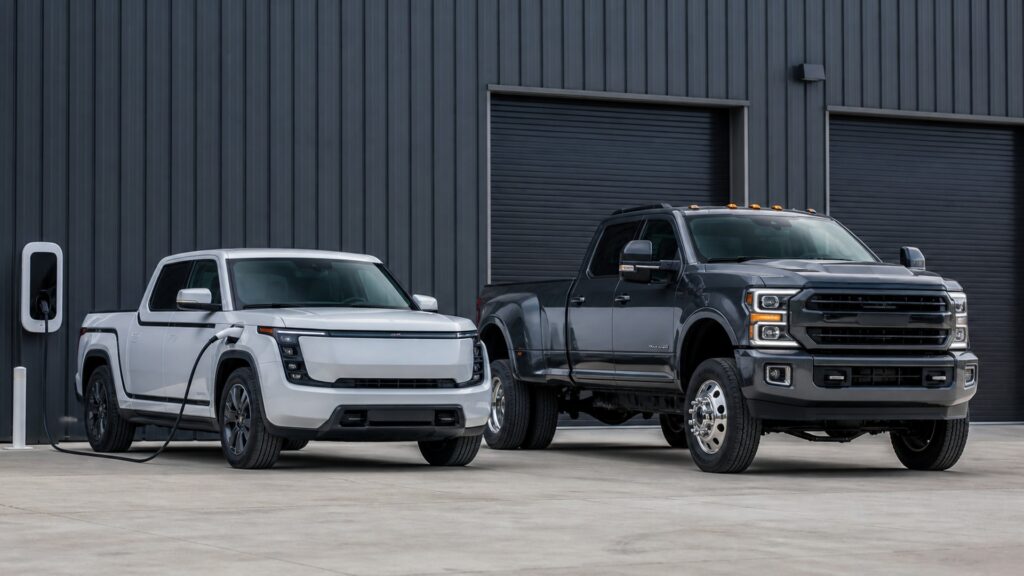
Electric pickups and heavy-duty pickups differ along two separate dimensions. Electric describes the powertrain; heavy-duty describes a truck's intended capability and design within a manufacturer's range. A battery-electric pickup is therefore not automatically a substitute for a conventional HD truck, and electric propulsion does not inherently rule out heavy-duty design.

For a purchase comparison, identify the exact battery-electric candidate and the exact gasoline or diesel HD configuration. Then compare payload, towing and hitch support, sustained loaded travel, energy access, and daily practicality. Similar exterior size or impressive motor torque does not establish equivalent working limits.

By: Review Streets Research Lab
Updated: October 5, 2026
Explainer · 8-12 min read
electric pickup trucks explainer hero image for Review Streets
What You'll Learn

How to Compare Electric Propulsion With HD Capability

Separate the source of driving power from the complete truck's ability to carry and control a load.

  • Define the actual vehicles being compared
  • Check load ratings and approved hitch arrangements
  • Examine the complete loaded route and workday
  • Compare usable configuration choices and parking requirements
  • Match the service and energy infrastructure to the job

Tip: Start with non-negotiable loads and equipment. A candidate that cannot support them is unsuitable regardless of how it is powered.

Definitions

Six Distinctions Behind the Comparison

These concepts prevent a powertrain feature from being mistaken for a duty rating.

Propulsion Type

The source and delivery of driving energy.

  • Example: A battery and motors replace combustion propulsion in a battery-electric truck.
  • Check: Identify whether the candidate is battery-electric, hybrid, gasoline, or diesel.
  • Limit: Propulsion type alone does not establish carrying capacity.

Duty Design

The combination of systems intended to support a truck's rated workload.

  • Example: An HD configuration can combine appropriate chassis, axles, brakes, and cooling for demanding loads.
  • Check: Use manufacturer specifications for the particular model.
  • Limit: HD is not a promise that every build has the same limits.

Available Payload

The carrying allowance for people, added equipment, cargo, and applicable hitch load.

  • Example: A trailer's load on the hitch uses truck capacity before tools are added.
  • Check: Use the actual vehicle's loading information and loaded weights.
  • Limit: A maximum tow figure does not answer the payload question.

Hitch Support

The approved attachment type, hardware, and limits for connecting a trailer.

  • Example: A work trailer may require a specifically supported gooseneck or fifth-wheel installation.
  • Check: Confirm the exact truck's approval and required equipment.
  • Limit: A receiver hitch does not imply support for every trailer connection.

Working Duty Cycle

The repeated pattern of loads, distances, stops, and operating time.

  • Example: A local hauling route differs from all-day highway towing between changing sites.
  • Check: Compare the whole recurring day, including energy stops.
  • Limit: One successful short trip does not prove suitability for a demanding schedule.

Energy Infrastructure

The fuel or charging access available to sustain that use.

  • Example: A depot charger can serve a truck parked there overnight.
  • Check: Verify locations, compatibility, access, and replenishment time.
  • Limit: An infrastructure advantage in one location may not exist elsewhere.

Tip: Record load capability and energy practicality separately so a strength in one cannot conceal a failure in the other.

Category Meaning

A Power Source and a Duty Class Answer Different Questions

A battery-electric pickup answers the question of how the vehicle obtains and delivers propulsion energy. An HD designation points toward a capability range and the equipment supporting it. Neither label gives the exact build's ratings. The useful comparison is not electricity versus strength; it is two complete vehicles serving the same specified task.

  • Name the exact model year and configuration.
  • Identify the required load and trailer connection.
  • Read ratings before interpreting marketing labels.

An electric candidate that meets the job can be suitable, while a conventional HD truck may be necessary when its supported configuration meets a requirement the other cannot.

Load Support

Look Beyond Motor Torque and Trailer Headlines

Starting a heavy load moving is only one part of carrying or towing it. The truck must support the hitch load and occupants, remain within axle and tire limits, and use approved attachment equipment. A capable HD family may offer configurations aimed at these needs, but optional equipment and vehicle weight still affect the individual truck.

  • Calculate the occupied, equipped truck's load.
  • Check vehicle, axle, tire, hitch, and combination limits.
  • Verify approved trailer equipment before purchase.

If the crew and hitch load consume the available allowance, an impressive advertised trailer maximum does not solve the mismatch.

Repeated Work

Evaluate the Hours Between Reliable Energy Stops

A working day can involve several loaded legs, idling or parked equipment use, and changes of destination. Battery-electric operation requires a charging plan for that sequence; conventional HD operation requires suitable fuel access and its own service planning. Assess realistic energy use and the time available to replenish it, especially when towing creates additional demand.

  • Use the busiest recurring day as a test case.
  • Include return travel and alternate stops.
  • Check whether the trailer fits at planned charging or fuel locations.

A truck returning to a depot every evening may have a workable electric routine that a truck dispatched unpredictably across remote routes does not share.

Configuration

Compare the Body and Equipment the Work Requires

Cab space, bed layout, wheel arrangement, storage, hitch provisions, and accessory compatibility can be decisive. Some HD ranges offer choices aimed at substantial or specialized loads. Electric designs may offer useful storage or power-export features, but those do not replace an incompatible body or hitch. Compare actual options without assuming every feature is standard.

  • Check bed dimensions and equipment mounting support.
  • Measure parking and access with the chosen configuration.
  • Confirm any external-power feature and its restrictions.

The truck that supports the required trailer attachment and tools may be the practical choice even if the other has a more appealing feature list.

Ownership

Match Service and Infrastructure to the Job's Consequences

Downtime can cost more than the difference in an energy estimate. Consider access to appropriate repair expertise, charging equipment support, replacement tires, and service scheduling for each candidate. Conventional HD powertrains have their own maintenance needs; electric trucks still require vehicle care. Compare costs using actual quotes, mileage, loads, and local energy prices.

  • Identify qualified service and likely downtime arrangements.
  • Include charging installation or fuel access in the plan.
  • Avoid treating either category as universally cheaper.

A useful comparison ends with a vehicle that can repeat the task reliably within its limits and the owner's practical budget.

Quick Reality Check

Where the Real Differences Show Up

Capability and replenishment must both support the job.

An Electric Candidate Can Make Sense

It meets the actual ratings and equipment requirements, and charging fits the recurring schedule.

Its available storage, controls, or power features solve useful tasks.

A Conventional HD Candidate Can Make Sense

Its supported load or hitch configuration meets a requirement the electric candidate cannot.

Its fuel-based routine better accommodates the planned loaded distances and changing destinations.

Common Myths

Misconceptions About Electric and Heavy-Duty Pickups

Separate category language from engineering limits.

Electric and HD are mutually exclusive concepts.

One describes propulsion and the other duty capability; they are different attributes.

More motor torque proves equivalent HD towing ability.

Payload, structural limits, cooling, braking, and approved equipment also matter.

Every HD pickup supports the same trailer.

Ratings and hitch provisions vary by configuration.

A local demonstration proves all-day suitability.

Repeated loaded travel and energy access require their own assessment.

Tip: Compare complete configurations under the same load and schedule rather than selecting each model's most flattering statistic.

FAQ

Questions About Electric Versus HD Capability

Answers for comparing real trucks without mixing categories.

Is an electric pickup necessarily light-duty?

No propulsion type inherently determines duty class. Check the specific vehicle's design and ratings.

What should I check first?

Required payload, trailer and hitch compatibility, and the exact configuration needed for the work.

Why does hitch load matter?

It is load carried by the truck and must fit alongside people, cargo, and installed equipment.

Can an electric truck suit a work fleet?

It can when the actual vehicle meets the task and dependable charging supports the duty cycle.

What if both trucks meet the load?

Compare loaded route practicality, replenishment time, access, service support, and total ownership cost.

Bottom Line

Electric propulsion and heavy-duty capability describe different aspects of a pickup, so the actual configuration must decide the comparison.

Choose a truck that supports the required load and equipment, then confirm it can repeat the work with practical energy and service access.

Next Steps

Go Deeper or Compare Your Options

Use these Review Streets paths to compare related categories and practical next decisions.

Manufacturer references: Ford towing information and vehicle-specific guides; Chevrolet Silverado HD configurations; Chevrolet Silverado EV configuration information. Use the manual and ratings for your own model year and configuration.