When to Use Electric Pickup Trucks Instead of Full Size Pickup Trucks

Choose a battery-electric pickup over a fuel-powered full-size pickup when the electric vehicle meets the required truck duties and its charging routine fits your life. Reliable charging during normal parking, manageable loaded travel, and useful model-specific features can make it a strong everyday choice. Those benefits need to hold up on the demanding trips as well as the easy commute.

Electric and full-size are overlapping descriptions, not opposite categories. Many electric pickups are full-size. The practical comparison here is a battery-electric configuration against a gasoline, diesel, or non-plug-in hybrid full-size alternative. Compare the actual vehicles rather than crediting the electric option with every advantage of a newer or differently equipped truck.

By: Review Streets Research Lab
Updated: October 5, 2026
Explainer · 8-12 min read
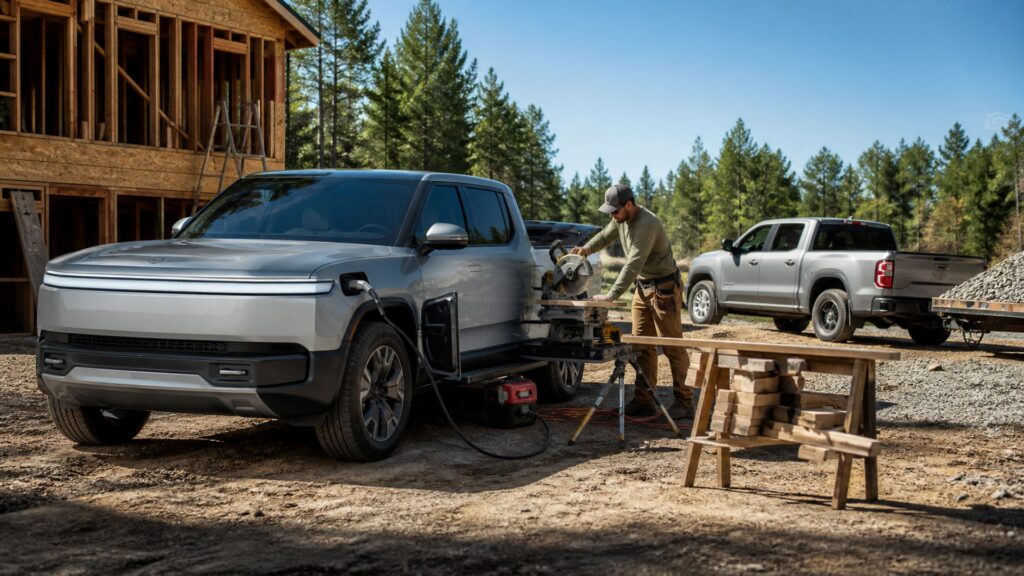
electric pickup trucks explainer hero image for Review Streets
What You'll Learn

When the Electric Choice Earns Its Place

Look for advantages that improve the owner's recurring routine.

  • Start with a truck that meets passenger, cargo, and towing requirements
  • Use dependable parked charging as a practical advantage
  • Check loaded travel and charging access on demanding routes
  • Evaluate fitted storage and power features against real uses
  • Compare actual ownership costs and daily inconvenience

Tip: A fair comparison gives both vehicles the same passengers, equipment, trailer, route, and annual mileage.

Definitions

Six Checks Before Choosing Electric

These checks separate an attractive feature from a workable ownership decision.

Task Fit

The ability of the actual configuration to perform required pickup duties.

  • Example: The truck carries the regular crew and secured tools within its limits.
  • Check: Check passenger space, cargo access, and rated capability.
  • Limit: A preferred powertrain cannot compensate for a failed requirement.

Parked Replenishment

Restoring energy while the vehicle would already be stationary.

  • Example: Charging during a normal overnight parking period prepares the next commute.
  • Check: Confirm access, suitable power, and enough time.
  • Limit: The benefit disappears if the charger is routinely unavailable.

Loaded-Route Fit

Compatibility between realistic trip demand and usable energy stops.

  • Example: A trailer trip includes reachable compatible stations and a reserve.
  • Check: Plan around the attached trailer and expected conditions.
  • Limit: An unloaded range estimate does not establish towing practicality.

Feature Value

A benefit from equipment that is fitted and useful for the owner's task.

  • Example: Supported power outlets can serve compatible tools at a regular job site.
  • Check: Check ratings, accessories, and operating restrictions.
  • Limit: A feature available elsewhere in the range may not be on the candidate.

Charging Mix

The share of charging performed at different locations and prices.

  • Example: Mostly home charging produces a different cost picture from frequent paid fast charging.
  • Check: Use realistic local rates and access assumptions.
  • Limit: A cheap advertised rate may not represent actual use.

Ownership Burden

The time, money, and practical effort required to keep the truck usable.

  • Example: Installation work and parking access can affect the benefit of home charging.
  • Check: Include service, insurance, tires, and setup costs.
  • Limit: Energy cost alone is not total cost.

Tip: Choose electric for benefits you can use consistently, rather than a feature or savings claim that depends on conditions you do not have.

Capability First

Make the Electric Candidate Pass the Truck Test

Check usable seating, bed dimensions, storage, accessory fit, and the fully loaded vehicle's limits before considering charging convenience. If towing is required, confirm the supported hitch arrangement and equipment. An electric pickup can be capable, but the configuration must fit the particular job. Do not use smooth acceleration or a large battery as substitutes for approved ratings.

  • Use the actual vehicle's labels and specifications.
  • Include installed equipment and the normal crew.
  • Confirm required trailer connections and brakes.

The electric option becomes a real contender when it can carry the same required people and equipment as the conventional alternative.

Routine Convenience

Choose Electric When Parking Time Can Do the Replenishing

Dependable home or depot charging can remove separate energy stops from many ordinary days. That is a practical advantage when the vehicle already stays there long enough and the supply suits its demand. Check permissions, installation needs, parking layout, and cable reach before counting on it. Public charging can also work, but its time and access belong in the comparison.

  • Match the charging window to daily energy needs.
  • Confirm electrical suitability with appropriate professional help.
  • Keep an alternative for interruptions.

A predictable overnight arrangement may matter more to daily convenience than the fastest charging rate listed for an occasional road trip.

Demanding Trips

Confirm the Exceptions Do Not Undermine the Routine

A vehicle that works for short errands still needs a credible plan for towing, cold weather, or a distant destination. Estimate demand for those conditions and identify compatible charging with practical access. Include stop time and alternatives. If the plan repeatedly conflicts with the required schedule, a fuel-powered configuration may remain the better choice for that owner.

  • Check outbound, return, and uncertain legs.
  • Review station access with the trailer attached.
  • Allow time and energy reserves for realistic variation.

The right decision can differ between two owners with identical commutes if one also tows to remote sites every week.

Useful Features

Give Credit to What the Actual Model Provides

An electric design may offer convenient storage, quiet propulsion, or supported external power. Evaluate each benefit on the specific truck, including access, ratings, and required equipment. Some conventional and hybrid pickups also offer useful power or storage features, so compare like with like. Supplying a building requires an approved compatible system, not merely an onboard outlet.

  • Try loading the equipment you normally carry.
  • Check outlet suitability for intended tools.
  • Include external-power use in the energy budget.

A dry storage compartment can be valuable for a particular tool kit, but its usefulness depends on dimensions and access rather than its location alone.

Cost and Commitment

Use Your Charging Prices and Ownership Numbers

Compare purchase terms, financing, insurance, service requirements, tires, fuel or electricity, and charging setup. Battery-electric vehicles avoid combustion-engine service, but still require maintenance. Home energy rates, demand patterns, and public-charging prices can produce different outcomes. Treat possible savings as something to calculate from the actual use pattern, not as a universal promise.

  • Use quotes for both complete configurations.
  • Include installation and any parking-related costs.
  • Compare time spent replenishing energy as well as money.

Electric is a strong choice when the capability, charging access, recurring convenience, and realistic costs all support the owner's needs.

Quick Reality Check

Conditions That Make the Decision Clearer

Both choices can be full-size trucks; compare how they serve the same work.

Choose the Electric Candidate When

It meets the load and configuration requirements and dependable charging fits normal parked time.

Demanding trips remain practical and the actual features and costs improve the ownership routine.

Keep the Conventional Candidate in View When

A required configuration or load lies outside the electric candidate's approved capability.

Charging access, route constraints, or setup costs make the electric routine unsuitable.

Common Myths

Misconceptions About Choosing Electric Over Full-Size

A size label should not decide a propulsion question.

Choosing electric means giving up a full-size pickup.

Electric pickups can also be full-size; compare the actual configurations.

Home charging is automatically convenient for every owner.

Parking, permissions, supply, and the charging window must support it.

Electric pickups always have lower total costs.

Local energy prices and the full ownership budget determine the outcome.

One useful feature settles the purchase.

The truck still has to meet required capability and the complete travel routine.

Tip: Prefer a repeatable advantage in ordinary use over a headline benefit that rarely applies to your situation.

FAQ

Questions About Choosing a Battery-Electric Pickup

Answers for making a practical powertrain decision.

What does full-size mean in this comparison?

It describes vehicle size. The conventional alternative and the electric candidate may both be full-size.

When is electric particularly convenient?

When suitable charging is dependable during normal parking and the vehicle meets the intended duties.

Should occasional towing rule electric out?

No. Check the particular truck's ratings, the loaded route, suitable charging, and time requirements.

Can I assume energy savings cover the purchase difference?

No. Calculate from actual mileage, charging mix, local prices, setup costs, and the broader ownership budget.

What would justify choosing conventional instead?

A required capability or configuration the electric candidate lacks, or an energy routine that does not work for the planned use.

Bottom Line

Use a battery-electric pickup when it passes the truck's required tasks and turns dependable charging into a practical ownership advantage.

Compare actual full-size configurations, test the demanding trips, and choose from real costs and useful features rather than treating size and propulsion as opposites.

Next Steps

Go Deeper or Compare Your Options

Use these Review Streets paths to compare related categories and practical next decisions.

Manufacturer references: Ford electric range and charging considerations; Ford towing information and vehicle-specific guides; DOE electric-vehicle benefits and considerations; Chevrolet Silverado EV owner resources and manuals. Use the manual and ratings for your own model year and configuration.