What Makes Emergency Tire Repair Different from Jump Starters

The comparison implied by “What Makes Emergency Tire Repair Different from Jump Starters” is why Emergency Tire Repair and Jump Starters should not be treated as interchangeable choices, beginning with tire plug rather than a feature-count shortcut. Emergency Tire Repair depends on temporarily restoring tire mobility with sealant, plugs, inflation, pressure checks, and safe damage assessment; performance depends next on sealant bottle and portable inflator shows where that process succeeds or breaks down. This framing separates a functional difference from a label change for the specific question in “What Makes Emergency Tire Repair Different from Jump Starters,” where the intended benefit is it can help a driver move safely after minor tire damage when a full repair is not available.

By: Review Streets Research Lab
Updated: August 20, 2026
Explainer · 8-12 min read
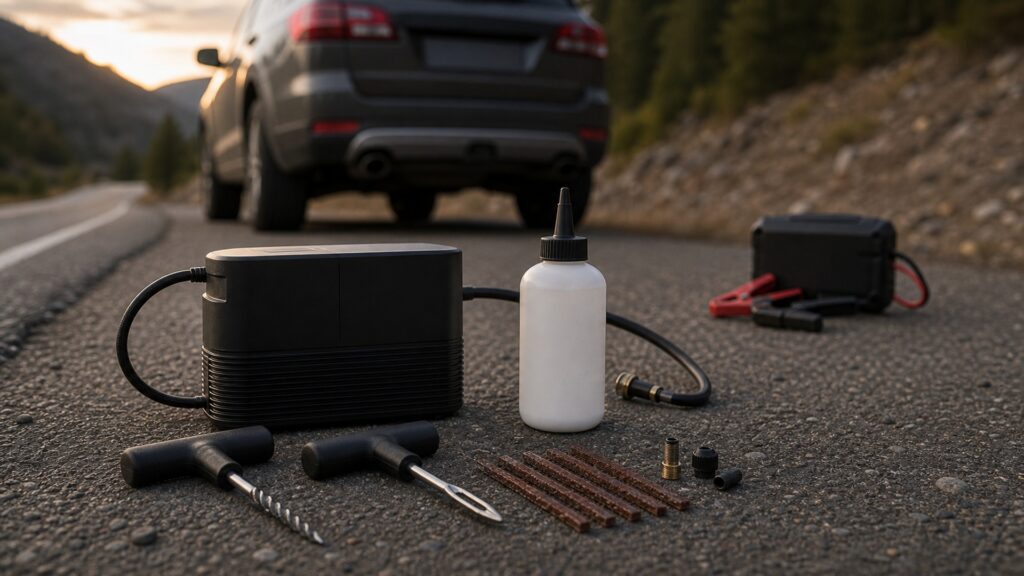
emergency tire repair explainer hero image for Review Streets
What You'll Learn

What “What Makes Emergency Tire Repair Different from Jump Starters” Requires You to Check

Connect the functional contrast with Jump Starters to the components, fitment conditions, evidence, tradeoffs, and limits specific to emergency tire repair.

  • How tire plug starts the relevant process; within the operating boundary created by how portable inflator connects the product to the vehicle area or pathway involved in temporarily restoring tire mobility with sealant, plugs, inflation, pressure checks, and safe damage assessment.
  • Where sealant bottle changes the outcome; where the decisive evidence comes from the field check to inspect portable inflator while reproducing low pressure and compare the result with the manufacturer's instructions.
  • Why portable inflator must match the intended task; provided the setup accounts for the limit that it cannot safely fix every tire injury, especially sidewall damage, large cuts, or run-flat damage This boundary is especially relevant to portable inflator during low pressure.
  • How to verify the exact vehicle configuration, tire plug, sealant bottle, portable inflator, pressure gauge, plus clearance and attachment conditions encountered during roadside punctures, slow leaks, low pressure; while the user also checks how pressure gauge protects, controls, seals, or transfers the process required for temporarily restoring tire mobility with sealant, plugs, inflation, pressure checks, and safe damage assessment.
  • Which safety checks apply to what makes emergency tire repair different from jump starters; because the result still depends on the field check to inspect pressure gauge while reproducing spare tire access and compare the result with the manufacturer's instructions.
  • What maintenance preserves it can help a driver move safely after minor tire damage when a full repair is not available; as the article tests the limit that it cannot safely fix every tire injury, especially sidewall damage, large cuts, or run-flat damage This boundary is especially relevant to pressure gauge during spare tire access.

  • Where the conclusion about the functional contrast with Jump Starters stops being reliable; with the tradeoff measured against how valve stem marks the safety or usability boundary surrounding temporarily restoring tire mobility with sealant, plugs, inflation, pressure checks, and safe damage assessment.

Tip: Read the concept as part of a system, then connect it back to the use case.

Definitions

Key Concepts That Define Emergency Tire Repair

These definitions connect the main idea to the variables, limits, and practical signals readers need to compare options.

Tire Plug

Within “What Makes Emergency Tire Repair Different from Jump Starters,” tire plug provides the first hardware or operating input used for temporarily restoring tire mobility with sealant, plugs, inflation, pressure checks, and safe damage assessment; it is checkpoint 1 for evaluating the functional contrast with Jump Starters; provided the setup accounts for the limit that it cannot safely fix every tire injury, especially sidewall damage, large cuts, or run-flat damage This boundary is especially relevant to valve stem during night emergencies.

  • Role: Connect tire plug to temporarily restoring tire mobility with sealant, plugs, inflation, pressure checks, and safe damage assessment in the specific context of what makes emergency tire repair different from jump starters, while distinguishing that role from delivering temporary starting current to a weak vehicle battery through safe clamps, internal protection, and charge storage; while the user also checks how damage location keeps the installation adjustable, inspectable, and serviceable while temporarily restoring tire mobility with sealant, plugs, inflation, pressure checks, and safe damage assessment.
  • Check: For this article's the functional contrast with Jump Starters, inspect tire plug while reproducing roadside punctures and compare the result with the manufacturer's instructions; because the result still depends on the field check to inspect damage location while reproducing roadside punctures and compare the result with the manufacturer's instructions.
  • Limit: The conclusion in “What Makes Emergency Tire Repair Different from Jump Starters” must account for the fact that it cannot safely fix every tire injury, especially sidewall damage, large cuts, or run-flat damage This boundary is especially relevant to tire plug during roadside punctures; as the article tests the limit that it cannot safely fix every tire injury, especially sidewall damage, large cuts, or run-flat damage This boundary is especially relevant to damage location during roadside punctures.

Sealant Bottle

Within “What Makes Emergency Tire Repair Different from Jump Starters,” sealant bottle sets a design variable that changes how temporarily restoring tire mobility with sealant, plugs, inflation, pressure checks, and safe damage assessment; it is checkpoint 2 for evaluating the functional contrast with Jump Starters; with the tradeoff measured against the alternative's separate outcome of they can start a vehicle without another car when the battery is weak but the system is otherwise healthy.

  • Role: Connect sealant bottle to temporarily restoring tire mobility with sealant, plugs, inflation, pressure checks, and safe damage assessment in the specific context of what makes emergency tire repair different from jump starters, while distinguishing that role from delivering temporary starting current to a weak vehicle battery through safe clamps, internal protection, and charge storage; with the conclusion tied to the alternative mechanism of delivering temporary starting current to a weak vehicle battery through safe clamps, internal protection, and charge storage.
  • Check: For this article's the functional contrast with Jump Starters, inspect sealant bottle while reproducing slow leaks and compare the result with the manufacturer's instructions; when the evidence is checked against the alternative boundary that they cannot fix bad batteries, poor terminals, charging-system faults, or unsafe connection habits This boundary is especially relevant to jump pack during dead battery.
  • Limit: The conclusion in “What Makes Emergency Tire Repair Different from Jump Starters” must account for the fact that it cannot safely fix every tire injury, especially sidewall damage, large cuts, or run-flat damage This boundary is especially relevant to sealant bottle during slow leaks; under the practical condition of the functional contrast with Jump Starters through temporarily restoring tire mobility with sealant, plugs, inflation, pressure checks, and safe damage assessment.

Portable Inflator

Within “What Makes Emergency Tire Repair Different from Jump Starters,” portable inflator connects the product to the vehicle area or pathway involved in temporarily restoring tire mobility with sealant, plugs, inflation, pressure checks, and safe damage assessment; it is checkpoint 3 for evaluating the functional contrast with Jump Starters; with special attention to the intended outcome of it can help a driver move safely after minor tire damage when a full repair is not available.

  • Role: Connect portable inflator to temporarily restoring tire mobility with sealant, plugs, inflation, pressure checks, and safe damage assessment in the specific context of what makes emergency tire repair different from jump starters, while distinguishing that role from delivering temporary starting current to a weak vehicle battery through safe clamps, internal protection, and charge storage; as verified through the fitment requirement covering the exact vehicle configuration, tire plug, sealant bottle, portable inflator, pressure gauge, plus clearance and attachment conditions encountered during roadside punctures, slow leaks, low pressure.
  • Check: For this article's the functional contrast with Jump Starters, inspect portable inflator while reproducing low pressure and compare the result with the manufacturer's instructions; within the operating boundary created by the safety boundary covering rated hardware, secure installation, normal vehicle controls and visibility, and the documented boundary that it cannot safely fix every tire injury, especially sidewall damage, large cuts, or run-flat damage.
  • Limit: The conclusion in “What Makes Emergency Tire Repair Different from Jump Starters” must account for the fact that it cannot safely fix every tire injury, especially sidewall damage, large cuts, or run-flat damage This boundary is especially relevant to portable inflator during low pressure; where the decisive evidence comes from the upkeep routine to clean and inspect tire plug, pressure gauge, and damage location after roadside punctures, low pressure, or other demanding exposure.

Pressure Gauge

Within “What Makes Emergency Tire Repair Different from Jump Starters,” pressure gauge protects, controls, seals, or transfers the process required for temporarily restoring tire mobility with sealant, plugs, inflation, pressure checks, and safe damage assessment; it is checkpoint 4 for evaluating the functional contrast with Jump Starters; provided the setup accounts for how tire plug provides the first hardware or operating input used for temporarily restoring tire mobility with sealant, plugs, inflation, pressure checks, and safe damage assessment.

  • Role: Connect pressure gauge to temporarily restoring tire mobility with sealant, plugs, inflation, pressure checks, and safe damage assessment in the specific context of what makes emergency tire repair different from jump starters, while distinguishing that role from delivering temporary starting current to a weak vehicle battery through safe clamps, internal protection, and charge storage; while the user also checks the field check to inspect tire plug while reproducing roadside punctures and compare the result with the manufacturer's instructions.
  • Check: For this article's the functional contrast with Jump Starters, inspect pressure gauge while reproducing spare tire access and compare the result with the manufacturer's instructions; because the result still depends on the limit that it cannot safely fix every tire injury, especially sidewall damage, large cuts, or run-flat damage This boundary is especially relevant to tire plug during roadside punctures.
  • Limit: The conclusion in “What Makes Emergency Tire Repair Different from Jump Starters” must account for the fact that it cannot safely fix every tire injury, especially sidewall damage, large cuts, or run-flat damage This boundary is especially relevant to pressure gauge during spare tire access; as the article tests how sealant bottle sets a design variable that changes how temporarily restoring tire mobility with sealant, plugs, inflation, pressure checks, and safe damage assessment.

Valve Stem

Within “What Makes Emergency Tire Repair Different from Jump Starters,” valve stem marks the safety or usability boundary surrounding temporarily restoring tire mobility with sealant, plugs, inflation, pressure checks, and safe damage assessment; it is checkpoint 5 for evaluating the functional contrast with Jump Starters; with the tradeoff measured against the field check to inspect sealant bottle while reproducing slow leaks and compare the result with the manufacturer's instructions.

  • Role: Connect valve stem to temporarily restoring tire mobility with sealant, plugs, inflation, pressure checks, and safe damage assessment in the specific context of what makes emergency tire repair different from jump starters, while distinguishing that role from delivering temporary starting current to a weak vehicle battery through safe clamps, internal protection, and charge storage; with the conclusion tied to the limit that it cannot safely fix every tire injury, especially sidewall damage, large cuts, or run-flat damage This boundary is especially relevant to sealant bottle during slow leaks.
  • Check: For this article's the functional contrast with Jump Starters, inspect valve stem while reproducing night emergencies and compare the result with the manufacturer's instructions; when the evidence is checked against how portable inflator connects the product to the vehicle area or pathway involved in temporarily restoring tire mobility with sealant, plugs, inflation, pressure checks, and safe damage assessment.
  • Limit: The conclusion in “What Makes Emergency Tire Repair Different from Jump Starters” must account for the fact that it cannot safely fix every tire injury, especially sidewall damage, large cuts, or run-flat damage This boundary is especially relevant to valve stem during night emergencies; under the practical condition of the field check to inspect portable inflator while reproducing low pressure and compare the result with the manufacturer's instructions.

Damage Location

Within “What Makes Emergency Tire Repair Different from Jump Starters,” damage location keeps the installation adjustable, inspectable, and serviceable while temporarily restoring tire mobility with sealant, plugs, inflation, pressure checks, and safe damage assessment; it is checkpoint 6 for evaluating the functional contrast with Jump Starters; with special attention to the limit that it cannot safely fix every tire injury, especially sidewall damage, large cuts, or run-flat damage This boundary is especially relevant to portable inflator during low pressure.

  • Role: Connect damage location to temporarily restoring tire mobility with sealant, plugs, inflation, pressure checks, and safe damage assessment in the specific context of what makes emergency tire repair different from jump starters, while distinguishing that role from delivering temporary starting current to a weak vehicle battery through safe clamps, internal protection, and charge storage; as verified through how pressure gauge protects, controls, seals, or transfers the process required for temporarily restoring tire mobility with sealant, plugs, inflation, pressure checks, and safe damage assessment.
  • Check: For this article's the functional contrast with Jump Starters, inspect damage location while reproducing roadside punctures and compare the result with the manufacturer's instructions; within the operating boundary created by the field check to inspect pressure gauge while reproducing spare tire access and compare the result with the manufacturer's instructions.
  • Limit: The conclusion in “What Makes Emergency Tire Repair Different from Jump Starters” must account for the fact that it cannot safely fix every tire injury, especially sidewall damage, large cuts, or run-flat damage This boundary is especially relevant to damage location during roadside punctures; where the decisive evidence comes from the limit that it cannot safely fix every tire injury, especially sidewall damage, large cuts, or run-flat damage This boundary is especially relevant to pressure gauge during spare tire access.

Tip: Keep the definitions connected; the strongest answer usually comes from the whole system, not one term.

Operating chain

Trace the Operating Chain in Emergency Tire Repair

For “What Makes Emergency Tire Repair Different from Jump Starters,” the mechanism begins by temporarily restoring tire mobility with sealant, plugs, inflation, pressure checks, and safe damage assessment. Evidence for it can help a driver move safely after minor tire damage when a full repair is not available comes from whether those linked stages preserve compatibility and control under normal use; provided the setup accounts for how valve stem marks the safety or usability boundary surrounding temporarily restoring tire mobility with sealant, plugs, inflation, pressure checks, and safe damage assessment.

  • Identify the input at tire plug; while the user also checks the field check to inspect valve stem while reproducing night emergencies and compare the result with the manufacturer's instructions.
  • Follow it through sealant bottle; because the result still depends on the limit that it cannot safely fix every tire injury, especially sidewall damage, large cuts, or run-flat damage This boundary is especially relevant to valve stem during night emergencies.
  • Observe the response at portable inflator; as the article tests how damage location keeps the installation adjustable, inspectable, and serviceable while temporarily restoring tire mobility with sealant, plugs, inflation, pressure checks, and safe damage assessment.
  • Check the boundary at damage location; with the tradeoff measured against the field check to inspect damage location while reproducing roadside punctures and compare the result with the manufacturer's instructions.

In this the functional contrast with Jump Starters analysis of emergency tire repair, a break around sealant bottle or damage location changes the answer; with the conclusion tied to the limit that it cannot safely fix every tire injury, especially sidewall damage, large cuts, or run-flat damage This boundary is especially relevant to damage location during roadside punctures.

Decision focus

Apply the Question in “What Makes Emergency Tire Repair Different from Jump Starters”

The useful distinction in “What Makes Emergency Tire Repair Different from Jump Starters” is not that Emergency Tire Repair is universally better than Jump Starters; it is whether the reader needs it can help a driver move safely after minor tire damage when a full repair is not available. For emergency tire repair, compare each option's job and the installation required to preserve temporarily restoring tire mobility with sealant, plugs, inflation, pressure checks, and safe damage assessment; when the evidence is checked against the alternative's separate outcome of they can start a vehicle without another car when the battery is weak but the system is otherwise healthy.

  • Name the task assigned to Emergency Tire Repair; under the practical condition of the alternative mechanism of delivering temporary starting current to a weak vehicle battery through safe clamps, internal protection, and charge storage.
  • Name the separate task assigned to Jump Starters; with special attention to the alternative boundary that they cannot fix bad batteries, poor terminals, charging-system faults, or unsafe connection habits This boundary is especially relevant to jump pack during dead battery.
  • Compare installation and operating constraints; as verified through the functional contrast with Jump Starters through temporarily restoring tire mobility with sealant, plugs, inflation, pressure checks, and safe damage assessment.
  • Choose only after the required outcome is explicit; within the operating boundary created by the intended outcome of it can help a driver move safely after minor tire damage when a full repair is not available.

The recommendation in “What Makes Emergency Tire Repair Different from Jump Starters” is limited to the functional contrast with Jump Starters and the supported outcome of it can help a driver move safely after minor tire damage when a full repair is not available; where the decisive evidence comes from the fitment requirement covering the exact vehicle configuration, tire plug, sealant bottle, portable inflator, pressure gauge, plus clearance and attachment conditions encountered during roadside punctures, slow leaks, low pressure.

Fitment

Verify Fit Before Judging the Result

The fitment test for “What Makes Emergency Tire Repair Different from Jump Starters” covers the exact vehicle configuration, tire plug, sealant bottle, portable inflator, pressure gauge, plus clearance and attachment conditions encountered during roadside punctures, slow leaks, low pressure. For emergency tire repair, those conditions establish whether the promised outcome can be reached without physical, electrical, legal, or operating conflict; provided the setup accounts for the safety boundary covering rated hardware, secure installation, normal vehicle controls and visibility, and the documented boundary that it cannot safely fix every tire injury, especially sidewall damage, large cuts, or run-flat damage.

  • Measure or identify tire plug; while the user also checks the upkeep routine to clean and inspect tire plug, pressure gauge, and damage location after roadside punctures, low pressure, or other demanding exposure.
  • Check clearance around portable inflator; because the result still depends on how tire plug provides the first hardware or operating input used for temporarily restoring tire mobility with sealant, plugs, inflation, pressure checks, and safe damage assessment.
  • Use the manufacturer's vehicle-specific instructions; as the article tests the field check to inspect tire plug while reproducing roadside punctures and compare the result with the manufacturer's instructions.
  • Run a complete low-risk function test after installation; with the tradeoff measured against the limit that it cannot safely fix every tire injury, especially sidewall damage, large cuts, or run-flat damage This boundary is especially relevant to tire plug during roadside punctures.

A forced or approximate fit invalidates the expected benefit in what makes emergency tire repair different from jump starters; with the conclusion tied to how sealant bottle sets a design variable that changes how temporarily restoring tire mobility with sealant, plugs, inflation, pressure checks, and safe damage assessment.

Safety boundary

Keep the Safety Claim Proportionate

The safety boundary for “What Makes Emergency Tire Repair Different from Jump Starters” is rated hardware, secure installation, normal vehicle controls and visibility, and the documented boundary that it cannot safely fix every tire injury, especially sidewall damage, large cuts, or run-flat damage. For emergency tire repair, warning signs around pressure gauge or valve stem require stopping and correcting the setup; when the evidence is checked against the field check to inspect sealant bottle while reproducing slow leaks and compare the result with the manufacturer's instructions.

  • Follow rated limits and installation instructions; under the practical condition of the limit that it cannot safely fix every tire injury, especially sidewall damage, large cuts, or run-flat damage This boundary is especially relevant to sealant bottle during slow leaks.
  • Inspect pressure gauge before normal use; with special attention to how portable inflator connects the product to the vehicle area or pathway involved in temporarily restoring tire mobility with sealant, plugs, inflation, pressure checks, and safe damage assessment.
  • Test controls and clearances without adding avoidable risk; as verified through the field check to inspect portable inflator while reproducing low pressure and compare the result with the manufacturer's instructions.
  • Use a qualified installer when the work exceeds the user's competence; within the operating boundary created by the limit that it cannot safely fix every tire injury, especially sidewall damage, large cuts, or run-flat damage This boundary is especially relevant to portable inflator during low pressure.

“What Makes Emergency Tire Repair Different from Jump Starters” does not justify bypassing vehicle instructions, ratings, or applicable rules; where the decisive evidence comes from how pressure gauge protects, controls, seals, or transfers the process required for temporarily restoring tire mobility with sealant, plugs, inflation, pressure checks, and safe damage assessment.

Upkeep

Check Whether the Result Will Last

Long-term performance in “What Makes Emergency Tire Repair Different from Jump Starters” depends on this maintenance routine: clean and inspect tire plug, pressure gauge, and damage location after roadside punctures, low pressure, or other demanding exposure. For emergency tire repair, exposure around valve stem determines when that work is due; provided the setup accounts for the field check to inspect pressure gauge while reproducing spare tire access and compare the result with the manufacturer's instructions.

  • Inspect sealant bottle after initial use; while the user also checks the limit that it cannot safely fix every tire injury, especially sidewall damage, large cuts, or run-flat damage This boundary is especially relevant to pressure gauge during spare tire access.
  • Recheck valve stem after weather or heavy demand; because the result still depends on how valve stem marks the safety or usability boundary surrounding temporarily restoring tire mobility with sealant, plugs, inflation, pressure checks, and safe damage assessment.
  • Correct movement, wear, contamination, or water entry early; as the article tests the field check to inspect valve stem while reproducing night emergencies and compare the result with the manufacturer's instructions.
  • Retest the function after service; with the tradeoff measured against the limit that it cannot safely fix every tire injury, especially sidewall damage, large cuts, or run-flat damage This boundary is especially relevant to valve stem during night emergencies.

Maintenance in “What Makes Emergency Tire Repair Different from Jump Starters” protects it can help a driver move safely after minor tire damage when a full repair is not available, but cannot make an incompatible product suitable; with the conclusion tied to how damage location keeps the installation adjustable, inspectable, and serviceable while temporarily restoring tire mobility with sealant, plugs, inflation, pressure checks, and safe damage assessment.

Quick Reality Check

What “What Makes Emergency Tire Repair Different from Jump Starters” Supports—and What It Does Not

For Emergency Tire Repair, the defensible conclusion about the functional contrast with Jump Starters comes from whether the operating path delivers it can help a driver move safely after minor tire damage when a full repair is not available in the user's actual environment; when the evidence is checked against the field check to inspect damage location while reproducing roadside punctures and compare the result with the manufacturer's instructions.

Supported Benefit of Emergency Tire Repair

For “What Makes Emergency Tire Repair Different from Jump Starters,” the supported benefit is it can help a driver move safely after minor tire damage when a full repair is not available when the fitment and operating checks in this article pass; under the practical condition of the limit that it cannot safely fix every tire injury, especially sidewall damage, large cuts, or run-flat damage This boundary is especially relevant to damage location during roadside punctures.

In emergency tire repair, that outcome is observable through sealant bottle, portable inflator, and the condition of valve stem rather than inferred from a label; with special attention to the alternative's separate outcome of they can start a vehicle without another car when the battery is weak but the system is otherwise healthy.

Boundary of the The Functional Contrast With Jump Starters Claim

The main limit in “What Makes Emergency Tire Repair Different from Jump Starters” is that it cannot safely fix every tire injury, especially sidewall damage, large cuts, or run-flat damage This boundary is especially relevant to tire plug during roadside punctures; as verified through the alternative mechanism of delivering temporary starting current to a weak vehicle battery through safe clamps, internal protection, and charge storage.

A second boundary is that it cannot safely fix every tire injury, especially sidewall damage, large cuts, or run-flat damage This boundary is especially relevant to damage location during roadside punctures, so the product still has to be evaluated as a complete installed system; within the operating boundary created by the alternative boundary that they cannot fix bad batteries, poor terminals, charging-system faults, or unsafe connection habits This boundary is especially relevant to jump pack during dead battery.

Common Myths

Misconceptions About Emergency Tire Repair

Common shortcuts and misunderstandings can make the topic seem simpler than it is.

Any product labeled for emergency tire repair will fit

The label does not resolve the exact vehicle configuration, tire plug, sealant bottle, portable inflator, pressure gauge, plus clearance and attachment conditions encountered during roadside punctures, slow leaks, low pressure; “What Makes Emergency Tire Repair Different from Jump Starters” requires those conditions to be checked against the exact vehicle and installation; where the decisive evidence comes from the functional contrast with Jump Starters through temporarily restoring tire mobility with sealant, plugs, inflation, pressure checks, and safe damage assessment.

The highest specification guarantees the best result

For what makes emergency tire repair different from jump starters, the limiting component in temporarily restoring tire mobility with sealant, plugs, inflation, pressure checks, and safe damage assessment matters more than one maximum number or feature count; provided the setup accounts for the intended outcome of it can help a driver move safely after minor tire damage when a full repair is not available.

Installation is separate from product performance

In emergency tire repair, installation establishes the exact vehicle configuration, tire plug, sealant bottle, portable inflator, pressure gauge, plus clearance and attachment conditions encountered during roadside punctures, slow leaks, low pressure, so it is part of the performance claim examined in “What Makes Emergency Tire Repair Different from Jump Starters; while the user also checks the fitment requirement covering the exact vehicle configuration, tire plug, sealant bottle, portable inflator, pressure gauge, plus clearance and attachment conditions encountered during roadside punctures, slow leaks, low pressure.

Maintenance only affects appearance

For emergency tire repair, maintenance means clean and inspect tire plug, pressure gauge, and damage location after roadside punctures, low pressure, or other demanding exposure; those actions can change attachment, movement, drainage, visibility, or reliability; because the result still depends on the safety boundary covering rated hardware, secure installation, normal vehicle controls and visibility, and the documented boundary that it cannot safely fix every tire injury, especially sidewall damage, large cuts, or run-flat damage.

Tip: Treat strong claims as starting points for comparison, not final answers.

FAQ

Frequently Asked Questions About Emergency Tire Repair

Concise answers to common questions readers may have after the main explanation.

What is the short answer to “What Makes Emergency Tire Repair Different from Jump Starters”?

In “What Makes Emergency Tire Repair Different from Jump Starters,” choose by matching each product's job to the need for it can help a driver move safely after minor tire damage when a full repair is not available, then verify tire plug and the required installation; as the article tests the upkeep routine to clean and inspect tire plug, pressure gauge, and damage location after roadside punctures, low pressure, or other demanding exposure.

What should be checked first for emergency tire repair?

Begin with tire plug because it provides the first hardware or operating input used for temporarily restoring tire mobility with sealant, plugs, inflation, pressure checks, and safe damage assessment and establishes the first boundary for this article's conclusion; with the tradeoff measured against how tire plug provides the first hardware or operating input used for temporarily restoring tire mobility with sealant, plugs, inflation, pressure checks, and safe damage assessment.

Which fitment detail is easiest to miss?

For emergency tire repair, readers commonly overlook how sealant bottle, portable inflator, and valve stem interact with the exact vehicle configuration, tire plug, sealant bottle, portable inflator, pressure gauge, plus clearance and attachment conditions encountered during roadside punctures, slow leaks, low pressure; with the conclusion tied to the field check to inspect tire plug while reproducing roadside punctures and compare the result with the manufacturer's instructions.

What evidence is more useful than a feature list?

A complete function test under the intended load or environment shows whether it can help a driver move safely after minor tire damage when a full repair is not available is actually present without an unacceptable tradeoff; when the evidence is checked against the limit that it cannot safely fix every tire injury, especially sidewall damage, large cuts, or run-flat damage This boundary is especially relevant to tire plug during roadside punctures.

When should professional help be used?

Use qualified help for “What Makes Emergency Tire Repair Different from Jump Starters” when rated hardware, secure installation, normal vehicle controls and visibility, and the documented boundary that it cannot safely fix every tire injury, especially sidewall damage, large cuts, or run-flat damage involves a procedure, rating, or installation decision beyond the installer’s competence; under the practical condition of how sealant bottle sets a design variable that changes how temporarily restoring tire mobility with sealant, plugs, inflation, pressure checks, and safe damage assessment.

Bottom Line

“What Makes Emergency Tire Repair Different from Jump Starters” is answered by tracing temporarily restoring tire mobility with sealant, plugs, inflation, pressure checks, and safe damage assessment and then testing that chain against the intended task; with special attention to the field check to inspect sealant bottle while reproducing slow leaks and compare the result with the manufacturer's instructions.

The appropriate choice is the one that delivers it can help a driver move safely after minor tire damage when a full repair is not available while satisfying the fitment, safety, and maintenance boundaries documented above; as verified through the limit that it cannot safely fix every tire injury, especially sidewall damage, large cuts, or run-flat damage This boundary is especially relevant to sealant bottle during slow leaks.

Next Steps

Go Deeper or Compare Your Options

Use these Review Streets paths to connect the explainer to related categories, comparisons, and next decisions.

How Emergency Tire Repair Works

Read this companion explainer for a focused treatment of emergency, repair, tire, adding evidence that complements the decision addressed here.

Quick Summary

Emergency Tire Repair Explained

  • The focus is the functional contrast with Jump Starters, not a generic ranking of emergency tire repair; with the conclusion tied to the field check to inspect valve stem while reproducing night emergencies and compare the result with the manufacturer's instructions.
  • Tire Plug establishes the first operating constraint; when the evidence is checked against the limit that it cannot safely fix every tire injury, especially sidewall damage, large cuts, or run-flat damage This boundary is especially relevant to valve stem during night emergencies.
  • Portable Inflator provides a practical checkpoint during setup or use; under the practical condition of how damage location keeps the installation adjustable, inspectable, and serviceable while temporarily restoring tire mobility with sealant, plugs, inflation, pressure checks, and safe damage assessment.
  • Fitment includes the exact vehicle configuration, tire plug, sealant bottle, portable inflator, pressure gauge, plus clearance and attachment conditions encountered during roadside punctures, slow leaks, low pressure; with special attention to the field check to inspect damage location while reproducing roadside punctures and compare the result with the manufacturer's instructions.
  • The conclusion remains limited by it cannot safely fix every tire injury, especially sidewall damage, large cuts, or run-flat damage This boundary is especially relevant to damage location during roadside punctures; as verified through the limit that it cannot safely fix every tire injury, especially sidewall damage, large cuts, or run-flat damage This boundary is especially relevant to damage location during roadside punctures.