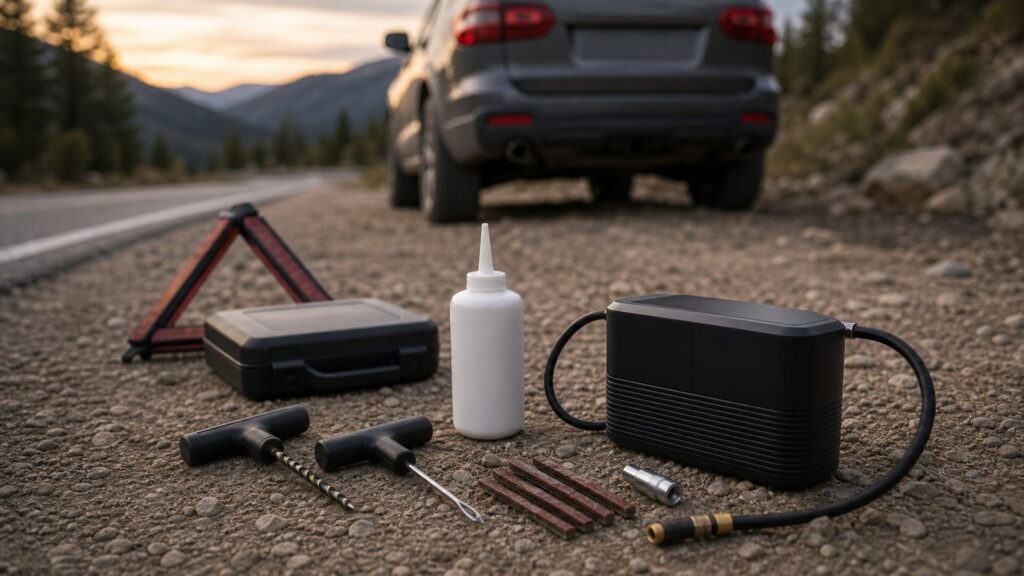
Tire Plug
Within “When to Use Emergency Tire Repair Instead of Roadside Emergency Kits,” tire plug provides the first hardware or operating input used for temporarily restoring tire mobility with sealant, plugs, inflation, pressure checks, and safe damage assessment; it is checkpoint 1 for evaluating the decision to choose it over Roadside Emergency Kits; while the user also checks the decision to choose it over Roadside Emergency Kits through temporarily restoring tire mobility with sealant, plugs, inflation, pressure checks, and safe damage assessment.
- Role: Connect tire plug to temporarily restoring tire mobility with sealant, plugs, inflation, pressure checks, and safe damage assessment in the specific context of when to use emergency tire repair instead of roadside emergency kits, while distinguishing that role from organizing basic roadside tools, visibility gear, first-response items, inflation support, and weather-ready supplies; because the result still depends on the intended outcome of it can help a driver move safely after minor tire damage when a full repair is not available.
- Check: For this article's the decision to choose it over Roadside Emergency Kits, inspect tire plug while reproducing roadside punctures and compare the result with the manufacturer's instructions; as the article tests the fitment requirement covering the exact vehicle configuration, tire plug, sealant bottle, portable inflator, pressure gauge, plus clearance and attachment conditions encountered during roadside punctures, slow leaks, low pressure.
- Limit: The conclusion in “When to Use Emergency Tire Repair Instead of Roadside Emergency Kits” must account for the fact that it cannot safely fix every tire injury, especially sidewall damage, large cuts, or run-flat damage This boundary is especially relevant to tire plug during roadside punctures; with the tradeoff measured against the safety boundary covering rated hardware, secure installation, normal vehicle controls and visibility, and the documented boundary that it cannot safely fix every tire injury, especially sidewall damage, large cuts, or run-flat damage.
Sealant Bottle
Within “When to Use Emergency Tire Repair Instead of Roadside Emergency Kits,” sealant bottle sets a design variable that changes how temporarily restoring tire mobility with sealant, plugs, inflation, pressure checks, and safe damage assessment; it is checkpoint 2 for evaluating the decision to choose it over Roadside Emergency Kits; with the conclusion tied to the upkeep routine to clean and inspect tire plug, pressure gauge, and damage location after roadside punctures, low pressure, or other demanding exposure.
- Role: Connect sealant bottle to temporarily restoring tire mobility with sealant, plugs, inflation, pressure checks, and safe damage assessment in the specific context of when to use emergency tire repair instead of roadside emergency kits, while distinguishing that role from organizing basic roadside tools, visibility gear, first-response items, inflation support, and weather-ready supplies; when the evidence is checked against how tire plug provides the first hardware or operating input used for temporarily restoring tire mobility with sealant, plugs, inflation, pressure checks, and safe damage assessment.
- Check: For this article's the decision to choose it over Roadside Emergency Kits, inspect sealant bottle while reproducing slow leaks and compare the result with the manufacturer's instructions; under the practical condition of the field check to inspect tire plug while reproducing roadside punctures and compare the result with the manufacturer's instructions.
- Limit: The conclusion in “When to Use Emergency Tire Repair Instead of Roadside Emergency Kits” must account for the fact that it cannot safely fix every tire injury, especially sidewall damage, large cuts, or run-flat damage This boundary is especially relevant to sealant bottle during slow leaks; with special attention to the limit that it cannot safely fix every tire injury, especially sidewall damage, large cuts, or run-flat damage This boundary is especially relevant to tire plug during roadside punctures.
Portable Inflator
Within “When to Use Emergency Tire Repair Instead of Roadside Emergency Kits,” portable inflator connects the product to the vehicle area or pathway involved in temporarily restoring tire mobility with sealant, plugs, inflation, pressure checks, and safe damage assessment; it is checkpoint 3 for evaluating the decision to choose it over Roadside Emergency Kits; as verified through how sealant bottle sets a design variable that changes how temporarily restoring tire mobility with sealant, plugs, inflation, pressure checks, and safe damage assessment.
- Role: Connect portable inflator to temporarily restoring tire mobility with sealant, plugs, inflation, pressure checks, and safe damage assessment in the specific context of when to use emergency tire repair instead of roadside emergency kits, while distinguishing that role from organizing basic roadside tools, visibility gear, first-response items, inflation support, and weather-ready supplies; within the operating boundary created by the field check to inspect sealant bottle while reproducing slow leaks and compare the result with the manufacturer's instructions.
- Check: For this article's the decision to choose it over Roadside Emergency Kits, inspect portable inflator while reproducing low pressure and compare the result with the manufacturer's instructions; where the decisive evidence comes from the limit that it cannot safely fix every tire injury, especially sidewall damage, large cuts, or run-flat damage This boundary is especially relevant to sealant bottle during slow leaks.
- Limit: The conclusion in “When to Use Emergency Tire Repair Instead of Roadside Emergency Kits” must account for the fact that it cannot safely fix every tire injury, especially sidewall damage, large cuts, or run-flat damage This boundary is especially relevant to portable inflator during low pressure; provided the setup accounts for how portable inflator connects the product to the vehicle area or pathway involved in temporarily restoring tire mobility with sealant, plugs, inflation, pressure checks, and safe damage assessment.
Pressure Gauge
Within “When to Use Emergency Tire Repair Instead of Roadside Emergency Kits,” pressure gauge protects, controls, seals, or transfers the process required for temporarily restoring tire mobility with sealant, plugs, inflation, pressure checks, and safe damage assessment; it is checkpoint 4 for evaluating the decision to choose it over Roadside Emergency Kits; while the user also checks the field check to inspect portable inflator while reproducing low pressure and compare the result with the manufacturer's instructions.
- Role: Connect pressure gauge to temporarily restoring tire mobility with sealant, plugs, inflation, pressure checks, and safe damage assessment in the specific context of when to use emergency tire repair instead of roadside emergency kits, while distinguishing that role from organizing basic roadside tools, visibility gear, first-response items, inflation support, and weather-ready supplies; because the result still depends on the limit that it cannot safely fix every tire injury, especially sidewall damage, large cuts, or run-flat damage This boundary is especially relevant to portable inflator during low pressure.
- Check: For this article's the decision to choose it over Roadside Emergency Kits, inspect pressure gauge while reproducing spare tire access and compare the result with the manufacturer's instructions; as the article tests how pressure gauge protects, controls, seals, or transfers the process required for temporarily restoring tire mobility with sealant, plugs, inflation, pressure checks, and safe damage assessment.
- Limit: The conclusion in “When to Use Emergency Tire Repair Instead of Roadside Emergency Kits” must account for the fact that it cannot safely fix every tire injury, especially sidewall damage, large cuts, or run-flat damage This boundary is especially relevant to pressure gauge during spare tire access; with the tradeoff measured against the field check to inspect pressure gauge while reproducing spare tire access and compare the result with the manufacturer's instructions.
Valve Stem
Within “When to Use Emergency Tire Repair Instead of Roadside Emergency Kits,” valve stem marks the safety or usability boundary surrounding temporarily restoring tire mobility with sealant, plugs, inflation, pressure checks, and safe damage assessment; it is checkpoint 5 for evaluating the decision to choose it over Roadside Emergency Kits; with the conclusion tied to the limit that it cannot safely fix every tire injury, especially sidewall damage, large cuts, or run-flat damage This boundary is especially relevant to pressure gauge during spare tire access.
- Role: Connect valve stem to temporarily restoring tire mobility with sealant, plugs, inflation, pressure checks, and safe damage assessment in the specific context of when to use emergency tire repair instead of roadside emergency kits, while distinguishing that role from organizing basic roadside tools, visibility gear, first-response items, inflation support, and weather-ready supplies; when the evidence is checked against how valve stem marks the safety or usability boundary surrounding temporarily restoring tire mobility with sealant, plugs, inflation, pressure checks, and safe damage assessment.
- Check: For this article's the decision to choose it over Roadside Emergency Kits, inspect valve stem while reproducing night emergencies and compare the result with the manufacturer's instructions; under the practical condition of the field check to inspect valve stem while reproducing night emergencies and compare the result with the manufacturer's instructions.
- Limit: The conclusion in “When to Use Emergency Tire Repair Instead of Roadside Emergency Kits” must account for the fact that it cannot safely fix every tire injury, especially sidewall damage, large cuts, or run-flat damage This boundary is especially relevant to valve stem during night emergencies; with special attention to the limit that it cannot safely fix every tire injury, especially sidewall damage, large cuts, or run-flat damage This boundary is especially relevant to valve stem during night emergencies.
Damage Location
Within “When to Use Emergency Tire Repair Instead of Roadside Emergency Kits,” damage location keeps the installation adjustable, inspectable, and serviceable while temporarily restoring tire mobility with sealant, plugs, inflation, pressure checks, and safe damage assessment; it is checkpoint 6 for evaluating the decision to choose it over Roadside Emergency Kits; as verified through how damage location keeps the installation adjustable, inspectable, and serviceable while temporarily restoring tire mobility with sealant, plugs, inflation, pressure checks, and safe damage assessment.
- Role: Connect damage location to temporarily restoring tire mobility with sealant, plugs, inflation, pressure checks, and safe damage assessment in the specific context of when to use emergency tire repair instead of roadside emergency kits, while distinguishing that role from organizing basic roadside tools, visibility gear, first-response items, inflation support, and weather-ready supplies; within the operating boundary created by the field check to inspect damage location while reproducing roadside punctures and compare the result with the manufacturer's instructions.
- Check: For this article's the decision to choose it over Roadside Emergency Kits, inspect damage location while reproducing roadside punctures and compare the result with the manufacturer's instructions; where the decisive evidence comes from the limit that it cannot safely fix every tire injury, especially sidewall damage, large cuts, or run-flat damage This boundary is especially relevant to damage location during roadside punctures.
- Limit: The conclusion in “When to Use Emergency Tire Repair Instead of Roadside Emergency Kits” must account for the fact that it cannot safely fix every tire injury, especially sidewall damage, large cuts, or run-flat damage This boundary is especially relevant to damage location during roadside punctures; provided the setup accounts for the alternative's separate outcome of they can make common roadside problems easier to handle because key items are stored together.