
What Makes Fall Detection Devices Different from Baby Breathing Monitors

Fall detectors and baby breathing monitors may both contain motion sensors, but they observe different patterns in different populations. One looks for a brief, fall-like change in adult body movement; the other watches subtle infant motion or respiratory-related patterns over time.

Their alerts cannot be interpreted interchangeably. A fall alarm begins an injury-and-assistance check, whereas a breathing-monitor alarm requires immediate observation of the baby and action based on appearance, responsiveness, and breathing—not trust in the app alone.

By: Review Streets Research Lab
Updated: August 19, 2026
Explainer · 8-12 min read
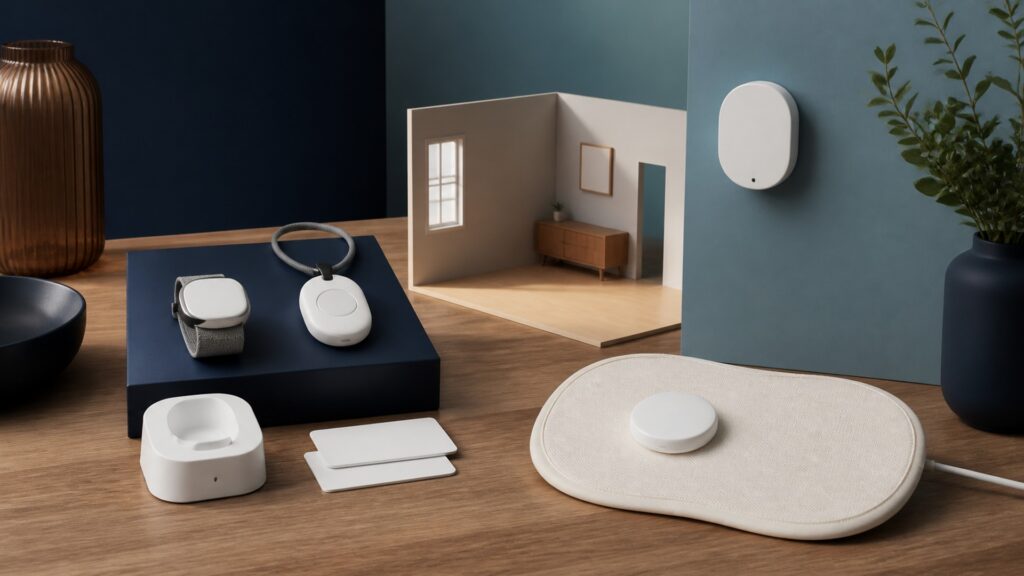
People-free editorial still life for What Makes Fall Detection Devices Different from Baby Breathing Monitors
What You'll Learn

Separate impact detection from respiratory-pattern monitoring

Compare the signal scale, placement, time window, user, and emergency response attached to each product category.

  • Identify the physical pattern each sensor observes
  • Distinguish wearable placement from crib setup
  • Compare seconds-long events with continuing trends
  • Understand different false-alarm sources
  • Follow each alert to the correct human check
  • Keep medical claims within evidence and labeling

Tip: Read the concept as part of a system, then connect it back to the use case.

Definitions

Six Concepts That Shape This Decision

These definitions connect the main idea to the variables, limits, and practical signals readers need to compare options.

Impact pattern

An impact pattern combines abrupt acceleration, orientation change, and sometimes post-event inactivity.

  • Fall software uses that pattern to classify a possible adult incident.
  • Review it through approved tests and recorded real events.
  • A slow collapse may not resemble the programmed pattern.

Respiratory proxy

A respiratory proxy is motion, contact, sound, or another signal used to estimate infant breathing behavior.

  • The monitor observes a correlate rather than directly diagnosing respiratory health.
  • Check the manufacturer's intended setup and signal-quality indicators.
  • Normal-looking data cannot rule out illness or airway trouble.

Observation window

The observation window is the span of data the algorithm considers before producing an alert.

  • A fall may be classified from a short movement sequence; breathing monitoring relies on repeated subtle activity.
  • Compare the window with the behavior named in the alert.
  • Different windows make superficially similar motion graphs incomparable.

Sensor placement

Sensor placement describes where a wearable sits or how a crib-side component views the sleep space.

  • Placement determines which movement reaches the device.
  • Recheck fit or camera geometry after clothing and bedding changes.
  • Unsafe sleep arrangements must never be introduced to improve a signal.

Verification action

Verification action is the immediate human check prompted by an alarm.

  • Adult fall response assesses contact, injury, and access; infant response checks breathing, color, and responsiveness.
  • Practice the appropriate safe response before relying on notifications.
  • Silencing an alarm without checking the person defeats both systems.

Clinical boundary

The clinical boundary separates consumer notification from diagnosis, treatment, and emergency assessment.

  • It prevents a reassuring display from overruling visible danger.
  • Write symptom-based escalation steps beside the device procedure.
  • Neither product proves that a person is medically well.

Tip: Keep the definitions connected; the strongest answer usually comes from the whole system, not one term.

Begin With the Body and Event

The categories are designed around different users and different movement scales.

Fall detection generally evaluates an older child or adult's gross body acceleration and orientation. Baby breathing monitors look for tiny repetitive motions or related signals during infant rest. A shared accelerometer does not make those targets equivalent, just as a microphone can serve many unrelated tasks.

  • Name the intended user
  • Describe the target event
  • Compare motion magnitude
  • Reject cross-category substitution

Primary purpose and validated population should govern the comparison.

Respect Placement Rules

Sensor geometry follows the signal each product is meant to observe.

A fall wearable may need a wrist, waist, or pendant position. Infant monitors may use a camera, contact component, mat, or wearable according to their design. Never attach an adult device to a baby or add unapproved objects to the sleep space for better readings.

  • Use only intended placement
  • Review age restrictions
  • Protect safe sleep conditions
  • Recheck setup after changes

Placement is part of safety, not a cosmetic preference.

Compare the Time Pattern

A sudden event and a repeating biological rhythm demand different analysis.

Fall classification considers a compact sequence around rapid motion and posture change. Breathing products examine ongoing patterns and may alarm after a pause or signal loss. The duration, filtering, and thresholds therefore answer different questions even when both screens show motion.

  • Identify the analysis window
  • Distinguish pause from impact
  • Keep signal loss visible
  • Avoid comparing raw scores

The time structure of the expected event explains much of the algorithmic difference.

Investigate False Alerts Differently

Common artifacts reflect the product's environment.

A dropped fall pendant or forceful sitting may resemble impact. Infant-monitor alarms can arise from poor contact, camera obstruction, bedding movement, caregiver handling, or a baby moving beyond the observed area. Check the person first, then preserve setup details for troubleshooting.

  • Check the user immediately
  • Note physical setup
  • Retain the alarm time
  • Seek support for repetition

Technical review follows the safety check; it never replaces it.

Use the Correct Emergency Lens

The response must fit the person named by the device.

After a fall alert, establish contact and assess injury or inability to rise. For an infant who appears blue, limp, unresponsive, or not breathing normally, call emergency services and begin trained first-aid steps as directed. Consumer monitoring must not delay direct observation.

  • Assess the person, not only data
  • Use age-appropriate response
  • Follow emergency guidance
  • Document the event afterward

The widest difference appears at the human-response end of the pathway.

Quick Reality Check

Similar electronics do not create similar evidence

The products transform motion into alerts for unrelated events, users, placements, and response decisions.

What the evidence can support

Fall devices may flag movement resembling an unwitnessed fall and start an assistance check.

A properly configured baby monitor may draw attention to a specified pattern or signal interruption during observation.

What remains unresolved

Neither category diagnoses the cause of an alert or certifies safety after a quiet period.

Consumer baby monitors should not be assumed to prevent sleep-related death or replace recommended safe-sleep practices and clinical care.

Common Myths

Misconceptions That Distort the Decision

Common shortcuts and misunderstandings can make the topic seem simpler than it is.

Are both products simply motion alarms with different names?

No. Their algorithms examine different movement scales, durations, placements, and users. A fall classifier looks for an event sequence, while a baby monitor follows subtle continuing proxies. Those outputs support entirely different verification and emergency actions.

Can a fall detector be repurposed to watch an infant?

No. Adult fall hardware and software are not designed, placed, or validated for infant respiratory observation. Improvised use may create hazards or false reassurance. Use age-appropriate products exactly as labeled and maintain recommended safe-sleep practices.

Does a normal baby-monitor display prove breathing is safe?

It does not. Consumer sensors can lose contact, misread movement, or miss clinical distress. Look at the baby when concerned. Blue color, limpness, unusual breathing, or unresponsiveness requires immediate emergency action regardless of the display.

Should every alarm be solved by adjusting sensitivity?

Check the person before changing settings. An alarm may reflect a real event, placement failure, obstruction, dropped hardware, or ordinary movement. Repeated false alerts merit support, but reducing sensitivity can also hide the pattern being monitored.

Tip: Treat strong claims as starting points for comparison, not final answers.

FAQ

Questions to Ask Before Choosing

Concise answers to common questions readers may have after the main explanation.

Why can both categories use accelerometers?

Accelerometers measure motion, a general input that many products can interpret differently. Software, placement, sampling, thresholds, intended population, and response rules determine meaning. The component name alone cannot establish what an alert represents.

What should happen first after either alarm?

Immediately check the person and follow the relevant emergency plan. For a possible adult fall, assess contact and injury without unsafe lifting. For infant breathing concern, observe responsiveness and breathing and obtain urgent help when indicated.

Do subscriptions or cellular service change the primary function?

They change how alerts travel and who receives them, not what physical event the product tries to recognize. Compare routing after confirming the category's sensed pattern actually matches the problem the household needs to address.

Which claims deserve special skepticism?

Be cautious with promises of guaranteed detection, prevention, diagnosis, or complete safety. Look for clear intended use, age range, placement, known limitations, test procedures, privacy terms, and instructions for responding when symptoms conflict with the screen.

Bottom Line

Fall detection interprets abrupt whole-body movement to start an adult assistance pathway. Baby breathing monitoring observes subtle ongoing proxies to prompt an infant check. Shared chips and wireless notifications do not make those jobs substitutes.

Use each product only for its labeled population and setting. Check the person first after an alarm, preserve safe sleep and fall-prevention practices, and let visible danger override any reassuring consumer display.

Next Steps

Go Deeper or Compare Your Options

Use these Review Streets paths to connect the explainer to related categories, comparisons, and next decisions.