What Makes Hammer Drills Different from Standard Drills

Hammer drills and standard drills can appear similar from the outside, yet they operate through fundamentally different mechanical processes. The distinction is not simply about strength or speed, but about how motion is generated and transferred through the tool. Rotation alone drives a standard drill, while a hammer drill adds a layered system that converts rotational movement into repeated forward pulses. This difference is often misunderstood because both tools share familiar shapes, controls, and visible behaviors.

This explainer walks through the internal mechanisms that set the two systems apart, focusing on how rotation, gearing, and impact motion interact. It outlines how each tool directs energy into the bit, how forces are transmitted through contact, and how those structural differences shape drilling behavior at the material surface.

By: Review Streets Research Lab
Updated: April 20, 2026
Explainer · 8–12 min read
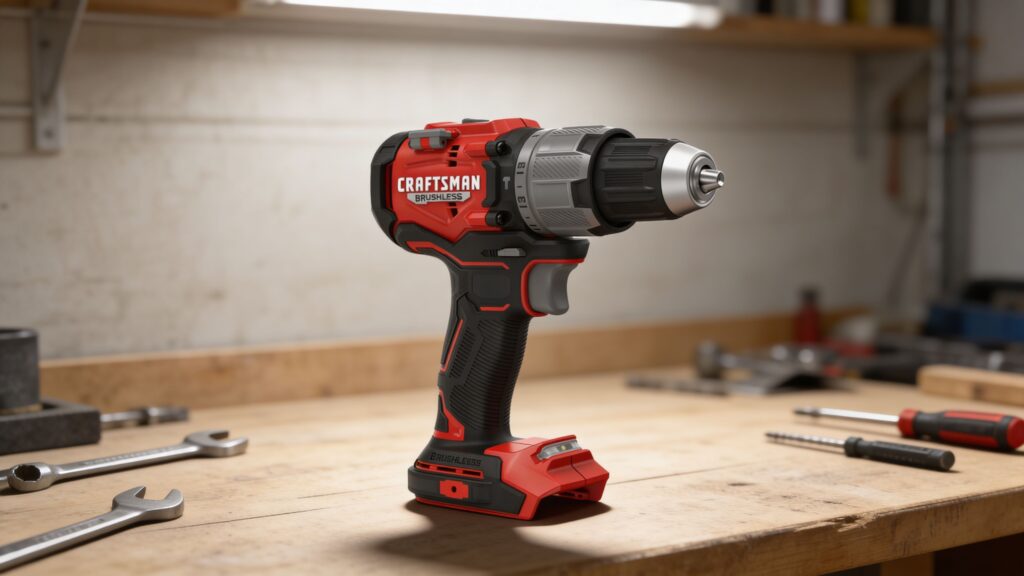
Side-by-side view of a hammer drill and a standard drill on a clean workshop surface, highlighting differences in design, size, and front housing structure in a neutral studio setting
What You’ll Learn

Hammer Drills vs Standard Drills

A mechanism-first breakdown of how hammer drills add impact motion to rotation, and why standard drills rely on rotational cutting alone.

  • How standard drills transmit continuous rotation directly through the chuck
  • How hammer drills generate timed forward pulses alongside steady rotation
  • What internal parts convert rotation into repeated impact motion
  • How force travels through the bit into material under different resistance
  • Why contact stability affects whether impacts couple or become vibration
  • How heat and load change rotation speed and impact cycle consistency
  • How material hardness shifts the balance between cutting and fracturing

Tip: Think in terms of motion types: standard drills cut by rotation, while hammer drills add a repeating axial pulse that assists fracture.

Definitions

Key Parts That Create Different Drilling Motion

The key distinction is not the exterior form, but how internal components generate motion and transfer force into the bit under different material resistance.

Rotary Drive

In a standard drill, the drive system delivers continuous rotation through the transmission into the chuck. The bit removes material by cutting and clearing debris through sustained spinning motion.

  • Continuous motion: Rotation remains steady rather than pulsed forward
  • Cutting action: Bit edges shear material as torque maintains rotation
  • Load behavior: Increased resistance mainly slows rotation or causes stalling

Impact Mechanism

In a hammer drill, an internal assembly converts part of the rotational motion into rapid forward pulses. Those strikes add an axial component that helps initiate fracture while the bit continues cutting.

  • Pulse creation: Internal parts cycle to generate repeating forward strikes
  • Dual motion: Rotation continues while impacts occur along the bit axis
  • Coupling: Impacts matter most when energy transfers into the surface

Material Response

The difference between the two systems depends on how the material reacts to force at the cutting edge. Some materials cut cleanly under rotation, while rigid masonry benefits from fracture-assisted removal.

  • Cutting mode: Softer substrates yield mainly through shearing and scraping
  • Fracture mode: Brittle substrates shed particles when struck repeatedly
  • Debris flow: Removal rate depends on how chips and dust clear

Transmission Path

Gearing and internal interfaces determine whether the tool outputs only rotation or rotation plus impacts. The transmission shapes speed, available turning force, and the timing of any hammer cycle.

  • Speed shaping: Gears set rotational rate at the chuck under load
  • Force shaping: Reduction increases available twisting force for resistance
  • Cycle timing: Impact frequency follows the rotational drive of internals

Chuck Interface

The chuck is the mechanical handoff point to the bit in both systems. In hammer drilling, it must transmit both torsion and repeated axial pulses without losing alignment.

  • Force handoff: Transfers rotation and, when present, forward impact pulses
  • Alignment: Keeps the bit centered so motion enters the surface straight
  • Stability: Poor coupling increases vibration and reduces effective transfer

Axial Impact Energy

Impact energy is the forward striking component added by the hammer mechanism. It works alongside torque, changing how energy is delivered at the tip when the material resists cutting.

  • Strike amplitude: The force delivered in each forward pulse
  • Strike frequency: How often pulses occur during continuous rotation
  • Combined effect: Rotation clears while impacts help loosen rigid material

Tip: Separate the motions in your head: standard drills deliver rotation only, while hammer drills layer a repeating axial pulse onto the same rotating drive.

Power Path

How Battery Capacity Becomes Usable Energy in a Drill

Battery capacity is stored charge, but the drill can only use it through an electrical path with limits and losses. Following that path explains why capacity is not fully “available” in practice.

  • The pack supplies charge; voltage sets potential, current draw sets rate
  • Internal resistance converts part of that energy into heat and voltage sag
  • Electronics regulate current and enforce cutoff thresholds to protect cells
  • The motor and drivetrain translate electrical input into mechanical load demand
  • As load rises, the system consumes energy faster and heats more quickly

Capacity only becomes runtime when the system can move energy without hitting thermal or protection limits.

Motors

How Motor Behavior Changes Current Draw and Capacity Use

The motor is where electrical energy is converted into rotation, and its efficiency shapes how much current is required for a given mechanical demand. That current draw directly governs how quickly stored charge is depleted.

  • Higher mechanical load increases motor current, accelerating capacity consumption
  • Lower efficiency turns more input energy into heat rather than useful rotation
  • Speed control and torque production change the electrical demand profile over time
  • Rising motor temperature increases resistance, compounding losses in the system

When the motor demands more current, capacity is consumed faster and system temperatures rise.

Gearing

How Gear Reduction Converts Electrical Demand Into Mechanical Work

Gearing determines the relationship between motor speed, torque, and the load seen by the motor. By changing that relationship, the gearbox alters current draw and how efficiently capacity is translated into work.

  • Lower gear reduces motor speed but lowers the load per revolution
  • Higher gear raises required motor torque, increasing current draw under resistance
  • Mechanical losses in gears add heat and reduce delivered work from the same energy
  • Transient load changes create current spikes that intensify voltage sag

Gear choice and mechanical efficiency change the electrical demand that drains capacity.

Heat Management

Why Heat Reduces Usable Capacity Before Charge Is Exhausted

Heat is produced wherever current flows through resistance, including cells, wiring, and electronics. As temperatures rise, the system constrains current and reaches voltage cutoffs sooner, reducing accessible capacity.

  • Cell resistance increases with temperature, causing larger voltage sag under load
  • Protective circuitry limits current when thermal thresholds are approached
  • Higher discharge rates generate more heat, lowering effective capacity in use
  • Voltage cutoffs may trigger earlier when heat and sag combine at high load

In sustained operation, heat can end output before the pack is truly empty.

User Control

How Control Inputs Shape Load and Energy Flow

Control inputs determine how the drill ramps speed and how load is applied, which changes the electrical demand profile over time. Small changes in demand can shift current draw, heat generation, and accessible capacity.

  • Smoother acceleration reduces transient current spikes that deepen voltage sag
  • More consistent engagement avoids repeated stall conditions that generate heat quickly
  • Speed settings change the torque requirement at the motor for the same task
  • Intermittent load produces cooling intervals that delay thermal limiting behavior

Capacity is consumed according to the load history, not the printed number alone.

Quick Reality Check

Where Hammer Drills Differ — and Where They Don’t

A quick reality check: how added impact motion changes drilling behavior, and where rotation-only cutting still defines the limits.

Where Impacts Change Behavior

Hammer drills add rapid forward pulses that help fracture rigid surfaces while rotation continues cutting.

In masonry, the impact cycle breaks the hole edge into dust as the bit clears.

Where Similar Limits Apply

Both systems still depend on rotation, so heat and load can slow output.

If the bit cannot clear debris or stay aligned, added impacts mostly become vibration.

Common Myths

Misconceptions About Hammer and Standard Drill Motion

The difference is often reduced to “more power,” but the real distinction is how motion is generated, timed, and transferred into material.

Hammer drills are just faster drills

A hammer drill adds rapid axial pulses to rotation rather than simply increasing speed. The impact cycle helps fracture rigid surfaces, while rotation continues to cut and clear debris through the hole.

Standard drills cannot handle hard materials

Standard drills can cut many firm substrates through rotation alone, depending on bit geometry and chip removal. The limitation appears when the material resists shearing and responds better to fracture than to continuous cutting.

Hammer mode always helps any drilling task

Impact pulses only help when the material sheds particles under repeated strikes and the bit maintains stable contact. In softer materials, the added axial motion often becomes vibration without meaningful fracture at the cutting edge.

More vibration means the mechanism is working

Vibration can indicate impacts transferring into the surface, but it can also indicate poor coupling, misalignment, or chatter. Effective hammering depends on impacts traveling through the bit into the material rather than returning through the housing.

Impacts replace the need for steady rotation

The impact mechanism does not replace cutting; it layers a repeated pulse onto the rotating drive. Rotation still determines how edges engage the surface and how debris clears, which is why a disrupted spin can soften the impact cycle as well.

Tip: Separate the mechanism into rotation, axial pulses, and coupling at the tip, since each explains a different “feel” change when resistance increases.

Common Myths

Misconceptions About Hammer and Standard Drill Motion

The difference is often reduced to “more power,” but the real distinction is how motion is generated, timed, and transferred into material.

Hammer drills are just faster drills

A hammer drill adds rapid axial pulses to rotation rather than simply increasing speed. The impact cycle helps fracture rigid surfaces, while rotation continues to cut and clear debris through the hole.

Standard drills cannot handle hard materials

Standard drills can cut many firm substrates through rotation alone, depending on bit geometry and chip removal. The limitation appears when the material resists shearing and responds better to fracture than to continuous cutting.

Hammer mode always helps any drilling task

Impact pulses only help when the material sheds particles under repeated strikes and the bit maintains stable contact. In softer materials, the added axial motion often becomes vibration without meaningful fracture at the cutting edge.

More vibration means the mechanism is working

Vibration can indicate impacts transferring into the surface, but it can also indicate poor coupling, misalignment, or chatter. Effective hammering depends on impacts traveling through the bit into the material rather than returning through the housing.

Impacts replace the need for steady rotation

The impact mechanism does not replace cutting; it layers a repeated pulse onto the rotating drive. Rotation still determines how edges engage the surface and how debris clears, which is why a disrupted spin can soften the impact cycle as well.

Tip: Separate the mechanism into rotation, axial pulses, and coupling at the tip, since each explains a different “feel” change when resistance increases.

Bottom Line

Hammer drills add timed axial pulses to the same rotating drive. That added impact cycle changes how energy couples into rigid materials, while rotation still governs cutting, debris clearing, and load behavior.

With this model, the “difference” reads as motion type and coupling quality, not a vague sense of strength or speed.

Next Steps

Go Deeper or Compare Your Options

Now that you understand what sets hammer drills apart from standard drills, these pages help you explore options, compare tool types, and make informed decisions.

Hammer Drill Roundups

An organized overview of hammer drills grouped by common use cases, helping you see how features and performance characteristics align with different project demands.

Hammer Drill Comparisons

A focused look at how two tools differ in impact action, drilling behavior, size, and control, making it easier to understand practical differences between similar options.

Hammer Drill Buying Guides

A clear explanation of the key features, specifications, and jobsite considerations that influence how a hammer drill performs in real-world applications.

Quick Summary

Hammer vs Standard Drills

  • Standard drills rely on continuous rotation to cut and clear material
  • Hammer drills add rapid forward pulses layered onto the rotating drive
  • Impact motion helps fracture brittle surfaces while rotation removes debris
  • Both systems depend on stable contact to transfer motion into material
  • Heat and load influence rotation speed and impact cycle consistency