
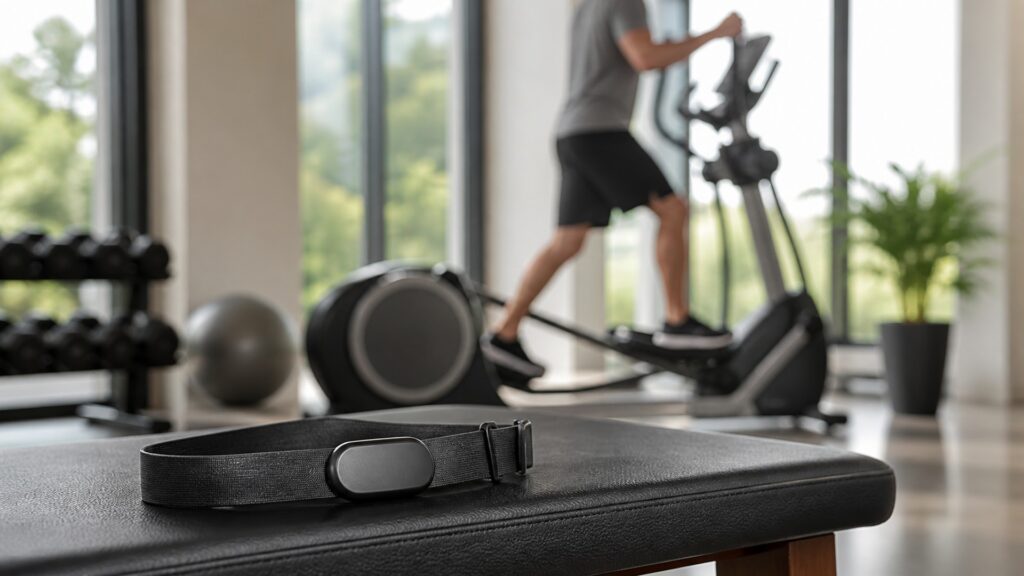
What Makes Heart Rate Trackers Different from Elliptical Machines

Heart rate trackers and elliptical machines belong to different parts of a workout. A heart rate tracker measures the body's response to effort. An elliptical machine provides the cardio movement, resistance, handles, stride path, and workout surface.

The difference matters because a tracker can follow many kinds of exercise, while an elliptical is a dedicated training machine. They can work together, but one is mainly a monitoring tool and the other is mainly exercise equipment.

By: Review Streets Research Lab
Updated: October 5, 2026
Explainer · 8-12 min read
heart rate trackers explainer hero image for Review Streets
What You'll Learn

How Monitoring Gear Differs From Cardio Equipment

A practical comparison of heart rate tracking, elliptical movement, workout control, and when the two tools complement each other.

  • Why a heart rate tracker measures effort instead of creating the workout
  • How an elliptical provides the movement and resistance
  • Where heart rate data can improve elliptical pacing
  • When a wearable is more flexible than a machine
  • Why the two tools are often complements rather than substitutes
  • What to choose when budget, space, or training goals differ

Tip: Use heart rate as one signal inside the workout, then confirm it with effort, pacing, recovery, and how the session actually feels.

Definitions

Key Concepts Behind Heart Rate Trackers Different from Elliptical Machines

These terms keep the heart rate data tied to practical training decisions instead of isolated numbers.

Sensor Contact

Sensor contact is how securely the tracker touches the body while it reads heart rate.

  • Example: a snug wrist wearable or a flat chest strap
  • Check: confirm the device does not slide during movement
  • Limit: poor contact can make good sensors look unreliable

Signal Lag

Signal lag is the delay between a change in effort and the number shown on the device.

  • Example: heart rate rising after an interval has already started
  • Check: watch how quickly the reading follows hard efforts
  • Limit: lag can make short intervals harder to judge

Training Zone

A training zone groups heart rate into an effort range for pacing or workout structure.

  • Example: keeping an easy run in a lower aerobic range
  • Check: make sure zones match the user's fitness level
  • Limit: default zones are estimates

Motion Artifact

Motion artifact is noise caused by movement, gripping, vibration, or shifting skin contact.

  • Example: a wrist reading jumping during rowing or strength circuits
  • Check: compare readings during steady and high-motion work
  • Limit: some activities are harder for wrist sensors

Recovery Signal

A recovery signal is a heart rate pattern that helps show how the body responds after training.

  • Example: resting heart rate staying elevated after hard sessions
  • Check: review several days instead of one reading
  • Limit: stress, heat, illness, sleep, and caffeine can change it

Effort Context

Effort context is the workout goal, conditions, and body feedback around a heart rate number.

  • Example: high heart rate during heat feeling different from high heart rate during intervals
  • Check: compare heart rate with breathing, pace, power, and fatigue
  • Limit: the number alone does not explain why it changed

Tip: Heart rate data gets more useful when the sensor signal, workout context, and training goal all line up.

Core Role

A Tracker Measures The Response

A heart rate tracker follows how the body responds during exercise. It can show whether a workout is easy, moderate, or hard, but it does not create the movement by itself.

  • Use it across running, cycling, gym work, and classes.
  • Check whether readings stay stable during the chosen activity.
  • Treat the tracker as feedback, not the workout source.

The tracker tells the user something about effort.

Machine Role

An Elliptical Creates The Cardio Session

An elliptical machine supplies the exercise surface. It controls stride, resistance, incline on some models, handles, and a low-impact pattern that can support indoor cardio.

  • Use it when a controlled indoor cardio machine is the goal.
  • Compare resistance range and stride comfort.
  • Check space, noise, and long-term use before buying.

The elliptical gives the body the workout to perform.

Together

Heart Rate Can Improve Elliptical Pacing

The tools can complement each other well. Heart rate helps the user keep an elliptical session in the intended effort range instead of relying only on machine level or speed.

  • Use heart rate to keep easy cardio from drifting too hard.
  • Watch response during intervals.
  • Compare similar elliptical sessions over time.

The tracker can make the machine's workout easier to interpret.

Flexibility

A Wearable Travels Across Workouts

A heart rate tracker can follow the user beyond one machine. That makes it useful for people who rotate between walking, running, cycling, strength circuits, and gym equipment.

  • Choose the tracker when monitoring several activities matters.
  • Choose the machine when one repeatable cardio station matters.
  • Consider both if indoor cardio and effort tracking are both priorities.

The tracker is more portable; the elliptical is more specific.

Decision

Choose Based On The Missing Piece

If the user needs a way to exercise indoors, an elliptical solves a different problem than a heart rate tracker. If the user already has workouts and needs better intensity feedback, the tracker may be the smarter purchase.

  • Start with whether movement or measurement is missing.
  • Consider budget and space before buying equipment.
  • Avoid expecting a tracker to replace exercise hardware.

The better choice depends on what the routine lacks.

Quick Reality Check

Where Each Tool Fits

The practical difference is monitoring feedback versus exercise hardware.

Heart Rate Trackers Fit When

The user wants effort feedback across many workout types.

Pacing, zones, and recovery trends matter more than buying a machine.

Elliptical Machines Fit When

The user wants a dedicated indoor cardio movement.

Low-impact machine training and resistance control are the main needs.

Common Myths

Misconceptions About Heart Rate Trackers And Ellipticals

The tools can overlap during cardio, but they do not serve the same role.

A tracker replaces cardio equipment

A tracker measures effort; it does not provide the movement or resistance.

An elliptical makes heart rate tracking unnecessary

Machine levels show settings, while heart rate shows the body's response.

The elliptical calorie number is enough

Calorie estimates can be rough, and heart rate still needs context.

They are direct substitutes

They are usually complements: one measures effort and one provides a workout surface.

Tip: Treat unusual readings as reasons to check the situation, not as commands to ignore your body.

FAQ

Frequently Asked Questions About Heart Rate Trackers Versus Ellipticals

Short answers for using heart rate data in real training decisions.

Which should I buy first?

Buy the missing piece. Choose an elliptical for an indoor cardio machine, or a heart rate tracker for effort feedback across workouts.

Can I use a heart rate tracker on an elliptical?

Yes. It can help manage intensity and compare similar sessions over time.

Is wrist heart rate accurate on an elliptical?

It can be usable, but gripping handles, wrist motion, and fit can affect readings.

Does an elliptical track heart rate by itself?

Some do through handles or paired sensors, but a wearable or chest strap may be more consistent.

What is the practical takeaway?

A heart rate tracker measures effort; an elliptical supplies the cardio workout.

Bottom Line

Heart rate trackers are monitoring tools, while elliptical machines are cardio training machines.

They work best together when the user wants a low-impact workout plus clearer effort feedback.

Next Steps

Go Deeper or Compare Your Options

Use these Review Streets paths to compare related categories and practical next decisions.