
Wearable Hydration
Wearable hydration carries water on the body so it stays reachable during activity.
- Example: a reservoir pack on a long trail session
- Check: decide whether fluid access is the barrier
- Limit: it does not create resistance training
Hydration packs and rowing machines are different because one is wearable support gear and the other is cardio training equipment. A hydration pack carries water during movement. A rowing machine creates a repeatable indoor pulling workout.
The comparison is useful only when the buyer separates workout support from workout creation. Choose the pack when fluids need to travel with the user. Choose the rower when the need is low-impact indoor conditioning.
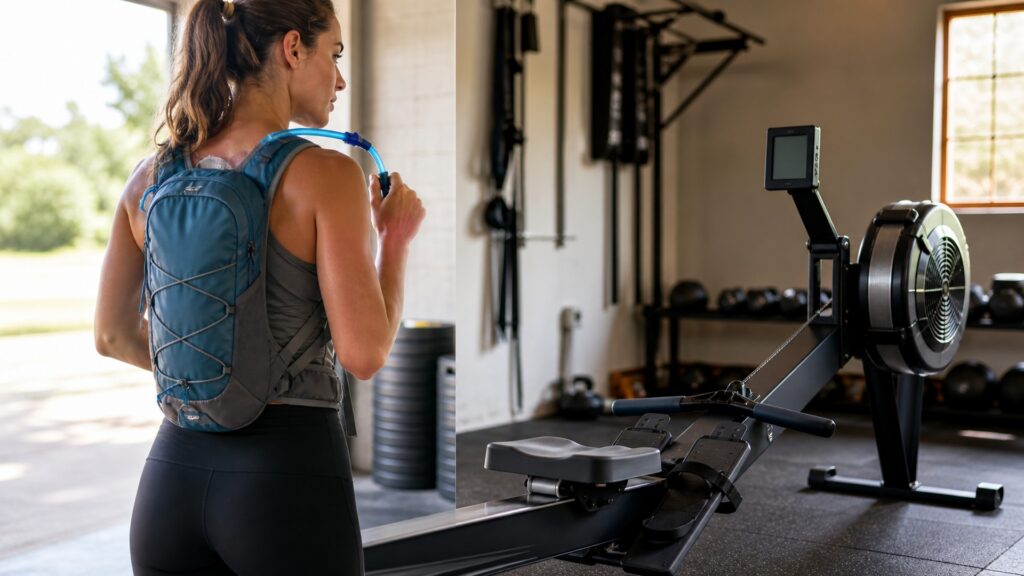
A clear comparison of portable fluid access and stationary cardio training.
Tip: Judge the gear by the problem it solves during the workout, not by the size of the feature list.
These concepts keep the decision tied to real training conditions, comfort, and setup.
Wearable hydration carries water on the body so it stays reachable during activity.
A rowing machine is stationary cardio equipment that simulates a rowing stroke.
Support gear helps an activity happen more comfortably or efficiently.
A training station provides the platform for the exercise.
Workout setting is where the session happens and what equipment can be used there.
Complementary role means two items serve different parts of a routine.
Tip: The right hydration setup is the one that stays comfortable, accessible, and clean enough to use repeatedly.
A hydration pack is useful when the user already has an activity and needs water, fuel, or small essentials to move with them.
The pack supports the session rather than producing it.
A rowing machine provides the movement, resistance, and repeatable indoor setup. Its value is the training station itself.
The rower is exercise equipment, not hydration gear.
The choice is simple when the need is named clearly. If the user needs water on the move, the pack is relevant. If the user needs an indoor cardio workout, the rowing machine is relevant.
The missing piece determines the better purchase.
A user might row indoors for conditioning and wear a hydration pack outdoors for hikes, runs, or long rides. The items can coexist because they solve different needs.
Different roles can support the same fitness goal.
A hydration pack may improve a workout, but it does not replace equipment that creates the workout. A rowing machine may include a bottle holder, but it does not help outdoors.
Clear categories prevent a bad comparison.
The pack supports mobile sessions; the rower supplies indoor cardio.
Water and small essentials need to move with the user.
Outdoor duration, heat, or refill access is the issue.
The user wants a stationary cardio workout.
Low-impact pulling and full-body conditioning are priorities.
These products should not be judged as if they perform the same job.
It supports activity but does not create a rowing workout.
A bottle nearby may help indoors, but it does not carry water outdoors.
Usefulness depends on the problem being solved.
They can support different training settings.
Tip: A hydration pack is useful only when it makes drinking easier without creating new friction.
Short answers for practical training and gear decisions.
No. One carries fluid; the other creates indoor cardio training.
Buy the one that solves your immediate barrier: water access or indoor conditioning.
Yes, especially if your routine includes indoor rowing and outdoor endurance sessions.
Usually no. A bottle nearby is simpler for stationary rowing.
Choose hydration packs for mobile water access and rowing machines for stationary cardio.
Hydration packs differ from rowing machines because they support movement with portable water instead of creating an indoor cardio workout.
They are different-role tools, so the right choice depends on whether the missing need is hydration access or exercise equipment.
Use these Review Streets paths to compare related categories and practical next decisions.
Explore the hydration pack category.
Explore indoor rowing equipment.
Review the hydration system.
Choose a retailer
Prices checked regularly. We may earn a commission at no cost to you.