What Makes Luxury Sedans Different from Hatchbacks

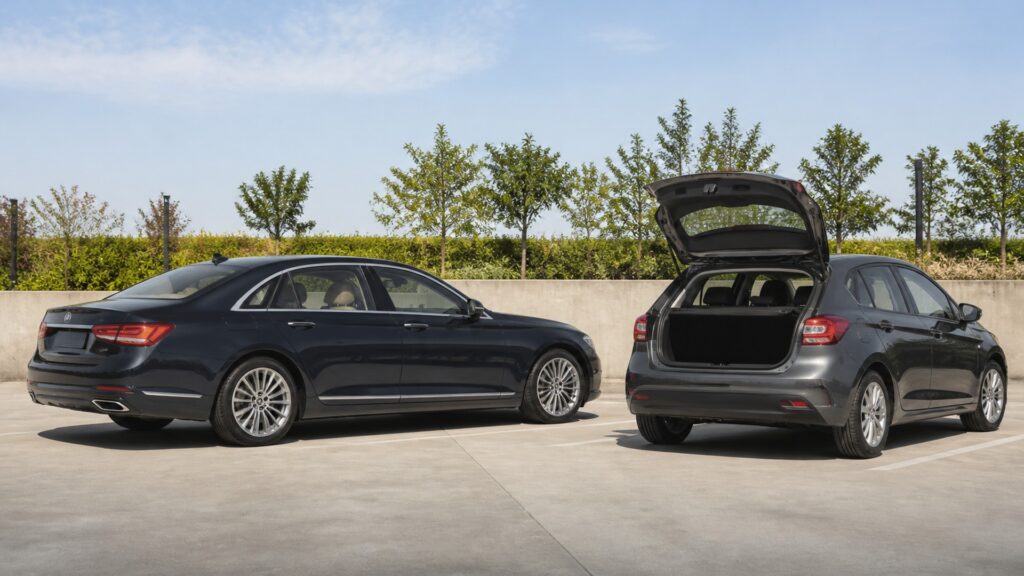
Luxury and hatchback describe different things. Luxury usually refers to a vehicle's positioning, materials, equipment, and experience; hatchback describes a rear opening that typically lifts with the rear glass. A conventional luxury sedan has a separate trunk, but an upscale vehicle can also have a hatch or liftback. The categories can overlap.

A useful comparison therefore separates cabin qualities from body packaging. Consider how the luggage opening works, which seats must remain occupied, how passengers experience the cabin, and which features are actually fitted. Neither a premium badge nor a hatch establishes the winner for every trip.

By: Review Streets Research Lab
Updated: October 5, 2026
Explainer · 8-12 min read
luxury sedans explainer hero image for Review Streets
What You'll Learn

Compare the Cabin and the Cargo Opening Separately

Look at the physical arrangement before drawing conclusions from a model's description.

  • Separate luxury equipment from rear-body design
  • Compare usable access rather than volume alone
  • Test passengers and luggage at the same time
  • Check actual refinement and fitted amenities
  • Account for opening clearance and everyday loading

Tip: Open the actual rear lid or hatch and inspect the seats: marketing names do not always describe the physical layout precisely.

Definitions

Six Differences to Inspect

These terms help compare body packaging without assuming hatchbacks are basic or sedans are uniformly luxurious.

Separate trunk

A conventional sedan places luggage beneath a rear lid while the rear glass stays fixed.

  • Example: loading a suitcase through the trunk opening
  • Check: inspect the aperture, hinges, and usable shape
  • Limit: the opening can limit an item that would fit inside the compartment

Hatch or liftback

A large rear door generally opens with the rear glass to expose the luggage area.

  • Example: loading a bulky box through a broad rear opening
  • Check: check width, height, sill, and opening clearance
  • Limit: a larger opening does not establish a higher weight allowance

Luxury equipment

Materials and comfort or convenience features contribute to the cabin experience.

  • Example: optional rear-seat adjustments or additional climate controls
  • Check: verify the individual vehicle's build and functions
  • Limit: equipment varies within a model and can also appear in hatchbacks

Seat flexibility

Folding sections or pass-throughs can change which loads fit alongside passengers.

  • Example: carrying a long item through a permitted seat opening
  • Check: test the actual configuration with required seats in use
  • Limit: some rear comfort arrangements restrict folding or usable seating

Refinement

The combined experience of ride, noise, vibration, and control quality shapes perceived comfort.

  • Example: comparing both cars on the same rough road
  • Check: test the actual tires, seats, and suspension configuration
  • Limit: body label or price alone cannot establish the quieter or smoother car

Loading clearance

The space needed around the car affects whether the rear opening is practical.

  • Example: a raised hatch approaching a low garage ceiling
  • Check: check full travel and manufacturer-approved opening adjustments where fitted
  • Limit: a powered opening still needs adequate clearance

Tip: Cargo shape, passenger requirements, and equipment options often matter more than a single headline dimension.

Category overlap

Luxury Does Not Require a Separate Trunk

An upscale hatchback or liftback can offer high-quality materials, sophisticated seats, and advanced cabin equipment. Likewise, a sedan's conventional profile does not establish which features are standard. Some vehicles marketed with sedan or coupe language use a lifting rear door. Inspect the physical opening and the actual equipment list before turning category names into assumptions about comfort or utility.

  • Identify whether the rear glass lifts with the opening.
  • Verify standard and optional equipment on the actual car.
  • Compare complete configurations rather than badges alone.

This prevents a false choice between comfort and a hatch. The relevant question is which available combination serves the owner's passengers and luggage.

Cargo access

Measure the Opening as Well as the Compartment

A separate trunk may suit ordinary bags very well while making a tall or awkward item difficult to insert. A hatch often provides a different loading path, but the roof, sill, rear seats, and cargo cover still shape what fits. Published capacity cannot show every obstruction or account for the precise dimensions of a stroller, mobility aid, or instrument case.

  • Try representative items where practical.
  • Check the narrowest point in the loading path.
  • Keep within vehicle loading limits and secure the load.

Removing a cover or folding a seat can change usable space, but it does not increase the vehicle's permitted weight. A cover also does not restrain luggage.

Rear passengers

Evaluate Comfort With the Required Seats Occupied

Luxury rear seating may be an important reason to choose a car, yet its layout can also affect carrying flexibility. A fixed console, separate rear seats, or optional comfort package may change the seating arrangement or folding capability. Compare the actual build with the passengers who will use it, then test luggage without removing seats those passengers require.

  • Check access, headroom, leg support, and normal seating posture.
  • Confirm how many usable seating positions are fitted.
  • Verify folding and pass-through features rather than assuming them.

An impressive cargo claim with the rear seats folded is less relevant when every journey needs those seats occupied. Passenger and luggage fit should be one combined test.

Cabin experience

Judge Refinement on the Road

Materials and equipment lists describe only part of a luxury cabin. Tire choice, suspension setup, seat shape, and road surface affect what passengers actually feel and hear. A hatchback should not be dismissed as noisy, and a sedan should not be accepted as comfortable without a test. Compare the particular vehicles under similar conditions and include the seating positions that matter most.

  • Use a route with the surfaces encountered regularly.
  • Check seat support after more than a brief sit.
  • Confirm useful climate and convenience functions while parked.

Choose demonstrated comfort rather than treating body design as a sound-insulation or ride-quality guarantee. Different equipment packages can change the experience within the same model.

Daily loading

Include the Place Where the Car Lives

The practical difference becomes clearer at a garage, a curb, or a crowded parking area. Check how much space is needed behind and above each opening, the effort of lifting bags over the sill, and the location of closing controls. A powered lid or hatch may make access easier, but it still needs a clear path and correct operation.

  • Check rear and overhead clearance.
  • Try the loading height with typical luggage.
  • Keep loose objects secured and follow cargo instructions.

A separate trunk can conceal luggage from view, while a hatchback may use a cover. Neither arrangement guarantees security, and visible concealment does not replace appropriate load restraint.

Quick Reality Check

Where Each Arrangement Can Make Sense

Compare the actual pair of cars with the same occupants and luggage.

A Conventional Luxury Sedan Can Suit

Regular passenger travel with luggage that fits its trunk opening.

Owners who value the particular car's verified cabin and ride without needing a large rear door.

A Hatch or Liftback Can Suit

Bulky items that benefit from its actual opening and flexible seating arrangement.

Owners who want that cargo access alongside the comfort equipment available on the chosen model.

Common Myths

Misconceptions About Luxury Sedans and Hatchbacks

Body shape and equipment need separate evidence.

Hatchbacks cannot be luxurious.

A hatch describes the rear opening; premium equipment can coexist with it.

Every luxury sedan has folding rear seats.

Confirm the actual seat and comfort-package arrangement.

A larger cargo number guarantees my item fits.

Opening dimensions, obstructions, and required passenger seats still matter.

A trunk is always quieter than a hatchback.

Compare actual road noise; construction, tires, and other details influence the result.

Tip: Inspect the layout, then test the experience instead of ranking entire categories.

FAQ

Questions About the Difference

Use the actual vehicle when labels overlap.

Can a luxury car also be a hatchback?

Yes. Luxury positioning and a lifting rear opening describe different attributes.

What is the clearest physical difference?

A conventional sedan's rear glass stays fixed when its trunk opens; a hatch generally lifts with the glass.

What if a manufacturer calls a liftback a sedan or coupe?

Inspect the opening and seating rather than relying only on the marketing description.

Is folded-seat cargo capacity the best comparison?

Only if your trips allow those seats to be folded. Test the required occupants and load together.

Which arrangement is better for daily use?

The one whose actual passenger comfort, loading access, clearance, and ownership needs fit your routine.

Bottom Line

The meaningful difference is how the actual cabin and rear opening serve the people and loads using the car.

Luxury equipment can appear in either layout. Compare passenger fit, real luggage access, refinement, and parking conditions directly.

Next Steps

Go Deeper or Compare Your Options

Use these Review Streets paths to compare related categories and practical next decisions.

Technical references: BMW i4 Gran Coupe configuration; BMW 7 Series cabin equipment; Honda hatch and cargo arrangement. Use the manual and ratings for your own model year and configuration.