
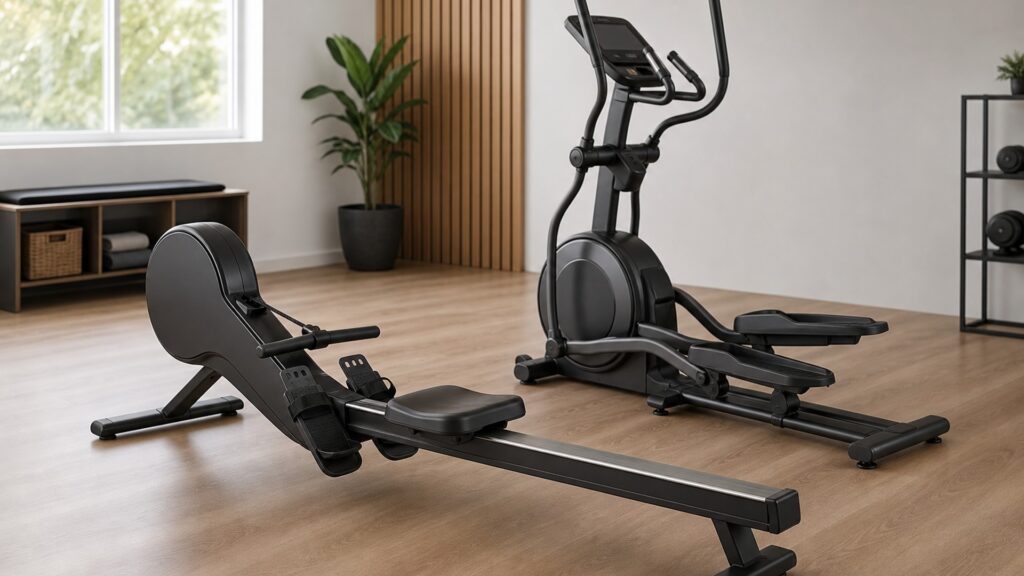
What Makes Magnetic Rowers Different from Rear Drive Ellipticals

Magnetic rowers differ from rear drive ellipticals in the way the body moves, how resistance is applied, and what the machine asks the user to practice. A magnetic rower asks you to sit, drive through a sliding stroke, and control effort through a flywheel resistance system. A rear drive elliptical keeps the user standing while the pedals follow a guided oval path.

That difference matters because these machines are not interchangeable cardio stations. The rower rewards stroke timing, rail comfort, and pulling mechanics. The rear drive elliptical rewards upright balance, stride comfort, and a machine footprint that usually stays fixed in place.

By: Review Streets Research Lab
Updated: October 7, 2026
Explainer · 8-12 min read
magnetic rowers explainer hero image for Review Streets
What You'll Learn

How Magnetic Rowers And Rear Drive Ellipticals Differ

A practical comparison of seated rowing, standing stride, resistance feel, space fit, and real workout role.

  • Why a magnetic rower feels different from an elliptical even when both are low-impact
  • How rowing stroke timing changes the training experience
  • Where rear drive ellipticals can feel smoother or simpler for standing cardio
  • Why footprint, rail length, storage, and noise should be checked before buying
  • How to choose based on the workout the user will actually repeat

Tip: Compare the motion first. Resistance levels matter, but the seated stroke versus standing stride is the bigger difference.

Definitions

Key Concepts Behind Magnetic Rowers Versus Rear Drive Ellipticals

These concepts explain why the machines can both support cardio while still feeling very different.

Magnetic Resistance

Magnetic resistance changes rowing effort by moving magnets closer to or farther from a flywheel, usually through a dial or console setting.

  • Example: turning a resistance knob before a steady rowing session
  • Check: try low, middle, and high settings at the same stroke rate
  • Limit: the feel may be quieter and steadier than air resistance, but less responsive to hard pulls

Rowing Stroke

A rowing stroke combines leg drive, body swing, arm pull, and recovery while the seat moves along a rail.

  • Example: pushing with the legs before finishing the pull with the arms
  • Check: practice slowly enough to keep the sequence smooth
  • Limit: poor timing can make a good rower feel awkward

Rail Comfort

Rail comfort is how the seat, rail length, handle path, and footrests feel through repeated strokes.

  • Example: a seat that rolls smoothly without catching or forcing short strokes
  • Check: test several minutes, not just a few pulls
  • Limit: a compact rail can feel cramped for taller users

Rear Drive Stride

Rear drive stride is the standing elliptical motion created when the drive system sits behind the user.

  • Example: a longer, flatter-feeling pedal path on a rear drive elliptical
  • Check: notice whether the stride feels natural at normal speed
  • Limit: stride comfort depends on body size, pedal spacing, and machine design

Balance Demand

Balance demand is the amount of standing control the machine requires during a workout.

  • Example: staying upright on moving pedals while holding or releasing the handles
  • Check: try the elliptical with the posture the user expects to use
  • Limit: low-impact does not mean balance-free

Footprint Fit

Footprint fit is how well the machine's length, clearance, storage position, and access space match the room.

  • Example: a rower that stores upright versus an elliptical that stays assembled
  • Check: measure operating space, not just the product dimensions
  • Limit: both machines can be long even when they are marketed for home use

Tip: The better machine is the one whose motion, setup, and comfort make repeated workouts easier.

Main Difference

Magnetic Rowers Use A Seated Push-And-Pull Stroke

A magnetic rower is built around a stroke cycle. The user sits on a sliding seat, presses through the legs, swings the torso, pulls the handle, and then returns in control. That sequence makes the workout feel technical in a way an elliptical usually does not.

  • The stroke uses timing as much as effort.
  • Seat, handle, rail, and footrest comfort matter together.
  • A short test may miss issues that appear after several minutes.

The rower makes the most sense when the user wants rowing motion, not just any cardio machine.

Standing Stride

Rear Drive Ellipticals Keep The User Upright

A rear drive elliptical uses moving pedals to guide a standing stride. The user does not sit, slide, or pull a handle through a rowing stroke. The workout is closer to continuous standing cardio, with the machine shaping the foot path.

  • Stride length and pedal feel matter more than stroke timing.
  • The rear drive layout can feel smooth for steady cardio.
  • Standing posture may be easier for users who dislike seated rowing.

The elliptical is the better fit when the user wants guided standing motion.

Resistance Feel

The Machines Change Effort In Different Ways

Magnetic rowers usually let the user set resistance and then control intensity with stroke rate, stroke length, and effort. Rear drive ellipticals also use resistance settings, but the experience is tied to pedal cadence, stride path, and sometimes handle movement.

  • A rower can feel quiet and controlled at steady effort.
  • An elliptical can feel smoother for continuous upright pacing.
  • Neither resistance system matters if the motion feels wrong.

Resistance should support the preferred movement rather than compensate for a poor fit.

Space And Setup

Footprint And Storage Can Decide The Choice

Both machines can be long, but they use space differently. A magnetic rower may need rail length during use and vertical storage afterward. A rear drive elliptical usually occupies a fixed footprint and needs clearance around the pedals and handles.

  • Measure the full rowing stroke area.
  • Check whether upright rower storage is realistic in the room.
  • Leave enough elliptical clearance for safe mounting and stride motion.

The machine that fits the room poorly is unlikely to become the machine that gets used often.

Decision Check

Choose By The Workout You Want To Repeat

A magnetic rower is usually the better choice for quiet seated rowing, stroke practice, and compact storage potential. A rear drive elliptical is usually better for standing low-impact cardio with a guided stride and less rowing technique to learn.

  • Choose the rower for rowing feel and stroke-based effort.
  • Choose the elliptical for standing stride and upright pacing.
  • Let comfort, room fit, and repeat use settle close calls.

The practical choice is the machine that makes the desired workout easier to start and finish.

Quick Reality Check

Where Each Machine Makes More Sense

The machines overlap as cardio equipment, but they solve different workout preferences.

Magnetic Rowers Make Sense When

The user wants seated rowing with controlled, usually quiet resistance.

Stroke practice, rail storage, and full-body pulling mechanics fit the routine.

Rear Drive Ellipticals Make Sense When

The user wants standing low-impact cardio with a guided stride.

A fixed machine footprint is acceptable and upright balance feels comfortable.

Common Myths

Misconceptions About Magnetic Rowers And Rear Drive Ellipticals

Both machines can support cardio, but their differences are practical and easy to feel.

They train the same way

They do not. Rowing uses a seated stroke with a handle pull, while an elliptical uses standing pedal motion.

Magnetic rowers are always easier

A rower can be quiet and controlled, but effort still depends on resistance, stroke rate, duration, and technique.

Rear drive ellipticals require no skill

They remove rowing technique, but stride comfort, posture, and balance still matter.

The smaller-looking machine always fits better

A rower may store upright, but it still needs rail length during use. An elliptical needs a stable footprint and stride clearance.

Tip: Try the actual motion for several minutes before trusting category labels or compact product photos.

FAQ

Frequently Asked Questions About Magnetic Rowers Versus Rear Drive Ellipticals

Short answers for choosing between seated rowing and standing stride cardio.

Which is better for rowing workouts?

A magnetic rower is the better match because rowing workouts depend on the seated stroke, handle pull, and sliding rail.

Which is better for standing low-impact cardio?

A rear drive elliptical is usually the better match because it keeps the user upright on a guided stride path.

Which machine is quieter?

Many magnetic rowers are relatively quiet, but seat, strap, rail, pedal, and flywheel noise vary by model. Test the machine at normal workout effort.

Which one takes more technique?

The magnetic rower usually takes more technique because stroke order and recovery timing affect comfort and performance.

What is the practical takeaway?

Choose the magnetic rower for seated rowing feel. Choose the rear drive elliptical for standing stride comfort.

Bottom Line

Magnetic rowers and rear drive ellipticals differ most in motion: seated rowing stroke versus standing guided stride.

Pick the rower when rowing technique, quiet resistance, and possible upright storage fit the routine. Pick the rear drive elliptical when upright low-impact pacing and stride comfort matter more.

Next Steps

Go Deeper or Compare Your Options

Use these Review Streets paths to compare related categories and practical next decisions.

Cardio Equipment

Compare more home cardio options by motion, space, and training role.

Quick Summary

Magnetic Rower Or Rear Drive Elliptical

  • Magnetic rowers use a seated stroke and flywheel resistance.
  • Rear drive ellipticals use standing guided stride motion.
  • Rowers ask for more stroke timing and rail fit.
  • Ellipticals ask for stride comfort, balance, and fixed footprint space.