
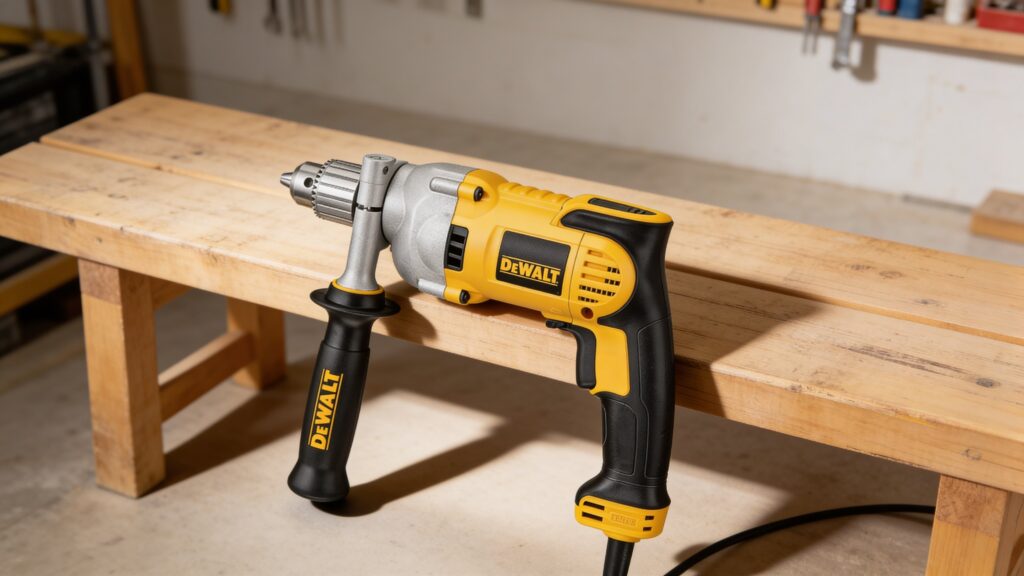
What Makes Mixing Drills Different from Standard Drills

Mixing drills and standard drills are often grouped together because they share a familiar silhouette and rotating chuck. Yet their internal engineering, gearing, and control systems are built for fundamentally different mechanical demands. The distinction is frequently misunderstood, particularly when appearance is mistaken for capability. In reality, the two tools are designed around separate torque profiles, speed ranges, and load expectations.

This explainer clarifies the structural and functional differences that define each category. It outlines how torque delivery, motor configuration, gearbox design, and speed control systems diverge between mixing drills and standard drills, providing a clear understanding of the mechanisms that separate them.

By: Review Streets Research Lab
Updated: April 20, 2026
Explainer · 8–12 min read
Side-by-side comparison of a high-torque mixing drill with paddle attachment and a standard drill, highlighting design and performance differences
What You’ll Learn

How Mixing Drills Differ Mechanically from Standard Drills

A focused breakdown of the mechanical and structural differences that separate high-torque mixing systems from general-purpose drilling mechanisms.

  • How motor windings are optimized for sustained high torque output
  • Why lower rotational speeds reduce strain during material agitation
  • How gearbox ratios prioritize torque multiplication over drill speed
  • What handle geometry reveals about load direction and resistance
  • How torque reaction forces affect operator control systems
  • Why mixing applications demand continuous-duty motor construction
  • How paddle attachments change load distribution at the chuck

Tip: View each tool as a torque-delivery system shaped by its intended mechanical load.

Definitions

Key Systems That Separate Mixing Drills from Standard Drills

Clear definitions of the core components and design choices that determine how a drill behaves under continuous resistance and heavy material load.

Torque-Focused Motor System

The motor and its electrical design shape how force is delivered at low speed. Mixing-oriented systems prioritize controlled torque output over high free-running RPM.

  • Windings: Tuned to generate rotational force without relying on speed
  • Cooling path: Manages heat when resistance stays high for long periods
  • Load response: Maintains rotation as material drag changes through the mix

Speed Control and Current Limiting

The control electronics regulate how power is metered into the motor. Under heavy mixing loads, control logic governs smooth starts, stable speed, and safe current draw.

  • Ramp-up: Controls startup surge to reduce sudden torque reaction
  • Regulation: Adjusts input as resistance rises to stabilize rotation
  • Limits: Caps current and temperature to protect the electrical system

Gear Reduction Train

The gearbox converts motor rotation into usable output by trading speed for torque. Mixing drills typically use deeper reduction ratios to keep RPM low while increasing force.

  • Ratios: Multiply torque by reducing output speed through staged gearing
  • Strength: Uses robust gears and supports to handle continuous resistance
  • Efficiency: Minimizes losses so more motor work reaches the attachment

Torque Reaction Management

When a rotating paddle meets resistance, equal and opposite torque pushes back through the tool body. Mixing designs account for this reaction through handle layout and control surfaces.

  • Grip geometry: Positions hands to counter rotation without relying on wrist strength
  • Moment arm: Spreads reaction forces across wider contact points
  • Start behavior: Reduces sudden twist through controlled acceleration and stance

Paddle Interface

The connection between tool and mixing paddle determines how load is transferred. A stable interface reduces slip and keeps rotation aligned when the material creates uneven drag.

  • Shank type: Sets how securely the paddle can be driven under torque
  • Alignment: Limits eccentric motion that increases vibration and bearing load
  • Retention: Resists loosening as the paddle repeatedly loads and unloads

Continuous-Duty Load Profile

Mixing work creates steady resistance rather than brief cutting peaks. The load profile defines how heat builds, how torque must be sustained, and how the drivetrain is stressed over time.

  • Duration: Applies high resistance continuously instead of in short bursts
  • Drag cycles: Varies as materials thicken, aerate, or bind during agitation
  • Stress path: Channels force through motor, gears, bearings, and attachment

Tip: Think in energy flow: power is shaped by controls, transformed by gearing, and resisted by the load.

Power Path

How Mixing Loads Change the Power Path

Mixing concentrates resistance into a continuous load that the tool must drive steadily. That changes how electrical input, gearing, and the output interface are stressed moment to moment.

  • Controllers meter current to manage startup surge and sustained drag
  • Motor output is shaped for low-speed rotation with high rotational force
  • Gear reduction transforms motor speed into torque suited for heavy agitation
  • The output interface transfers load as material thickens and releases cyclically
  • Reaction forces push back through the housing, influencing stability and control

In real use, mixing behavior reflects how evenly the system sustains torque under constant resistance.

Motors

How Motor Design Supports Sustained Torque

Mixing-oriented motor systems are built around torque density and thermal stability, because resistance is persistent rather than intermittent. The electrical and mechanical design targets consistent force at low RPM.

  • Motor windings and magnetic design emphasize rotational force over free-running speed
  • Current delivery is managed to avoid abrupt torque spikes during thick material engagement
  • Thermal paths and mass help delay heat buildup during continuous-duty operation

The result is a motor behavior that prioritizes stable torque delivery as load remains high.

Gearing

Why Gear Reduction Defines Mixing Behavior

Gearing determines how a tool converts motor rotation into the slow, forceful output mixing demands. The ratio, support structure, and engagement geometry shape how torque is produced and transmitted.

  • Deeper reduction ratios lower RPM while multiplying torque at the output shaft
  • Gear tooth form and alignment affect smoothness under uneven material drag
  • Bearing supports handle radial loads created by off-center paddle resistance

When gearing is tuned for mixing, rotation stays controlled as resistance rises and falls.

Heat Management

How Continuous Load Drives Heat and Output Limits

Mixing pushes heat into the system because high current is sustained for longer periods. As temperatures rise, control electronics and batteries restrict output to keep components within safe operating ranges.

  • Motor heating increases as torque demand forces higher sustained current
  • Controllers reduce power when internal sensors approach thermal thresholds
  • Battery packs limit discharge rate as cells warm under continuous draw

Heat management shows up as changes in speed stability and torque consistency over time.

User Control

How Torque Reaction Shapes Handling and Control

Mixing produces strong counter-torque that tries to rotate the tool body opposite the paddle. Control is shaped by how handles, trigger response, and stance geometry manage that reaction force.

  • Handle placement spreads reaction torque across both hands to stabilize rotation
  • Progressive trigger mapping limits sudden acceleration that amplifies tool twist
  • Body alignment and grip geometry reduce leverage that concentrates force at the wrist

Control feel is largely the visible result of how the tool manages torque reaction under load.

Quick Reality Check

Where Mixing Drills Behave Differently

A quick balance of how each drill type behaves under resistance, showing where control is stable and where system limits surface.

Mixing Load Handling

Mixing drills are built to sustain low-speed torque under continuous drag, using gear reduction and control logic that keep rotation steadier as resistance persists.

When a paddle enters thick material, the controller meters current and the drivetrain multiplies torque, reducing sudden stalls caused by load spikes.

General Drilling Behavior

Standard drills are optimized for intermittent cutting loads, where higher RPM and shorter torque events dominate, and sustained drag can push heat and current limits sooner.

When resistance remains high, the motor draws more current and heats faster, which can trigger electronic limiting and make speed regulation feel less stable.

Common Myths

Misconceptions About Mixing Drills and Standard Drills

These tools look similar, but their behavior is shaped by torque delivery, gearing, and thermal limits that are easy to misread.

Any drill can spin a mixing paddle

Spinning is not the same as sustaining torque under continuous drag. Mixing loads demand low-speed torque and stable current delivery, and the reaction forces can overwhelm housings, gearing, and control systems built for intermittent cutting.

Higher RPM makes mixing faster and easier

Mixing is governed by torque and load stability more than free-running speed. Higher RPM can increase current draw and heat while the paddle slips through material, whereas controlled low RPM keeps the drivetrain operating in a torque-capable range.

Torque ratings fully describe real mixing behavior

Published torque numbers often reflect short events rather than continuous resistance. Real mixing depends on sustained torque, gear reduction, and how the controller limits current as temperatures rise during extended high-load rotation.

Handle design is mostly a comfort feature

Handle geometry is part of the mechanical system that manages torque reaction. Wider grips and secondary handles change leverage and load paths, reducing how much counter-torque is concentrated at the wrist when the paddle binds.

Stalling always means the motor is weak

Stalls commonly originate from control limits, thermal protection, or gear ratios not matched to continuous drag. As current rises under load, electronics may reduce output to protect the motor, battery, and drivetrain from overheating.

Tip: Treat each drill as a torque-and-heat system that must stay stable under a specific load profile.

FAQ

Frequently Asked Questions About Mixing Drills and Standard Drills

Clear, mechanism-based answers that explain torque delivery, gearing, control behavior, and why continuous mixing loads stress tools differently.

What actually determines how “strong” a drill feels during mixing?

Perceived strength comes from sustained torque at low RPM, which depends on gear reduction, motor torque density, and how the controller meters current under continuous drag and rising temperature.

Does higher RPM make a drill better for mixing materials?

Not necessarily. Mixing performance is shaped by torque and speed regulation under resistance, and higher RPM can increase current draw and heat without improving torque where the paddle is heavily loaded.

What does amp-hour (Ah) change during heavy mixing loads?

Amp-hours mainly affect how long a battery can sustain a given draw, but mixing also stresses heat management. Larger-capacity packs often warm more slowly and may hold voltage steadier as current demand remains high, which can stabilize speed under load.

Why does a drill slow down or cut out while mixing?

Continuous drag drives current and heat upward, triggering controller or battery protection that limits output. As the tool approaches thermal thresholds, the electronics may reduce power or briefly shut down to prevent damage to cells, wiring, and motor components.

What role do gear ratios play in mixing versus drilling?

Mixing favors deeper reduction so the motor can operate in a torque-capable range at lower output RPM. Drilling often benefits from higher output speed for cutting, so ratios are tuned for intermittent resistance rather than steady, high-drag rotation.

How does motor type affect behavior under continuous resistance?

Motor behavior under load depends on efficiency and control, not just the label. Designs that manage current precisely and shed heat effectively tend to maintain torque more consistently as resistance persists and internal temperatures rise.

Why can a paddle feel like it “grabs” or binds suddenly?

Material can thicken, clump, or create asymmetric drag that spikes torque demand. When the load increases faster than the system can supply torque, rotation slows, reaction forces rise, and the tool body twists until the controller and drivetrain re-stabilize.

What matters more for mixing stability: tool design or power source?

Both shape the result. The power source sets current and thermal limits, while tool design determines how that power becomes controlled low-RPM torque through gearing, supports, and reaction management, especially when resistance fluctuates through the mix.

Tip: When behavior changes under load, trace it through the chain of limits: load drag, gear reduction, current draw, and thermal protection.

Bottom Line

Mixing work is a continuous-load problem shaped by torque, gearing, and heat. Tools built for sustained drag deliver steadier low-RPM rotation because the drivetrain and control system are tuned for persistent resistance.

With this load-based mental model, differences between mixing and drilling become clearer through speed stability, torque reaction, and thermal limiting behavior.

Next Steps

Go Deeper or Compare Your Options

Now that the core differences are clear, these next pages show where to continue learning, compare formats, and narrow down what matters most.

Mixing Drill Lists

A broader look at mixing drill options organized around common use needs, material demands, and workflow priorities for readers exploring the category further.

Mixing Drill Comparisons

A focused set of side-by-side pages that clarifies how different drill types, layouts, and performance traits affect control, consistency, and mixing tasks.

Mixing Drill Buying Guides

A practical guide collection that explains which features, handling traits, and jobsite considerations deserve attention before choosing a mixing drill.

Quick Summary

When Mixing Drills Make Sense

  • Continuous drag demands sustained low-speed torque and thermal stability
  • Gear reduction shapes torque delivery more than free-running speed
  • Controller limits manage current as heat builds under load
  • Torque reaction increases with thicker, uneven material resistance
  • Standard drills favor intermittent cutting over steady high-drag rotation