
Olympic barbell
An Olympic barbell is commonly built for snatch, clean and jerk, and related dynamic lifts.
- Sleeve spin helps plates rotate during turnover.
- Whip can affect timing.
- It may feel less ideal for heavy slow powerlifting.
Olympic barbells and power bars differ because the lifts they support ask different things from the bar. Olympic lifting benefits from sleeve spin and controlled whip; powerlifting movements usually favor a stiffer shaft, aggressive grip, and stable feel under heavy squats, benches, and deadlifts.
Both are barbells, but the shaft diameter, knurling, center knurl, sleeve rotation, whip, markings, and coating can make one bar feel wrong for the other job. The comparison starts with the movement pattern, not the brand label.
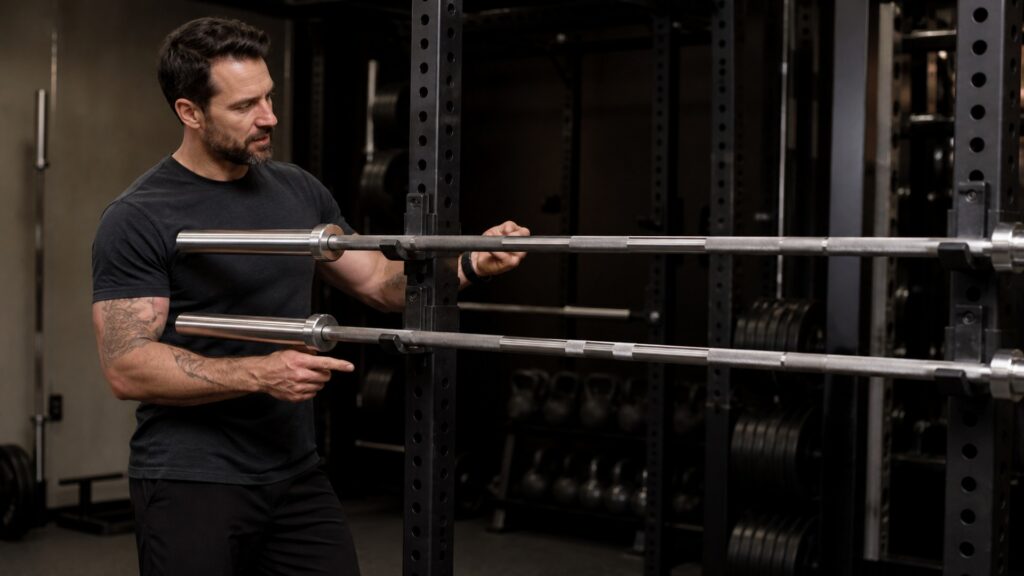
Olympic barbells and power bars differ through sleeve spin, shaft stiffness, knurling, center knurl, bar markings, and the lifts they are built to support.
Tip: Judge the equipment by the training job it changes, then compare features.
An Olympic barbell is commonly built for snatch, clean and jerk, and related dynamic lifts. The remaining concepts define the variables that change actual use.
An Olympic barbell is commonly built for snatch, clean and jerk, and related dynamic lifts.
A power bar is built for squat, bench press, and deadlift style training.
Sleeve spin is how freely the bar sleeves rotate around the shaft.
Bar whip is controlled flex in the shaft under load or speed.
Knurling is the textured pattern cut into the bar for grip.
Center knurl is texture in the middle of the bar.
Tip: A power bar is built for squat, bench press, and deadlift style training.
Olympic movements move fast and include turnover. Powerlifting movements are slower, heavier, and usually demand stiffness and secure grip.
The lift decides the bar.
When plates rotate during fast lifts, smooth sleeves keep that rotation from fighting the hands as much.
Sleeve spin matters when the bar turns quickly.
Whip can be useful in Olympic timing, while stiffness gives a stable feel for slow heavy lifts.
Flex should match the lift.
Power bars often use stronger knurl and center knurl because heavy slow lifts need secure contact. Olympic lifting often needs smoother transitions.
Grip texture should match contact points.
A mixed home gym may compromise, but specialized lifting rewards specialized bars.
The right bar follows the program.
The useful answer follows the actual mechanism, setup, and training condition rather than a generic upgrade claim.
It explains what olympic barbells and power bars changes in real training.
It gives readers practical comparison criteria without overstating outcomes.
It cannot guarantee performance, recovery, injury prevention, safety, or health outcomes.
Bar choice cannot settle technique, shoulder, wrist, back, or competition-programming concerns that require qualified coaching or medical context.
Common shortcuts and misunderstandings can make the topic seem simpler than it is.
The useful choice depends on body size, skill, setup, environment, goal, and tolerance.
Extra features help only when they solve a specific movement, setup, or feedback problem.
Gear can support training decisions, but it cannot control technique, fatigue, progression, recovery, or risk.
A tool can feel good while still being poorly matched to the goal.
Complex lifts, stroke changes, pain, and symptoms need more context than a product page can provide.
Tip: For olympic barbells and power bars, follow the mechanism before accepting broad gear claims.
Concise answers to common questions readers may have after the main explanation.
Start with the physical job: load support, resistance path, grip, stability, vision, buoyancy, propulsion, or stroke feedback.
No. It can support better training decisions, but it cannot guarantee performance, safety, recovery, or injury prevention.
Compare the mechanism, fit, setup, adjustment range, durability, and training context before brand claims.
Test the setup during ordinary training before using it for heavy attempts, races, long sessions, or technical work.
Qualified coaching or medical guidance matters for complex technique, pain, symptoms, injury concerns, or individualized programming.
Olympic Barbells and Power Bars matters when it changes a specific movement, setup, feedback, or progression problem.
The best decision matches mechanism, fit, training context, and evidence limits instead of treating equipment as a shortcut.
Use these related explainers to continue the Review Streets fitness decision path around olympic barbells and power bars.
Use it to place this strength-equipment topic inside the broader equipment system.
Read it when load increments, exercise setup, and progression are central to the choice.
Use it for the free-weight side of strength-equipment comparisons.
Choose a retailer
Prices checked regularly. We may earn a commission at no cost to you.