
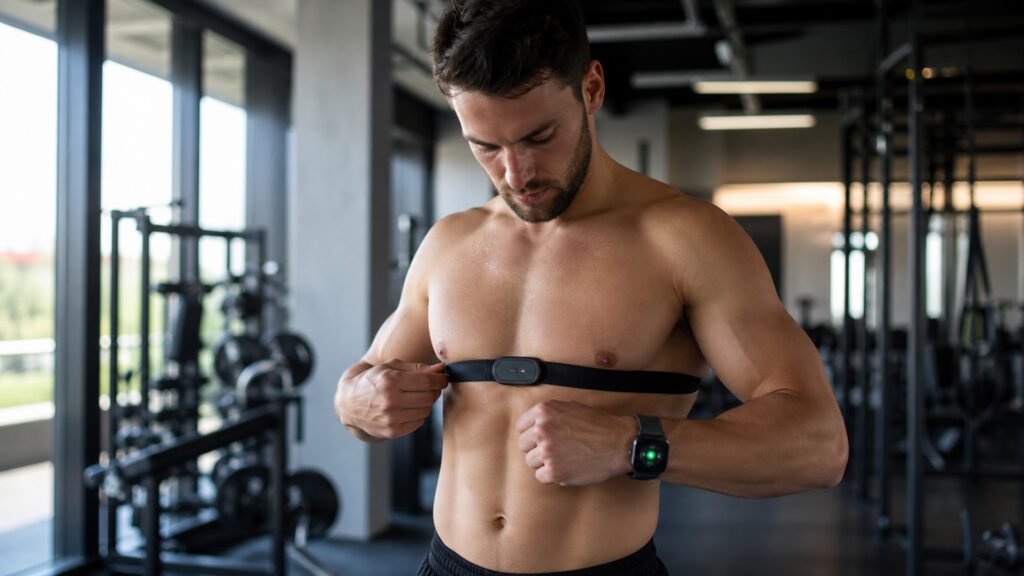
What Makes Optical Heart Rate Sensors Different from Chest Strap Monitors

Optical heart rate sensors and chest strap monitors are often compared as if they are two versions of the same tool. They are not. An optical sensor estimates pulse from light reflected by blood-volume changes near the skin, while a chest strap detects electrical activity through electrodes held against the torso.

That difference changes where each device sits, what kind of contact it needs, how movement can interfere, and how quickly readings can respond during changing effort. The useful question is not which format is universally better, but what each signal path handles well and where its assumptions need context.

By: Review Streets Research Lab
Updated: August 31, 2026
Explainer · 8-12 min read
optical heart rate sensors explainer hero image for Review Streets
What You'll Learn

How Two Heart-Rate Sensor Systems Create Different Workout Readings

The comparison starts with the signal each device reads, then follows placement, motion, setup, and interpretation into real fitness use.

  • Why optical sensors use reflected light instead of the electrical signal a chest strap reads
  • How wrist, arm, and torso placement change contact pressure and movement noise
  • Why steady cardio, intervals, gripping, and strength work can stress the two systems differently
  • How sweat, strap moisture, cold skin, tattoos, or loose fit can affect readings
  • Why pairing, battery use, and device workflow matter after the raw sensor reading
  • How to interpret device disagreement without treating either number as medical guidance
  • Where heart-rate monitoring connects to broader wearable and recovery-tracking decisions

Tip: When two devices disagree, first ask what each sensor is actually reading before asking which number looks more flattering.

Definitions

Key Concepts That Define Optical Heart Rate Sensors vs Chest Strap Monitors

These definitions connect the main idea to the variables, limits, and practical signals readers need to compare options.

Optical Heart Rate Sensor

A light-based sensor, often built into a watch, ring, armband, or earbud, that estimates pulse from changes in reflected light.

  • It usually relies on LEDs and photodiodes pressed near the skin.
  • Its reading depends on stable contact and enough usable blood-flow signal at that location.
  • It can be convenient because it is integrated into devices people may already wear.

Chest Strap Monitor

A separate strap worn around the torso that uses electrodes to detect the heart's electrical activity and transmit heart-rate data.

  • It needs firm contact across the chest rather than light passing through skin.
  • Many straps pair with watches, bike computers, phones, or gym machines.
  • Its separate band can feel less convenient even when its signal is steadier.

Photoplethysmography

Photoplethysmography, often shortened to PPG, is the optical method that tracks pulse-related blood-volume changes with light.

  • Green LEDs are common because the signal can work well near the skin surface.
  • The sensor estimates repeating pulse waves rather than reading the heart's electrical activity directly.
  • Movement, skin contact, and local circulation can change how clean the light signal looks.

Electrical Signal Detection

Electrical detection reads the tiny voltage changes associated with each heartbeat through conductive electrode contact.

  • The strap must sit where the electrodes can maintain contact across the chest.
  • Moisture from sweat or wetting the pads can improve contact for some straps.
  • This signal path is different from the pulse wave an optical sensor estimates farther from the heart.

Motion Artifact

Motion artifact is noise created when movement changes the sensor's contact, pressure, position, or surrounding signal.

  • Wrist bending, handlebar gripping, lifting, or impact can make optical readings harder to separate from motion.
  • A loose strap can also create noise if the electrodes shift or lose contact.
  • The artifact pattern depends on the exercise, not only on the device category.

Signal Latency

Signal latency is the delay between a real effort change and the value shown by the device or app.

  • Optical systems may smooth readings to reduce noise, which can make rapid changes appear later.
  • Chest straps may respond quickly when electrode contact is stable and the receiver connection is clean.
  • Displayed lag can also come from the app, watch, or bike computer processing the sensor stream.

Tip: Keep the raw signal separate from the app's training interpretation; a zone alert is downstream of the sensor reading.

Signal Path

They Start With Different Body Signals

An optical sensor works from the outside inward: light enters the skin, the sensor measures reflected changes, and software estimates a pulse pattern from those changes. A chest strap works from electrical contact: electrodes pick up cardiac electrical activity across the torso and send that timing data to another device.

  • Optical PPG follows blood-volume changes near the sensor site.
  • Chest straps follow electrical activity detected through electrode pads.
  • The watch, app, or receiver still processes and displays the final number.
  • The two devices can disagree because they are not reading the same raw signal.
  • A comparison that ignores signal source turns the issue into reputation instead of mechanics.

The cleanest mental model is simple: optical devices estimate pulse optically at the wear site, while chest straps detect an electrical timing signal from the torso.

Placement and Contact

Where the Sensor Sits Changes What Can Go Wrong

Placement determines the sensor's working environment. A wrist or arm sensor sits where skin, tissue, strap pressure, temperature, and movement all affect the optical reading. A chest strap sits closer to the torso signal, but it still depends on electrode contact and enough stability to keep the strap from shifting.

  • A loose watch can let outside light or movement disrupt an optical sensor.
  • A too-tight watch can be uncomfortable and still may not solve every reading issue.
  • Cold skin or reduced local circulation can make the optical pulse signal harder to read.
  • Chest straps may need moisture or sweat for electrode contact to settle.
  • A strap that slides, twists, or dries out can lose its advantage in consistency.

Fit matters for both formats, but it matters in different ways because light contact and electrode contact fail differently.

Workout Conditions

Exercise Type Changes the Error Pattern

Steady movement is usually easier for heart-rate devices to track than abrupt effort changes or movements that disturb the sensor site. Optical sensors can be challenged by wrist flexion, tight gripping, impact, or lifting because those actions move the sensor relative to the skin. Chest straps can be challenged by strap slip, dry electrodes, or awkward torso contact.

  • Running cadence and arm swing can add motion noise at the wrist.
  • Cycling grip and road vibration can affect optical readings on some watches.
  • Strength training can change wrist pressure and muscle tension near the sensor.
  • Intervals can reveal display lag because effort changes faster than smoothed readings.
  • A chest strap is not immune to problems if the band fit or connection is poor.

The exercise does not only raise heart rate; it also changes the physical conditions the sensor has to survive.

Workflow Tradeoffs

Convenience and Consistency Pull in Different Directions

Optical sensing wins much of its appeal by being built into everyday wearables. A watch or ring can record all-day trends, show workouts, and avoid another strap. A chest strap asks for a separate band, pairing step, and battery check, but that separation can give workouts a dedicated sensor stream.

  • Optical sensors draw power for LEDs, sampling, and onboard processing.
  • Chest straps usually use a small replaceable or rechargeable battery in the sensor pod.
  • Optical devices may show data on the same screen that records the workout.
  • Chest straps depend on a receiving watch, phone, bike computer, or machine.
  • Comfort preferences can matter because the most consistent device still has to be worn correctly.

The tradeoff is practical: integrated optical tracking reduces friction, while a strap adds a dedicated piece of hardware for sessions where stable contact is worth the setup.

Reading the Data

Disagreement Is a Clue, Not a Diagnosis

When readings differ, the cause may be sensor method, fit, movement, smoothing, connection quality, or the timing of the display. The right response is to inspect the conditions around the reading, not to treat one number as proof that the body or workout is doing something specific.

  • Check whether the devices disagree mostly during starts, intervals, or high-motion blocks.
  • Look for fit clues before assuming the sensor category is the only cause.
  • Separate raw heart-rate tracking from app-generated zones, recovery scores, or readiness labels.
  • Use consumer heart-rate data as workout information, not medical interpretation.
  • Seek qualified medical guidance for symptoms, heart-health questions, or health concerns.

A useful comparison gives the number context: what was measured, where it was measured, and what conditions shaped the reading.

Quick Reality Check

Where This Comparison Helps and Where It Has Limits

The sensor distinction explains many workout-data differences, but it does not turn either format into a universal truth source.

What the Difference Clarifies

It explains why wrist or arm optical readings can drift during movement even when the device is functioning normally.

It also explains why chest straps are often chosen for sessions where fast effort changes and stable contact matter more than all-day convenience.

What It Cannot Prove

It cannot prove that every chest strap will outperform every optical device in every workout, body, weather condition, or fit situation.

It also cannot turn consumer heart-rate data into medical advice, medical evaluation, injury-prevention guidance, or an individualized training prescription.

Common Myths

Misconceptions About Optical Heart Rate Sensors vs Chest Strap Monitors

Common shortcuts and misunderstandings can make the topic seem simpler than it is.

Optical sensors and chest straps measure the same thing

They both display heart rate, but the raw inputs differ. Optical sensors estimate pulse from light-based blood-volume changes, while chest straps detect electrical activity through torso electrodes.

A chest strap is always correct

A chest strap has a strong signal path when contact is stable, but it can still misread if the band shifts, electrodes dry out, pairing drops, or the receiver processes data poorly.

Optical heart rate is only for easy workouts

Optical sensors can be useful in many sessions, especially when fit is stable and movement is predictable. The limitation is not effort alone; it is how motion and contact affect the light signal.

Tighter always makes a watch sensor better

A secure fit helps, but over-tightening can be uncomfortable and may not fix issues caused by motion, cold skin, tattoos, sensor placement, or software smoothing.

Heart-rate data tells you exactly how hard you should train

Heart-rate readings can inform workouts, but they do not replace coaching, medical advice, perceived effort, symptoms, or context about sleep, heat, hydration, medication, and fitness history.

Tip: Compare the sensor method, fit, and workout conditions before trusting a single heart-rate trace.

FAQ

Frequently Asked Questions About Optical Heart Rate Sensors vs Chest Strap Monitors

Concise answers to common questions readers may have after the main explanation.

Why do my watch and chest strap show different heart rates?

They may be reading different signal types under different conditions. Watch fit, wrist movement, optical smoothing, strap contact, electrode moisture, and display timing can all create temporary differences.

Are optical heart rate sensors accurate enough for workouts?

They can be useful for many workouts, especially steady sessions with good sensor contact. Accuracy can vary by device, fit, exercise type, skin conditions, and how the app filters noisy data.

Why do intervals make the difference more obvious?

Intervals change effort quickly. If an optical device smooths noisy readings or lags behind the pulse change, the displayed number may trail the chest strap during starts, stops, and surges.

Can tattoos or cold weather affect optical readings?

They can. Anything that changes light transmission, reflected signal quality, or local blood flow near the sensor can make optical readings less stable for some users and conditions.

Do chest straps need moisture to work?

Many straps work best when the electrodes have good conductive contact. Sweat or lightly wetting the pads can help some straps settle, but fit and sensor maintenance still matter.

Can either device replace medical monitoring?

No. Fitness heart-rate devices are consumer workout tools. For symptoms, medication questions, or heart-health concerns, use qualified medical guidance rather than a wearable reading.

Bottom Line

Optical sensors and chest straps differ because they begin with different signals and ask for different wearing conditions.

Optical tracking favors integrated convenience, all-day wear, and simple workout capture; chest straps favor a dedicated torso signal when contact and pairing are handled well. The best reading is the one interpreted with method, fit, movement, and health limits in view.

Next Steps

Go Deeper or Compare Your Options

Use these Fitness Technology explainers to connect sensor hardware with heart-rate data, wearable placement, and recovery-tracking context.

Quick Summary

Optical Heart Rate Sensors vs Chest Strap Monitors Explained

  • Optical sensors estimate pulse from light-based blood-volume changes near the wear site.
  • Chest straps detect electrical activity through torso electrodes and transmit the data outward.
  • Movement, contact pressure, cold skin, strap slip, and smoothing can change displayed readings.
  • Steady cardio, intervals, cycling grip, and strength work stress sensors in different ways.
  • Heart-rate data is workout feedback, not medical evaluation or a complete training plan.