What Makes Paint Protection Different from Interior Cleaning

Paint protection intentionally leaves supported material on prepared exterior paint. Wax, sealant, coating, or film remains after service, then faces weather, washing, contamination, abrasion, and impact within defined limits. Coverage, cure, adhesion, edges, maintenance, and eventual renewal are central evidence.

Interior cleaning intentionally removes material. Vacuuming, chemistry, agitation, towel transfer, extraction, ventilation, and time carry debris, dissolved soil, residue, and moisture out of cabin surfaces. Occupant contact, electronics, restraints, visibility, grip, hidden foam, odor, and drying define acceptance. That difference governs tool separation, waste handling, downtime, and the evidence required before the vehicle returns to service.

By: Review Streets Research Lab
Updated: September 1, 2026
Explainer · 8-12 min read
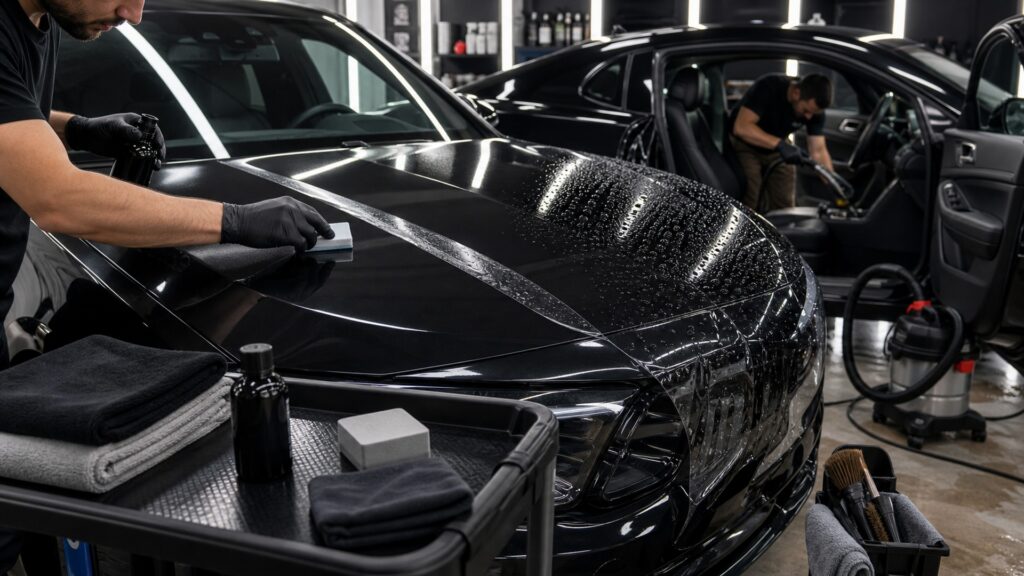
paint protection different from interior cleaning explainer hero image for Review Streets
What You'll Learn

Resolve Paint Protection and Interior Cleaning through Its Controlling Evidence

The explanation separates five mechanisms that decide paint protection and interior cleaning instead of repeating a generic care sequence.

  • Protection Adds a Retained Layer; Interior Cleaning Exports Soil and Residue
  • Exterior Layers Face Weather; Cabin Surfaces Face Occupants and Hidden Assemblies
  • Protection Needs Flash, Adhesion, or Cure; Interiors Need Recovery and Drying
  • Layer Degradation Differs from Cabin Recontamination or Moisture Retention
  • Protection Is Judged by Coverage and Layer Function; Cabins Add Human-Factors Checks
  • How to verify the finished state

Tip: Use the first failed paint protection and interior cleaning gate to choose the next test; do not compensate with unrelated force, chemistry, or product.

Definitions

Key Concepts That Define Paint Protection and Interior Cleaning

These definitions anchor paint protection and interior cleaning to exact materials, mechanisms, limits, and observable evidence. Required article-specific evidence includes retained exterior layer, removed cabin soil, weather-exposure surface, occupant-contact surface, substrate adhesion state, bounded moisture application, film edge termination, extractor recovery path, curing interval, hidden-foam drying, impact or chemical exposure, odor and function acceptance.

Retained Exterior Layer

Retained Exterior Layer locates the interface where paint protection and interior cleaning under the named surface and operating conditions.

  • Measure retained exterior layer before work
  • Observe how retained exterior layer changes
  • Record retained exterior layer after verification

Removed Cabin Soil

Removed Cabin Soil sets the usable boundary for paint protection and interior cleaning under the named surface and operating conditions.

  • Measure removed cabin soil before work
  • Observe how removed cabin soil changes
  • Record removed cabin soil after verification

Weather-Exposure Surface

Weather-Exposure Surface explains the material response during paint protection and interior cleaning under the named surface and operating conditions.

  • Measure weather-exposure surface before work
  • Observe how weather-exposure surface changes
  • Record weather-exposure surface after verification

Occupant-Contact Surface

Occupant-Contact Surface measures the transfer created by paint protection and interior cleaning under the named surface and operating conditions.

  • Measure occupant-contact surface before work
  • Observe how occupant-contact surface changes
  • Record occupant-contact surface after verification

Substrate Adhesion State

Substrate Adhesion State reveals the failure condition within paint protection and interior cleaning under the named surface and operating conditions.

  • Measure substrate adhesion state before work
  • Observe how substrate adhesion state changes
  • Record substrate adhesion state after verification

Bounded Moisture Application

Bounded Moisture Application records the verified outcome after paint protection and interior cleaning under the named surface and operating conditions.

  • Measure bounded moisture application before work
  • Observe how bounded moisture application changes
  • Record bounded moisture application after verification

Tip: Use each paint protection and interior cleaning term at its defined interface rather than as a generic synonym for cleaning or protection.

Material Direction

Protection Adds a Retained Layer; Interior Cleaning Exports Soil and Residue

Exterior installation keeps selected product on paint, while cabin cleaning transfers unwanted material into filters, towels, extractors, and waste containers. This section pairs retained exterior layer with occupant-contact surface; film edge termination supplies the stop signal. Record curing interval before changing impact or chemical exposure, then inspect retained exterior layer again after the material reaches its stable cleaned, dried, cooled, or cured state. A valid row 215 decision connects removed cabin soil to bounded moisture application without masking hidden-foam drying. If hidden-foam drying changes first, hold occupant-contact surface constant and diagnose the interface rather than adding unrelated pressure, passes, chemistry, or product. At the category boundary, retained exterior layer describes material that remains or leaves, whereas occupant-contact surface identifies the contrasting pathway; film edge termination therefore cannot be accepted using the evidence designed for curing interval or impact or chemical exposure. Boundary test 1 follows removed cabin soil across the weather seal, then uses bounded moisture application to distinguish exterior layer service from cabin recovery; hidden-foam drying closes only after the appropriate cure or hidden-moisture interval.

  • Identify what remains
  • Identify what leaves
  • Separate media
  • Verify the final destination

Opposite material flow creates opposite completion evidence.

Surface Environment

Exterior Layers Face Weather; Cabin Surfaces Face Occupants and Hidden Assemblies

Paint protection addresses exposure across inspectable panels, while interior methods navigate fabrics, coatings, foam, adhesives, screens, switches, belts, airbags, and skin contact. This section pairs removed cabin soil with substrate adhesion state; extractor recovery path supplies the stop signal. Record hidden-foam drying before changing odor and function acceptance, then inspect removed cabin soil again after the material reaches its stable cleaned, dried, cooled, or cured state. A valid row 215 decision connects weather-exposure surface to film edge termination without masking impact or chemical exposure. If impact or chemical exposure changes first, hold substrate adhesion state constant and diagnose the interface rather than adding unrelated pressure, passes, chemistry, or product. At the category boundary, removed cabin soil describes material that remains or leaves, whereas substrate adhesion state identifies the contrasting pathway; extractor recovery path therefore cannot be accepted using the evidence designed for hidden-foam drying or odor and function acceptance. Boundary test 2 follows weather-exposure surface across the weather seal, then uses film edge termination to distinguish exterior layer service from cabin recovery; impact or chemical exposure closes only after the appropriate cure or hidden-moisture interval.

  • Map weather surfaces
  • Map occupant-contact zones
  • Locate hidden construction
  • Respect vehicle guidance

The visible face does not define the whole cleaning system.

Time State

Protection Needs Flash, Adhesion, or Cure; Interiors Need Recovery and Drying

A layer develops its service state during a protected interval; a cabin returns to service only after moisture, residue, odor, visibility, grip, and functions stabilize. This section pairs weather-exposure surface with bounded moisture application; curing interval supplies the stop signal. Record impact or chemical exposure before changing retained exterior layer, then inspect weather-exposure surface again after the material reaches its stable cleaned, dried, cooled, or cured state. A valid row 215 decision connects occupant-contact surface to extractor recovery path without masking odor and function acceptance. If odor and function acceptance changes first, hold bounded moisture application constant and diagnose the interface rather than adding unrelated pressure, passes, chemistry, or product. At the category boundary, weather-exposure surface describes material that remains or leaves, whereas bounded moisture application identifies the contrasting pathway; curing interval therefore cannot be accepted using the evidence designed for impact or chemical exposure or retained exterior layer. Boundary test 3 follows occupant-contact surface across the weather seal, then uses extractor recovery path to distinguish exterior layer service from cabin recovery; odor and function acceptance closes only after the appropriate cure or hidden-moisture interval.

  • Protect curing layers
  • Ventilate cleaned materials
  • Recheck after temperature change
  • Delay release when evidence is incomplete

Both need time, but for different physical reasons.

Failure Mode

Layer Degradation Differs from Cabin Recontamination or Moisture Retention

Film lift, coating contamination, staining, or coverage loss are protection issues; wick-back, odor, dye transfer, residue, wet foam, or electrical symptoms belong to interior cleaning. This section pairs occupant-contact surface with film edge termination; hidden-foam drying supplies the stop signal. Record odor and function acceptance before changing removed cabin soil, then inspect occupant-contact surface again after the material reaches its stable cleaned, dried, cooled, or cured state. A valid row 215 decision connects substrate adhesion state to curing interval without masking retained exterior layer. If retained exterior layer changes first, hold film edge termination constant and diagnose the interface rather than adding unrelated pressure, passes, chemistry, or product. At the category boundary, occupant-contact surface describes material that remains or leaves, whereas film edge termination identifies the contrasting pathway; hidden-foam drying therefore cannot be accepted using the evidence designed for odor and function acceptance or removed cabin soil. Boundary test 4 follows substrate adhesion state across the weather seal, then uses curing interval to distinguish exterior layer service from cabin recovery; retained exterior layer closes only after the appropriate cure or hidden-moisture interval.

  • Diagnose the right system
  • Do not hide symptoms
  • Record conditions
  • Escalate damage

Similar appearance changes can have unrelated causes.

Acceptance Test

Protection Is Judged by Coverage and Layer Function; Cabins Add Human-Factors Checks

Protection inspection follows adhesion, clarity, finish, edges, contamination release, and exposure; cabin inspection adds dry textiles, clear glass, safe controls, belts, warnings, and neutral odor. This section pairs substrate adhesion state with extractor recovery path; impact or chemical exposure supplies the stop signal. Record retained exterior layer before changing weather-exposure surface, then inspect substrate adhesion state again after the material reaches its stable cleaned, dried, cooled, or cured state. A valid row 215 decision connects bounded moisture application to hidden-foam drying without masking removed cabin soil. If removed cabin soil changes first, hold extractor recovery path constant and diagnose the interface rather than adding unrelated pressure, passes, chemistry, or product. At the category boundary, substrate adhesion state describes material that remains or leaves, whereas extractor recovery path identifies the contrasting pathway; impact or chemical exposure therefore cannot be accepted using the evidence designed for retained exterior layer or weather-exposure surface. Boundary test 5 follows bounded moisture application across the weather seal, then uses hidden-foam drying to distinguish exterior layer service from cabin recovery; removed cabin soil closes only after the appropriate cure or hidden-moisture interval.

  • Use stable light
  • Touch-test safe controls
  • Inspect film edges
  • Confirm no returning symptoms

A glossy or clean appearance alone closes neither job.

Quick Reality Check

Where Paint Protection and Interior Cleaning Helps—and Where It Stops

The method is useful only when its mechanism, material, conditions, and verification remain inside the documented paint protection and interior cleaning boundary.

Evidence Supporting Use

retained exterior layer and removed cabin soil remain controlled while weather-exposure surface produces the expected material response.

occupant-contact surface, substrate adhesion state, and bounded moisture application can be observed independently without masking residue or an unstable finish.

Evidence Requiring a Stop

Stop when film edge termination, extractor recovery path, or curing interval cannot be verified within the supported process window.

Unknown material, uncontrolled hidden-foam drying, incompatible impact or chemical exposure, or failed odor and function acceptance requires another method, location, repair, or qualified service.

Common Myths

Misconceptions About Paint Protection and Interior Cleaning

These myths replace paint protection and interior cleaning evidence with shortcuts that fail across materials and conditions.

Both categories are just cosmetic detailing

Paint protection creates a retained material system with cure and maintenance, while interior cleaning removes contamination from occupant-facing materials and verifies drying, grip, visibility, restraints, and electronics. Verify paint protection and interior cleaning on the named material after complete drying.

Any coating can protect interior materials the same way

Interior protectants and coatings must be explicitly compatible with the exact material and contact zone; exterior paint products can create haze, slipperiness, staining, odor, or unsafe residues. Check paint protection and interior cleaning against vehicle guidance and the observed residue.

Dry-looking fabric proves interior work is complete

Foam, backing, seams, ducts, and retractors can retain moisture after the face appears dry, whereas protection completion depends on product-specific flash, adhesion, cure, and inspection. Confirm paint protection and interior cleaning with a controlled test before broader application.

Paint protection reduces the need for cabin cleaning

An exterior layer does not intercept food, skin oils, dust, allergens, spills, dye, biological soil, or moisture introduced inside the weather seals. Reinspect paint protection and interior cleaning under stable light, temperature, and moisture conditions.

Tip: Test the claimed paint protection and interior cleaning mechanism and inspect the dried or cured result before accepting it.

FAQ

Frequently Asked Questions About Paint Protection and Interior Cleaning

These answers resolve the remaining material, process, safety, and verification questions around paint protection and interior cleaning.

Can the same towels serve both jobs?

Use dedicated, labeled media because coating residue, exterior grit, dyes, oils, cleaners, and biological soil can cross-contaminate surfaces and undermine protection, cleanliness, grip, or appearance. Document paint protection and interior cleaning, the affected surface, and the final functional check.

Do both jobs need ventilation?

Yes, for different exposures: protection may release preparation or carrier vapor during application and cure; interior work must manage cleaning vapor and moisture released from porous materials. Keep paint protection and interior cleaning within the product label and recovery capacity.

Which job comes first in a full detail?

Sequence by contamination control, access, dust, water, cure, and vehicle release; keep polishing and coating residue away from completed cabin surfaces and protect curing exterior work. Judge paint protection and interior cleaning by transferred soil rather than immediate appearance.

What is the shared safety rule?

Read product and vehicle guidance, protect people and sensitive systems, control chemical contact and footing, separate tools and waste, and verify function before returning the vehicle. Stop paint protection and interior cleaning when color, texture, grip, or adhesion changes.

How are the results maintained?

Use layer-compatible exterior washing and inspection for protection; use prompt spill response, dry soil removal, material-safe cleaning, ventilation, and periodic function checks inside. Compare paint protection and interior cleaning with the untreated area after all residue leaves.

Bottom Line

What Makes Paint Protection Different from Interior Cleaning turns on retained exterior layer, removed cabin soil, and weather-exposure surface; the decision remains incomplete until occupant-contact surface, substrate adhesion state, and bounded moisture application are documented.

Accept the result only when film edge termination, extractor recovery path, and curing interval remain compatible with hidden-foam drying, impact or chemical exposure, and odor and function acceptance after the applicable inspection interval.

Next Steps

Continue the Paint Protection and Interior Cleaning Decision

These article-level destinations extend the mechanism, fitment, or category boundary for paint protection and interior cleaning without padding the module with taxonomy ancestors.

Quick Summary

Paint Protection and Interior Cleaning Explained

  • Protection Adds a Retained Layer; Interior Cleaning Exports Soil and Residue
  • Exterior Layers Face Weather; Cabin Surfaces Face Occupants and Hidden Assemblies
  • Protection Needs Flash, Adhesion, or Cure; Interiors Need Recovery and Drying
  • Layer Degradation Differs from Cabin Recontamination or Moisture Retention
  • Protection Is Judged by Coverage and Layer Function; Cabins Add Human-Factors Checks