What Makes Pilates Equipment Different from Yoga Props

Pilates equipment and yoga props can both support movement, but they usually serve different purposes. Pilates equipment often adds guided resistance, range control, or exercise structure. Yoga props usually make poses more accessible, supported, comfortable, or aligned.

The difference matters because a ring, reformer, strap, or Pilates apparatus is often used to shape an exercise, while yoga blocks, bolsters, blankets, and straps are often used to support a position. The tools can overlap, but they are not automatically interchangeable.

By: Review Streets Research Lab
Updated: October 5, 2026
Explainer · 8-12 min read
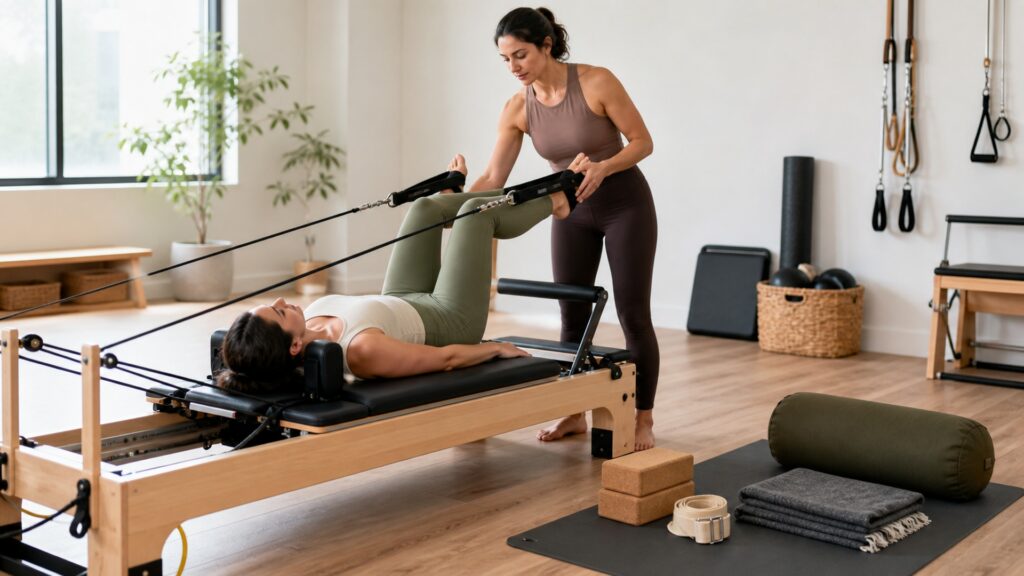
pilates equipment explainer hero image for Review Streets
What You'll Learn

How Pilates Tools Differ From Yoga Support Props

A practical comparison of guided resistance, pose support, alignment, range, and when the tools can complement each other.

  • Why Pilates equipment often changes the exercise itself
  • How yoga props usually support access, comfort, and alignment
  • Where straps, blocks, and rings can overlap across practices
  • Why resistance and support are different training jobs
  • When the simpler prop is the better tool
  • How to choose based on the session's intention

Tip: Use heart rate as one signal inside the workout, then confirm it with effort, pacing, recovery, and how the session actually feels.

Definitions

Key Concepts Behind Pilates Equipment Different from Yoga Props

These terms keep the heart rate data tied to practical training decisions instead of isolated numbers.

Guided Resistance

Guided resistance uses springs, bands, straps, rings, or machines to control how effort is applied.

  • Example: a reformer spring adding resistance during a leg press
  • Check: match resistance to control and range
  • Limit: too much resistance can distort form

Alignment Support

Alignment support helps the user keep joints and posture organized during movement.

  • Example: using a ring or strap to keep the movement path clean
  • Check: watch whether support improves control
  • Limit: support does not replace instruction

Core Control

Core control is the ability to stabilize the trunk while limbs move.

  • Example: keeping the pelvis steady during a reformer exercise
  • Check: reduce range when the trunk shifts
  • Limit: bracing too hard can reduce fluid movement

Range Management

Range management controls how far the body moves during an exercise.

  • Example: using a strap to keep a stretch within a comfortable range
  • Check: stay in a range the user can control
  • Limit: larger range is not always better

Progression

Progression is the planned increase in challenge as control improves.

  • Example: adding spring tension or a more demanding position
  • Check: change one variable at a time
  • Limit: rushing progression can reduce technique

Practice Fit

Practice fit is how well the equipment matches the user's routine, space, and skill level.

  • Example: using small props at home instead of a full reformer
  • Check: choose equipment the user will use consistently
  • Limit: larger equipment is not automatically more useful

Tip: Heart rate data gets more useful when the sensor signal, workout context, and training goal all line up.

Core Role

Pilates Equipment Often Shapes The Exercise

Pilates equipment can guide motion, add resistance, create feedback, or manage range. The tool may be central to how the exercise works.

  • Use Pilates tools when they improve control.
  • Match resistance to ability.
  • Choose equipment based on the movement goal.

The equipment often changes the exercise mechanics.

Prop Role

Yoga Props Usually Support A Position

Yoga props often help the user reach, hold, modify, or soften a position. They can improve comfort, access, and alignment without making the exercise more complex.

  • Use props to reduce strain.
  • Support range without forcing it.
  • Choose comfort and alignment when that is the goal.

The prop often makes the position more accessible.

Overlap

Some Tools Cross Between Practices

Straps, balls, blocks, and rings can appear in several movement styles. The difference is how the tool is being used: as resistance, support, alignment feedback, or range assistance.

  • Define the tool's job before using it.
  • Avoid assuming one practice's setup transfers directly.
  • Use simpler versions when the purpose is support.

The same object can serve different roles.

Resistance

Resistance Changes The Training Demand

Pilates equipment commonly uses springs, rings, or bands to create effort. Yoga props more often reduce strain or make a pose more reachable, though they can still create feedback.

  • Use resistance only when it improves control.
  • Use support when access is the issue.
  • Do not confuse harder with better.

Resistance and support should be chosen intentionally.

Decision

Choose The Tool For The Session's Intention

If the goal is structured movement and controlled resistance, Pilates equipment has the stronger case. If the goal is comfort, access, and supported positioning, yoga props may be the better fit.

  • Choose Pilates equipment for guided exercise mechanics.
  • Choose yoga props for support and accessibility.
  • Use both only when each has a clear role.

The tool should match the intention, not the label.

Quick Reality Check

Where Each Category Fits

The practical difference is exercise-shaping equipment versus support-focused props.

Pilates Equipment Fits When

The user wants guided resistance, controlled range, or structured movement.

The tool changes the exercise in a useful way.

Yoga Props Fit When

The user needs support, comfort, alignment help, or pose access.

The tool should make a position easier to manage.

Common Myths

Misconceptions About Pilates Equipment And Yoga Props

The tools can overlap, but they are not the same thing.

Pilates equipment is just yoga props with different names

Pilates tools often add resistance or structure, while yoga props often add support.

Yoga props are only for beginners

Props can refine alignment and comfort for many levels.

Resistance is always more useful than support

Support is the right choice when access or safety is the goal.

The tools are interchangeable

They can overlap, but the setup and intention matter.

Tip: Treat unusual readings as reasons to check the situation, not as commands to ignore your body.

FAQ

Frequently Asked Questions About Pilates Equipment Versus Yoga Props

Short answers for using heart rate data in real training decisions.

What is the biggest difference?

Pilates equipment often shapes the exercise through resistance or guidance, while yoga props often support a pose or position.

Can a strap be both Pilates equipment and a yoga prop?

Yes. The difference is whether it is being used for resistance, alignment, range, or support.

Which is better for beginners?

The better option is the one that makes the movement safer and clearer.

Do yoga props build strength?

They can support strength work, but they are more often used for access, alignment, or comfort.

What is the practical takeaway?

Choose Pilates equipment for guided movement and yoga props for supported positioning.

Bottom Line

Pilates equipment differs from yoga props because it often changes how an exercise works through resistance, guidance, or range control.

Yoga props are usually better for access, comfort, and supported alignment.

Next Steps

Go Deeper or Compare Your Options

Use these Review Streets paths to compare related categories and practical next decisions.

Yoga Props

Compare support props for yoga practice.