
Reservoir
Container holding cleansing water.
- Role: Within this product pathway, reservoir defines part of portable bidets.
- Check: For reservoir, locate this concept in the use documentation.
- Boundary: It cannot correct a category mismatch.
Choose portable bidets when the question fits its direct job: they direct a controlled stream of clean water for perineal cleansing after toileting; baby breathing monitors instead estimate infant movement or respiratory patterns and issue alerts.
The decision depends on different mechanisms. For portable bidets, examine reservoir and nozzle hygiene; for baby breathing monitors, examine intended use and signal artifact. Features should enter the decision after the direct job is understood.
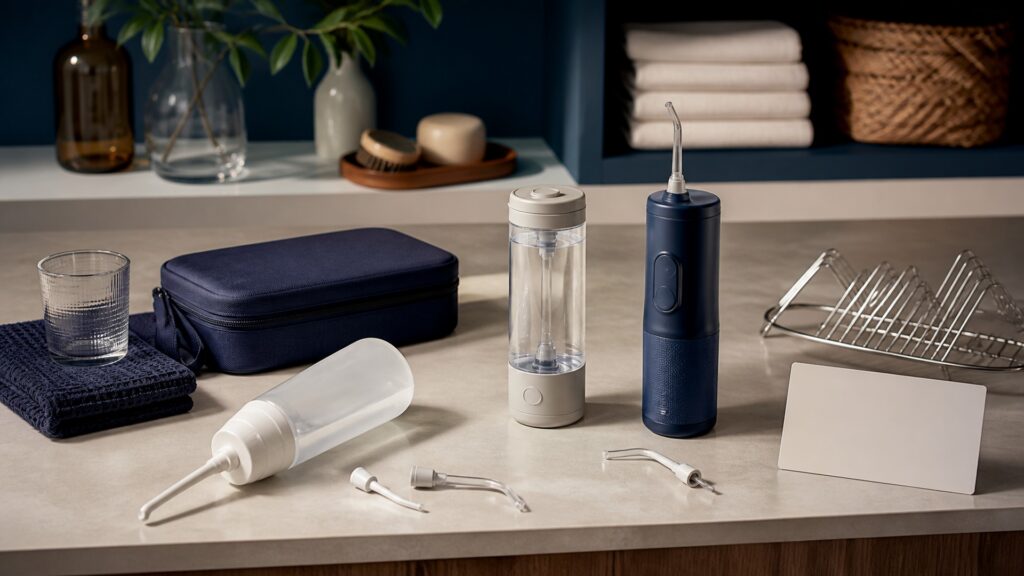
Examine reservoir, backflow, real-world conditions, points of failure, and the response that follows rather than assuming the category name settles the issue.
Tip: Read the concept as part of a system, then connect it back to the use case.
These definitions connect the main idea to the variables, limits, and practical signals readers need to compare options.
Container holding cleansing water.
Keeping the outlet clean and noncontact.
Contaminated water moving toward the reservoir.
Cleaning skin after toileting.
Adjustment of stream force for comfort.
Drying without abrasive rubbing.
Tip: Keep the definitions connected; the strongest answer usually comes from the whole system, not one term.
The first pathway emphasizes reservoir, nozzle hygiene, and backflow; the alternative emphasizes intended use, signal artifact, and alarm threshold. That difference should be clear before price and convenience enter the choice.
Reservoir is useful only when it answers the stated purpose.
Reservoir means container holding cleansing water. Nozzle Hygiene affects the next part of the process: keeping the outlet clean and noncontact. The pathway then reaches backflow, meaning contaminated water moving toward the reservoir.
Following the operating pathway shows how perineal cleansing can change the result.
A practical test documents these variables: toilet stability; travel storage; reservoir size; water source and temperature; and nozzle design. If several change together, it becomes difficult to identify whether perineal cleansing or the wider setup caused the difference.
Comparable conditions make this category-level judgment easier to interpret without pretending uncertainty disappears.
Safe operation requires attention to these rules: use the least intensive suitable setting; use potable water unless a clinician directs otherwise; keep pressure gentle; direct flow appropriately; and never insert the nozzle. If the step associated with pressure control breaks down or the user's condition changes, a seemingly normal output should not delay a proportionate action.
The safety boundary for the decision between product types includes failure, misuse, and warning signs.
A practical routine coordinates these actions: store clean; check condition before use; prepare compatible supplies; confirm settings and power; perform the practical task in sequence; and wash hands. The remaining sequence covers: fill with comfortable clean water; and inspect and position the nozzle without contact. Keep any required caregiver or professional review in the process.
The best routine for the decision between product types is an uncomplicated process that users can perform safely.
Use reservoir and perineal cleansing to separate what the evidence supports versus a broader claim the product's output cannot prove alone.
Used for its direct job, the product can show how reservoir affects nozzle hygiene within the stated conditions of use.
Systematic attention to backflow and perineal cleansing can reveal whether the practical task remains practical over time.
The category cannot make pressure control into proof of cause or make personal contraindications immaterial.
A failure involving pat dry needs the response established for the user rather than another unsupported attempt.
Common shortcuts and misunderstandings can make the topic seem simpler than it is.
Nozzle Hygiene contributes one input to the category choice. That definition is too narrow to support the claim. The conclusion cannot omit cleaning access. A safe-use plan should also use potable water unless a clinician directs otherwise.
Backflow describes a control within the decision between product types. The description does not justify that conclusion. The finding also turns on drying method. The user may also need to keep pressure gentle.
Perineal Cleansing marks an intermediate step in the product-category choice. Its role in the pathway is more limited than the myth suggests. The conclusion cannot omit skin comfort. The applicable precaution is to direct flow appropriately.
Pressure Control sets one boundary around this choice of category. Setup quality does not eliminate other failure points. A sound conclusion also considers toilet stability. Responsible follow-through should never insert the nozzle.
Tip: Treat strong claims as starting points for comparison, not final answers.
Concise answers to common questions readers may have after the main explanation.
Perineal Cleansing enters at the start of this category-level judgment. Start by reviewing travel storage. The daily routine should also check condition before use. The applicable precaution is to never insert the nozzle.
Pressure Control changes a control point in this category-level judgment. Interpret the observation alongside reservoir size. The daily routine should also prepare compatible supplies. The backup procedure should also avoid sharing.
Pat Dry affects the observable output from this category-level judgment. Compare performance only after recording water source and temperature. The daily routine should also confirm settings and power. Before continuing, remember to prevent the nozzle from touching skin or toilet surfaces.
Reservoir helps define the stopping point for the product-category choice. Before continuing use, confirm nozzle design. The daily routine should also perform the hands-on job in sequence. This boundary requires users to empty and dry after use.
Judge the two-category choice through reservoir, backflow, and the real conditions surrounding pressure control.
A sound decision keeps nozzle hygiene visible, builds perineal cleansing into the workflow, and responds promptly when pat dry or another defined warning condition appears.
Use these Review Streets paths to connect the explainer to related categories, comparisons, and next decisions.
See the related mechanism guide for the product's inputs, operating sequence, variables, and limits.
Continue with a focused guide to the outcome, context, safety, or routine named in this related topic.
Continue with a focused guide to the outcome, context, safety, or routine named in this related topic.
Choose a retailer
Prices checked regularly. We may earn a commission at no cost to you.