
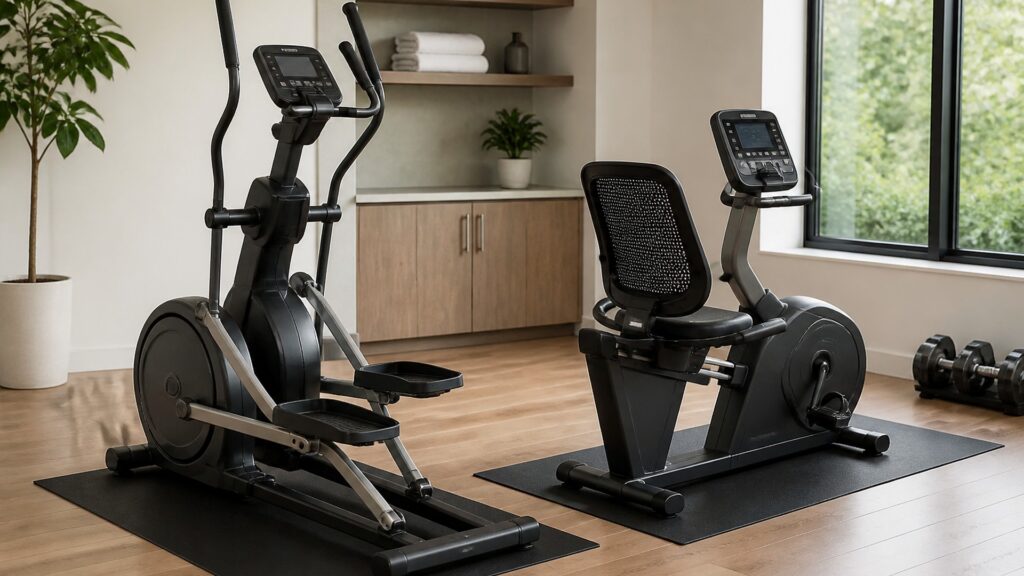
What Makes Rear Drive Ellipticals Different from Recumbent Exercise Bikes

Rear drive ellipticals differ from recumbent exercise bikes because they keep the user standing on a guided elliptical stride, while recumbent bikes support the user in a seated pedaling position. Both can support cardio, but they ask the body to work differently.

The difference matters for balance, posture, joint comfort, room fit, and workout goals. A rear drive elliptical fits users who want standing stride work, while a recumbent bike fits users who want seated support and lower balance demand.

By: Review Streets Research Lab
Updated: October 6, 2026
Explainer · 8-12 min read
rear drive ellipticals explainer hero image for Review Streets
What You'll Learn

How Standing Rear Drive Motion Differs From Supported Cycling

A practical comparison of body position, motion, support, and workout use.

  • How standing stride differs from seated pedaling
  • Why balance demand changes the decision
  • Where back support matters
  • How room fit differs
  • When each machine makes more sense

Tip: Test the motion, placement, and controls together before relying on one specification.

Definitions

Key Concepts Behind Rear Drive Ellipticals Versus Recumbent Exercise Bikes

These concepts connect rear drive design to comfort, room fit, and repeated workout use.

Rear Drive Layout

A rear drive layout places the flywheel and main drive housing behind the user.

  • Example: a longer elliptical with the drive system at the back
  • Check: measure the full frame and use space
  • Limit: rear placement alone does not prove comfort

Stride Path

Stride path is the guided route the pedals follow during each step.

  • Example: a long oval motion during steady cardio
  • Check: test the motion at normal workout pace
  • Limit: listed stride length does not show the whole feel

Frame Stability

Frame stability is how well the machine resists rocking, shifting, or flexing.

  • Example: staying steady during faster cadence
  • Check: try the machine at the intensity you expect to use
  • Limit: a stable frame still needs a level floor

Resistance Range

Resistance range is the span between easy and difficult pedal effort.

  • Example: light warmups plus harder endurance blocks
  • Check: try low, middle, and high settings
  • Limit: more levels do not guarantee better control

Room Fit

Room fit is whether the machine's footprint, clearance, and access space work at home.

  • Example: leaving enough length behind and around the elliptical
  • Check: measure the whole use zone
  • Limit: a good machine can still be wrong for the room

Workout Fit

Workout fit is how well rear drive ellipticals versus recumbent exercise bikes supports the sessions the user plans to repeat.

  • Example: steady cardio, intervals, or recovery work
  • Check: match features to weekly use
  • Limit: plans can change after purchase

Tip: A rear drive elliptical earns its space only when the stride and setup match the user.

Position

Rear Drive Ellipticals Keep The User Standing

A rear drive elliptical uses a standing stride. That can engage posture and balance more than a seated bike workout.

  • Check standing comfort.
  • Use handles without leaning hard.
  • Test the stride at normal pace.

Standing motion is the main difference.

Support

Recumbent Bikes Support The Back And Seat

A recumbent exercise bike lets the user sit with back support while pedaling. That can be helpful for users who want less balance demand.

  • Adjust the seat carefully.
  • Check backrest comfort.
  • Try resistance changes while seated.

Support changes how the workout feels.

Motion

Stride And Pedaling Use Different Patterns

Rear drive ellipticals guide the feet through an oval path. Recumbent bikes use circular pedaling from a seated position.

  • Compare hip and knee comfort.
  • Try both for several minutes.
  • Notice which motion feels easier to repeat.

The movement pattern should match the user.

Room

Both Need Space In Different Ways

A rear drive elliptical needs length, height, and standing clearance. A recumbent bike may sit lower but can need space for the seat track.

  • Measure floor length.
  • Check ceiling needs for the elliptical.
  • Leave room for safe entry and exit.

The best machine has to fit the actual room.

Decision

Choose By Support Needs And Workout Goal

The right choice depends on whether the user wants standing cardio or seated support. Both can be useful when matched to the right routine.

  • Choose rear drive for standing stride work.
  • Choose recumbent for supported cycling.
  • Let comfort decide close calls.

The better machine is the one the user will use consistently.

Quick Reality Check

Where Each Machine Makes Sense

The two machines support different bodies and workout preferences.

Rear Drive Ellipticals Help When

The user wants standing low-impact cardio.

A longer stride feel is comfortable and the room has space.

Recumbent Bikes Help When

The user wants seated support.

Lower balance demand is a priority.

Common Myths

Misconceptions About Rear Drive Ellipticals And Recumbent Bikes

Both can support cardio, but they are not the same experience.

They train the same way

Standing stride and seated pedaling use different body positions.

The recumbent bike is only easy

Resistance can make recumbent sessions challenging.

The elliptical is always better for fitness

Better depends on comfort, support needs, and consistency.

Room fit is obvious from pictures

Measure footprint, clearance, and access space before choosing.

Tip: Treat broad category claims as starting points, then check the actual machine.

FAQ

Frequently Asked Questions About Rear Drive Ellipticals Versus Recumbent Exercise Bikes

Short answers for practical elliptical buying and setup decisions.

Which has more balance demand?

The rear drive elliptical usually has more balance demand because the user stands.

Which offers more support?

The recumbent bike offers more seated and back support.

Which is better for small rooms?

It depends on floor length, ceiling height, and access space.

Can both provide low-impact cardio?

Yes, but they use different body positions and motion patterns.

What is the practical takeaway?

Choose rear drive for standing stride work and recumbent cycling for seated support.

Bottom Line

Rear drive ellipticals differ from recumbent exercise bikes by using standing guided stride motion instead of supported seated pedaling.

Choose by balance comfort, support needs, room fit, and the workout the user will repeat.

Next Steps

Go Deeper or Compare Your Options

Use these Review Streets paths to compare related categories and practical next decisions.