
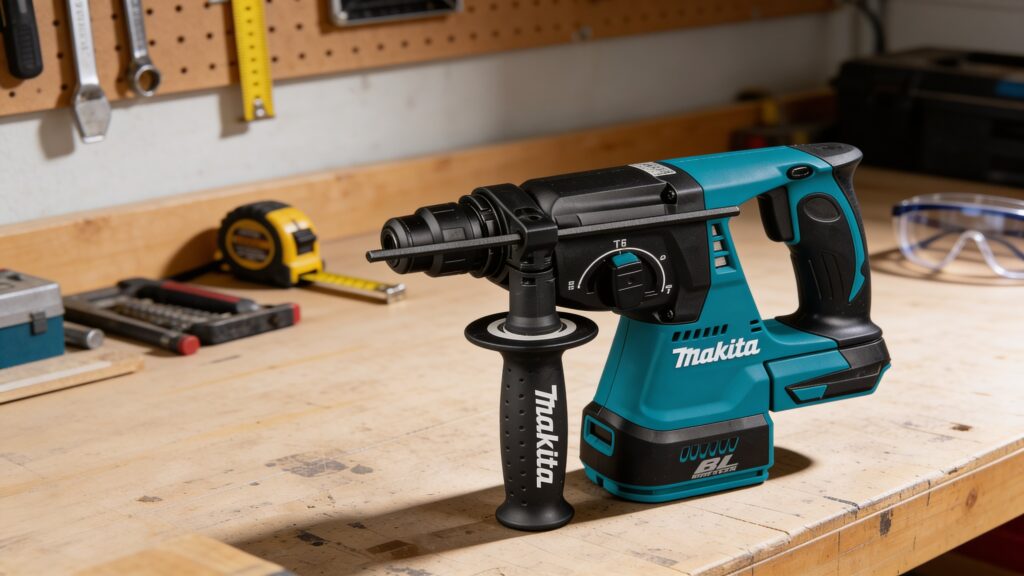
What Makes Rotary Hammer Drills Different from Hammer Drills

Rotary hammer drills and hammer drills are often grouped together because both add a striking action to drilling, yet they rely on different internal systems. The confusion usually comes from their similar names and overlapping use on masonry, even though the way each tool generates force, transfers motion, and drives the bit is not the same.

This explainer outlines the mechanical differences between the two designs, from basic hammering action to pneumatic impact systems and bit engagement. By the end, the reader will understand how each tool operates, why the drilling motion feels different, and what separates their underlying mechanisms in practical terms.

By: Review Streets Research Lab
Updated: April 19, 2026
Explainer · 8–12 min read
Side-by-side view of a rotary hammer drill and a hammer drill on a clean workbench, highlighting their different sizes, chucks, and heavy-duty drilling purposes
What You’ll Learn

How Rotary Hammer Drills and Hammer Drills Differ

A focused explanation of the internal systems, impact mechanisms, and motion differences that separate these two drilling tools in function and design.

  • How rotary hammer drills generate force through an internal pneumatic impact system
  • How hammer drills create vibration through mechanical discs or cam plates
  • Why the striking motion feels different between the two tool designs
  • How rotation and impact are linked differently inside each mechanism
  • What the chuck and bit interface reveals about intended drilling motion
  • Why impact energy transfers more directly in one system than another
  • How internal design affects drilling rhythm, resistance, and operator feedback

Tip: Think of a hammer drill as mechanically chattering, while a rotary hammer delivers impact through a separate internal striking system.

Definitions

Key Systems That Separate Rotary Hammers from Hammer Drills

Before the mechanism makes sense, it helps to define the internal systems that create impact, manage rotation, and transfer force into the bit.

Mechanical Hammering Mechanism

This is the impact system used in a hammer drill. It creates rapid forward-and-back movement by forcing paired internal surfaces against each other as the tool rotates.

  • Action: Produces a vibrating hammering effect through direct mechanical contact
  • Timing: Impact depends on the rotational system staying engaged under pressure
  • Feel: The motion is tighter, faster, and more chatter-like at the handle

Pneumatic Impact System

This is the striking system inside a rotary hammer. It uses an internal piston arrangement to compress air and drive a separate hammering action forward.

  • Action: Transfers impact through air pressure rather than direct gear contact
  • Separation: The striking motion is generated independently from basic rotation
  • Delivery: Blows arrive as heavier impacts instead of fine mechanical chatter

Rotation Drive

The rotation drive is the part of the tool that keeps the bit turning. In both designs, rotation matters, but it interacts differently with the impact mechanism.

  • Hammer drill: Rotation and hammering are closely linked in one mechanical path
  • Rotary hammer: Rotation continues alongside a separate internal striking cycle
  • Result: The drilling motion reflects how those systems share or divide work

Gear Train

The gear train channels motor motion into usable internal movement. It determines how rotation is reduced, redirected, and coordinated with the tool’s hammering system.

  • Transfer: Carries rotational force from the motor into working components
  • Coordination: Helps synchronize spinning parts with the impact mechanism
  • Load path: Internal layout changes how force travels through the tool body

Bit Interface

The bit interface is where the tool grips and guides the bit. Its design shows whether the system is built mainly for rotational holding or repeated impact transfer.

  • Hammer drill: Typically clamps the bit tightly for rotation-driven drilling motion
  • Rotary hammer: Allows the bit to move slightly while receiving internal blows
  • Function: The interface reflects how each system sends energy forward

Impact Energy

Impact energy is the force delivered in each forward strike. It helps explain why two tools can both hammer while producing very different drilling behavior.

  • Source: Comes from cam contact in one design and compressed air in another
  • Character: Can feel like rapid vibration or slower, heavier percussion
  • Effect: The energy pattern shapes resistance, rhythm, and material response

Tip: The key distinction is not that both tools hammer, but that each one creates and delivers impact through a different internal system.

Power Path

How Impact and Rotation Travel Through Each Tool

These tools do not simply spin and strike in the same way. Their internal systems route motion differently, which is why the resulting drilling action feels mechanically distinct.

  • A hammer drill combines rotation with a mechanically generated forward pulsing motion
  • A rotary hammer separates rotational drive from a dedicated internal impact system
  • In one design, contact surfaces create hammering through direct mechanical engagement
  • In the other, a piston system creates blows through compressed air and transferred force
  • The bit receives energy differently depending on how those internal paths are arranged

The tool’s behavior at the bit is a direct result of how its internal system creates and delivers motion.

Motors

The Motor Starts Motion but Does Not Define the Impact System

Both tools rely on a motor to generate rotation, but the motor alone does not explain their difference. What matters is how that rotational input is converted into hammering action inside the housing.

  • Initial role the motor provides the spinning force that sets the internal system in motion
  • Hammer drill path motor rotation drives the parts that create rapid mechanical pulsing
  • Rotary hammer path motor motion powers a mechanism that supports a separate striking cycle

The motor begins the process, but the internal conversion of that motion is what separates these designs.

Gearing

Gearing Shapes How Rotation Becomes Usable Drilling Motion

Gears do more than reduce speed or redirect force. They help organize the relationship between spinning parts and the mechanism that produces impact.

  • Gear reduction controls how quickly internal components cycle under load
  • Mechanical hammering systems depend on gears to keep rotation and pulsing linked
  • Pneumatic systems use gearing to support piston movement alongside bit rotation
  • Internal layout affects how smoothly force moves through the tool body

Differences in gearing help explain why the same basic input can produce very different drilling rhythms.

Heat Management

Heat Reveals How Hard the Internal Mechanism Is Working

Whenever motion is converted into repeated impact, some energy is lost as heat. That heat reflects friction, compression, resistance, and the strain placed on moving internal parts.

  • Mechanical contact surfaces generate heat as they repeatedly force hammering action
  • Piston-driven systems also build heat through compression and internal cycling
  • Higher resistance at the bit increases the load carried by the entire mechanism

Temperature buildup is one visible sign of how each system manages force, friction, and repeated impact.

User Control

Tool Feel Comes From the Pattern of Motion Inside the Housing

What reaches the hands is not just vibration, but the character of the internal mechanism at work. The feel of each tool reflects how impact is produced, timed, and transmitted forward.

  • Hammer drills tend to feel tighter and faster because the hammering is mechanically coupled
  • Rotary hammers often feel more percussive because the striking system is internally separated
  • Resistance at the material changes how that motion feeds back through the handle
  • Bit engagement influences whether the motion feels like chatter, pulse, or repeated blows

Operator feedback is the surface expression of the deeper system moving beneath the casing.

Quick Reality Check

How Their Mechanisms Change the Drilling Experience

A quick mechanical contrast helps explain why these tools can seem similar at first, yet behave very differently once load and impact begin.

Where Hammer Drills Differ

Hammer drills combine rotation with a mechanically generated pulsing action, so the tool stays relatively compact while producing rapid, closely spaced impacts.

That effect comes from internal contact surfaces moving against each other, which creates a tighter, chatter-like feel as the bit turns under pressure.

Where Rotary Hammers Differ

Rotary hammers use a pneumatic striking system, so impact is generated through an internal piston arrangement rather than direct mechanical hammering surfaces.

Because the blows are created through compressed air and transferred separately from rotation, the motion usually feels heavier, slower, and more percussive.

Common Myths

Misconceptions About Rotary Hammers and Hammer Drills

These tools are often treated as variations of the same idea, even though their internal systems create impact in fundamentally different ways.

They use the same hammering mechanism

They do not. A hammer drill creates impact through direct mechanical contact, while a rotary hammer uses a pneumatic system that drives a separate internal striking action.

More noise means more real impact

Sound alone says little about how impact is being generated. Mechanical chatter can be loud and fast, while pneumatic blows may arrive with a heavier rhythm and different internal force path.

The chuck works the same way

It does not. A standard drill-style chuck is built mainly to grip a rotating bit tightly, while a rotary hammer interface is designed to accommodate repeated internal striking movement.

Impact comes directly from motor power

The motor starts the motion, but it does not define the hammering system by itself. Internal cams, gears, pistons, and air compression determine how impact is actually created and delivered.

They feel different only because of size

Size affects handling, but the deeper difference is mechanical. The feedback at the handle changes because each tool produces impact through a distinct internal pattern of motion.

Tip: The clearest way to understand the distinction is to follow how each tool creates impact, not simply that both tools hammer while rotating.

FAQ

Frequently Asked Questions About Rotary Hammers and Hammer Drills

These answers clarify how impact is generated, transmitted, and felt when two similar-looking drilling systems operate through very different internal mechanisms.

What is the main mechanical difference between the two?

A hammer drill creates impact through direct mechanical contact between internal parts, while a rotary hammer uses a piston-driven pneumatic system. The key distinction is how the tool generates the forward striking force, not simply that both tools hammer while rotating.

Does a rotary hammer just hit faster than a hammer drill?

Not necessarily. The difference is less about speed alone and more about the character of the blow. Hammer drills produce rapid mechanical pulsing, while rotary hammers deliver impact through a separate internal striking cycle with a different force pattern.

Why do the two tools feel different in use?

The feedback changes because the motion inside each housing is different. A hammer drill tends to transmit tighter, chatter-like vibration, while a rotary hammer usually feels more percussive because its impact is generated through an independent pneumatic mechanism.

Is the motor what makes one tool hit harder?

The motor starts the system, but it does not create the full hammering effect by itself. Internal cams, gears, pistons, and air compression determine how rotational input is converted into repeated forward impact at the bit.

Why does the bit connection differ between these tools?

The bit interface reflects the kind of motion the system is designed to deliver. A standard chuck mainly holds the bit firmly for rotational drilling, while a rotary hammer interface accommodates repeated impact transfer and slight axial movement.

Do both tools combine rotation and hammering at the same time?

Both combine rotation and impact, but not through the same arrangement. In a hammer drill, those actions are closely tied through mechanical contact, while a rotary hammer separates rotational drive from the internal striking process.

Why does one tool often sound sharper than the other?

Sound reflects the mechanism at work. Mechanical hammering often produces a quicker, tighter sound because parts are contacting directly, while pneumatic impact tends to create a deeper, more spaced rhythm as internal air pressure drives the blows.

What should I focus on when diagnosing the difference?

Focus on the path of motion through the tool. Once you identify whether impact comes from direct mechanical contact or a separate pneumatic striking system, the differences in feel, sound, and drilling behavior become much easier to explain.

Tip: When the behavior seems confusing, trace the sequence from motor to impact mechanism to bit interface, because that chain explains most of what you feel.

Bottom Line

These tools differ because they generate and deliver impact through different internal systems. One relies on direct mechanical hammering, while the other uses pneumatic force, creating distinct motion paths, bit behavior, and feedback at the tool.

Once that internal sequence is clear, differences in feel, sound, and drilling action become easier to interpret as system behavior rather than surface similarity.

Next Steps

Continue Through the Rotary Hammer Category

With the core mechanism explained, these pages extend the topic through broader category views, direct format distinctions, and specification-focused guidance.

Rotary Hammer Lists

List pages gather rotary hammer articles into a broader category view, helping readers see recurring tool types, formats, and use-case patterns.

Rotary Hammer Comparisons

Comparison pages clarify how related drilling formats differ in mechanism, force delivery, handling character, and the internal systems behind their behavior.

Rotary Hammer Buying Guides

Buying guides explain the terminology, specifications, and design details that matter once the motion path and impact system are clearly understood.

Quick Summary

Rotary Hammer vs Hammer Drill

  • Hammer drills create impact through direct mechanical contact between internal parts
  • Rotary hammers use pneumatic force to generate separate internal striking action
  • Rotation and impact are linked differently inside each drilling system
  • Bit interfaces reflect how each tool transfers motion and force
  • Feel, sound, and drilling rhythm follow the underlying mechanism design