What Makes Sedans Different from Hatchbacks

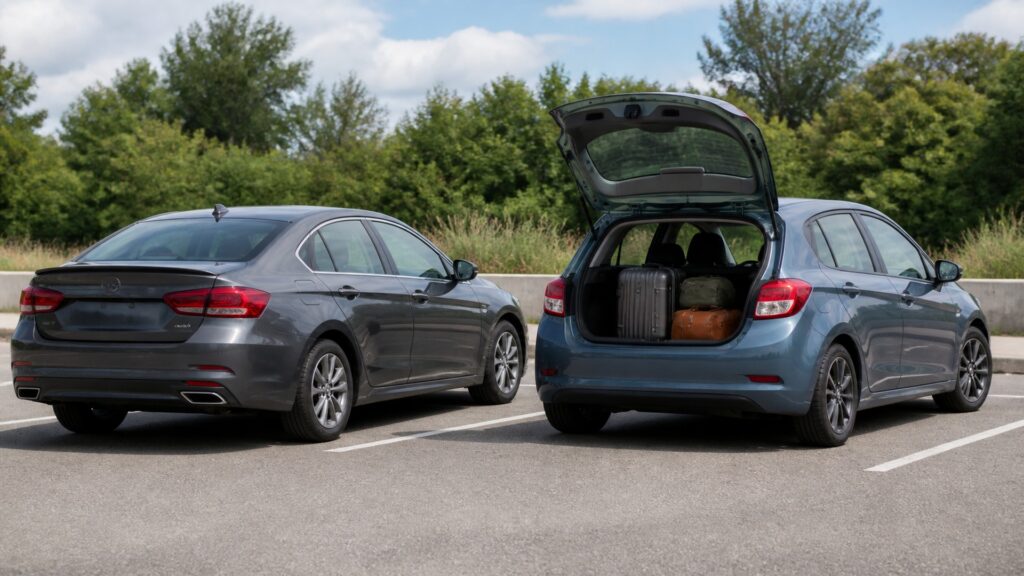
Sedans and hatchbacks differ most clearly in how the rear cargo area is enclosed and accessed. A conventional sedan uses a separate trunk lid beneath a fixed rear window. A hatchback opens a larger rear door that includes the window, connecting the loading opening directly with the rear interior space.

That change affects which objects can enter, how cargo space combines with folding seats, and how luggage is separated from passengers. It does not establish which car has more rear-seat room, better fuel economy, or lower costs. Names and rooflines can blur the distinction, so inspect how the actual rear opening works rather than relying on a silhouette alone.

By: Review Streets Research Lab
Updated: October 5, 2026
Explainer · 8-12 min read
sedans explainer hero image for Review Streets
What You'll Learn

Understand the Trunk-versus-Hatch Difference

Compare loading access, usable space, and passenger needs together.

  • Identify whether the rear glass opens with the cargo door
  • Separate cargo volume from opening dimensions
  • Check folding seats while preserving required passenger places
  • Consider concealment and cargo restraint
  • Test overhead clearance and ordinary loading tasks

Tip: Bring the item that must fit, or measure its relevant dimensions. A capacity number alone cannot establish whether it passes through the opening.

Definitions

Six Cargo-Layout Concepts for Sedans and Hatchbacks

These describe useful differences in the rear body and interior.

Trunk Opening

The aperture beneath the fixed rear window of a conventional sedan.

  • Example: A suitcase enters through the separate trunk lid.
  • Check: Measure the narrowest relevant part of the opening.
  • Limit: A roomy compartment can still have a restrictive entrance.

Hatch Opening

The opening created when the rear door and its window lift together.

  • Example: A bulky box enters through the taller rear opening of a hatchback.
  • Check: Check width, height, and the open door's clearance.
  • Limit: A large opening does not guarantee unlimited cargo dimensions or weight.

Cargo Compartment Shape

The actual three-dimensional space available for luggage.

  • Example: Wheel housings or a sloping roof limit where an object can sit.
  • Check: Measure usable space with the intended seat arrangement.
  • Limit: Published volume does not describe every obstruction.

Seat-Folding Flexibility

The ability to change the passenger-and-cargo arrangement.

  • Example: One rear seat section folds for a long item while another remains available.
  • Check: Confirm the actual split, opening, and loading instructions.
  • Limit: Sedans can also have folding seats or pass-throughs.

Cargo Concealment

Keeping stored items out of ordinary exterior view.

  • Example: A sedan trunk or a fitted hatchback cargo cover hides luggage.
  • Check: Check what remains visible in the actual arrangement.
  • Limit: Concealment is not a guarantee of theft protection or cargo restraint.

Loading Clearance

Space needed outside and inside the car to load it.

  • Example: An open hatch needs room beneath a low garage ceiling.
  • Check: Check the opening, lift-over height, and available surroundings.
  • Limit: A car that parks successfully may still lack space to open fully.

Tip: Keep cargo within vehicle limits and secure it appropriately in either layout, especially when a folded seat connects luggage with the occupied cabin.

Rear Body Design

Look at the Opening Rather Than the Roofline

A conventional sedan's rear window stays in place while the trunk lid opens below it. A hatchback's rear window moves with the larger rear door. A sloping roof can appear on either kind of vehicle, and liftback or fastback names can add confusion. Watch the actual opening to understand the loading arrangement and how it relates to the cabin.

  • Identify which panels move when cargo access opens.
  • Inspect the connection between luggage space and cabin.
  • Use the actual layout rather than the marketing label.

Two cars can have similar side profiles yet provide very different openings for a bulky object.

Cargo Fit

The Doorway Can Matter More Than the Volume

Hatchbacks often offer a taller loading aperture, which can help with bulky items. A sedan can have a generous trunk but a smaller entry opening or passage to folded rear seats. The actual object must pass through and sit securely inside. Compare relevant measurements with the seats and cargo cover in the positions the trip requires.

  • Measure the opening and internal space separately.
  • Check intrusions, roof slope, and lift-over height.
  • Try normal luggage with needed seats upright.

A box may fit the mathematical volume of a trunk and still fail to pass through its opening.

Passenger Flexibility

Folding Seats Change the Useful Arrangement

Many hatchbacks use folding rear seats to extend the cargo area, but sedans may also provide folding seatbacks or pass-throughs. Check the actual design and trim. A larger space with all seats folded is not available on a trip requiring those seats for passengers. Use the permitted loading arrangement and secure items that extend toward the cabin.

  • Confirm which seat sections fold and how.
  • Keep required occupant seats and restraints usable.
  • Follow the manual for locking seatbacks after use.

The practical advantage is the flexibility available while carrying the actual people, not only the maximum empty-car cargo measurement.

Separation and Concealment

A Trunk and a Cargo Cover Serve Different Layouts

A sedan's trunk provides a distinct luggage compartment, while a hatchback typically uses the rear interior area, often beneath a cover. Either can conceal items when arranged appropriately. Neither arrangement guarantees security, and a cover does not necessarily restrain a load. Noise, comfort, and isolation also depend on the vehicle's materials and design rather than body style alone.

  • Check what is visible from outside.
  • Secure cargo according to vehicle instructions.
  • Test actual cabin noise and comfort if those matter.

Choose a layout for its useful separation or flexibility without treating it as a universal promise of quietness or security.

Daily Use

Test the Opening Where the Car Will Be Parked

A hatch needs room above and behind the vehicle as it opens. A trunk lid also has an opening path and loading reach to consider. Compare normal parking, garage clearance, shopping bags, and frequently carried equipment. Then assess passenger room, powertrain, and ownership costs separately; those may differ between the cars without being caused by the trunk or hatch itself.

  • Try cargo access in representative parking conditions.
  • Check reach to the rear of the compartment.
  • Compare complete vehicles beyond the rear opening.

The best layout is the one that makes regular loading practical while still meeting the passenger and driving requirements.

Quick Reality Check

When Each Rear Layout Is Useful

Cargo access and passenger needs decide the practical advantage.

A Sedan Can Fit Well

Normal luggage fits through the trunk opening with required seats available.

The owner values a separate luggage compartment and the particular car's overall package.

A Hatchback Can Fit Well

Bulky items benefit from the actual taller opening and flexible rear interior.

The seat arrangement and hatch clearance work for the normal people and parking spaces.

Common Myths

Misconceptions About Sedans and Hatchbacks

The rear opening explains some differences, not every specification.

Sedans never have folding rear seats.

Many do; verify the actual model and trim.

A larger volume number guarantees better cargo fit.

Opening shape and internal dimensions can be decisive.

Every sloping-roof car is a hatchback.

The defining practical check is whether the rear window opens with the cargo door.

A cargo cover secures the load.

It mainly conceals items; appropriate cargo restraint is still needed.

Tip: Compare cargo in the seating arrangement you will use, not only the largest possible space shown in a brochure.

FAQ

Questions About Sedan and Hatchback Layouts

Answers for understanding rear access and usable luggage space.

What is the clearest difference?

A conventional sedan has a separate trunk lid below fixed rear glass; a hatchback opens a rear door that includes the glass.

Can a sedan carry long items?

Some provide folding seats or a pass-through. Check the actual opening, limits, and securement instructions.

Is a hatchback always roomier for passengers?

No. Passenger space depends on the model's cabin packaging.

What should I measure for cargo?

The opening, internal width and height, usable length, obstructions, and space with required seats upright.

Which is better for everyday use?

The layout that accommodates the actual people and cargo with practical loading access and a suitable overall vehicle.

Bottom Line

Sedans and hatchbacks differ chiefly in rear opening design and the relationship between luggage space and the cabin.

Compare the doorway, interior shape, folding-seat arrangement, and loading clearance before deciding which layout serves the intended use.

Next Steps

Go Deeper or Compare Your Options

Use these Review Streets paths to compare related categories and practical next decisions.

Technical references: Honda Civic sedan cargo layout; Honda Civic hatchback cargo layout; Honda Civic hatchback configuration information. Use the manual and ratings for your own model year and configuration.