
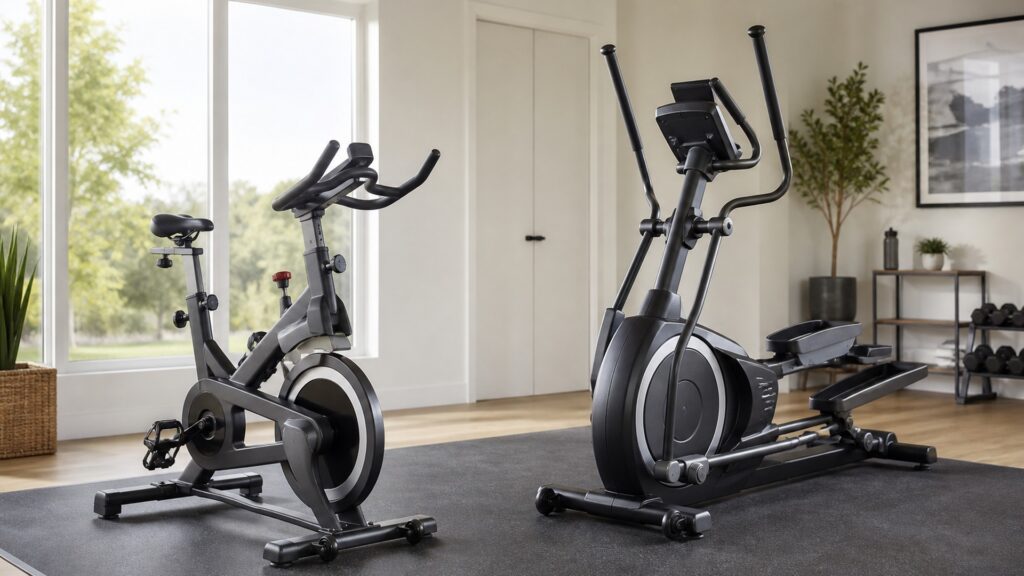
What Makes Spin Bikes Different from Rear Drive Ellipticals

Spin bikes differ from rear drive ellipticals because they use cycling posture and circular pedaling, while rear drive ellipticals use standing guided stride motion. Both can support cardio, but the body position and effort cues are different.

A spin bike is better when the user wants cadence, resistance intervals, and indoor cycling structure. A rear drive elliptical is better when the user wants standing low-impact stride motion with a longer elliptical feel.

By: Review Streets Research Lab
Updated: October 6, 2026
Explainer · 8-12 min read
spin bikes explainer hero image for Review Streets
What You'll Learn

How Indoor Cycling Differs From Rear Drive Elliptical Stride

A practical comparison of posture, motion, resistance, and workout role.

  • How cycling posture differs from standing stride
  • Why cadence matters on spin bikes
  • Where rear drive ellipticals feel different
  • How balance and room fit compare
  • When each machine makes more sense

Tip: Set the bike to the rider first, then judge comfort at real cadence and resistance.

Definitions

Key Concepts Behind Spin Bikes Versus Rear Drive Ellipticals

These concepts connect spin bike design to fit, effort, control, and workout use.

Spin Bike Position

Spin bike position places the rider over a saddle and handlebar setup similar to indoor cycling classes.

  • Example: leaning slightly forward while pedaling
  • Check: adjust saddle and handlebar height before judging comfort
  • Limit: poor fit can make the ride uncomfortable

Flywheel Feel

Flywheel feel is how the bike carries momentum through each pedal stroke.

  • Example: a weighted flywheel smoothing out cadence
  • Check: pedal at slow and moderate speeds
  • Limit: heavy feel is not automatically better

Resistance Control

Resistance control changes how hard the pedals are to turn.

  • Example: turning a knob for a simulated climb
  • Check: confirm changes are smooth and predictable
  • Limit: some systems need calibration or maintenance

Cadence

Cadence is how quickly the rider pedals, usually measured in revolutions per minute.

  • Example: holding a steady rhythm during intervals
  • Check: see whether the console or app shows cadence
  • Limit: cadence is useful only when paired with effort

Riding Posture

Riding posture is how the rider's hips, back, shoulders, and hands align on the bike.

  • Example: standing briefly during a climb-style interval
  • Check: avoid reaching too far for the bars
  • Limit: aggressive posture may not suit every rider

Workout Role

Workout role is the job the bike fills in a routine.

  • Example: interval rides, class-style workouts, or steady cardio
  • Check: match the bike to the rides the user will repeat
  • Limit: one bike may not fit every cardio preference

Tip: A spin bike works best when fit, resistance, and cadence control support the same ride.

Position

Spin Bikes Put The Rider In Cycling Posture

The rider sits on a saddle and leans toward handlebars. That position is different from standing on elliptical pedals.

  • Check saddle comfort.
  • Adjust handlebar reach.
  • Test cadence at normal pace.

Cycling posture defines the spin bike.

Stride

Rear Drive Ellipticals Use Standing Motion

A rear drive elliptical guides the feet through a standing oval path. The user stays upright and does not use a cycling saddle.

  • Test stride comfort.
  • Check balance and posture.
  • Measure floor length.

Standing stride is the elliptical's core difference.

Effort

Spin Bikes Emphasize Cadence And Resistance

Spin bike workouts often use cadence targets, resistance changes, and cycling intervals. Rear drive ellipticals can vary effort too, but the movement is not cycling.

  • Compare effort cues.
  • Try resistance changes on both.
  • Notice which style feels motivating.

The workout language differs.

Comfort

Comfort Depends On Different Contact Points

Spin bike comfort depends on saddle, pedals, and handlebars. Rear drive elliptical comfort depends more on stride path, pedal spacing, and handle reach.

  • Test the real contact points.
  • Avoid judging by category alone.
  • Compare comfort after several minutes.

Different machines create different fit problems.

Decision

Choose By Preferred Cardio Style

The better choice depends on whether the user wants cycling or standing stride work. Both can be useful when fit is right.

  • Choose spin for cycling structure.
  • Choose rear drive elliptical for standing stride.
  • Let repeatable comfort decide.

Workout preference should lead the choice.

Quick Reality Check

Where Each Machine Makes Sense

The machines support different cardio styles.

Spin Bikes Help When

The user wants cycling posture, cadence, and resistance intervals.

Indoor cycling classes or bike training matter.

Rear Drive Ellipticals Help When

The user wants standing guided stride motion.

A longer elliptical stride feel is the preference.

Common Myths

Misconceptions About Spin Bikes And Rear Drive Ellipticals

Both are cardio machines, but they are not the same experience.

They train the same way

Cycling and elliptical stride use different positions.

Spin bikes are always harder

Effort depends on resistance, cadence, and duration.

Rear drive ellipticals are always easier

Stride effort and resistance can still be demanding.

Space fit is obvious

Measure bike length, elliptical length, and use clearance.

Tip: Treat ride claims as cues to test setup, resistance, and control directly.

FAQ

Frequently Asked Questions About Spin Bikes Versus Rear Drive Ellipticals

Short answers for practical spin bike decisions.

Which is better for cycling workouts?

A spin bike is the better match.

Which is better for standing cardio?

A rear drive elliptical is the better match.

Which has more balance demand?

The elliptical usually has more standing balance demand.

Can both support intervals?

Yes, but they use different motion patterns.

What is the practical takeaway?

Choose spin for cycling feel and rear drive elliptical for standing stride work.

Bottom Line

Spin bikes differ from rear drive ellipticals by using cycling posture and cadence-based pedaling instead of standing guided stride motion.

Choose by preferred body position, effort style, fit, and room needs.

Next Steps

Go Deeper or Compare Your Options

Use these Review Streets paths to compare related categories and practical next decisions.