What Makes Subscription Payment Gateways Different from Cloud Accounting Software

Subscription payment gateways handle the payment attempts behind recurring collection. Cloud accounting software organizes the business's financial records, including invoices, expenses, customer balances, and bank activity. A renewal may appear in both, but each system explains a different part of what happened.

The distinction is functional, not simply a matter of separate products. An accounting service may offer recurring invoices and connected automatic payments, while a payment platform may bundle subscription billing. Compare the complete setup and its records instead of assuming that one category excludes the other's features.

By: Review Streets Research Lab
Updated: September 25, 2026
Explainer · 8-12 min read
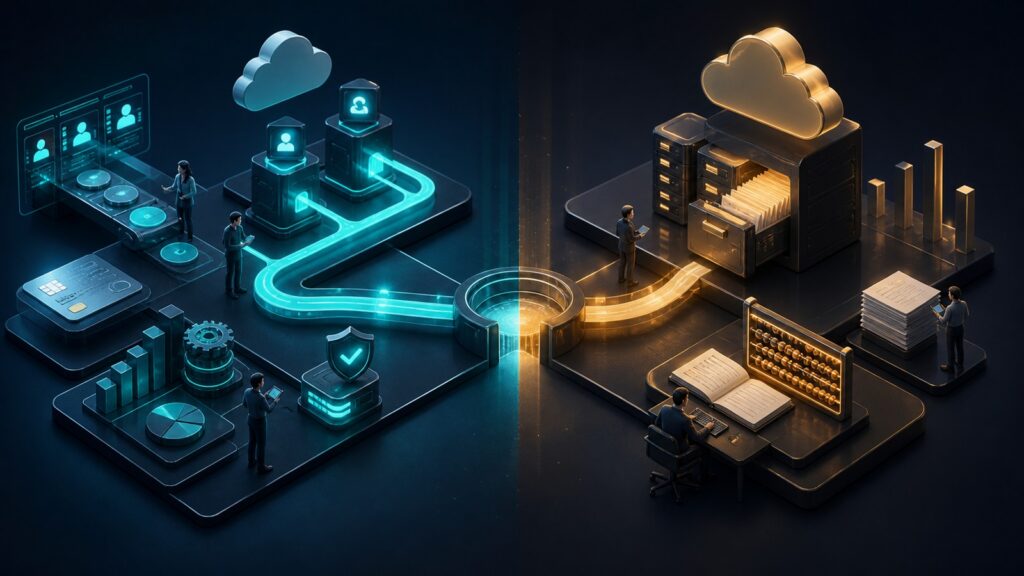
Editorial business scene illustrating subscription payment gateways and cloud accounting software
What You'll Learn

Understand the Payment Record and the Accounting Record

Follow a renewal from the amount due to collection, adjustments, and the bank deposit.

  • Distinguish a scheduled invoice from an attempted payment
  • Recognize recurring-payment features inside accounting products
  • Keep failed attempts separate from additional sales
  • Understand why deposits can differ from customer payments
  • Choose one source for the invoice and connect the payment results

Tip: Ask two separate questions: did the customer pay, and have the business records correctly recorded what happened?

Definitions

Records That Explain a Subscription Renewal

Related records should link together without being mistaken for duplicates of the same thing.

Recurring Invoice

A recurring invoice is a bill created at a scheduled interval for an ongoing charge.

  • Example: A maintenance business bills a client each month.
  • Check: Check how the schedule and amount are determined.
  • Limit: Creating or emailing the invoice does not itself collect payment.

Payment Attempt

A payment attempt is a request to collect a particular amount through a payment service.

  • Example: A renewal attempt is declined and a later eligible attempt succeeds.
  • Check: Link each attempt to the bill it is intended to pay.
  • Limit: Several attempts may relate to one invoice rather than several sales.

Saved Payment Reference

A saved payment reference identifies a method held by a payment provider for permitted future use.

  • Example: The billing service requests collection using the customer's stored card reference.
  • Check: Confirm the method is set up for the intended recurring use.
  • Limit: The accounting customer record alone is not a reusable payment credential.

Customer Balance

A customer balance records amounts owed or credited under the accounting system's records.

  • Example: An unpaid invoice remains outstanding until a payment or adjustment is applied.
  • Check: Check the documents contributing to the balance.
  • Limit: A gateway's latest attempt status may not explain the customer's entire balance.

Processing Fee

A processing fee is a charge associated with providing a payment service.

  • Example: The provider deducts a fee from the amount later transferred to the merchant.
  • Check: Use actual fee records rather than guessing from the deposit.
  • Limit: Fees and refund treatment depend on the provider's terms.

Payout

A payout transfers an available payment-provider balance to the merchant's destination account.

  • Example: One deposit includes several renewals and adjustments.
  • Check: Connect the payout breakdown to bank activity.
  • Limit: Its date and amount may differ from any individual customer's payment.

Tip: A payment attempt, an invoice, and a payout answer different questions about the same customer relationship.

Collection

The Payment Service Explains the Attempt

When a renewal fails, the payment service is the place to inspect the collection result. It may indicate that the method needs updating or that the customer must take another action. An accounting screen can show an unpaid invoice, but that balance alone does not identify the cause of the failed payment.

  • Find the attempt associated with the relevant renewal.
  • Check whether its status is final or still pending.
  • Keep recovery actions tied to the same underlying obligation.

For example, a customer may owe one monthly bill even though the provider records several attempts to collect it.

Recordkeeping

Accounting Explains the Wider Business

Cloud accounting brings the renewal together with costs and other financial activity. A payment dashboard cannot, by itself, explain rent paid from another bank account or supplier bills entered elsewhere. Its reports are useful source records, but they are not automatically a complete view of the company's books.

  • Record the invoice or sale in the designated accounting process.
  • Include relevant fees and adjustments.
  • Keep unrelated business costs in the same overall financial recordkeeping system.

Payment success answers a collection question. Understanding the business requires more than a list of successful renewals.

Overlapping Features

Recurring Collection May Already Be Integrated

An accounting product can create repeating invoices and connect them to a payment provider. That may be enough for a business charging stable retainers or membership fees. A dedicated subscription service becomes more useful when the business needs capabilities its existing connection does not support, such as a closer link between payment results and application access.

  • Check the complete connected service, including country and account availability.
  • Test what happens after a failed renewal.
  • Inspect whether payment updates reach the correct invoice automatically.

Do not add a separate platform solely because recurring billing sounds like a feature accounting software could never offer.

Adjustments

A Refund Is More Than a Change to an Invoice Label

A customer may receive money back after collection. The payment service records the refund operation, while accounting needs the appropriate adjustment linked to the original records. Canceling a subscription stops or changes future activity under its settings; it does not necessarily reverse an earlier payment.

  • Check whether the request concerns future billing, a past payment, or both.
  • Confirm the provider's refund result.
  • Ensure the accounting connection carries the necessary adjustment.

A member who cancels after an accidental renewal needs the cancellation decision and any refund decision checked separately.

Reconciliation

Connect Gross Payments to Net Deposits

Suppose three customers each pay a hypothetical $100 renewal. If the provider deducts a hypothetical $9 in fees, the resulting $291 deposit does not represent only $291 of customer payments. The records need to explain the $300 collected, the fee, and the transfer. Real payouts can include further adjustments and payments from different dates.

  • Retain invoice, payment, refund, and payout references.
  • Choose one system to originate each sale record.
  • Test whether an imported payout could duplicate a sale already recorded.

A reliable connection saves re-entry while preserving the explanation of why the bank deposit differs from the customer payments.

Quick Reality Check

The Same Renewal Viewed in Two Systems

Both views can be correct while showing different information.

Payment-Service View

Shows the saved method reference, collection attempts, payment result, and provider-side refund activity.

Useful when investigating why collection failed or whether an attempt succeeded.

Accounting View

Shows the bill, applied payments and adjustments, business costs, and financial reports.

Useful when explaining the customer's balance and reconciling the business's records.

Common Myths

Misconceptions About Recurring Payments and Accounting

Shared features do not eliminate the need for clear record ownership.

A recurring invoice guarantees automatic collection

An invoice schedule and a payment arrangement are different. The customer and payment method must be set up for the intended collection method.

A gateway report replaces cloud accounting

The report covers the provider's activity, not necessarily the company's complete financial activity.

Each retry should create another sale

Retries ordinarily relate to an existing obligation. Creating a new sale for each attempt can overstate what the customer owes.

Tip: Trace one renewal, one failed attempt, and one refund before relying on an automatic connection.

FAQ

Questions About Subscription Gateways and Cloud Accounting

Common choices when combining collection and bookkeeping.

Can a small business use one product for both?

It may use one interface with an integrated payment service. Confirm that the complete setup supports the recurring terms, recovery, and records the business needs.

Where should the invoice be created?

Choose the system that owns the billing calculation and design the accounting connection accordingly. Avoid independently creating the same obligation in both systems.

Why is the bank deposit smaller than the payments?

Fees, refunds, and other adjustments may affect the payout. Use the provider's detailed breakdown rather than assuming the difference is an error.

Does a successful payment show revenue for the period?

It establishes a collection result. Financial reporting treatment depends on the service, timing, and accounting policies, so do not equate a payment dashboard with the reporting ledger.

Bottom Line

Subscription gateways explain collection attempts; cloud accounting connects their financial results to the rest of the business.

Use integrated capabilities where they fit, and keep invoice, payment, adjustment, and payout records linked without counting the same sale twice.

Next Steps

Go Deeper or Compare Your Options

Use these Review Streets paths to compare related categories and practical next decisions.

Trace Subscription Payment Data

Subscription payment data must connect a bill, one or more collection attempts, and the result applied to the customer's account.

Quick Summary

Collection and Accounting Have Different Jobs

  • An invoice is not a payment attempt.
  • One bill can have several attempts.
  • Accounting products can integrate recurring payments.
  • A net payout needs an explanation of fees and adjustments.