
Water Resistance Rower
A water resistance rower uses a sliding seat, handle pull, and water tank drag.
- Example: paddles churning water as the user drives back
- Check: try the full stroke at normal effort
- Limit: tank care and stroke technique matter
Water resistance rowers differ from rear drive ellipticals because they use a seated rowing stroke and a water tank to create effort. Rear drive ellipticals use standing pedal motion, with the drive system behind the user shaping the stride path.
Both can be low-impact cardio machines, but they feel very different. The water rower rewards stroke rhythm, tank feel, and pulling mechanics. The rear drive elliptical rewards upright stride comfort, balance, and a fixed standing setup.
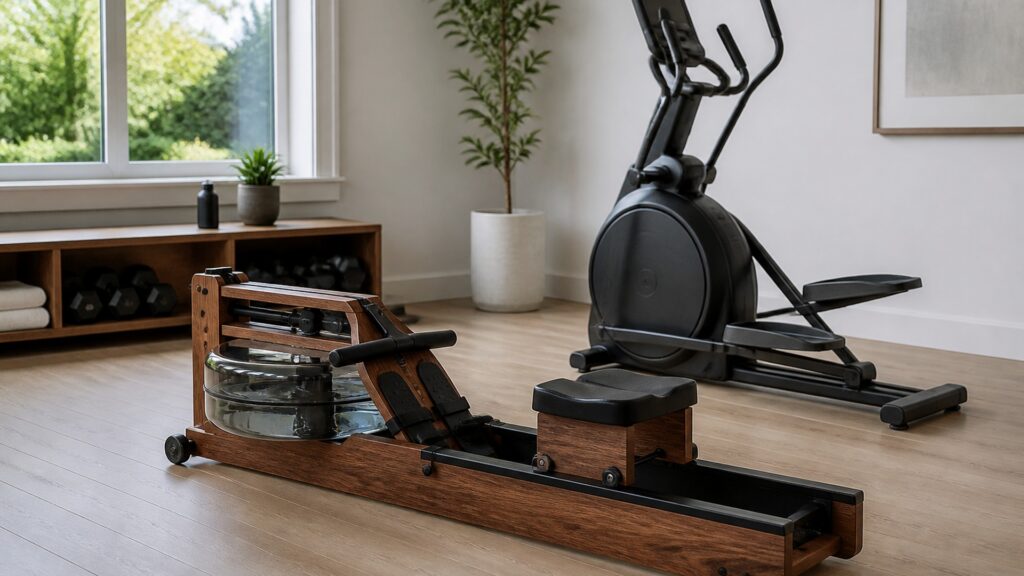
A practical comparison of seated water rowing and standing rear-drive elliptical stride.
Tip: Compare the movement first, then the features. The machines ask the body to do different things.
These terms explain the practical differences between the two cardio machines.
A water resistance rower uses a sliding seat, handle pull, and water tank drag.
A rear drive elliptical places the drive system behind the user and guides a standing stride.
Stroke rhythm is the timing of drive and recovery on a rower.
Stride path is the route the feet follow on an elliptical.
Resistance feel is how effort changes during use.
Ownership fit is how well setup, storage, sound, and care match the home.
Tip: The best choice is the machine whose motion and ownership needs the user will tolerate repeatedly.
A water rower uses a sliding seat, foot connection, handle pull, and tank resistance. The user has to coordinate the full stroke rather than simply stand and stride.
The water rower is best when rowing motion is the goal.
A rear drive elliptical guides the feet through a standing stride. It removes rowing technique, but stride length, pedal spacing, posture, and balance still matter.
The elliptical is best when standing low-impact motion is the goal.
Water drag rises with the user's stroke force. Rear drive ellipticals typically change effort through resistance settings and cadence. That makes pacing and feedback feel different.
Resistance feel should support the preferred movement.
The water rower has tank sound, water care, and rail length. The rear drive elliptical usually has a fixed assembled footprint and may be long enough to dominate a room.
The better machine is the one that fits the home without becoming a chore.
Choose the water rower for seated rowing, tank feel, and stroke rhythm. Choose the rear drive elliptical for upright stride, simpler continuous motion, and standing cardio.
They overlap as cardio machines, but not as movement experiences.
The machines answer different workout preferences.
The user wants seated rowing, water sound, and responsive tank drag.
Stroke rhythm and tank care fit the routine.
The user wants standing low-impact stride motion.
A fixed elliptical footprint is easier than rower setup and tank care.
Both can support cardio, but they do not ask for the same movement.
A rower is seated and stroke-based. An elliptical is standing and stride-based.
It is better only when the user likes rowing feel and tank ownership.
They are guided, but standing posture and control still matter.
Sound matters, but comfort, space, and repeated use matter too.
Tip: The most useful comparison is the workout the user will repeat.
Short answers for choosing between rowing and rear-drive stride cardio.
The water rower is the better choice because it provides the rowing stroke and tank feel.
The rear drive elliptical is usually better when the user wants upright stride motion.
The water rower usually has more technique demand because stroke order matters.
It depends on model and storage. Measure both operating and storage space.
Choose the water rower for seated rowing and the rear drive elliptical for standing stride cardio.
Water resistance rowers differ from rear drive ellipticals by using seated rowing and tank drag instead of standing guided stride.
Choose by preferred motion, resistance feel, room fit, sound, maintenance, and repeat-use comfort.
Use these Review Streets paths to compare related categories and practical next decisions.
Review how the tank creates resistance.
Explore the broader rowing-machine category.
Compare more home cardio options.
Choose a retailer
Prices checked regularly. We may earn a commission at no cost to you.